
• Skip to primary navigation
  • Skip to main content
  • Skip to primary sidebar
  • Skip to footer
  • Home
  • About
  • The Magazine
  • Events
  • Partners
  • Products
  • Contact
  • Jobs and Careers
  • Advertise
  • Facebook
  • Instagram
  • Twitter
  • Subscribe
American Police Beat

American Police Beat Magazine

Law Enforcement Publication

  • Home
  • Leadership
    • The measure of a mentor
      Developing a leadership framework
      When nothing happens: The invisible work of effective police...
      The most important person is the captain
      Every great sports team has a playbook
  • Topics
    • Leadership
      • The measure of a mentor
        Developing a leadership framework
        When nothing happens: The invisible work of effective police...
        The most important person is the captain
        Every great sports team has a playbook
    • Editor’s Picks
      • More than just a red shirt and a Sharpie
        The sixth sense in policing
        Train them to ask why
        The shift happens long before the resignation letter
        No two days are ever the same
    • On the Job
      • Human trafficking: The hidden criminal enterprise
        A winning sign
        LAPD puts brakes on bike takeover
        Frankpledge to forensics: A brief history of law enforcement
        The sixth sense in policing
    • Labor
      • The shift happens long before the resignation letter
        Facing the oral board
        Why good cops quit
        Succession planning
        Why more staff won’t fix your operational slowdowns
    • Tech
      • Video can be your portable coach
        Accentuating safety for first responders
        Take Me Home program offers effective tool for police and families
        Get the most out of simulation training
        The virtual beat
    • Training
      • The shotgun revival
        When SWAT isn’t coming anytime soon
        Leading through the crucible
        How small departments can prepare for rural disasters
        Do your metrics tell the wrong story?
    • Policy
      • Policy should guide, not handcuff
        Out of chaos comes opportunity
        Massachusetts law establishes fund to care for retired K-9s
        Portlanders will not vote on diverting climate funds for police...
        Surviving internal affairs investigations
    • Health/Wellness
      • After the shift: A police officer’s dreams
        Successful strategies for police handling of mental health-related...
        Permission to play
        The call you handled right can still hurt you
        The radio says you’re clear; your body disagrees
    • Community
      • Inspiring noteworthy community outreach
        A happier homecoming
        National Night Out 2026
        Pittsburgh mounted patrol officer helps inner-city kids saddle up
        Wyoming girl on a mission to collect “hero patches”
    • Offbeat
      • Snagging a grilled snake
        A surprise sting operation
        Could cadaver otters help close cold cases?
        Police chief catches cat in the act
        “Teenage Mutant Ninja Deer” rescued
    • We Remember
      • Honoring the Fallen Heroes of 9-11
        Steel Across America
        The first officers on scene on September 11
        Protecting America with the USA PATRIOT Act
        Distant cousins connect to honor fallen family member 110 years after...
    • HOT Mail
      • The War on Cops Continues Unabated
  • On the Job
    • Human trafficking: The hidden criminal enterprise
      A winning sign
      LAPD puts brakes on bike takeover
      Frankpledge to forensics: A brief history of law enforcement
      The sixth sense in policing
  • Labor
    • The shift happens long before the resignation letter
      Facing the oral board
      Why good cops quit
      Succession planning
      Why more staff won’t fix your operational slowdowns
  • Tech
    • Video can be your portable coach
      Accentuating safety for first responders
      Take Me Home program offers effective tool for police and families
      Get the most out of simulation training
      The virtual beat
  • Training
    • The shotgun revival
      When SWAT isn’t coming anytime soon
      Leading through the crucible
      How small departments can prepare for rural disasters
      Do your metrics tell the wrong story?
  • Policy
    • Policy should guide, not handcuff
      Out of chaos comes opportunity
      Massachusetts law establishes fund to care for retired K-9s
      Portlanders will not vote on diverting climate funds for police...
      Surviving internal affairs investigations
  • Health/Wellness
    • After the shift: A police officer’s dreams
      Successful strategies for police handling of mental health-related...
      Permission to play
      The call you handled right can still hurt you
      The radio says you’re clear; your body disagrees
  • Community
    • Inspiring noteworthy community outreach
      A happier homecoming
      National Night Out 2026
      Pittsburgh mounted patrol officer helps inner-city kids saddle up
      Wyoming girl on a mission to collect “hero patches”
  • Offbeat
    • Snagging a grilled snake
      A surprise sting operation
      Could cadaver otters help close cold cases?
      Police chief catches cat in the act
      “Teenage Mutant Ninja Deer” rescued
  • We Remember
    • Honoring the Fallen Heroes of 9-11
      Steel Across America
      The first officers on scene on September 11
      Protecting America with the USA PATRIOT Act
      Distant cousins connect to honor fallen family member 110 years after...
  • HOT Mail
    • The War on Cops Continues Unabated
  • About
  • The Magazine
  • Events
  • Partners
  • Products
  • Contact
  • Jobs and Careers
  • Advertise
  • Subscribe
Search

Training

The control trap

When the fight for control becomes the real battle

Antonio Zarzoza Published October 11, 2026 @ 1:13 pm PDT

iStock/ideataxi

There was a period in my career when I woke up every morning trying to solve a problem I could not solve. Before my feet touched the floor, my mind was already working. I replayed every detail of a training course I had submitted for approval, searched for requirements I might have overlooked, anticipated objections that had not been raised and imagined every possible outcome. I kept looking for something I could do that might move the process forward.

None of it changed the situation.

The course had already been submitted. The approval process had its own timeline, its own requirements and its own decision makers. I could answer questions, provide additional material or make revisions if requested. Beyond that, much of what happened next was outside my control. Understanding that intellectually did not prevent me from trying to control it mentally.

I checked for updates too often. I revisited portions of the submission that could no longer be changed unless they were returned to me. I prepared explanations for questions nobody had asked and responses to objections nobody had raised. Every day without an answer gave my mind more room to create possibilities, few of which were useful.

The course was important to me. I had invested significant time researching the subject, developing the curriculum and making sure the content met the established requirements. I believed in its value and wanted the opportunity to deliver it. My concern was legitimate, but concern was not the problem. The problem was believing that continued mental effort could influence a process that was no longer in my hands.

Eventually, I had to confront an uncomfortable truth. The approval process was creating uncertainty, but much of my frustration came from my refusal to release control after my responsibility had been fulfilled. I had confused caring about the outcome with needing to influence every stage of the process.

That distinction matters, especially in law enforcement.

Police officers are trained to assess problems, make decisions and take action. When something is wrong, we do not simply observe it. We identify the threat, establish priorities and work toward a resolution. The profession rewards preparation, decisiveness and the ability to create order in uncertain conditions.

Those qualities are necessary in the field. However, they can become counterproductive when we apply them to situations that do not respond to immediate action.

A pending course approval is a relatively minor example, but the pattern appears in much more consequential areas. Officers experience it while waiting for a promotion, applying for a specialized assignment, recovering from an injury, navigating a damaged relationship or watching a family member make choices they cannot prevent. In each case, uncertainty creates the urge to do something. When no meaningful action remains, we often substitute worry for action.

Worry can feel productive because the mind stays busy. We replay conversations, examine details, anticipate objections and prepare for outcomes that may never occur. That activity creates the impression that we are staying ahead of the problem. In reality, we may simply be experiencing the same uncertainty repeatedly without producing new information or improving the outcome.

The answer is not indifference. Letting go of control does not mean abandoning responsibility or pretending the outcome does not matter. Some situations require documentation, advocacy, legal guidance, follow-up or a difficult conversation. The challenge is recognizing the point at which responsible action ends and the fight for control begins.

Three questions can help establish that line: 

  • What is mine to do right now?
  • What part of this decision belongs to someone else?
  • What am I neglecting while trying to control an outcome I cannot accelerate?

In my case, my responsibility was clear: I needed to develop a sound course, satisfy the submission requirements and remain available to answer questions or make legitimate revisions. Once those tasks were completed, repeatedly checking for an answer did not improve the curriculum or influence the reviewers. It only consumed attention that could have been directed toward other meaningful work.

This is where discipline takes a different form. We usually associate discipline with persistence, preparation and continued effort. Sometimes discipline means recognizing that additional effort has no useful target. It means stepping away from the inbox, returning to the work in front of us and allowing a process to continue without our constant mental supervision.

Practical boundaries can help. Decide when a follow-up is appropriate instead of reacting to every delay. Write down any legitimate action that may still be required, then complete it when the time comes. Continue working, exercising, resting and remaining present with the people around you. Most importantly, pay attention to whether uncertainty is changing your attitude or affecting how you treat people who had nothing to do with the situation.

My course was eventually approved. By then, however, the more valuable lesson had little to do with curriculum development. I learned that completing my responsibility did not guarantee an immediate resolution, and continued worry did not create additional influence.

There are moments when discipline requires decisive action. There are others when it requires accepting that the available action has already been taken.

We cannot always control the process, the timeline, another person’s judgment or the final outcome. We can control the quality of our preparation, how we respond when action is required, where we place our attention and what we do while we wait. Sometimes the uncertainty is unavoidable. The struggle we create by trying to control it is not.
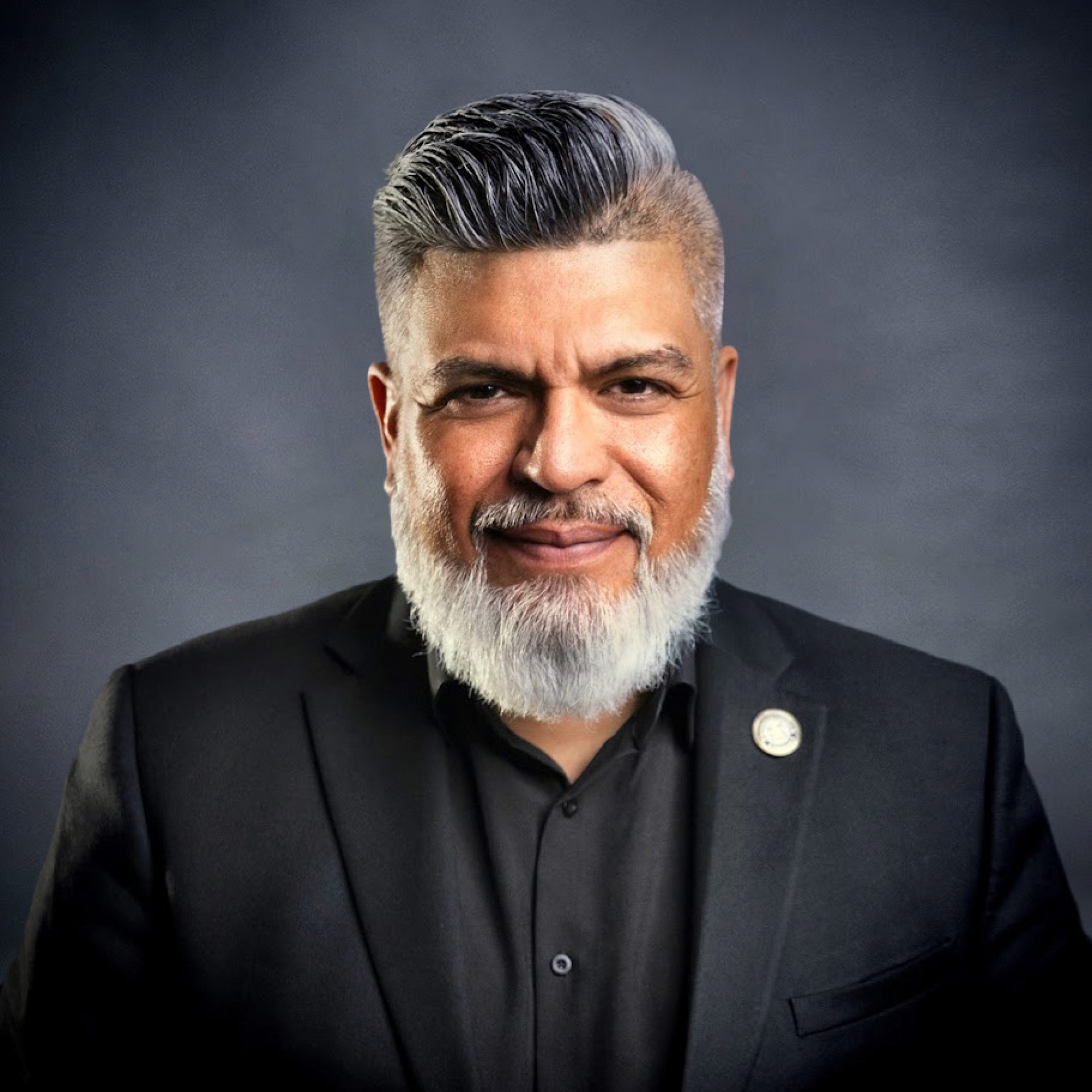
Antonio Zarzoza

Antonio Zarzoza

Antonio Zarzoza, widely known as “Instructor Z,” is an internationally recognized police and corrections trainer with over 20 years of law enforcement experience. He serves as training coordinator and lead instructor at a respected Texas university training center, shaping standards on a global scale. Through his firm, Instructor Z & Associates International, he has trained local, state, federal and international law enforcement, as well as Fortune 500 corporate trainers. A published writer, expert witness in use of force and training, and sought-after keynote speaker, his insights are featured across leading law enforcement publications.

View articles by Antonio Zarzoza

As seen in the October 2026 issue of American Police Beat magazine.
Don’t miss out on another issue today! Click below:

SUBSCRIBE TODAY!

Categories: Training

Primary Sidebar

Recent Articles

  • The shotgun revival
  • When SWAT isn’t coming anytime soon
  • The measure of a mentor
  • Human trafficking: The hidden criminal enterprise
  • Snagging a grilled snake
  • National Law Enforcement Officers Memorial Fund announces September 2026 Officers of the Month
  • A winning sign
  • Developing a leadership framework
  • Leading through the crucible
  • How small departments can prepare for rural disasters

Footer

Our Mission
To serve as a trusted voice of the nation’s law enforcement community, providing informative, entertaining and inspiring content on interesting and engaging topics affecting peace officers today.

Contact us: info@apbweb.com | (800) 234-0056.

  • Facebook
  • Instagram
  • Twitter

Categories

  • Editor’s Picks
  • On the Job
  • Labor
  • Tech
  • Training
  • Policy
  • Health/Wellness
  • Community
  • Offbeat
  • We Remember
  • Jobs and Careers
  • Events

Editor’s Picks

More than just a red shirt and a Sharpie

More than just a red shirt and a Sharpie

August 22, 2026

The sixth sense in policing

The sixth sense in policing

August 21, 2026

Train them to ask why

Train them to ask why

August 19, 2026

The shift happens long before the resignation letter

The shift happens long before the resignation letter

August 16, 2026

Policies | Consent Preferences | Copyright © 2026 APB Media, LLC | Website design, development and maintenance by 911MEDIA

Open

Subscribe

Close

Receive the latest news and updates from American Police Beat directly to your inbox!

  • This field is for validation purposes and should be left unchanged.