
• Skip to primary navigation
  • Skip to main content
  • Skip to primary sidebar
  • Skip to footer
  • Home
  • About
  • The Magazine
  • Events
  • Partners
  • Products
  • Contact
  • Jobs and Careers
  • Advertise
  • Facebook
  • Instagram
  • Twitter
  • Subscribe
American Police Beat

American Police Beat Magazine

Law Enforcement Publication

  • Home
  • Leadership
    • Why you should lead from 30,000 feet
      Public perception and trust
      When performance reviews are a waste of time
      Taking a page from Toyota’s playbook
      Tattoos can be self-inflicted handicaps
  • Topics
    • Leadership
      • Why you should lead from 30,000 feet
        Public perception and trust
        When performance reviews are a waste of time
        Taking a page from Toyota’s playbook
        Tattoos can be self-inflicted handicaps
    • Editor’s Picks
      • Liability challenges in contemporary policing
        When performance reviews are a waste of time
        Proactive wellness visits
        Taking a page from Toyota’s playbook
        Law enforcement’s missing weapon
    • On the Job
      • Right place, right time — again
        Some good news on crime
        Mom-to-be named Cop of the Year
        Fatherly instincts save boy from icy water
        More than a call for service
    • Labor
      • Labor release under fire
        Who’s watching the watchmen?
        Crime and punishment (or lack thereof) in Seattle
        Labor leadership out in the field
        When you are falsely accused
    • Tech
      • A modern field guide to understanding research in policing
        Gear that moves with you
        A new breed of cop car
        The future of patrol is here
        New York governor highlights $24 million investment to modernize law...
    • Training
      • Navigating danger
        Critical thinking in police training
        Threshold neuroscience
        Integrated virtual reality training
        Hit the pause button
    • Policy
      • Try racing without wheels
        Law enforcement accreditation: Why it matters
        Liability challenges in contemporary policing
        The war on drugs is evolving
        Drug policy and enforcement
    • Health/Wellness
      • Nervous system regulation
        The nature of the job
        Promoting organizational wellness
        Telling cops to get more sleep isn’t working
        Proactive wellness visits
    • Community
      • Shop with a Cop
        Community engagement: What is it moving forward?
        Contradictory crossroads
        Back-to-school season brings out police support nationwide
        A bold idea for reducing homelessness in America
    • Offbeat
      • An unexpected burglar
        Police humor only a cop would understand
        Not eggzactly a perfect heist
        Pizza … with a side of alligator?
        Wisconsin man charged with impersonating Border Patrol agent twice in...
    • We Remember
      • Forty heroes: United Airlines Flight 93
        The Pentagon
        A nation propelled to war, lives changed forever
        A Christmas loss
        York County ambush leaves three officers dead, others critically...
    • HOT Mail
      • The War on Cops Continues Unabated
  • On the Job
    • Right place, right time — again
      Some good news on crime
      Mom-to-be named Cop of the Year
      Fatherly instincts save boy from icy water
      More than a call for service
  • Labor
    • Labor release under fire
      Who’s watching the watchmen?
      Crime and punishment (or lack thereof) in Seattle
      Labor leadership out in the field
      When you are falsely accused
  • Tech
    • A modern field guide to understanding research in policing
      Gear that moves with you
      A new breed of cop car
      The future of patrol is here
      New York governor highlights $24 million investment to modernize law...
  • Training
    • Navigating danger
      Critical thinking in police training
      Threshold neuroscience
      Integrated virtual reality training
      Hit the pause button
  • Policy
    • Try racing without wheels
      Law enforcement accreditation: Why it matters
      Liability challenges in contemporary policing
      The war on drugs is evolving
      Drug policy and enforcement
  • Health/Wellness
    • Nervous system regulation
      The nature of the job
      Promoting organizational wellness
      Telling cops to get more sleep isn’t working
      Proactive wellness visits
  • Community
    • Shop with a Cop
      Community engagement: What is it moving forward?
      Contradictory crossroads
      Back-to-school season brings out police support nationwide
      A bold idea for reducing homelessness in America
  • Offbeat
    • An unexpected burglar
      Police humor only a cop would understand
      Not eggzactly a perfect heist
      Pizza … with a side of alligator?
      Wisconsin man charged with impersonating Border Patrol agent twice in...
  • We Remember
    • Forty heroes: United Airlines Flight 93
      The Pentagon
      A nation propelled to war, lives changed forever
      A Christmas loss
      York County ambush leaves three officers dead, others critically...
  • HOT Mail
    • The War on Cops Continues Unabated
  • About
  • The Magazine
  • Events
  • Partners
  • Products
  • Contact
  • Jobs and Careers
  • Advertise
  • Subscribe
Search

Training

The myth of the “best-trained department in the country”

Opinion/Editorial

Steve Grammas Published June 24, 2023 @ 3:00 pm PDT

iStock.com/jetcityimage

Editor’s note: This article, reprinted with permission, originally appeared in the May/June 2023 issue of LVPPA Vegas Beat, the official publication of the Las Vegas Police Protective Association.

This article is going to talk about what I feel is the myth surrounding Las Vegas Metropolitan Police Department (LVMPD) being the best-trained police department in the country. While I do not feel our training is anywhere near where it should be, this does not mean we do not start out as one of the best-trained departments in the country. I believe that the instruction and training that our officers get in the Academy are second to none. We spend a long time learning and practically applying things that we are given over the course of six months.

When coming out of the Academy, officers have a great base for tactics, policy, search and seizure, and defensive and firearms tactics. The instructors who teach at the Academy do a great job and have so much good information to pass along. Many hours of these teachings are spent drilling them time and again during those six months. Multiple repetitions for any skill set are how that skill set becomes part of you. With such a heavy emphasis put on new officers at the Academy, one would think that that same emphasis is applied throughout an officer’s entire career. Sadly, we know this is not the case. I think after we leave the Academy, we lose those amazing skills we obtained in the Academy.

Getting on the streets and handling calls for service or impacting hotspot areas becomes more important than keeping your skill set in good working order. It would appear that our agency feels that if it was taught to you in the Academy, you would always have those skill sets. That is an amazingly horrible thought process. Look at any pro athlete in any sport. They do not train for six months, become very proficient at their craft and then just stop until the day comes for a game or match. If a fighter in the UFC developed their skills and no longer had a fight camp to train and prepare for their upcoming fight, they would stand no chance at victory.

The truth is skill sets need to be continually developed and practiced over thousands of hours of time. Repetition over repetition is the only way to maintain your training. Once our officers graduate from the Academy, the most training they get is in front of a computer screen through UMLV.

When we look at the officers who work in areas such as FTTU, AOST, RBT, MACTAC and others, they can pass along some great training to our officers. But we only go four times a year to the range to stay proficient in handling and using our firearm, which is the highest level of force we have. We do defensive tactics four times a year, but every quarter is different, so you only really skill-build a specific tactic one time a year.

We do RBT/AOST once a year to apply our thought processes and training in real-world-based scenarios. And then we spend countless hours on UMLV, getting nonsense classes and only very few good ones that challenge our retention of Department policy and case law.

Most of the classes are merely to satisfy some outside group that probably isn’t all that law enforcement friendly anyway. Training days with structured training fall by the wayside for DP units or pet projects in the community. But every time we skip training, we lose or diminish our skill set. When an officer is involved in a case that goes to a use of force/tactical review board, the CIRT team always brings up our officers’ training. However, they fail to recognize how little we actually train and blame officers for things they trained on five years ago in the Academy or read in UMLV.

Policy changes happen frequently but are rarely hammered home with kinesthetic training/hands-on training so that the new policy has been ingrained in the officer. I have observed the use-of-force policy change several times over my career, and the only training given is a new document and a sign-off sheet to acknowledge you got the policy change. And our agency and the public wonder why officers make mistakes!

We are not getting the proper amount of training to truthfully say that our officers are the best-trained police department in the country. We could be, though. It may mean one day, a few extra 416b calls hold because a squad is continuing to build their critical skill set rather than hitting the streets to clear up calls.

Of course, we all recognize that our agency is down bodies. But if we want the best response to a police call for service, we need to provide our citizens with the genuinely best-trained police officers that we can. That training doesn’t come from a computer screen. It comes from real training days, with real direction and real application. For now, I would advise you to seek out your own training. Whether it is coming to the LVPPA to train with Chad Lyman, going up to the range or getting together as a squad on your own time to train, you need to do something to increase the likelihood of you winning an engagement during your tour of duty. Stay safe and train.
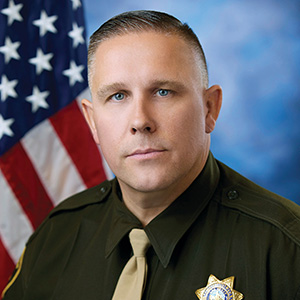
Steve Grammas

Steve Grammas

Steve Grammas is president of the Las Vegas Police Protective Association, the union representing active and retired LVMPD police and corrections officers and Las Vegas Deputy City and Municipal Court marshals.

View articles by Steve Grammas

As seen in the June 2023 issue of American Police Beat magazine.
Don’t miss out on another issue today! Click below:


SUBSCRIBE TODAY!

Categories: Training

Primary Sidebar

Recent Articles

  • NLEOMF announces February 2026 Officers of the Month
  • Fallen law enforcement officers from across the country to be honored during 38th Annual Candlelight Vigil on May 13 in Washington, D.C.
  • Nervous system regulation
  • Navigating danger
  • The nature of the job
  • Forty heroes: United Airlines Flight 93
  • Why you should lead from 30,000 feet
  • Promoting organizational wellness
  • Critical thinking in police training
  • Public perception and trust

Footer

Our Mission
To serve as a trusted voice of the nation’s law enforcement community, providing informative, entertaining and inspiring content on interesting and engaging topics affecting peace officers today.

Contact us: info@apbweb.com | (800) 234-0056.

  • Facebook
  • Instagram
  • Twitter

Categories

  • Editor’s Picks
  • On the Job
  • Labor
  • Tech
  • Training
  • Policy
  • Health/Wellness
  • Community
  • Offbeat
  • We Remember
  • Jobs and Careers
  • Events

Editor’s Picks

Liability challenges in contemporary policing

Liability challenges in contemporary policing

February 27, 2026

When performance reviews are a waste of time

When performance reviews are a waste of time

February 26, 2026

Proactive wellness visits

Proactive wellness visits

February 25, 2026

Taking a page from Toyota’s playbook

Taking a page from Toyota’s playbook

February 23, 2026

Policies | Consent Preferences | Copyright © 2026 APB Media, LLC | Website design, development and maintenance by 911MEDIA

Open

Subscribe

Close

Receive the latest news and updates from American Police Beat directly to your inbox!

  • This field is for validation purposes and should be left unchanged.