• Skip to primary navigation
  • Skip to main content
  • Skip to primary sidebar
  • Skip to footer
  • Home
  • About
  • The Magazine
  • Events
  • Partners
  • Products
  • Contact
  • Jobs and Careers
  • Advertise
  • Facebook
  • Instagram
  • Twitter
  • Subscribe
American Police Beat

American Police Beat Magazine

Law Enforcement Publication

  • Home
  • Leadership
    • Understanding the boundaries of professional relationships with the...
      Why you should lead from 30,000 feet
      Public perception and trust
      When performance reviews are a waste of time
      Taking a page from Toyota’s playbook
  • Topics
    • Leadership
      • Understanding the boundaries of professional relationships with the...
        Why you should lead from 30,000 feet
        Public perception and trust
        When performance reviews are a waste of time
        Taking a page from Toyota’s playbook
    • Editor’s Picks
      • Liability challenges in contemporary policing
        When performance reviews are a waste of time
        Proactive wellness visits
        Taking a page from Toyota’s playbook
        Law enforcement’s missing weapon
    • On the Job
      • Villains and heroes in the Big Apple
        Right place, right time — again
        Some good news on crime
        Mom-to-be named Cop of the Year
        Fatherly instincts save boy from icy water
    • Labor
      • Cut the cops, save a dollar?
        Labor release under fire
        Who’s watching the watchmen?
        Crime and punishment (or lack thereof) in Seattle
        Labor leadership out in the field
    • Tech
      • New Mexico license plate readers save lives, lead to “precise...
        A modern field guide to understanding research in policing
        Gear that moves with you
        A new breed of cop car
        The future of patrol is here
    • Training
      • Navigating danger
        Critical thinking in police training
        Threshold neuroscience
        Integrated virtual reality training
        Hit the pause button
    • Policy
      • E-bikes spark public safety concerns
        Try racing without wheels
        Law enforcement accreditation: Why it matters
        Liability challenges in contemporary policing
        The war on drugs is evolving
    • Health/Wellness
      • Addressing stress, vicarious trauma and burnout
        Nervous system regulation
        The nature of the job
        Promoting organizational wellness
        Telling cops to get more sleep isn’t working
    • Community
      • Improving autism awareness
        Shop with a Cop
        Community engagement: What is it moving forward?
        Contradictory crossroads
        Back-to-school season brings out police support nationwide
    • Offbeat
      • An unexpected burglar
        Police humor only a cop would understand
        Not eggzactly a perfect heist
        Pizza … with a side of alligator?
        Wisconsin man charged with impersonating Border Patrol agent twice in...
    • We Remember
      • Forty heroes: United Airlines Flight 93
        The Pentagon
        A nation propelled to war, lives changed forever
        A Christmas loss
        York County ambush leaves three officers dead, others critically...
    • HOT Mail
      • The War on Cops Continues Unabated
  • On the Job
    • Villains and heroes in the Big Apple
      Right place, right time — again
      Some good news on crime
      Mom-to-be named Cop of the Year
      Fatherly instincts save boy from icy water
  • Labor
    • Cut the cops, save a dollar?
      Labor release under fire
      Who’s watching the watchmen?
      Crime and punishment (or lack thereof) in Seattle
      Labor leadership out in the field
  • Tech
    • New Mexico license plate readers save lives, lead to “precise...
      A modern field guide to understanding research in policing
      Gear that moves with you
      A new breed of cop car
      The future of patrol is here
  • Training
    • Navigating danger
      Critical thinking in police training
      Threshold neuroscience
      Integrated virtual reality training
      Hit the pause button
  • Policy
    • E-bikes spark public safety concerns
      Try racing without wheels
      Law enforcement accreditation: Why it matters
      Liability challenges in contemporary policing
      The war on drugs is evolving
  • Health/Wellness
    • Addressing stress, vicarious trauma and burnout
      Nervous system regulation
      The nature of the job
      Promoting organizational wellness
      Telling cops to get more sleep isn’t working
  • Community
    • Improving autism awareness
      Shop with a Cop
      Community engagement: What is it moving forward?
      Contradictory crossroads
      Back-to-school season brings out police support nationwide
  • Offbeat
    • An unexpected burglar
      Police humor only a cop would understand
      Not eggzactly a perfect heist
      Pizza … with a side of alligator?
      Wisconsin man charged with impersonating Border Patrol agent twice in...
  • We Remember
    • Forty heroes: United Airlines Flight 93
      The Pentagon
      A nation propelled to war, lives changed forever
      A Christmas loss
      York County ambush leaves three officers dead, others critically...
  • HOT Mail
    • The War on Cops Continues Unabated
  • About
  • The Magazine
  • Events
  • Partners
  • Products
  • Contact
  • Jobs and Careers
  • Advertise
  • Subscribe
Search

Policy

LAPD cuts back on proactive policing with new policy

APB Team Published February 9, 2022 @ 6:00 am PST

iStock.com/Motortion

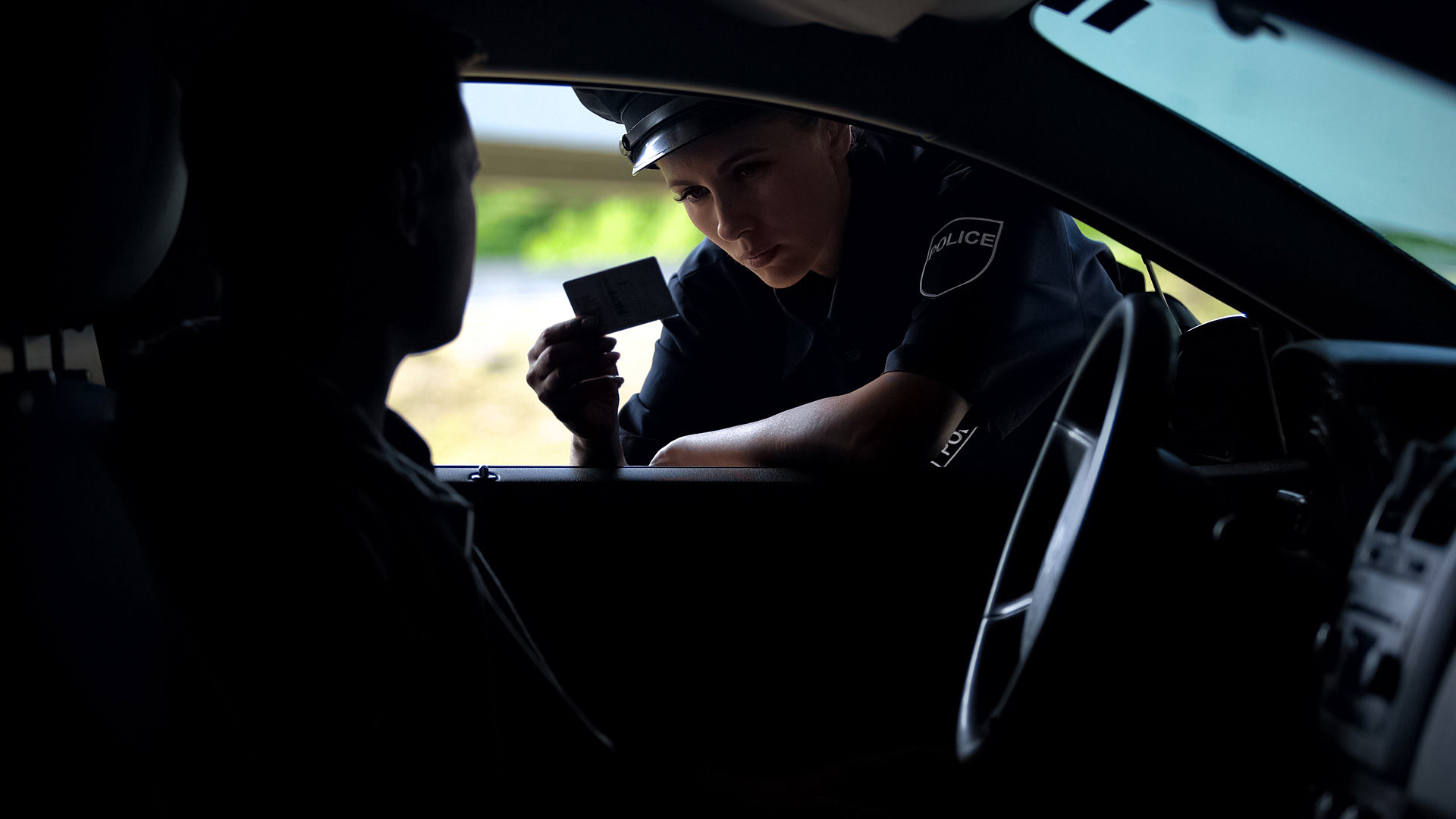
The LAPD is moving away from proactive policing with a new policy that will end minor traffic stops in an effort to reduce “bias.”

Chief Michel Moore announced in a letter that the department would no longer conduct pretextual stops over minor traffic violations unless an individual is suspected of committing more serious crimes like burglary, street racing, hit-and-runs or narcotics possession.

“It is the department’s policy that pretextual stops shall not be conducted unless officers are acting upon articulable information in addition to the traffic violation, which may or may not amount to reasonable suspicion, regarding a serious crime (i.e., a crime with potential for great bodily injury or death).”

Moore said the new policy is a response to community activists’ calls to end minor traffic violations, who argue that they are a manifestation of “implicit or explicit bias(es)” and lead to situations where unnecessary force is used on innocent people.

Moore wrote that the department would shift its strategy to strengthening community relationships instead of pursuing vehicle violations like expired plates or broken taillights.

The LAPD “seeks to hone the focus of its traffic enforcement and crime prevention strategies … while also strengthening trust and improving community relations,” Moore wrote, adding that “less attention” should be paid to “vehicle equipment violations,” such as missing license plates.

Law enforcement experts are concerned that the new policy marks a shift away from proactive policing.

“The days of proactive policing — of actually going out there, showing high visibility, doing traffic stops, doing pedestrian stops, looking for suspicious behavior, looking for small vehicle code violations that could possibly lead to discovering a gun in the car — those days are going to be gone now,” an anonymous LAPD source told Fox News.

Members of the Los Angeles Police Protective League (LAPPL) are resisting the new policy, arguing that routine traffic stops are a useful tool in reducing crime.

Spokesperson Tom Saggau said the union and other police groups are currently negotiating with the LAPD over the policy and that the laid-back approach to traffic stops will not make Los Angeles safer.

“The premise that a policy that would dramatically limit and, in many instances, eliminate traffic stops doesn’t make a lot of sense if you want a safer Los Angeles. Last year, there [were] close to 8,100 guns that were booked into evidence in Los Angeles, and many of those weapons were had as a result of car stops,” Saggau said.

Saggau noted that since 2019, murders and shootings have more than doubled in the city. He also argued that the policy would “disincentivize officers from proactive traffic enforcement.”

“If I’m an officer and I pull a car over, and it happens to be a person of color, am I going to want to get jammed up and disciplined because I am enforcing the law? What this memo and the various discussions don’t say is every one of those pretextual stops is legal and lawful,” Saggau explained.

The policy forbids officers from making decisions based on a person’s race, gender, age, homelessness or presence in a high-crime location — factors that some experts believe are necessary for police judgment calls.

Sergeant Betsy Brantner Smith, spokesperson for the National Police Association, said that such information is crucial for officers.

“I’ve pulled over people who have done armed robberies, who had done retail theft, who had done burglaries and on and on,” she said. “… A good street cop knows how to engage people and weigh their answers. That’s part of an investigation. A uniformed patrol officer is basically a detective on the street.”

Law enforcement experts said that one of the rules of thumb is that “little things can lead to big things” — as in small crimes often reveal much larger crimes in the process. Traffic stops, for example, often lead to the discovery of illegal firearms or narcotics or the arrest of suspects wanted for more serious crimes.

Smith also worried that the new policy would lead to more dangers on the road.

“What motivates you to ever renew your license plate? What motivates you to ever get insurance? What motivates you to ever then have a working vehicle?” she said. “… What we’re going to end up with is, let’s say, unfortunately, you get into a crash with somebody who has never renewed their license plate and couldn’t be pulled over because of it. … You end up paying for whatever happened to you during that accident.”

Categories: Policy Tags: traffic stops, bias, Michel Moore, proactive policing, community activists, traffic vio-lation, union, Police Reform, crime, LAPD

Primary Sidebar

Recent Articles

  • New Mexico license plate readers save lives, lead to “precise policing”
  • Addressing stress, vicarious trauma and burnout
  • Understanding the boundaries of professional relationships with the boss
  • E-bikes spark public safety concerns
  • Improving autism awareness
  • Cut the cops, save a dollar?
  • Villains and heroes in the Big Apple
  • NLEOMF announces February 2026 Officers of the Month
  • Fallen law enforcement officers from across the country to be honored during 38th Annual Candlelight Vigil on May 13 in Washington, D.C.
  • Nervous system regulation

Footer

Our Mission
To serve as a trusted voice of the nation’s law enforcement community, providing informative, entertaining and inspiring content on interesting and engaging topics affecting peace officers today.

Contact us: info@apbweb.com | (800) 234-0056.

  • Facebook
  • Instagram
  • Twitter

Categories

  • Editor’s Picks
  • On the Job
  • Labor
  • Tech
  • Training
  • Policy
  • Health/Wellness
  • Community
  • Offbeat
  • We Remember
  • Jobs and Careers
  • Events

Editor’s Picks

Liability challenges in contemporary policing

Liability challenges in contemporary policing

February 27, 2026

When performance reviews are a waste of time

When performance reviews are a waste of time

February 26, 2026

Proactive wellness visits

Proactive wellness visits

February 25, 2026

Taking a page from Toyota’s playbook

Taking a page from Toyota’s playbook

February 23, 2026

Policies | Consent Preferences | Copyright © 2026 APB Media, LLC | Website design, development and maintenance by 911MEDIA

Open

Subscribe

Close

Receive the latest news and updates from American Police Beat directly to your inbox!

  • This field is for validation purposes and should be left unchanged.