
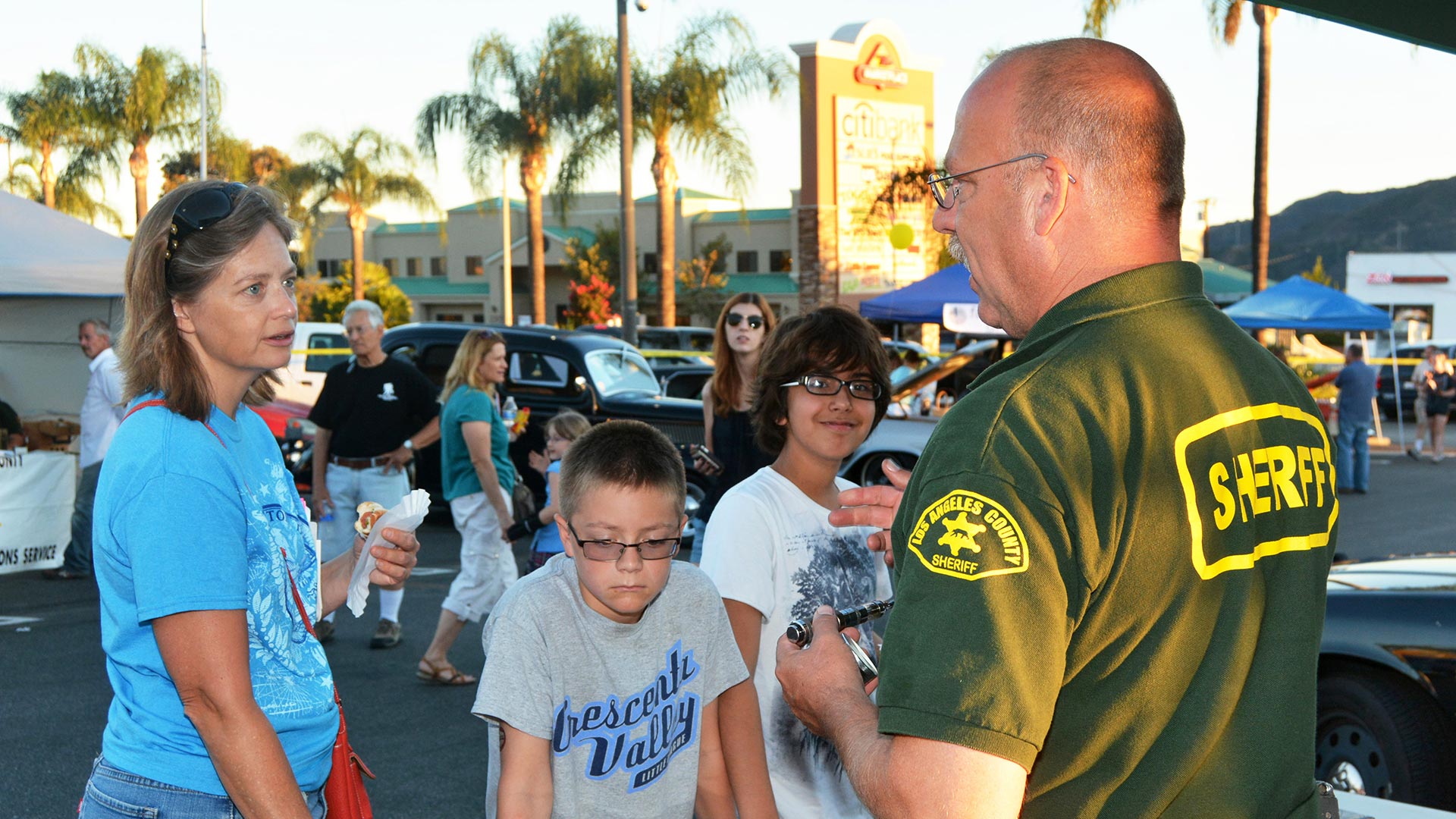
Did you know that local sporting events, jack-o’-lanterns and Christmas music, along with the focused use of public messaging through various media, can lead to better police–citizen relations, less crime and an improved sense of community well-being?
Research has revealed that the most effective pathway for improving relations between law enforcement and the communities they serve is by organizing collaborative events where both parties come together with a common purpose. The specific activities hardly matter — cooperating, communicating and joining together are the most important elements — and possibilities for collaborative events are endless.
In late summer at the Everytown municipal ball field, it’s the constables versus the dealership gearheads for the local championship. It’s one of the biggest events every summer. Those unable to make it to the game can watch it livestreamed on the web or catch the replay on YouTube or the local public access TV channel.
When conducted conscientiously, community policing is measurably more effective in reducing crime and fostering better community relations.
A few weeks later, the annual Halloween pumpkin-carving competition takes place in the high school parking lot, sponsored by local area law enforcement agencies as part of their yearly youth safety awareness campaign, with prizes donated by local merchants, along with all kinds of sweets and treats. It is also an opportunity to set up instructive displays as well as info tables, exhibits, handouts and other material relevant to this good cause.
As Christmas approaches, it’s time for the annual Cops and Kids holiday choral program, one of the most popular concert performances of the year. All proceeds are donated to a worthy aid organization. Again, as with all of these collaborative community events, it would also be livestreamed and posted on the department’s website, Facebook page and YouTube channel, shared over the public access TV channel and so on.
While shared community activities are important, they’re one component of a program that includes ongoing public messaging, along with a more approachable and friendly style of interaction between law enforcement personnel and civilians, where officers are perceived as being approachable and sociable, even when it’s not a special holiday or sporting event.
These types of tactics, among others, are proven to help create a greater sense of trust between local law enforcement agencies and the citizens they serve, which then leads to less crime. It also leads to a more positive sense of community, tending to improve the quality of life and well-being for all concerned.
Community policing basics
The foundational concepts for more positive police–community relations are the essentials of community policing, which first generated national interest in the aftermath of the racial riots of the late 1960s and early 1970s. In the years following, the U.S. Department of Justice (DOJ) refined and codified the basics of community policing, culminating with the formation of the Office of Community Oriented Policing Services (COPS), responsible for advancing community
policing through information and funding grants to every level of America’s law enforcement.
A defining landmark in understanding and advancing police–community relations was “The President’s Task Force on 21st Century Policing Implementation Guide.” The task force was established to help build trust between citizens and law enforcement, and its final report provides copious research revealing that community policing procedures can unquestionably help reduce local crime rates by as much as 15%. It also presents a wide range of policies and positive action steps for law enforcement agencies, in collaboration with their communities, to expand and support community policing.
“The Collaborative Toolkit for Community Organizations,” from COPS, offers many innovations for improving how civilians interact with police. With just these two documents, any community could begin effectively improving police–community relations.
Evidence-based policing
Community policing is evidence-based policing (EBP), meaning that agency policies and practices are proven to work and are supported by research. When conducted conscientiously, community policing is measurably more effective in reducing crime and fostering better community relations.
Building trust starts with effective person-to-person communication. Regardless of race, class, culture or ethnicity, most law-abiding citizens generally only see police officers during a traffic stop, in various official operations or perhaps looking out from a patrol car, distant and officious. Police officers often engage in a linear style of communication, primarily by giving orders or
commands. This type of interaction is effective in dynamic situations or circumstances where an officer needs to gain compliance immediately, but it also eliminates factors that make interactions more transactional, two-way conversations.
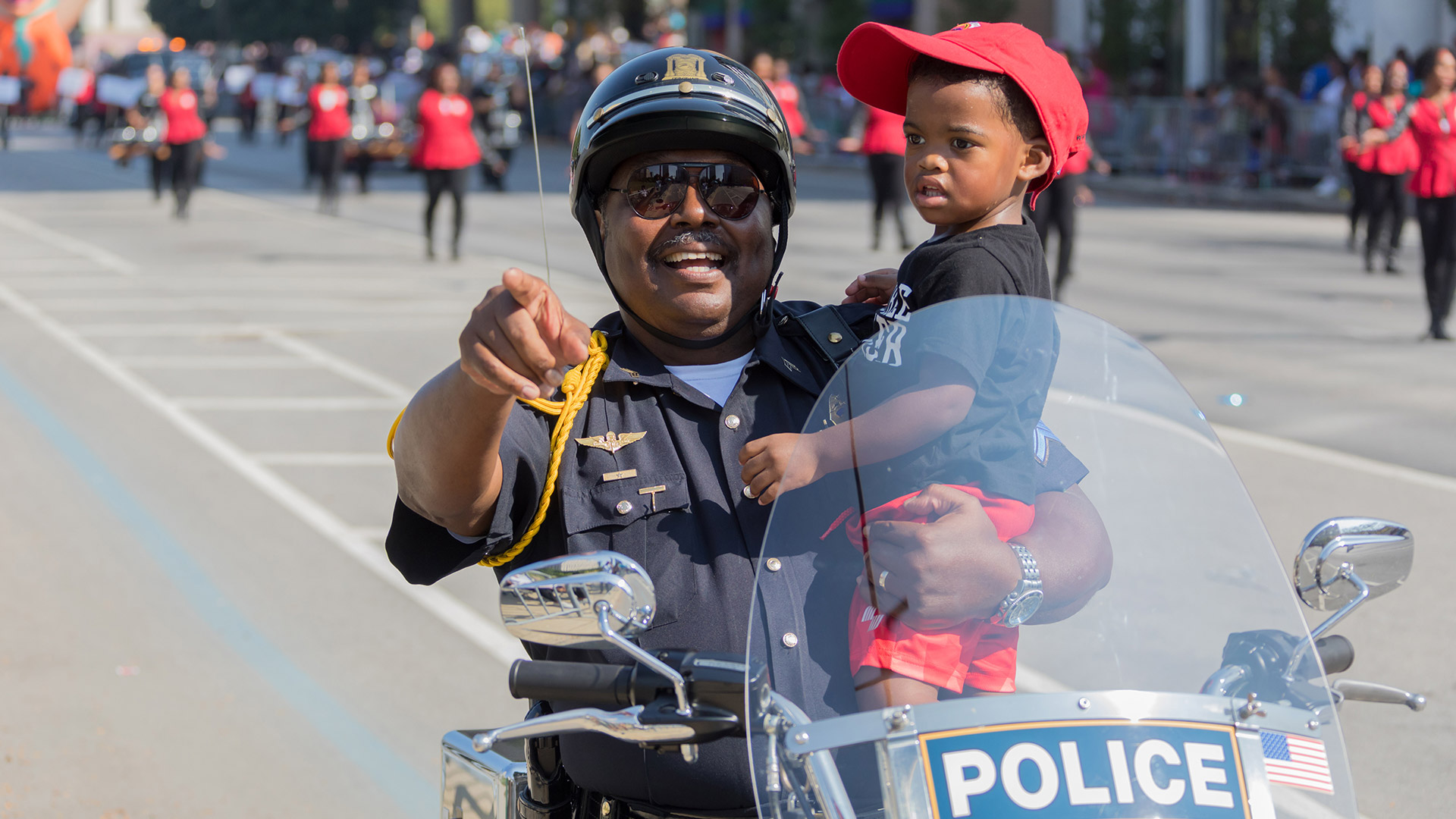
A 2011 Rand study indicates that a community’s sense of trust and rapport with police officers is impacted by body language, tone of voice and delivery style, perceived presence — or lack — of empathy and understanding, and so on. It concluded that some agencies need to address the often distant, impersonal, demanding demeanor of their police officers, and also found that one of the easiest and most positive ways that officers can generate goodwill is to simply step out of their patrol vehicles, take a walk through neighborhoods and engage directly with the civilians in their communities.
Very positive effects can result from simple shifts in an officer’s tone of voice and content. After some simple, straightforward training, LEOs can learn the basics of active listening and how to employ a more generally affable tone when conversing with the public. According to numerous studies, citizens hold more positive attitudes toward officers whose demeanor is friendly and conversational. This increase in citizen satisfaction with their police leads to more civilian cooperation, which is a vital element in reducing crime.
When looking to create a sense of trust and legitimacy, the evidence shows that an officer’s demeanor is very important, and a friendly, conversational tone helps citizens feel more trusting. It starts with considering how one communicates with the people they know — relatives, close friends, acquaintances — and presenting the same kind of attitude, posture and tone of voice, not at all like the officious armed warrior who seems ever wary of strangers.
Collaborative events
Research indicates that direct collaborations between police departments and local groups are the most reliable and effective way to improve relations between police and minority communities, providing durable, lasting, positive results. Any type of collaboration — Neighborhood Watch, interagency sporting events, street fairs, citizen review boards, etc. — markedly improves police–community relations, as in the events mentioned above.
National Night Out is a perfect way to kick off a progression of cooperative ventures between law enforcement and the public going forward — but if that single once-a-year festival is the only event that the police and the citizens take on together, it would not be nearly enough to support a successful community policing program.
Important additional long-term collaborations would include regular sit-down meetings, once or twice per month, between law enforcement personnel and representatives of various civic organizations, such as the Rotary, Lions, downtown merchants’ associations, minority advocacy groups and so on. Similarly, regular ongoing community-wide meetings, perhaps a half-dozen per year, in large gathering places such as gymnasiums, auditoriums and outdoor venues, can provide opportunities to meet face-to-face with the general public. An open microphone would provide community participants the opportunity to ask questions or share comments as well, helping citizens to feel that they are being included and considered in the process.
Technology and social media
The current state of communication technology provides endless opportunities for police agencies to maintain a media presence, which is instrumental for successful community policing and offers far more engagement than just an occasional press release or critical incident report.
The internet alone offers the prospect of ongoing communication with the public through mass emails, web pages, blogs, podcasts, livestreaming videos and a wide array of social media, such as Twitter, Facebook, Instagram, TikTok and so on. Add to that traditional broadcast platforms like radio and TV, print media and live events.
For effective community policing, handling the press, social media and other communication technology, as well as public relations, requires a public information officer (PIO), someone who can oversee, coordinate and help generate whatever messages are to be disseminated to the public, as well as determine the most effective means to get it all out there. Among their most important duties, the PIO is responsible for the release of incident-related information involving important crimes and evolving situations, in addition to regular ongoing public relations.
However, it seems that most law enforcement agencies have decided that a PIO is not necessary, for whatever reasons. If one of those reasons is budget constraints, the DOJ’s COPS Office regularly awards grants to hire community policing professionals, such as PIOs. COPS also funds innovative policing approaches, especially related to community policing, providing training and technical assistance to community members, local government leaders and all levels of law enforcement.
Many agencies have developed web pages dedicated to presenting up-to-date information on everything from local crime stats to departmental promotions to upcoming community–police collaborations. The City of San Diego’s police department is an exemplary example and can be viewed at
sandiego.gov/police. Internet presence can also be enhanced by posting relevant content through social media connections such as Facebook, Instagram, YouTube and other popular platforms, in addition to presenting more in-depth information through podcasts. Livestreaming video is also available, which is detailed further on.
Local radio and TV newsrooms are always hungry for material to use on air. Utilizing radio to consistently communicate with the community can be as simple as issuing regular press releases on issues of interest, whether it be about newsworthy law enforcement stories, public events related to upcoming community–police collaborations or interesting developments within the agency.
Local TV news is especially useful for announcing or promoting significant community–police events, as well as having LE officials appear as guests related to evolving events or critical incidents. While local television news programming may have shed some of its audience over the past decade, it still garners more viewers on average than cable and network news programs. Community access, or PEG, television, not to be confused with public television, is a not-for-profit nationwide system of channels mandated by federal law to be available free of charge, and can be utilized by police agencies in a wide variety of ways.
Conclusions
Following these simple guidelines to develop more effective police–community relations in jurisdictions of any size or cultural complexity will help significantly prevent and reduce crime. Such an undertaking requires a generally more sociable communication style from local law enforcement personnel, and also requires regular, ongoing meetings and direct engagement between the police and a wide variety of community organizations. There should also be numerous different types of collaborations planned throughout the year between the local law enforcement agencies and the citizenry, through various activities such as sports, musical partnerships and seasonal events, as exemplified by the National Night Out. Funding, guidance and complete information to launch such an endeavor is available through COPS, and details can be acquired through the Final Report of the Presidential Task Force on 21st Century Policing.
References
Geoffrey P. Alpert, Daniel Flynn and Alex R. Piquero, “Effective Community Policing Performance Measures.”
Justice Research and Policy, Volume 3, Issue 2, 2001. tinyurl.com/5a2rs32m.
Karen Bullock and Nick Tilley, “Evidence-Based Policing and Crime Reduction.” Policing: A Journal of Policy and Practice, Volume 3, Issue 4, 2009. tinyurl.com/z2adjj3v.
Randy Conley, “The 10 Commandments of Communication to Build Trust.” LeaderChat, 2015. tinyurl.com/9ecjvvfm.
Faye Elkins, “Police Youth Programs: Much More Than Fun and Games.” Office of Community Oriented Policing Services, Community Policing Dispatch, Volume 13, Issue 3, 2020. tinyurl.com/6wccut2a.
Richard R. Johnson, Ph.D., “Why Officer Demeanor Matters.” Dolan Consulting Group, 2016. tinyurl.com/2h5u3y3u.
K. Loving, “Three Ways for Law Enforcement to Improve Public Relations and Trust.” 2014. tinyurl.com/58cp5u3n.
Michael S. McCampbell, The Collaboration Toolkit for Community Organizations: Effective Strategies to Partner With Law Enforcement. Office of Community Oriented Policing Services, 2014. tinyurl.com/mrzjfrze.
Alision Milofsky, “What Is Active Listening?” U.S. Institute of Peace. tinyurl.com/3bsz2dxm.
Candice Norwood, “Calls for Reform Bring Renewed Focus to Community Policing, But Does It Work?”
PBS NewsHour, 2020. tinyurl.com/mr4yb9ft.
Pew Research Center, “Local TV News Fact Sheet.” 2021. tinyurl.com/yc8whmpa.
Michael Reisig, “What Shapes Residents’ Willingness to Participate in Crime Prevention Programs?”
Policing: A Journal of Policy and Practice, 1(3), 356–369, 2007.
M. Roberts, “Public Information Officer Job Description.” JobHero, 2019. tinyurl.com/5n8bsr2b.
Gregory F. Treverton, Matt Wollman, Elizabeth Wilke and Deborah Lai, Moving Toward the Future of Policing.
Rand National Security Research Division, 2011. tinyurl.com/bdv7yzfc.
U.S. Department of Justice Community Relations Service, Police–Community Relations Toolkit: Policing 101.
tinyurl.com/384bcumn.
Cole Zercoe, “Why Police Agencies Should Embrace News Media.” Police1, 2015. tinyurl.com/y5zdnds8.

Dr. Gene Ira Katz, DMCJ
As seen in the March 2024 issue of American Police Beat magazine.
Don’t miss out on another issue today! Click below: