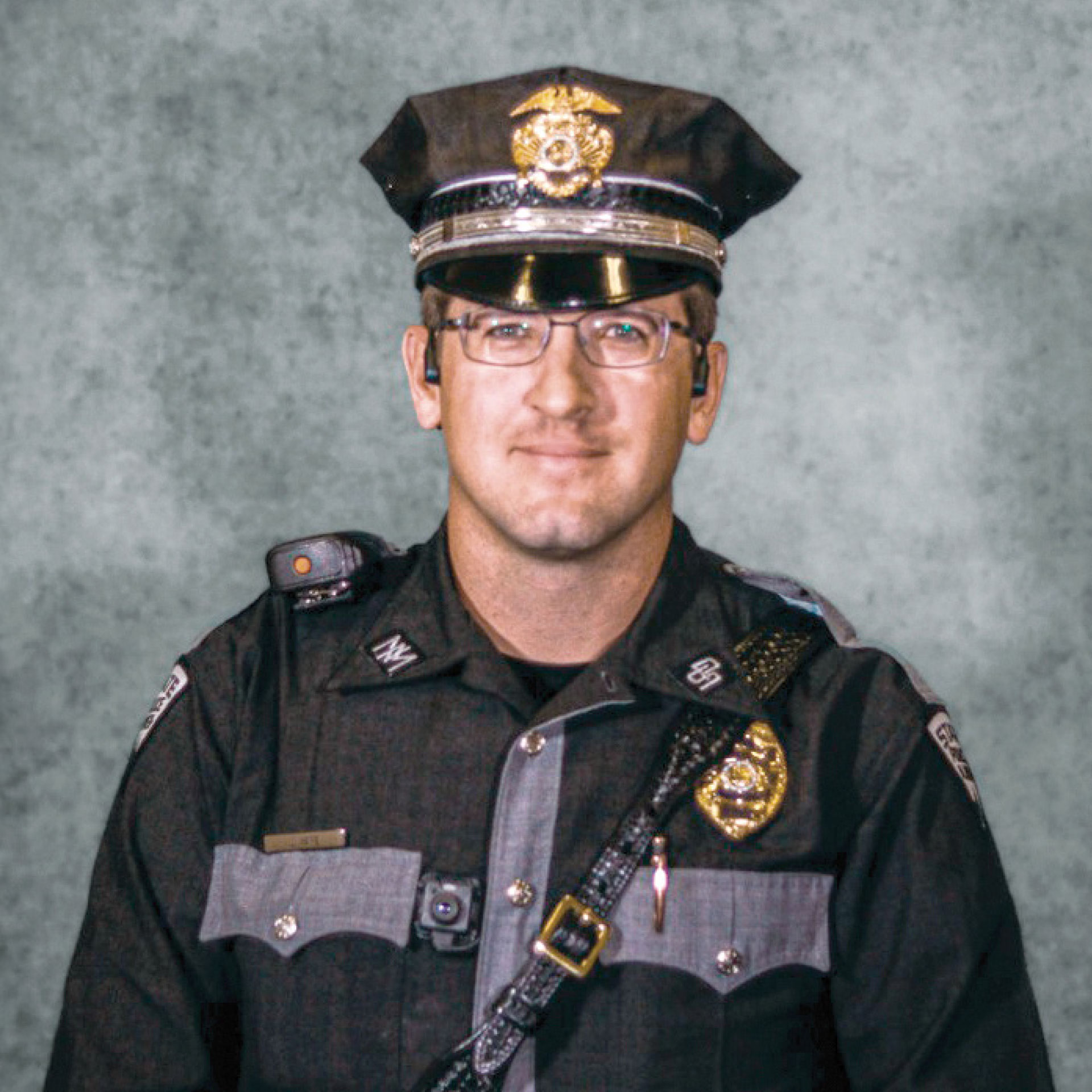
When it comes to solving crimes, time is of the essence and information is power. With that power of information comes the opportunity to save lives. On the anniversary of Officer Justin Hare’s death on March 15, 2024, New Mexico State Police Chief W. Troy Weisler reflected on how important the license plate reader (LPR) program is for law enforcement officer safety.
“If this technology would have been available at the time, it is possible New Mexico State Police Officer Justin Hare would’ve learned he was dealing with a fugitive prior to being executed by Jaremy Smith,” said Weisler. “This technology is critically important in keeping both the public and officers safe.”
On March 15, 2024, Hare stopped to assist Smith with a flat tire on a BMW in Tucumcari, New Mexico. When Hare pulled over behind the BMW, Smith exited the driver’s side of his car and approached the passenger window of Hare’s patrol car. After a short discussion and offer by Hare to give Smith a ride, he then asked Smith to walk to the front of the patrol vehicle. Instead, Smith shot Hare while he was still seated in the driver’s seat. Smith then moved to the driver’s side of the patrol vehicle and shot Hare two additional times before entering the driver’s seat and driving away with Hare still inside the vehicle.
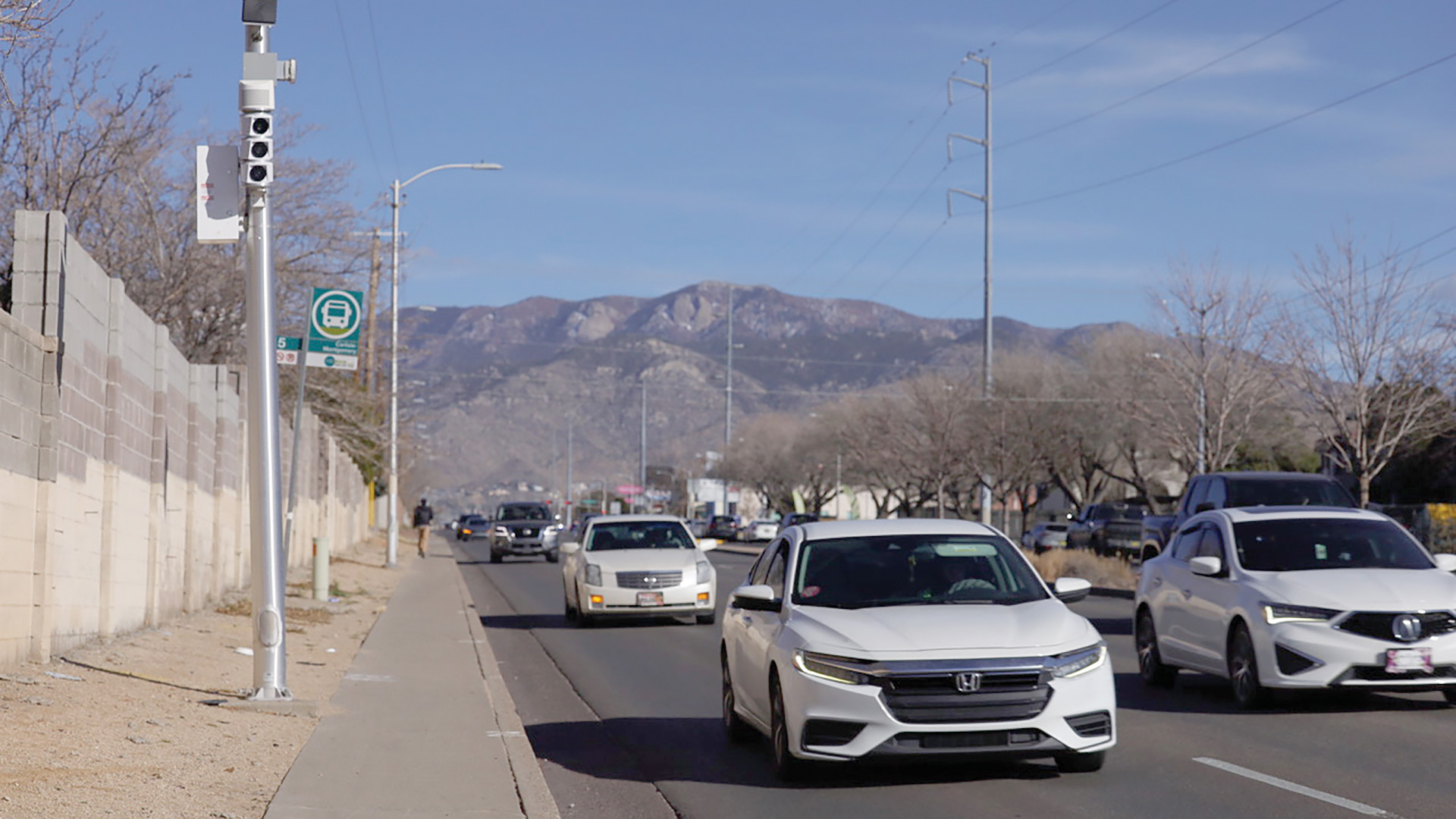
With LPR cameras installed in July 2024, officers throughout the state now have valuable information available to them, with improvements being made all the time, per Kent Augustine, New Mexico Department of Public Safety’s Information Technology Division chief information officer.
The process to get there took three years for the Information Technology Division and the State Police’s Innovations Bureau. This involved working with vendors on implementing and maintaining LPR cameras, software, hardware and security, along with collaborating with the FBI on lawfully maintained “hot lists,” such as stolen vehicles or active felony alerts. This included researching which cameras would work where. For example, a camera that would pick up a license plate in a residential area would likely not work on a high-speed interstate. Efforts with vendors even included considering the power needed for a camera and attempting to find solar solutions.
“This was all geared at having the most accurate, most reliable and most cost-effective systems we could in the environments that we operate in,” said Augustine. “I’m really proud of that effort — working closely with our [New Mexico] State Police partners and putting together a test plan that no other agency had ever done before.
“We had to consider a multitude of factors when putting cameras in an area. We don’t want to duplicate efforts. We were talking to a county officer two weeks ago about how to pick up drug traffickers and they were putting cameras on county roads because the traffickers knew there were cameras on interstates and were making conscientious efforts to avoid them. We’re trying to keep one step ahead of the bad guys. We’ve increased our cooperative efforts with our law enforcement partner agencies to take the money we’re utilizing and maximize the investment.”
The effort continues to this day to fine-tune the process to ensure quick real-time information that assists not only with solving crimes, but with missing persons (AMBER, Silver or Turquoise) alerts, such as a kidnapping with children.
“This isn’t just about stolen cars, stolen plates or even homicide investigations; through the use of our LPRs we’ve had a kidnapping case from out of state where we were able to recover the children and get them away from their kidnapper,” said Captain Clay Goret, supervisor for the Innovations Bureau, including new equipment and technology, for the New Mexico State Police. “We’ve used it to help investigate missing person cases. It just helps us move quicker and solve these cases faster because we have more information.”
“It just helps us move quicker and solve these cases faster because we have more information.”
The program has evolved over the past few years with more cameras being installed, per Terry Reusser, Information Technology Division deputy chief information officer.
“We are continuously building out this public safety infrastructure,” he said. “This has been a huge success and it’s growing, and it will continue to grow.”
Per Goret, the advantage to the LPR is that it allows the New Mexico State Police and other law enforcement agencies to be more “precise and efficient.”
“Just take your usual police officer who’s going about his day,” he said. “He sees a vehicle that is suspicious, and he runs their plate through CAD [computer-aided dispatch] and determines, oh, that vehicle is stolen or the registration’s expired. Instead, what the LPR does is provide a way to say, hey, this specific vehicle was just spotted, and it needs to be dealt with because it is on a hot list which indicates the plate or vehicle is stolen. So rather than officers visually checking plates one by one, it allows us to focus on the vehicles that we need to deal with.”
“Everyone is short on officers,” said Augustine. “With this effort, we’re able to utilize officers to do more. If you can close a case with less effort, then you end up being able to take on more cases and solve more crimes, which is significantly in the best interest of the public.”
LPRs allow for more of what Goret refers to as “precise policing,” where officers can shift from looking at every vehicle and be more efficient, which he believes is paramount with the increased number of vehicles in New Mexico.
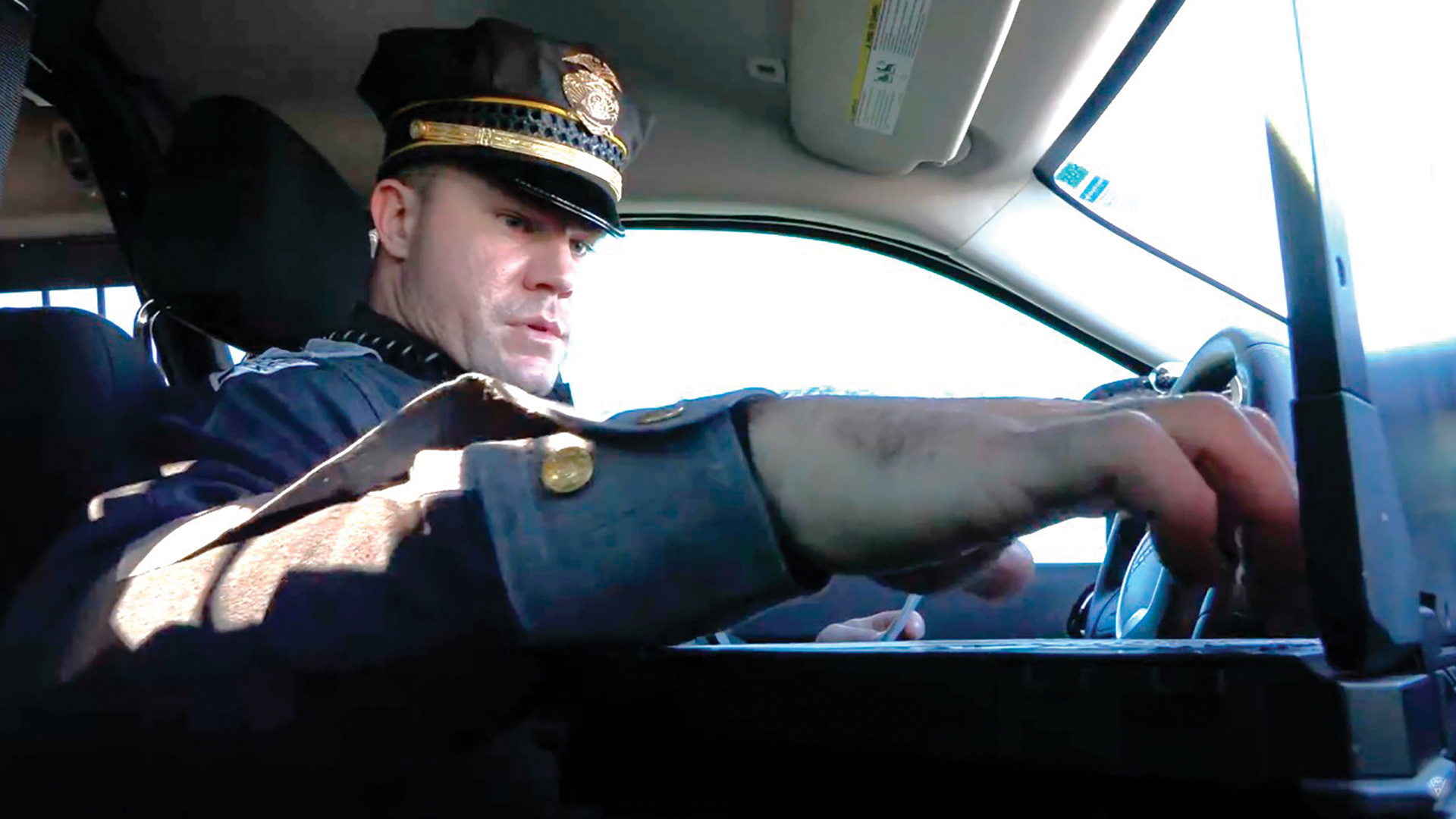
In addition to efficiently being able to identify vehicles from the hot list, it also assists with officer safety, particularly with the in-car cameras that have an LPR capability.
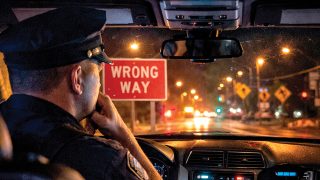
“If an officer is behind or has stopped a vehicle that is on one of those hot lists — for example, a homicide suspect or suspicious missing person — we want to provide that information to the officer for their safety so that he or she is cognizant that something is going on with this vehicle and they need to be extra careful and safe; they should use their tactics, approach this vehicle safely until they determine what’s actually going on,” said Goret. “More information tells us maybe we need to be more careful or maybe the vehicle is attached to a missing person, and we can look at how we are going to approach this for the best possible outcome.”
Per Goret, the ability to interdict stolen vehicles is much more robust. With this system, dispatch is notified of the location of a stolen vehicle and can strategically send officers to that location to manage it. The in-car camera LPR has been extremely successful for stolen vehicles and much more.
“This creates a far more focused investigation that minimizes disruption and better protects people’s rights.”
“It helped us in a homicide case where an officer had been conducting a traffic stop and the in-car LPR ran the plate of a vehicle in a parking lot adjacent to the location of where the officer was,” said Goret. “It turned out that particular vehicle was of interest in a homicide case and with a little digging, the agent was able to seize the vehicle and gather evidence that was pertinent to the investigation. Absent that really good technology, it may have been a long time, if we ever at all would have been able to find that vehicle.”
The technology is also constantly improving, with vendors looking to refine the system. Currently, law enforcement can search for certain types of vehicles or specific identifiers like window stickers.
In one case, officers knew the type of vehicle left at the crime scene. They asked the LPR system to show all vehicles of that type that passed through a specific area at a specific time, and the system returned a plate number. When officers checked it against their list of alleged suspects, they found it was registered to a suspect’s family member. After speaking with that family member, officers learned they had picked up the alleged suspect, placing the suspect at the crime scene and allowing the case to move forward.
“I expect in the future, technology will only get better and allow us to be much more precise and allow us to gain more investigative leads for those cases that need that information,” said Goret. “Use of the LPR is both reactive — such as when a hot-listed vehicle passes an LPR camera and requires immediate attention — and proactive, where we analyze lawfully collected data tied to specific investigations.
“I remember we had a high-profile multiple homicide in the northern part of the state, and I was supervising the crew handling the investigation. We knew the perpetrators had to drive through a certain area to return from the scene. So, the agents canvassed the area and gathered an extreme amount of the surveillance footage and had to sort through it to try and find an investigative lead because there weren’t LPRs present at that time. Had there been an LPR in that particular case we would have been far quicker in deciding the vehicles we were looking for, or which vehicles went through the area during a 5-minute timeframe of the incident occurring, because if you don’t have the vehicle description you can search by timeframe. Today we might have the ability to make an arrest within hours rather than within months with this particular case.”
And it is that precision in policing that allows for less disruption to the public for broad investigations, per Augustine.
“Say you’re investigating a crime and the suspect left in a white SUV,” he said. “In the past, with only that description, we might have stopped every white SUV in the area, which was highly disruptive. With the LPR system, a camera can capture the vehicle and its plate number as it leaves the area. This creates a far more focused investigation that minimizes disruption and better protects people’s rights, which serves the public interest.”
Some might ask the question — what happens with all the data?
The retention period for all the data gathered for LPRs is 180 days, per Goret. “If it is not tied to an ongoing investigation it is purged,” he said. “We are not storing this data in perpetuity. We’re saving it for a reasonable time period to ensure we can further criminal or other investigations as appropriate but not using a surveillance tool.”
“We take the security and privacy of the data very seriously,” said Weisler. “The protection of the information is paramount and let me emphasize — it is not available to just anyone.
“This tool saves lives. When officers know who they’re dealing with, they can make safer decisions. This technology is about preventing another loss like Officer Hare’s and protecting the men and women who serve our communities.”

John Heil
As seen in the April 2026 issue of American Police Beat magazine.
Don’t miss out on another issue today! Click below: