• Skip to primary navigation
  • Skip to main content
  • Skip to primary sidebar
  • Skip to footer
  • Home
  • About
  • The Magazine
  • Events
  • Partners
  • Products
  • Contact
  • Jobs and Careers
  • Advertise
  • Facebook
  • Instagram
  • Twitter
  • Subscribe
American Police Beat

American Police Beat Magazine

Law Enforcement Publication

  • Home
  • Leadership
    • Clarifying your “true north”
      The job has changed — have you?
      Perpetual recognition of line-of-duty deaths
      Understanding the boundaries of professional relationships with the...
      Why you should lead from 30,000 feet
  • Topics
    • Leadership
      • Clarifying your “true north”
        The job has changed — have you?
        Perpetual recognition of line-of-duty deaths
        Understanding the boundaries of professional relationships with the...
        Why you should lead from 30,000 feet
    • Editor’s Picks
      • Smile and let them swing
        The job has changed — have you?
        The days that follow
        Perpetual recognition of line-of-duty deaths
        Let’s get moving!
    • On the Job
      • Curbing teen takeovers
        2026 Top Cops
        High-rise rescue in Brooklyn
        Swift thinking
        K-9 officer turns children’s book author
    • Labor
      • Why more staff won’t fix your operational slowdowns
        Drama in Georgia: Mayor fires entire police department for...
        Smile and let them swing
        The Promise Gap
        Cut the cops, save a dollar?
    • Tech
      • The virtual beat
        Training with an AI partner?
        NYC’s electric vehicle fleet for LE passes milestone
        New Mexico license plate readers save lives, lead to “precise...
        A modern field guide to understanding research in policing
    • Training
      • Rules or results?
        Enhance your preparedness
        Good enough never is
        Pushback as a training signal
        Let’s get moving!
    • Policy
      • Police and local government leaders join forces to build community...
        Police pause license plate readers
        Corruption, collusion and impunity
        E-bikes spark public safety concerns
        Try racing without wheels
    • Health/Wellness
      • The days that follow
        Addressing stress, vicarious trauma and burnout
        Nervous system regulation
        The nature of the job
        Promoting organizational wellness
    • Community
      • Working community connections
        Cops promote National Donate Life Month
        Police officer kicks up social media praise
        Donning denim in solidarity with victims and survivors of sexual...
        Improving autism awareness
    • Offbeat
      • “Teenage Mutant Ninja Deer” rescued
        An unexpected burglar
        Police humor only a cop would understand
        Not eggzactly a perfect heist
        Pizza … with a side of alligator?
    • We Remember
      • National Police Week 2026
        Shooting of Chicago police officers prompts call for new regulations...
        The sacrifice continues
        A Tribute to Fallen Heroes
        Markers of service and remembrance
    • HOT Mail
      • The War on Cops Continues Unabated
  • On the Job
    • Curbing teen takeovers
      2026 Top Cops
      High-rise rescue in Brooklyn
      Swift thinking
      K-9 officer turns children’s book author
  • Labor
    • Why more staff won’t fix your operational slowdowns
      Drama in Georgia: Mayor fires entire police department for...
      Smile and let them swing
      The Promise Gap
      Cut the cops, save a dollar?
  • Tech
    • The virtual beat
      Training with an AI partner?
      NYC’s electric vehicle fleet for LE passes milestone
      New Mexico license plate readers save lives, lead to “precise...
      A modern field guide to understanding research in policing
  • Training
    • Rules or results?
      Enhance your preparedness
      Good enough never is
      Pushback as a training signal
      Let’s get moving!
  • Policy
    • Police and local government leaders join forces to build community...
      Police pause license plate readers
      Corruption, collusion and impunity
      E-bikes spark public safety concerns
      Try racing without wheels
  • Health/Wellness
    • The days that follow
      Addressing stress, vicarious trauma and burnout
      Nervous system regulation
      The nature of the job
      Promoting organizational wellness
  • Community
    • Working community connections
      Cops promote National Donate Life Month
      Police officer kicks up social media praise
      Donning denim in solidarity with victims and survivors of sexual...
      Improving autism awareness
  • Offbeat
    • “Teenage Mutant Ninja Deer” rescued
      An unexpected burglar
      Police humor only a cop would understand
      Not eggzactly a perfect heist
      Pizza … with a side of alligator?
  • We Remember
    • National Police Week 2026
      Shooting of Chicago police officers prompts call for new regulations...
      The sacrifice continues
      A Tribute to Fallen Heroes
      Markers of service and remembrance
  • HOT Mail
    • The War on Cops Continues Unabated
  • About
  • The Magazine
  • Events
  • Partners
  • Products
  • Contact
  • Jobs and Careers
  • Advertise
  • Subscribe
Search

Training

Critical thinking in police training

Why “the way we’ve always done it” isn’t working

Todd Fletcher Published March 17, 2026 @ 6:00 am PDT

iStock.com/onfokus

Whether you’re attending in-service, an instructor development class or a professional development course, training provides an opportunity to improve our knowledge, skills and abilities. It can be a source of motivation and a break from our normal schedules. Training may even be an opportunity to recharge our batteries and energize us for a big project, investigation or new career challenge.

As good as this can be, how often have you been in class wondering, “What the hell are we doing here?” We’ve all attended training that leaves us scratching our heads, wondering who thought it would be a good idea to waste our time listening to this garbage. We’ve sat through a compost pile of nonsensical classes, questioning how the material relates to working as a police officer.

Conversely, there are the classes that interest and engage us. Maybe the presentation is flashy, or the instructor has a dynamic and charismatic personality. Unfortunately, when this happens, too often we take the information at face value, failing to question its validity or appropriateness. Too much of what we do in training is based on “the way we’ve always done it” and lacks something fundamental: critical thinking.

Hurt feelings

This is going to raise the ire of some instructors. It’s not meant to be insulting or a personal attack, so don’t look for a reason to be offended. But if we want to benefit our officers, some things need to change, and if this is what it takes, I’m more than willing to sacrifice your feelings. One reason we continue to do things the way we’ve always done them is because we’re afraid to try something different. We’re afraid of being the one to do it differently. We’re afraid of standing out from the rest of the crowd, because it can be lonely being the only person banging that drum. But consider this: nothing ever improved by doing the same thing over and over.

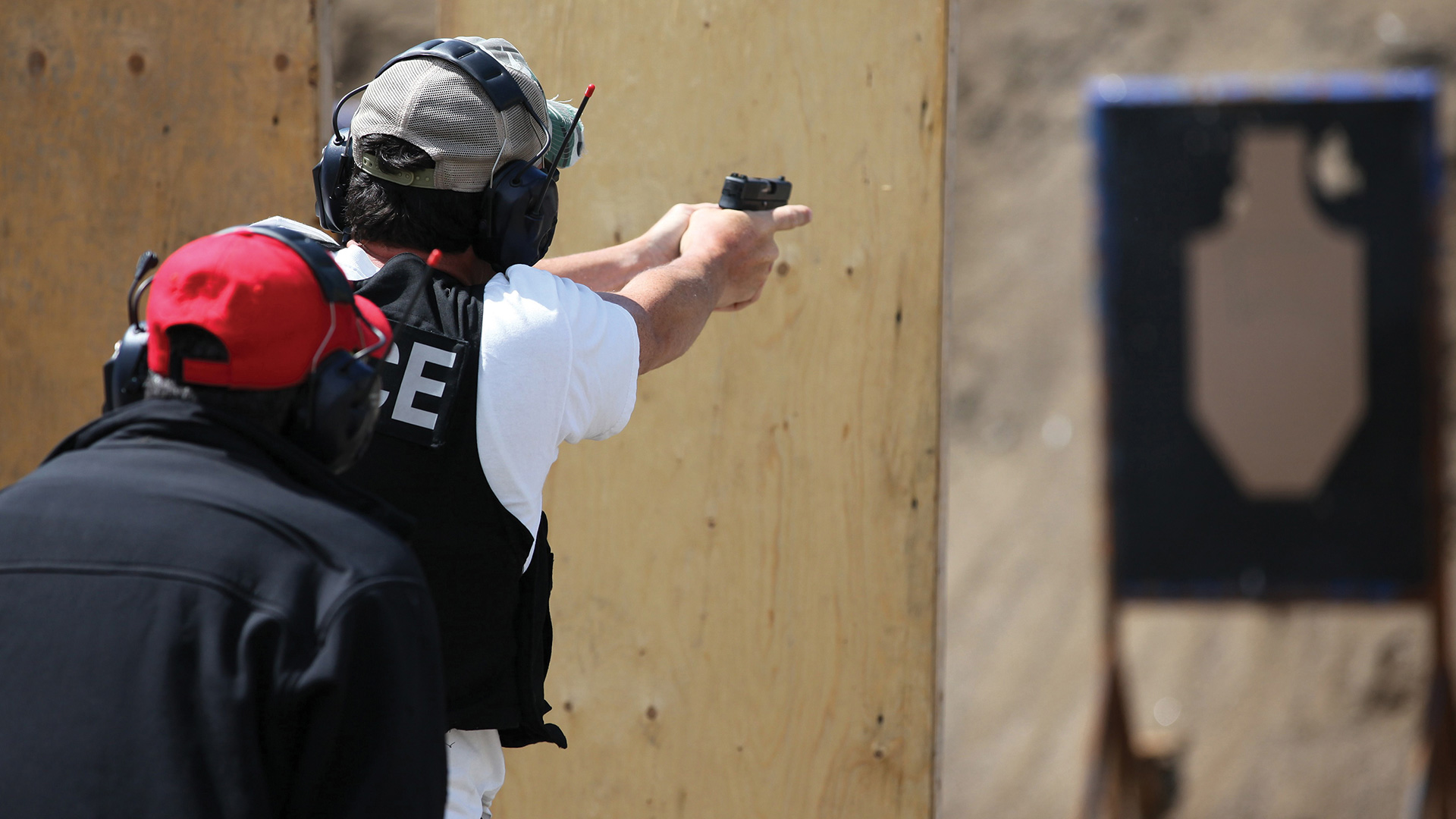
Maybe the best place to start is with the single most sensitive group of instructors, the ones who argue incessantly over the most frivolous and insignificant topics but rarely push for true improvements in the skills and abilities of their students: firearms instructors. As a longtime firearms instructor, I have been as guilty as the next guy, but I am working hard to do better.

Here’s an example I see all over the country, going back more than 30 years, and this is definitely going to ruffle some feathers: “Getting off the X.” We’ve all heard it and repeated it. It sounds amazing. “Getting off the X” is a classic example of the road to hell being paved with good intentions. It was intended to introduce officers to the concept of moving during a gunfight. But in firearms training, it is most often taught with the instructor standing behind a firing line, having officers take a single step left or right while drawing or reloading. It sounds awesome and looks very tacti-cool. But it doesn’t make you a harder target.

What it does is condition officers to take a single step left or right while drawing or reloading. That’s it. End of story. If you don’t believe me, have someone stand in front of you and take a single step to one side or the other while you point your finger at their chest. Try it at different distances. You will discover that even people with the worst hand–eye coordination can easily keep their finger pointed at your chest. It adds unnecessary movement to the draw or reload and wastes time. If we want to make officers harder targets, we need to get them moving deliberately and dynamically offline.

This is where some instructors will make the excuse that moving deliberately and dynamically offline with a long line of shooters would be unsafe. They will also say the movement is meant to “simulate the officer’s first movement to cover.” Sorry, that’s not how we learn. All you have done is train a conditioned response to take a single step left or right while drawing or reloading. If you want to train movement to cover, place cover nearby. Use barrels, narrow barricades or anything else that simulates actual cover. Stop making officers do a dance that amounts to nothing more than range theatrics.

We can’t keep doing things the way we’ve always done them and expect to improve.

Slow motion

Here’s a less controversial example of the lack of critical thinking in firearms training. Most academies and departments include some type of training block that covers shooting on the move. This usually involves some variation of the “Groucho” walk, where the shooter focuses on rolling their feet smoothly from heel to toe while moving forward slowly. And when I say “slowly,” I mean s-l-o-w-l-y. They’re moving so slowly that time seems to go backward. A shot timer is overkill when a sundial would do.

You would think this would only occur when introducing new shooters to the concept. Unfortunately, that is not the case. It doesn’t get any better (faster). This is what we see in academies, and this is what we see in in-service training: officers being trained to move slower than walking speed while shooting to save their lives or the lives of someone else. Does that sound realistic?

We have decades’ worth of officer-involved shooting videos showing exactly what happens during gunfights. If officers are moving, they are moving fast. If they are firing multiple shots, more often than not, they are shooting fast. Regrettably, too often they are doing these things for the first time while trying to survive. It would be far better to experience these things in the safe, controlled setting of training than in the dangerous and chaotic environment of a real gunfight.

Do better

It’s not just firearms instructors and their students who have failed to think critically about what we’re doing and how we’re training. This problem exists in every topic covered in law enforcement training. These are just some examples drawn from my experience as a firearms instructor who has taught all over the U.S. and Canada.

Of course, if you’ve gotten to this point in the article and are thinking this doesn’t pertain to your classes, your experience or your agency, then you must be the unicorn who works for the magical department in Delusionville. It also means you missed the point about critical thinking.

We must do better. We can’t keep doing things the way we’ve always done them and expect to improve. As trainers, students, supervisors and leaders, it’s up to us to escape the curse of mediocrity. Let’s raise our expectations and do better.

Todd Fletcher

Todd Fletcher

Todd Fletcher is a retired sergeant from central Oregon with over 30 years of law enforcement experience. He presents firearms training, instructor certification and instructor development classes nationwide. Todd has presented at multiple regional, national and international conferences, including multiple ILEETA conferences and IALEFI events. He owns Combative Firearms Training, LLC, providing firearms training, handgun and patrol rifle instructor certification, and instructor development classes to law enforcement, military and private security. He can be contacted at Todd@CombativeFirearms.com.

View articles by Todd Fletcher

As seen in the March 2026 issue of American Police Beat magazine.
Don’t miss out on another issue today! Click below:


SUBSCRIBE TODAY!

Categories: Training

Primary Sidebar

Recent Articles

  • The virtual beat
  • Why more staff won’t fix your operational slowdowns
  • Training with an AI partner?
  • Curbing teen takeovers
  • 2026 Top Cops
  • National Police Week 2026
  • Drama in Georgia: Mayor fires entire police department for criticizing his wife
  • Shooting of Chicago police officers prompts call for new regulations on electronic monitoring
  • High-rise rescue in Brooklyn
  • Swift thinking

Footer

Our Mission
To serve as a trusted voice of the nation’s law enforcement community, providing informative, entertaining and inspiring content on interesting and engaging topics affecting peace officers today.

Contact us: info@apbweb.com | (800) 234-0056.

  • Facebook
  • Instagram
  • Twitter

Categories

  • Editor’s Picks
  • On the Job
  • Labor
  • Tech
  • Training
  • Policy
  • Health/Wellness
  • Community
  • Offbeat
  • We Remember
  • Jobs and Careers
  • Events

Editor’s Picks

Smile and let them swing

Smile and let them swing

May 16, 2026

The job has changed — have you?

The job has changed — have you?

May 15, 2026

The days that follow

The days that follow

May 11, 2026

Perpetual recognition of line-of-duty deaths

Perpetual recognition of line-of-duty deaths

May 10, 2026

Policies | Consent Preferences | Copyright © 2026 APB Media, LLC | Website design, development and maintenance by 911MEDIA

Open

Subscribe

Close

Receive the latest news and updates from American Police Beat directly to your inbox!

  • This field is for validation purposes and should be left unchanged.