• Skip to primary navigation
  • Skip to main content
  • Skip to primary sidebar
  • Skip to footer
  • Home
  • About
  • The Magazine
  • Events
  • Partners
  • Products
  • Contact
  • Jobs and Careers
  • Advertise
  • Facebook
  • Instagram
  • Twitter
  • Subscribe
American Police Beat

American Police Beat Magazine

Law Enforcement Publication

  • Home
  • Leadership
    • The relentless pursuit of excellence
      An effective strategy for difficult discussions
      Developing and enhancing assertiveness
      Clarifying your “true north”
      The job has changed — have you?
  • Topics
    • Leadership
      • The relentless pursuit of excellence
        An effective strategy for difficult discussions
        Developing and enhancing assertiveness
        Clarifying your “true north”
        The job has changed — have you?
    • Editor’s Picks
      • No two days are ever the same
        Training dipshittery, Part 2
        Tactical medicine for cops
        Why good cops quit
        Smile and let them swing
    • On the Job
      • From warrior to peacekeeper
        Hats off to a new uniform look
        Overcoming climate and conditions to rescue child
        Father and son mark career milestones together
        Officer’s determination closes case and surprises cancer patient
    • Labor
      • The shift happens long before the resignation letter
        Facing the oral board
        Why good cops quit
        Succession planning
        Why more staff won’t fix your operational slowdowns
    • Tech
      • Take Me Home program offers effective tool for police and families
        Get the most out of simulation training
        The virtual beat
        Training with an AI partner?
        NYC’s electric vehicle fleet for LE passes milestone
    • Training
      • Train them to ask why
        Nobody is coming to do it for you
        Precision, adaptability and response: The need for LPVOs in equipping...
        Training dipshittery, Part 2
        Tactical medicine for cops
    • Policy
      • Out of chaos comes opportunity
        Massachusetts law establishes fund to care for retired K-9s
        Portlanders will not vote on diverting climate funds for police...
        Surviving internal affairs investigations
        Fighting human trafficking at the local level
    • Health/Wellness
      • Understanding why police officers think alcohol works
        Has the job quietly stolen your humanity?
        No two days are ever the same
        Changing the narrative
        Supporting your peer support team
    • Community
      • Pittsburgh mounted patrol officer helps inner-city kids saddle up
        Wyoming girl on a mission to collect “hero patches”
        Texas sheriff’s office nominates 7-year-old for commendation
        Cops try to net DEA agents
        A different type of teen takeover
    • Offbeat
      • Could cadaver otters help close cold cases?
        Police chief catches cat in the act
        “Teenage Mutant Ninja Deer” rescued
        An unexpected burglar
        Police humor only a cop would understand
    • We Remember
      • Protecting America with the USA PATRIOT Act
        Distant cousins connect to honor fallen family member 110 years after...
        9/11 Victim Compensation Fund: A journey to coverage
        Driver charged with murder after striking LAPD sergeant at 112 mph
        Unsung heroes: New York City correction officers
    • HOT Mail
      • The War on Cops Continues Unabated
  • On the Job
    • From warrior to peacekeeper
      Hats off to a new uniform look
      Overcoming climate and conditions to rescue child
      Father and son mark career milestones together
      Officer’s determination closes case and surprises cancer patient
  • Labor
    • The shift happens long before the resignation letter
      Facing the oral board
      Why good cops quit
      Succession planning
      Why more staff won’t fix your operational slowdowns
  • Tech
    • Take Me Home program offers effective tool for police and families
      Get the most out of simulation training
      The virtual beat
      Training with an AI partner?
      NYC’s electric vehicle fleet for LE passes milestone
  • Training
    • Train them to ask why
      Nobody is coming to do it for you
      Precision, adaptability and response: The need for LPVOs in equipping...
      Training dipshittery, Part 2
      Tactical medicine for cops
  • Policy
    • Out of chaos comes opportunity
      Massachusetts law establishes fund to care for retired K-9s
      Portlanders will not vote on diverting climate funds for police...
      Surviving internal affairs investigations
      Fighting human trafficking at the local level
  • Health/Wellness
    • Understanding why police officers think alcohol works
      Has the job quietly stolen your humanity?
      No two days are ever the same
      Changing the narrative
      Supporting your peer support team
  • Community
    • Pittsburgh mounted patrol officer helps inner-city kids saddle up
      Wyoming girl on a mission to collect “hero patches”
      Texas sheriff’s office nominates 7-year-old for commendation
      Cops try to net DEA agents
      A different type of teen takeover
  • Offbeat
    • Could cadaver otters help close cold cases?
      Police chief catches cat in the act
      “Teenage Mutant Ninja Deer” rescued
      An unexpected burglar
      Police humor only a cop would understand
  • We Remember
    • Protecting America with the USA PATRIOT Act
      Distant cousins connect to honor fallen family member 110 years after...
      9/11 Victim Compensation Fund: A journey to coverage
      Driver charged with murder after striking LAPD sergeant at 112 mph
      Unsung heroes: New York City correction officers
  • HOT Mail
    • The War on Cops Continues Unabated
  • About
  • The Magazine
  • Events
  • Partners
  • Products
  • Contact
  • Jobs and Careers
  • Advertise
  • Subscribe
Search

Training

Precision, adaptability and response: The need for LPVOs in equipping today’s patrol officer

Robert Graziano Published July 26, 2026 @ 6:00 am PDT

iStock.com/Marek Krempa

As a retired peace officer and experienced law enforcement instructor, I have found that the profession is constantly evolving, whether it be equipment, report writing or tactics. And with new technology such as AI platforms, we are accelerating that move forward tenfold.

Today’s patrol officer is being asked to solve complex problems in increasingly shortened timelines. Active shooters. Armed barricades. Rifle-equipped suspects. Violence in schools, shopping centers, places of worship and public spaces. In many of these incidents, patrol officers are no longer expected to establish a perimeter and wait for specialized units. They are expected to move toward the threat, stop the killing and save lives. As law enforcement continues to adapt to these realities, agencies must examine whether their firearms programs are keeping pace with the threats officers face.

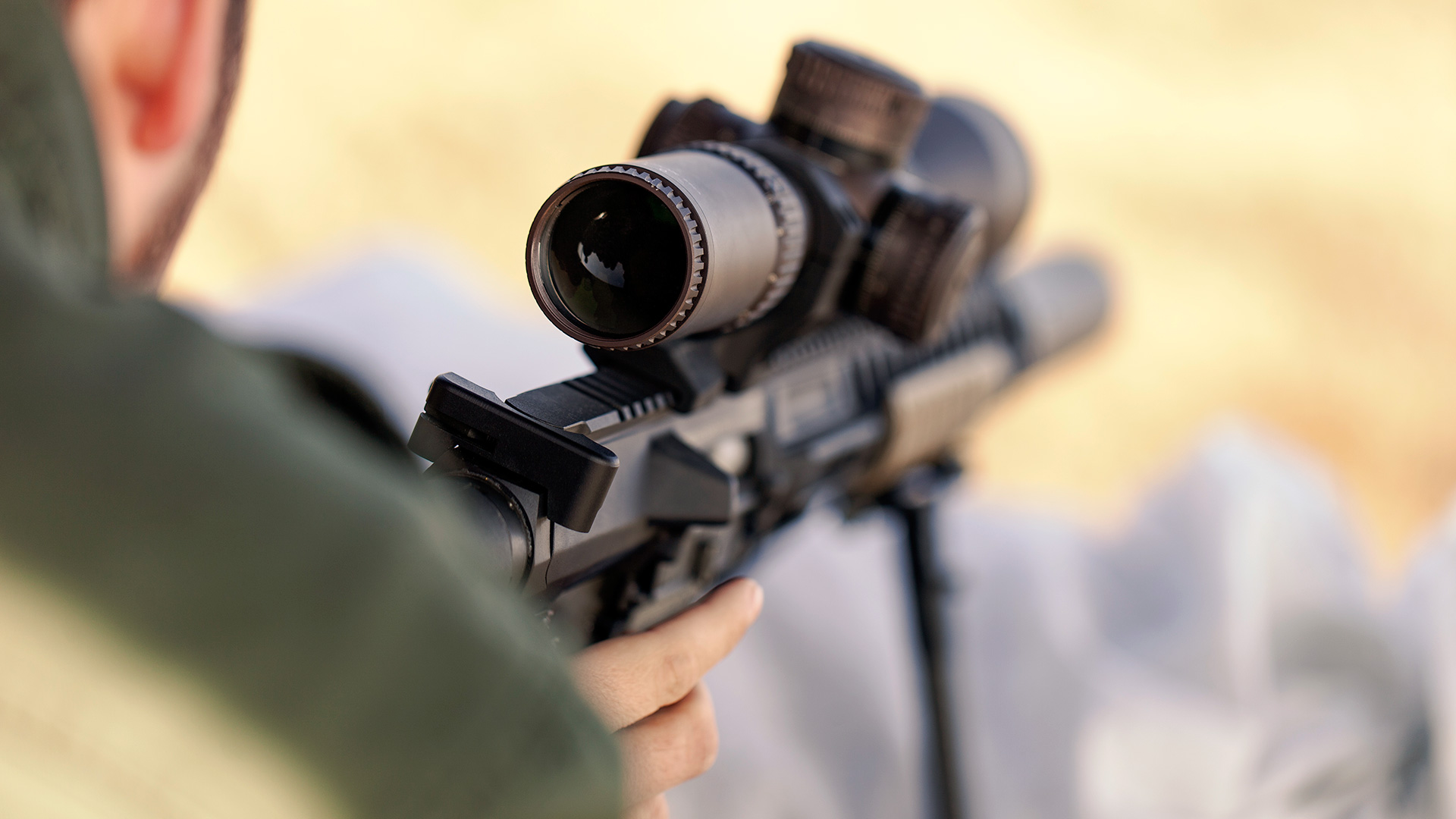
One area receiving increased attention is the use of low-power variable optics (LPVOs) on patrol rifles. While LPVOs have become commonplace in military and tactical applications, many patrol officers continue to rely exclusively on red-dot optics or iron sights.

The question agencies should ask is simple: Are we providing patrol officers with the best tool available to identify and respond to intermediate threats?

It’s not about shooting farther. One of the biggest misconceptions surrounding LPVOs is that they exist primarily to extend engagement distances. In reality, one of their best values may have nothing to do with marksmanship. It is the ability of clearer observation.

Every use-of-force decision begins with identifying a threat. An officer responding to a report of an armed subject in a school parking lot or shopping center will need to answer critical questions before ever considering a lifesaving shot: Is that actually a firearm? Is the suspect threatening someone? Is there a hostage involved? Is deadly force legally justified?

A “quality” 1-6x or 1-8x LPVO allows officers to gather information that may not be visible through a non-magnified optic. Magnification should first be viewed as a decision-making tool — not a shooting tool.

The reality of intermediate threats

Many patrol rifle qualification courses are conducted inside 50 yards. Real-world incidents often are not. School campuses, large retail centers, apartment complexes, industrial facilities, parks and rural environments regularly create situations where officers must assess threats at 75, 100 or even 150 yards.

There are many reported incidents documenting these encounters and subsequent interviews with the officers. The information was overwhelming. The factors that led to their decisions were distance, environmental factors such as lighting, and uncertainty of the evolving circumstances.

Those factors mean the officer may have never fired a shot. But the need to determine whether a suspect was armed, whether a hostage is present or whether a threat is developing may have altered the results. LPVOs give patrol officers the ability to observe, identify and respond more effectively across those distances.

Accountability matters

Every round fired by law enforcement carries enormous responsibility. Public scrutiny, legal review, administrative investigation and media attention follow virtually every officer-involved shooting.

Because of that reality, equipment that supports better decision-making and greater accuracy should be considered a public safety investment. The ability to clearly identify a threat and place rounds precisely where intended benefits everyone involved — the officer, the agency and the community.

Maintaining close-range capability

Critics often argue that LPVOs are slower than red dots during close-range engagements.

That may have been true years ago. Modern LPVOs featuring true 1x magnification and daylight-bright reticles have largely eliminated that concern. Illuminated dot reticles further enhance this truth — all while keeping both eyes open for peripheral awareness.

Officers can operate effectively inside structures, hallways and classrooms while maintaining the ability to immediately transition to magnification when circumstances require. Rather than carrying separate optics for separate problems, officers can address a broad range of situations with one system and at a lifesaving speed.

The common engagements we face in today’s policing require officers to use critical thinking, most in milliseconds. If they have the tools needed for the problem, it saves lives and avoids litigation.

Training requirements

Simply adding another tool or item to an officer’s choices of response does not fix the problem. With new options comes the need for new training. Equipment alone does not solve operational problems. An LPVO mounted on a patrol rifle without training provides little benefit.

As I stated earlier, adding LPVO is more than increasing engagement distance. Simply magnifying your zero won’t accommodate ballistic characteristics. The user must understand all aspects of an LPVO within all its parameters. Organizations considering LPVO adoption must invest in training that emphasizes:

  • Threat identification
  • Optic management
  • Magnification transitions
  • Positional shooting
  • Intermediate-distance accountability
  • Low-light operations
  • Shoot/no-shoot decision making

Officers must understand when magnification helps and when it becomes a liability. Training — not equipment — is what ultimately creates capability.

LPVOs are not patrol sniper scopes

One concern occasionally raised is that LPVO-equipped patrol rifles somehow blur the line between patrol officers and police snipers. That concern misunderstands both missions.

Patrol officers and police snipers serve fundamentally different purposes. Patrol officers intervene immediately. The ability to have a competent officer and LPVO within a patrol cruiser enhances patrol response tremendously.

The patrol response doesn’t negate the need for SWAT snipers. Snipers provide intelligence, overwatch and precision engagement capabilities developed through extensive specialized training.

An officer using a 1-6, 1-8x LPVO does not function as a sniper. They are simply better equipped to identify and respond to immediate threats before specialized resources arrive.

Specialized response and snipers remain critical

The adoption of LPVOs should never be viewed as a replacement for tactical teams or sniper programs. In fact, the opposite is true.

With threats becoming more sophisticated, agencies need stronger, quicker patrol capabilities and stronger specialized capabilities. Specialized response teams continue to provide:

  • Hostage rescue
  • Barricaded suspect resolution
  • High-risk warrant service
  • Deliberate tactical operations
  • Armored rescue capabilities

Law enforcement snipers continue to provide:

  • Critical intelligence gathering
  • Long-range observation
  • Tactical overwatch
  • Precision engagement capability
  • Incident command support

Many sniper deployments end without a shot being fired because the sniper’s greatest value is often information, not marksmanship. Likewise, many successful SWAT operations result from deliberate planning and specialized tactics that exceed the mission of patrol officers. The answer is not choosing between patrol, SWAT or sniper assets; it is ensuring each component has the tools necessary to fulfill its role.

How the future of patrol rifle programs is evolving

The modern patrol officer is increasingly the first line of defense against active, in-progress violence. Enhancing officers with LPVO-equipped patrol rifles is not about extending engagement distances or turning patrol officers into snipers. It is about improving threat identification, enhancing accountability and increasing the likelihood of making correct critical decisions under stress.

Paired with quality training, clear policy and the agency’s continued investment in SWAT and sniper programs, LPVOs represent the evolution of the patrol rifle for modern policing.

Officers on the scene may never get a second chance to make the right decision. Providing them with the ability to see more clearly may be one of the most important investments an agency can make.


Robert Graziano

Robert Graziano

Robert Graziano is director of Academy Operations at the Ohio Peace Officer Training Academy, where he also serves as the primary executive protection instructor and head sniper instructor. He is a retired El Paso County Sheriff’s sergeant and Army combat veteran. His expertise includes law enforcement training, SWAT training, precision rifle instruction, curriculum development and leadership, with an emphasis on realistic, experience-based instruction.

View articles by Robert Graziano

Categories: Training

Primary Sidebar

Recent Articles

  • Train them to ask why
  • Nobody is coming to do it for you
  • Protecting America with the USA PATRIOT Act
  • The shift happens long before the resignation letter
  • Out of chaos comes opportunity
  • From warrior to peacekeeper
  • Pittsburgh mounted patrol officer helps inner-city kids saddle up
  • NLEOMF announces 2026 National Officer Safety and Wellness Award Winners
  • Could cadaver otters help close cold cases?
  • GOSAFE Technology announces public safety initiative focused on firearm security and risk reduction

Footer

Our Mission
To serve as a trusted voice of the nation’s law enforcement community, providing informative, entertaining and inspiring content on interesting and engaging topics affecting peace officers today.

Contact us: info@apbweb.com | (800) 234-0056.

  • Facebook
  • Instagram
  • Twitter

Categories

  • Editor’s Picks
  • On the Job
  • Labor
  • Tech
  • Training
  • Policy
  • Health/Wellness
  • Community
  • Offbeat
  • We Remember
  • Jobs and Careers
  • Events

Editor’s Picks

No two days are ever the same

No two days are ever the same

July 24, 2026

Training dipshittery, Part 2

Training dipshittery, Part 2

July 23, 2026

Tactical medicine for cops

Tactical medicine for cops

July 18, 2026

Why good cops quit

Why good cops quit

July 14, 2026

Policies | Consent Preferences | Copyright © 2026 APB Media, LLC | Website design, development and maintenance by 911MEDIA

Open

Subscribe

Close

Receive the latest news and updates from American Police Beat directly to your inbox!

  • This field is for validation purposes and should be left unchanged.