
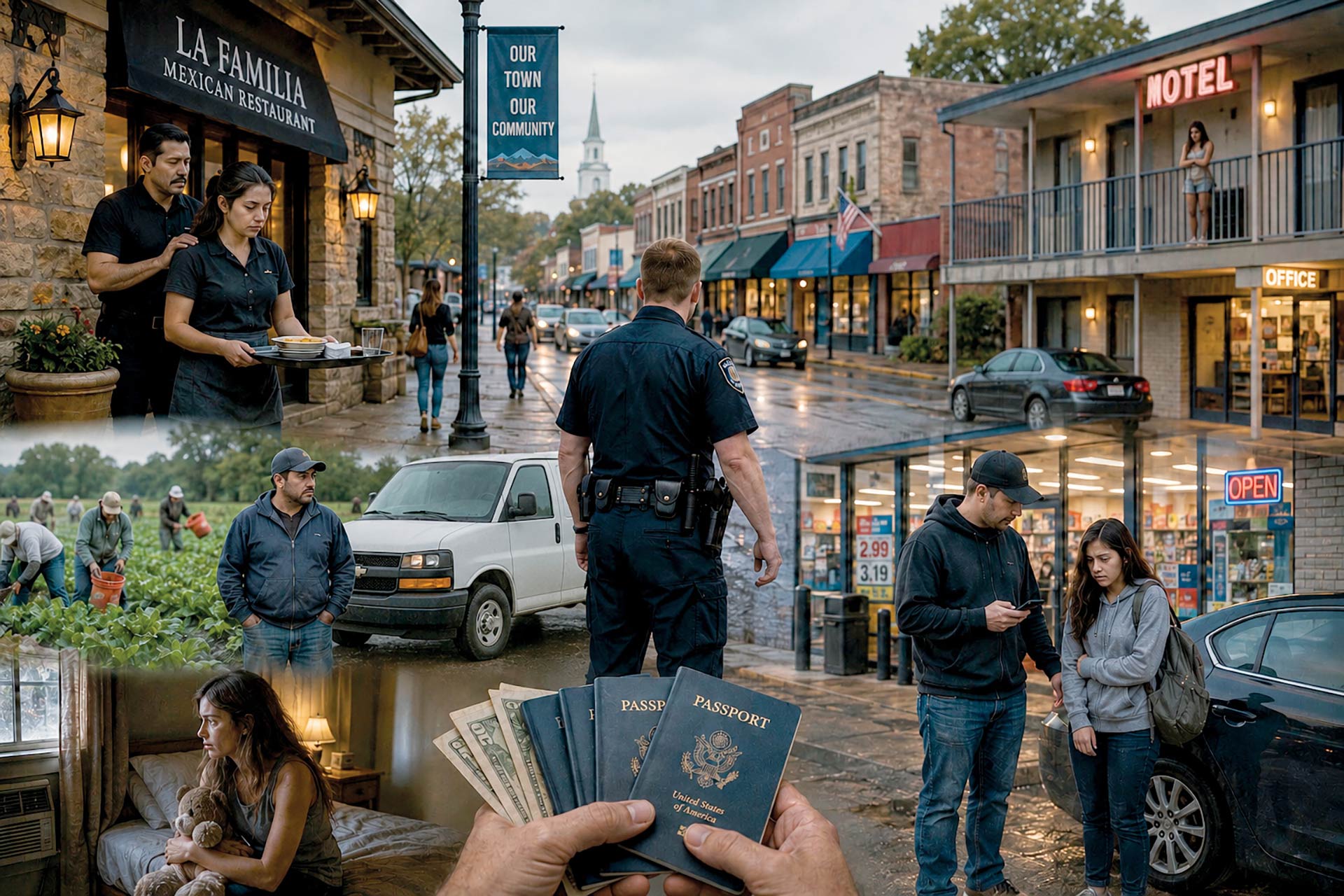
Human trafficking is a crime in which people are forced, manipulated or coerced into labor, services or sexual acts. Coercion may be physical or psychological, direct or subtle. Any commercial sexual exploitation of a minor is considered trafficking, even in the absence of force, fraud or coercion.
Trafficking victims can come from any background, regardless of age, race, gender, nationality, education or income. However, traffickers often target vulnerable populations, including runaway or homeless youth, undocumented immigrants, people of color, Indigenous communities, LGBTQI+ individuals, migrant workers, people with disabilities and individuals with substance use disorders.
The Laboratory to Combat Human Trafficking
One example of effectively focusing locally on tracking human trafficking issues is the Laboratory to Combat Human Trafficking (LCHT). In 2005, under the leadership of Amanda Finger, a group of advocates launched a Colorado chapter of the national organization Polaris Project, a 501(c)(3) nonprofit that works to combat and prevent sex and labor trafficking in North America. The organization’s 10-year strategy is built on the understanding that human trafficking does not happen in a vacuum but is instead the predictable end result of a range of persistent injustices and inequities in society and the economy. At the time, the national response to human trafficking was still developing, and many communities lacked the awareness, coordination and resources needed to respond effectively. Finger was motivated by a commitment to human rights and a belief that communities could play a stronger role in protecting vulnerable individuals from exploitation.
In Colorado, early anti-trafficking efforts were often fragmented and disconnected from research and statewide data. Recognizing the need for a more coordinated and informed response, Finger partnered with Dr. Annjanette Alejano-Steele to create an organization focused on research, education, leadership and collaboration. In 2009, they founded the LCHT, an independent 501(c)(3) nonprofit dedicated to strengthening Colorado’s response to trafficking through survivor-centered and evidence-based solutions.
Since 2009, LCHT has conducted four major research initiatives in Colorado to inform policy, promote action and improve data-driven responses to trafficking. The organization has also operated Colorado’s 24/7 Human Trafficking Hotline, connecting callers and texters with a statewide network of support services; trained nearly 90,000 professionals, students and community members to recognize trafficking and support survivors; and supported more than 200 emerging human rights leaders through its Leadership Development Program. LCHT continues to work toward a future where communities are informed, survivors are supported and human trafficking is addressed through collaboration, compassion and evidence-based practices.
Additional ways to help fight human trafficking at the local level
According to information shared by the U.S. Department of State’s Office to Monitor and Combat Trafficking in Persons, everyone can play a role in combating human trafficking. Individuals and communities can help by:
- Learning the warning signs of trafficking through training and educational resources
- Reporting suspected trafficking to the National Human Trafficking Hotline at (888) 373-7888 or calling 9-1-1 in an emergency
- Supporting businesses that promote ethical labor practices and transparent supply chains
- Volunteering with or donating to anti-trafficking organizations
- Encouraging elected officials to strengthen anti-trafficking policies and victim services
- Organizing awareness events, fundraisers and community discussions
- Promoting trafficking awareness in schools and universities
- Encouraging trauma-informed practices in workplaces and organizations
- Mentoring youth and vulnerable individuals who may be at greater risk of exploitation
- Learning about traffickers’ online recruitment tactics, particularly through social media
- Supporting survivor employment opportunities and ethical hiring practices
- Using professional skills in healthcare, education, journalism, law and public service to identify and support victims
Guidance from PHEAL
Human trafficking occurs in communities across the U.S., including rural areas and small towns. Prevention begins with awareness. Warning signs may include fear, isolation, control, abuse, severe underpayment or restricted movement, as described by PHEAL (Philanthropy, Humanitarianism, Environmentalism, Animal Rights and Liberties), a nonprofit that promotes education, advocacy, ethical decision-making and community involvement to help individuals create positive change through volunteering, donations and everyday actions.
If trafficking is suspected, PHEAL recommends avoiding direct intervention and reporting concerns to law enforcement or the National Human Trafficking Hotline, or by texting “HELP” to 233733. Individuals can also help by supporting anti-trafficking organizations, attending awareness events, choosing products from companies with fair labor practices and advocating for stronger survivor services and prevention programs. PHEAL emphasizes that ending human trafficking requires awareness, compassion, collaboration and community action to protect vulnerable individuals and support survivors.
State human trafficking laws
In 2003, Washington became the first U.S. state to criminalize human trafficking. Today, every state has laws addressing forced labor and sexual exploitation, though definitions, required proof and penalties vary by jurisdiction. State human trafficking laws define offenses through actions such as recruiting, transporting, harboring, coercing, isolating or profiting from exploitation. These laws apply to commercial sex, domestic work, agriculture, restaurants, online activity and other industries.
Common sex trafficking venues include strip clubs, residential brothels, street-based exploitation, online advertisements and businesses used as fronts, among other situations. Common labor trafficking venues include agriculture (with some reports indicating this as the most trafficked sector), as well as domestic work, restaurants/food service, traveling sales crews, and health and beauty services.
Most state laws require proof of force, fraud or coercion to secure a conviction. These may include physical violence or threats, debt bondage, blackmail or extortion, financial harm, drug dependency, withholding identification documents, abuse of power or legal threats, physical restraint or kidnapping.
Some states also criminalize benefiting financially from trafficking ventures. For example, Alaska prosecutes anyone who profits from trafficking activities; California includes coercion, violence, menace and deprivation of liberty within its trafficking laws; Oklahoma criminalizes confiscating passports or identification documents; and Wisconsin includes debt bondage, fraud, deception and extortion in its statutes.
Many states increase penalties when trafficking involves children, undocumented immigrants, violence or other aggravating circumstances. For example, Colorado increases penalties when victims are children or undocumented immigrants; Delaware increases penalties when offenses involve minors; Missouri allows life sentences when trafficking results in death, kidnapping or sexual abuse; Texas increases penalties for child trafficking or trafficking involving death; and Florida imposes life-felony penalties when victims are mentally incapacitated.
Several states also hold businesses accountable for trafficking crimes. Alabama, Georgia,
Mississippi and Rhode Island allow businesses to be prosecuted for trafficking-related offenses; Massachusetts authorizes fines up to one million dollars for forced labor trafficking; South Carolina adds prison penalties for owners who use businesses to facilitate trafficking; and Hawaii, Minnesota and Vermont allow business
dissolution, reorganization or license revocation following
trafficking convictions.
More extensive research and statistics regarding vulnerable populations and trafficking trends are available through the following links:
- National Human Trafficking Hotline (humantraffickinghotline.org)
- U.S. DOJ COPS Office: “Who Is the Most Vulnerable to Human Trafficking?” (tinyurl.com/59hxamm3)
- U.S. DOJ: “What Is Human Trafficking?” (tinyurl.com/mryxa8th)
- Minnesota Coalition Against Sexual Assault: “The Prostitution and Trafficking of Native Women in Minnesota” (tinyurl.com/ms9vk54j)
U.S. Department of Health and Human Services’ Office on Trafficking in Persons
Human trafficking can occur in any community in the U.S. Staying informed and recognizing warning signs can help identify individuals who may be experiencing exploitation, including students, patients, tenants, co-workers, family members or others in vulnerable situations.
The Health and Human Services’ “Look Beneath the Surface” campaign encourages awareness, education and community engagement. The National Human Trafficking Hotline provides free, confidential, 24/7 support by calling (888) 373-7888, texting HELP to 233733 (BEFREE) or using its online chat services.
Professionals working with at-risk populations can access training through programs such as SOAR Health and Wellness and the National Human Trafficking Training and Technical Assistance Center.
Communities can strengthen prevention efforts by:
- Supporting safe housing, healthcare, education, childcare and employment opportunities
- Building partnerships across schools, healthcare systems and workplaces
- Developing safety protocols and trauma-informed services
IACP’s Toolkit for Human Trafficking Investigations
The International Association of Chiefs of Police (IACP) released an online resource titled “Building Police Agency Capacity: A Toolkit for Human Trafficking Investigations” to strengthen law enforcement responses to trafficking cases, which is among the most comprehensive practical tools available to effectively address these issues.
The toolkit provides practical guidance for police executives, investigators, supervisors and frontline officers. It focuses on helping agencies identify victims, conduct trauma-informed investigations and implement victim-centered policing strategies.
The resource is organized into three primary sections:
- Assessment and action-planning tools to help agencies evaluate current capabilities and improve anti-trafficking strategies
- Organizational readiness resources, including policy templates, leadership guidance and training materials
- Operational tools such as investigative checklists, field reference guides and case management resources for active trafficking investigations
The toolkit was developed with subject-matter experts and law enforcement agencies across the U.S., including agencies in Texas, Arizona, Florida, New Jersey, North Carolina and Oregon.
By integrating real-world experiences from agencies of varying sizes and jurisdictions, the resource provides practical and adaptable guidance grounded in evidence-based practices.
A key emphasis throughout the toolkit is the adoption of a trauma-informed, victim-centered approach. This framework prioritizes the safety, dignity and well-being of survivors while fostering trust and cooperation that can ultimately improve investigative outcomes and prosecutions. By encouraging agencies to balance enforcement efforts with survivor support, the toolkit seeks to strengthen both public safety and long-term victim recovery.
Now available through the IACP website, the toolkit represents a significant national effort to standardize and improve law enforcement responses to human trafficking. Its release underscores the growing recognition that successful human trafficking investigations require coordinated, informed and compassionate approaches that support survivors while holding offenders accountable.

Dr. Gene Ira Katz, DMCJ
As seen in the July 2026 issue of American Police Beat magazine.
Don’t miss out on another issue today! Click below: