• Skip to primary navigation
  • Skip to main content
  • Skip to primary sidebar
  • Skip to footer
  • Home
  • About
  • The Magazine
  • Events
  • Partners
  • Products
  • Contact
  • Jobs and Careers
  • Advertise
  • Facebook
  • Instagram
  • Twitter
  • Subscribe
American Police Beat

American Police Beat Magazine

Law Enforcement Publication

  • Home
  • Leadership
    • Developing and enhancing assertiveness
      Clarifying your “true north”
      The job has changed — have you?
      Perpetual recognition of line-of-duty deaths
      Understanding the boundaries of professional relationships with the...
  • Topics
    • Leadership
      • Developing and enhancing assertiveness
        Clarifying your “true north”
        The job has changed — have you?
        Perpetual recognition of line-of-duty deaths
        Understanding the boundaries of professional relationships with the...
    • Editor’s Picks
      • Smile and let them swing
        The job has changed — have you?
        The days that follow
        Perpetual recognition of line-of-duty deaths
        Let’s get moving!
    • On the Job
      • Coffee shop intel
        Curbing teen takeovers
        2026 Top Cops
        High-rise rescue in Brooklyn
        Swift thinking
    • Labor
      • Why more staff won’t fix your operational slowdowns
        Drama in Georgia: Mayor fires entire police department for...
        Smile and let them swing
        The Promise Gap
        Cut the cops, save a dollar?
    • Tech
      • The virtual beat
        Training with an AI partner?
        NYC’s electric vehicle fleet for LE passes milestone
        New Mexico license plate readers save lives, lead to “precise...
        A modern field guide to understanding research in policing
    • Training
      • Rules or results?
        Enhance your preparedness
        Good enough never is
        Pushback as a training signal
        Let’s get moving!
    • Policy
      • The impact of the Graham v. Connor decision
        Mexican cartels recruit like industry titans on both sides of the...
        Police and local government leaders join forces to build community...
        Police pause license plate readers
        Corruption, collusion and impunity
    • Health/Wellness
      • Down to divorce
        The days that follow
        Addressing stress, vicarious trauma and burnout
        Nervous system regulation
        The nature of the job
    • Community
      • Working community connections
        Cops promote National Donate Life Month
        Police officer kicks up social media praise
        Donning denim in solidarity with victims and survivors of sexual...
        Improving autism awareness
    • Offbeat
      • “Teenage Mutant Ninja Deer” rescued
        An unexpected burglar
        Police humor only a cop would understand
        Not eggzactly a perfect heist
        Pizza … with a side of alligator?
    • We Remember
      • Unsung heroes: New York City correction officers
        National Police Week 2026
        Shooting of Chicago police officers prompts call for new regulations...
        The sacrifice continues
        A Tribute to Fallen Heroes
    • HOT Mail
      • The War on Cops Continues Unabated
  • On the Job
    • Coffee shop intel
      Curbing teen takeovers
      2026 Top Cops
      High-rise rescue in Brooklyn
      Swift thinking
  • Labor
    • Why more staff won’t fix your operational slowdowns
      Drama in Georgia: Mayor fires entire police department for...
      Smile and let them swing
      The Promise Gap
      Cut the cops, save a dollar?
  • Tech
    • The virtual beat
      Training with an AI partner?
      NYC’s electric vehicle fleet for LE passes milestone
      New Mexico license plate readers save lives, lead to “precise...
      A modern field guide to understanding research in policing
  • Training
    • Rules or results?
      Enhance your preparedness
      Good enough never is
      Pushback as a training signal
      Let’s get moving!
  • Policy
    • The impact of the Graham v. Connor decision
      Mexican cartels recruit like industry titans on both sides of the...
      Police and local government leaders join forces to build community...
      Police pause license plate readers
      Corruption, collusion and impunity
  • Health/Wellness
    • Down to divorce
      The days that follow
      Addressing stress, vicarious trauma and burnout
      Nervous system regulation
      The nature of the job
  • Community
    • Working community connections
      Cops promote National Donate Life Month
      Police officer kicks up social media praise
      Donning denim in solidarity with victims and survivors of sexual...
      Improving autism awareness
  • Offbeat
    • “Teenage Mutant Ninja Deer” rescued
      An unexpected burglar
      Police humor only a cop would understand
      Not eggzactly a perfect heist
      Pizza … with a side of alligator?
  • We Remember
    • Unsung heroes: New York City correction officers
      National Police Week 2026
      Shooting of Chicago police officers prompts call for new regulations...
      The sacrifice continues
      A Tribute to Fallen Heroes
  • HOT Mail
    • The War on Cops Continues Unabated
  • About
  • The Magazine
  • Events
  • Partners
  • Products
  • Contact
  • Jobs and Careers
  • Advertise
  • Subscribe
Search

Training

Navigating danger

Intersection risks and siren limitations in emergency response driving

Kelly Couch Published March 22, 2026 @ 6:00 am PDT

Kelly Couch

Editor’s note: This article is reprinted with permission from the February 2026 issue of PORAC Law Enforcement News, the official publication of the Peace Officers Research Association of California (PORAC).

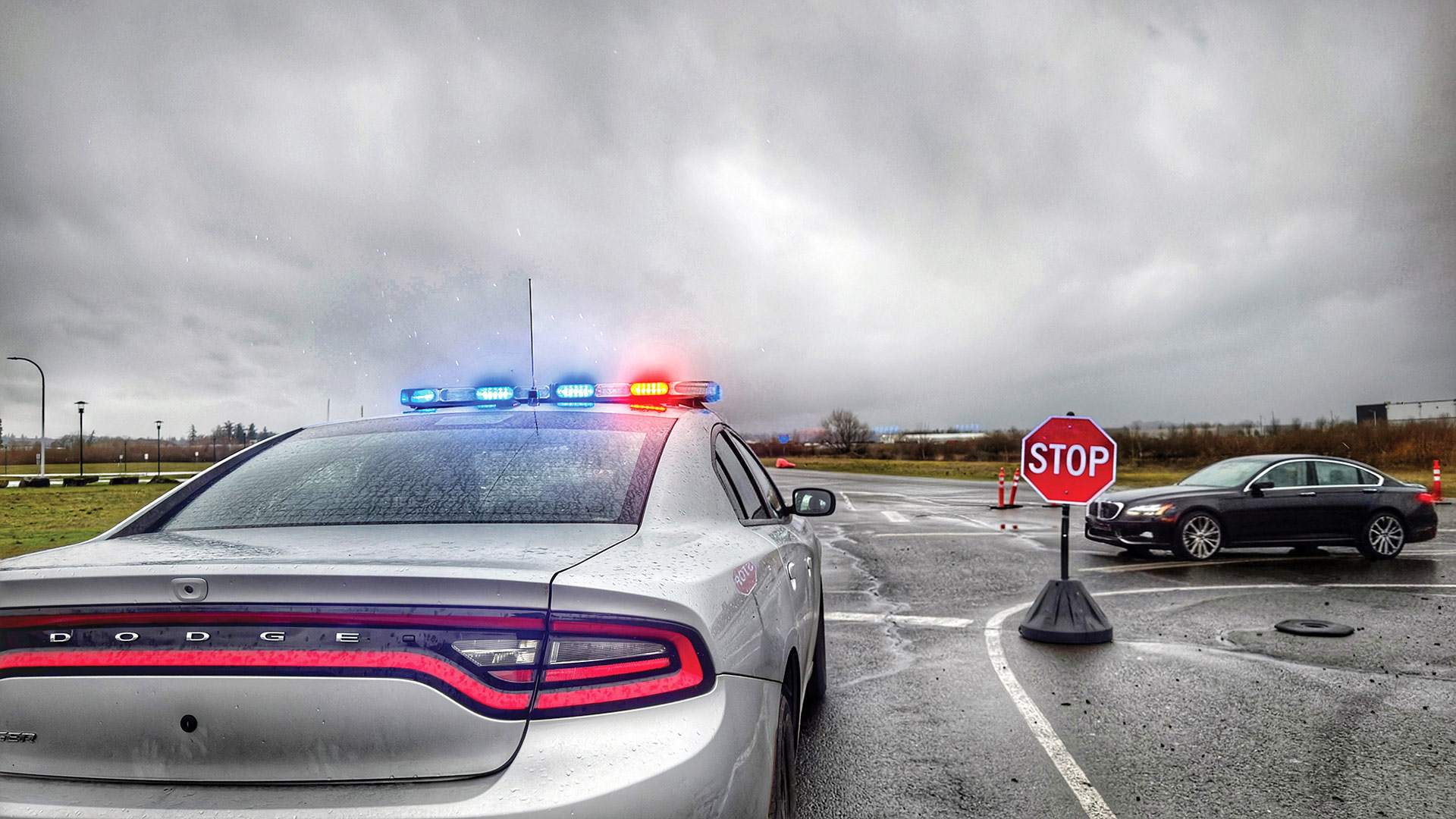
Sometimes time is critical in an emergency, and as a result, an emergency response is necessary to save precious moments. Driving with urgency to a critical incident or serious call with lights and sirens activated can save time and potentially allow citizens or fellow officers to receive the help they need more quickly. But the risks involved must be carefully weighed, and officers must develop driving habits that are non-negotiable, no matter the circumstances of the event they are responding to. The worst outcome in an emergency response is when a responder causes an accident and becomes an additional problem. Under the best of circumstances, this may mean they do not make it to the call due to a minor collision. If a more serious collision occurs, it often requires diverting officers or medical personnel to help, further straining already limited resources.

This article will cover two issues in an emergency response: properly clearing intersections and the limitations of the police siren. Intersections are inherently dangerous, even under normal circumstances, and these risks become even greater during emergency responses. The Federal Highway Administration reports that about one-quarter of U.S. traffic deaths and half of all injuries happen at intersections. Although there is no ongoing data collection point for police vehicle collisions, available data indicates that somewhere between 25% and 40% of police collisions occur at intersections. Studies that include all emergency vehicles (fire and ambulance) show even higher collision rates, further illustrating the danger of navigating an intersection during an emergency response. Overall, motor vehicle accidents remain one of the leading causes of law enforcement fatalities each year, and a review of available information often suggests that many of these incidents could have been prevented.

About one-quarter of U.S. traffic deaths and half of all injuries happen at intersections.

During a recent vacation, while I was waiting at an intersection, I noticed emergency vehicles approaching from the opposite direction. There were three vehicles — an ambulance, a paramedic supervisor and a police vehicle — all approaching the intersection in line, relatively close to one another. Traffic was light at that time, but I was impressed by the care each vehicle took in clearing the intersection before proceeding. The intersection had two lanes of through traffic and left-turn lanes in all directions, and each emergency vehicle stopped and took the time to clear each lane carefully before continuing through. As an emergency vehicle operations (EVO) trainer, my first thought was, “Great job,” followed by, “I wish I had video of that for training purposes.”

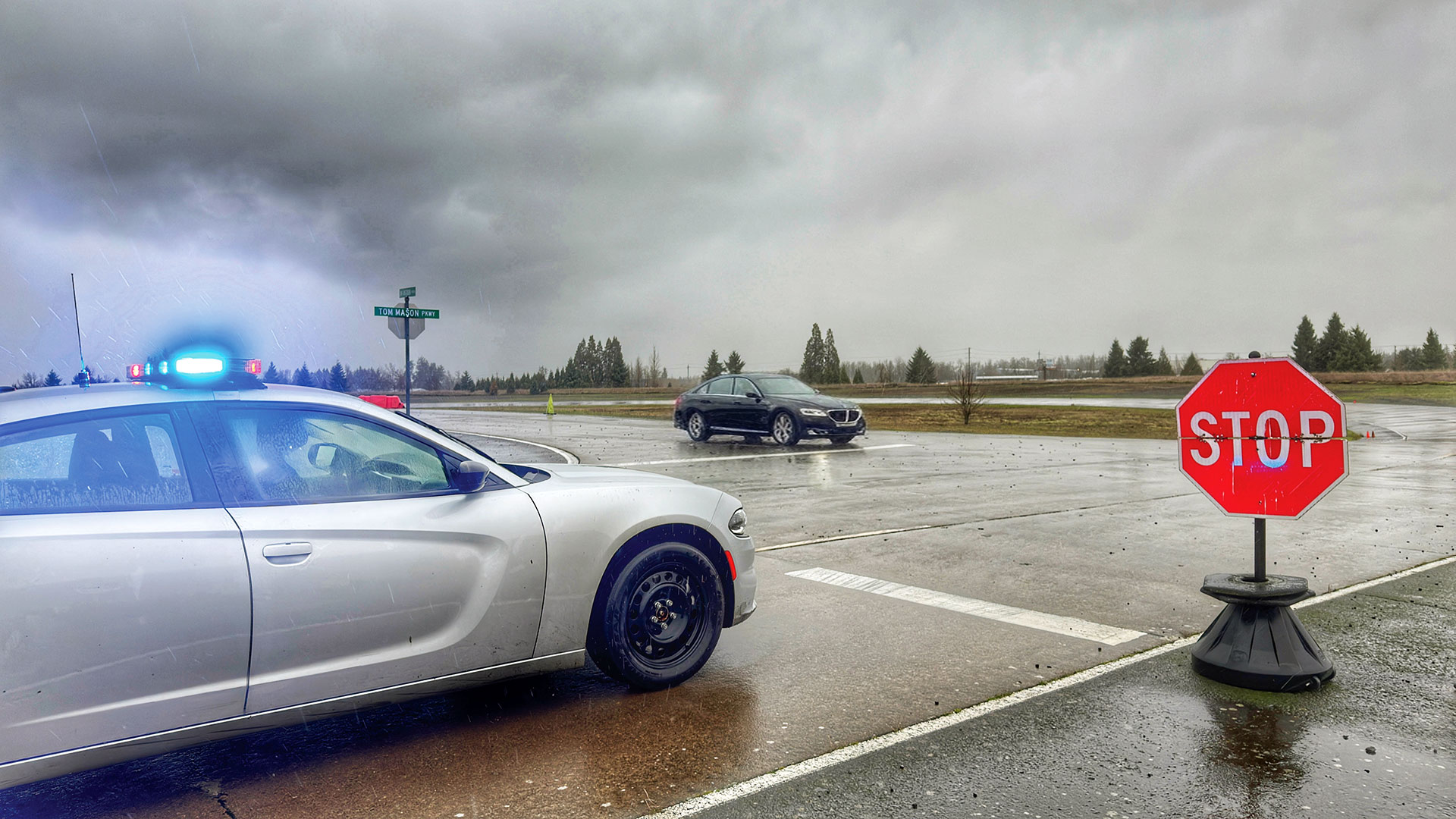
That brings me to training related to intersection clearing. I am fortunate to work for a state agency with a first-rate training facility and a dedicated driving course (track), and I have seen other great driving facilities in the other states; however, I have yet to see a training venue where intersection clearing can be properly taught. It is simply too complex a task to fully recreate in a training environment, so it falls on field training officers to provide instruction and instill good habits in their trainees. Officers need to stop, or at a minimum, slow to a speed at which they can stop if a hazard presents itself and clear each lane individually before proceeding through an intersection against a red light or past a stop sign. Even when proceeding through a green traffic signal or two-way controlled intersection, officers should remain aware of traffic potentially entering their path of travel from side streets. They should also watch for pedestrians or bicyclists near crossings and always maintain a safe speed. We all know that adrenaline can impact our visual perception. When I am training new officers to clear intersections, I have them physically turn their heads and scan in all directions to develop this habit to help with this physiological response. While optical traffic signal-changing systems can be useful, officers should use them cautiously, as they may disrupt normal traffic light cycles and cause confusion among other drivers.
Kelly Couch

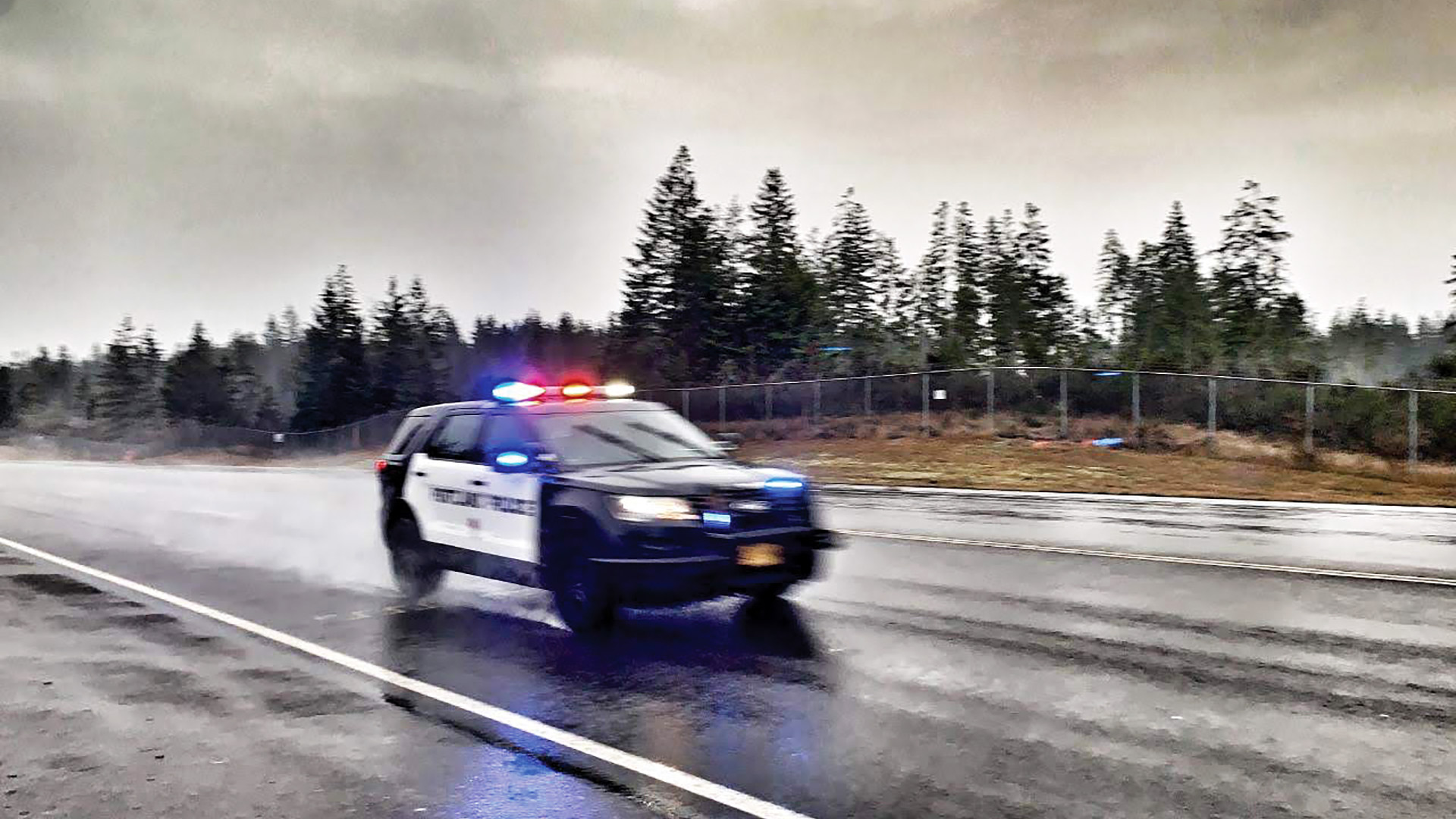
It is unfortunate that many officers are not fully aware of the limitations of emergency vehicle sirens during response situations. Most of us have been stopped in traffic, heard a siren and wondered where it was coming from until we saw its source. We’ve also likely been on a highway as a patrol car passed us at high speed, not hearing the siren until the vehicle was right next to us. This illustrates the reality of siren limitations. Some studies have suggested that sirens can increase the risk of a crash. Despite evidence indicating that sirens are not always effective, we continue to use them to warn other traffic and often become frustrated with drivers who fail to respond. Typically, cars are well-insulated against external noise, and drivers are often listening to music or otherwise distracted. This makes it challenging for them to notice a siren, or pinpoint its direction, especially when an emergency vehicle is approaching rapidly.

What are some ways to overcome these obstacles? From both an acoustic and scientific perspective, there is little we can do until technology advances to better warn drivers of approaching emergency vehicles. This emerging in-car technology is still far from widespread use. Until such solutions are widely available, it is essential to educate ourselves and new officers about the limitations of siren effectiveness and to foster consistent, safe driving practices during emergency responses. Because sirens are often ineffective, always assume other drivers do not see or hear you, especially when passing through intersections against a stop sign or red light. Switching siren tones and using the air horn can sometimes make it easier for drivers to notice you, but these methods are not completely reliable. You must always assume that other drivers do not see or hear you and make efforts to ensure they do before proceeding. Making eye contact or waiting until it is clear they have stopped is often a good indicator.

In summary, it is imperative that you understand the limitations of your siren and develop safe driving habits for yourself, your trainees and those you train if you participate in your agency training program. Always slow or stop and properly clear all intersections lane by lane every time during an emergency response. Getting to the call is essential to being able to assist, and a collision will prevent that outcome and divert resources to you. The most important thing you can do is build good habits and remain steadfast, even when a surge of adrenaline comes with that urgent “hot” call on the radio. Your diligence is the solution to these challenges.
Kelly Couch
Kelly Couch

Kelly Couch

Kelly Couch is a retired California police officer from the Bay Area and retired law enforcement trainer. He was a patrol tactics instructor and the lead EVO instructor at the Department of Public Safety Standards and Training (DPSST) in Oregon for six years. He still provides training as a part-time instructor. Couch is a PORAC Retired Associate Member.

View articles by Kelly Couch

As seen in the March 2026 issue of American Police Beat magazine.
Don’t miss out on another issue today! Click below:


SUBSCRIBE TODAY!

Categories: Training

Primary Sidebar

Recent Articles

  • The impact of the Graham v. Connor decision
  • Coffee shop intel
  • Developing and enhancing assertiveness
  • Mexican cartels recruit like industry titans on both sides of the border — and it’s working
  • Down to divorce
  • Unsung heroes: New York City correction officers
  • The virtual beat
  • Why more staff won’t fix your operational slowdowns
  • Training with an AI partner?
  • Curbing teen takeovers

Footer

Our Mission
To serve as a trusted voice of the nation’s law enforcement community, providing informative, entertaining and inspiring content on interesting and engaging topics affecting peace officers today.

Contact us: info@apbweb.com | (800) 234-0056.

  • Facebook
  • Instagram
  • Twitter

Categories

  • Editor’s Picks
  • On the Job
  • Labor
  • Tech
  • Training
  • Policy
  • Health/Wellness
  • Community
  • Offbeat
  • We Remember
  • Jobs and Careers
  • Events

Editor’s Picks

Smile and let them swing

Smile and let them swing

May 16, 2026

The job has changed — have you?

The job has changed — have you?

May 15, 2026

The days that follow

The days that follow

May 11, 2026

Perpetual recognition of line-of-duty deaths

Perpetual recognition of line-of-duty deaths

May 10, 2026

Policies | Consent Preferences | Copyright © 2026 APB Media, LLC | Website design, development and maintenance by 911MEDIA

Open

Subscribe

Close

Receive the latest news and updates from American Police Beat directly to your inbox!

  • This field is for validation purposes and should be left unchanged.