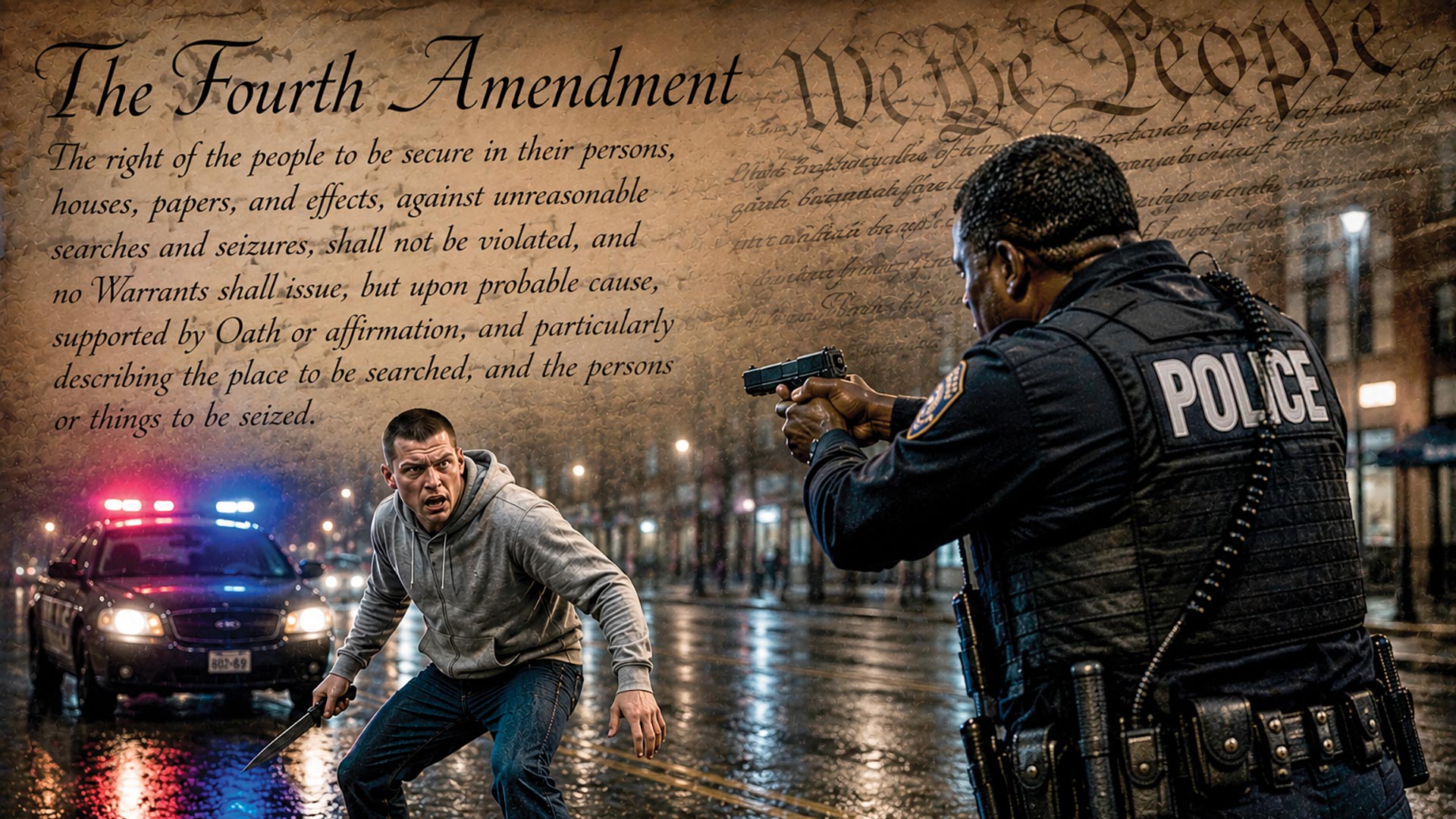
Over my career in law enforcement, there were several U.S. Supreme Court cases that dictated how police officers should perform their jobs so as not to violate any aspect of the Constitution. In the academy, we learned about such decisions as Miranda v. Arizona (1966), where the court ruled that police must inform suspects of their constitutional rights, particularly the right to remain silent and the right to an attorney, before questioning them in custody.
The ruling in Escobedo v. Illinois (1964) applied the Sixth Amendment right to counsel to states during interrogations. In particular, the court established that, after an arrest, a suspect has the right to request a lawyer during police interrogations, even if the suspect has not been formally charged.
In the landmark case Terry v. Ohio (1968), the court established the legal framework for police “stop and frisk” procedures. It ruled that police could briefly detain and search individuals based on “reasonable suspicion” that they were involved in criminal activity and were armed and dangerous, even without a warrant or probable cause.
The Graham v. Connor case
Perhaps the one decision that had the most impact on law enforcement was the case of Graham v. Connor, 490, U.S. 386 (1989). This was a case in which the U.S. Supreme Court determined that an objective reasonableness standard should apply to a claim that law enforcement officials used excessive force while making an arrest, investigatory stop or other “seizure” of a person. The court emphasized that the “reasonableness” should be judged from the perspective of a reasonable officer on the scene, considering the specific circumstances of the encounter.
In this case, Dethorne Graham, who was diabetic, had traveled with a friend to a convenience store to buy orange juice to counteract an insulin reaction that Graham was experiencing. Graham entered the store but quickly ran out because the line was too long. He returned to his friend’s vehicle, and they hurriedly sped away from the store. Charlotte Police Officer M.S. Connor, who was nearby, observed Graham’s behavior and became suspicious. Connor then pulled them over for an investigative stop.
Although Graham’s friend told police that Graham was simply suffering from a “diabetic reaction,” the officer ordered Graham to wait while he found out what, if anything, had happened at the convenience store. He was previously aware of several recent shoplifting incidents at this store. When Connor returned to his patrol car to call for backup assistance, Graham got out of the car, ran around it twice and finally sat down on the curb, where he passed out briefly.
In the ensuing confusion, other police officers arrived on the scene in response to Connor’s request for backup. One of the officers rolled Graham over on the sidewalk, cuffed his hands tightly behind his back and ignored Graham’s friend’s pleas to get him some sugar. During the police encounter, Graham suffered a broken foot, cuts on his wrists, a bruised forehead and an injured shoulder. He filed a federal lawsuit against Connor and other officers, alleging that their use of force during the investigative stop had been excessive and violated his civil rights.
The impact
The outcome of the case was the introduction of an “objective reasonableness test” in examining an officer’s actions. That test, over time via case law, would evolve into something that could be summed up as “Given the facts known at the time, would a similarly trained and experienced officer respond in a similar fashion?”
This ruling has had a significant impact on police practices, training and the evaluation of excessive-force claims. It has led to greater emphasis on objective factors when assessing the reasonableness of an officer’s use of force. It was a favorable ruling, since the police would no longer be judged or criticized on these cases by City Hall administrators or the ACLU, who are nothing more than Monday morning quarterbacks who have never really had to face what our officers do in the line of duty.
Many high-profile cases alleging use of excessive force by a law enforcement officer have been decided based on the framework set out by Graham v. Connor, including the shooting of Michael Brown in Ferguson, Missouri, in 2014. In most of those cases, the officer’s actions were deemed to pass the reasonableness test. Graham v. Connor was also repeatedly cited by both the prosecution and defense in State v. Chauvin, regarding the murder of George Floyd in Minneapolis in 2020.
The Supreme Court held that determining the “reasonableness” of a seizure requires careful balancing of the nature and quality of the intrusion on the individual’s Fourth Amendment interests against the potential mitigating governmental interests at stake. It acknowledged, “Our Fourth Amendment jurisprudence has long recognized that the right to make an arrest or investigatory stop necessarily carries with it the right to use some degree of physical coercion or threat thereof to effect it.” Because reasonableness under the Fourth Amendment cannot be precisely defined, it was noted, “the test’s proper application requires careful attention to the facts and circumstances of each particular case.”
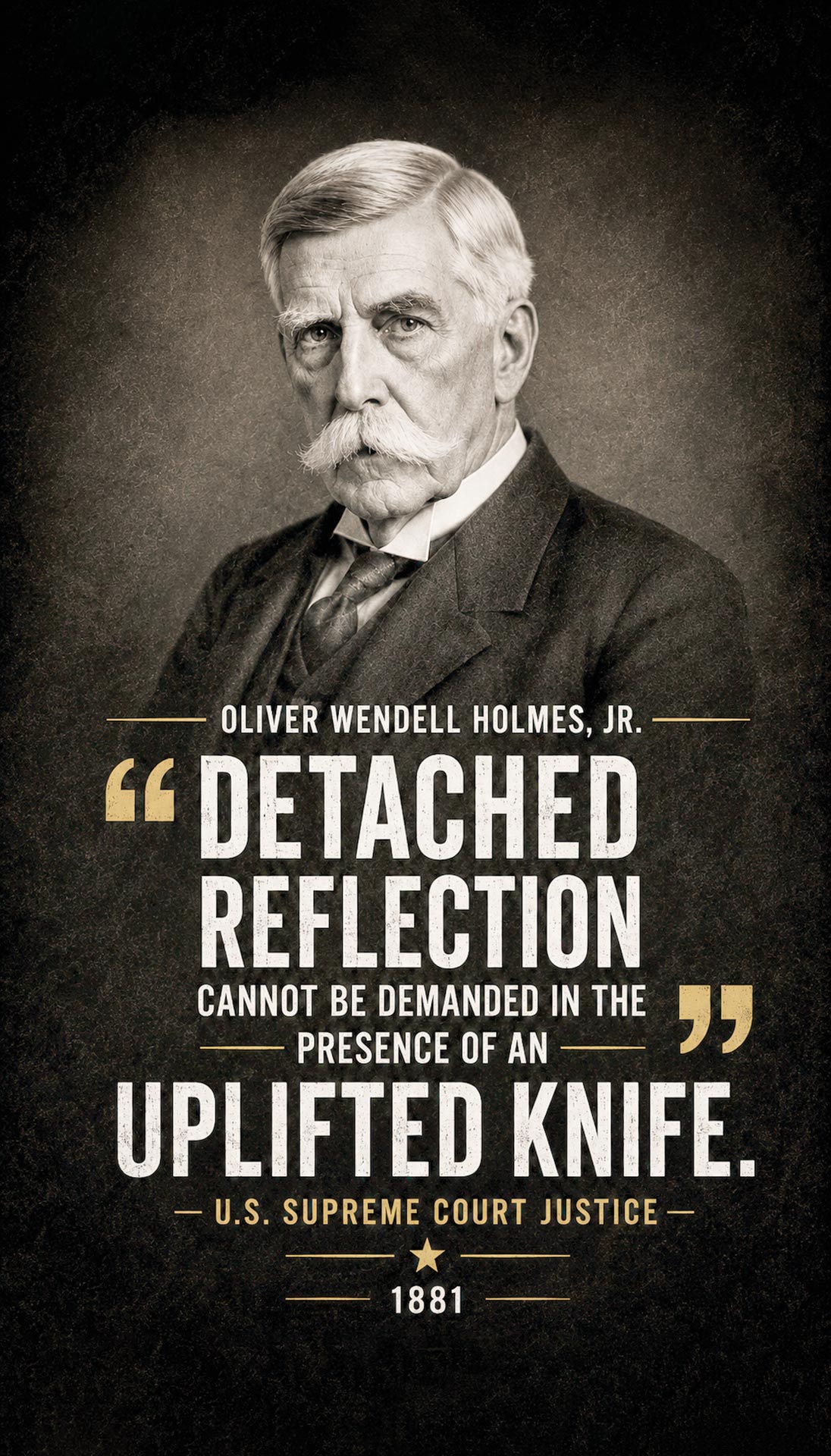
As in other Fourth Amendment contexts, the “reasonableness” inquiry in an excessive-force case is an objective one: the question is whether the officers’ actions are “objectively reasonable” considering the facts and circumstances confronting them, without regard to their underlying intent or motivation. The court explained, “The reasonableness of a particular use of force must be judged from the perspective of a reasonable officer on the scene, rather than with the 20/20 vision of hindsight.” The court further explained that the analysis of “‘the reasonableness’ of a particular use of force must incorporate an allowance for the fact that police officers are often forced to make split-second decisions about the amount of force necessary in a particular situation.”
The court then outlined a list of factors to determine when an officer’s use of force is objectively reasonable: “the severity of the crime at issue,” “whether the suspect poses an immediate threat to the safety of the officers or others” and “whether he is actively resisting arrest or attempting to evade arrest by flight.”
Having established the proper framework for excessive-force claims, the court explained that the court of appeals in the Graham case had applied a test that focused on the officer’s subjective motivations, rather than on whether he had used an objectively unreasonable amount of force. The court then reversed the court of appeals’ judgment and remanded the case for reconsideration that used the proper Fourth Amendment standard.
“The reasonableness of a particular use of force must be judged from the perspective of a reasonable officer on the scene, rather than with the 20/20 vision of hindsight.”
Final thoughts
Departments today should hold their personnel to a higher standard than was articulated in Graham v. Connor when performing their duties on behalf of the department and the community. When feasible, any department employee who observes any officer using force that a reasonable officer would consider out of policy should safely intercede to stop the officer’s actions.
Based on the totality of the circumstances, officers should only use force to accomplish a lawful objective. The force used should be objectively reasonable and only used when appropriate and necessary. Back in the day, it was a common practice that if a suspect ran from the police they would get “tuned up” regardless of whether they gave up voluntarily or not. Officers today should continually assess whether they are using the minimum and objectively reasonable amount of force necessary. Remember that there are cameras everywhere these days, including body cameras on our own chests.
By adhering to these guidelines, officers and police departments will avoid costly lawsuits and major discipline or terminations. The heavy-handed days of a Rodney King event should never happen again. Professional agencies will achieve legitimacy and gain support and trust from their communities when they prevent excessive-force incidents through policies, training, intervention programs and effective internal force reviews. Police reports merely stating, “I came, I saw and I kicked his butt” in their narrative should focus more on a detailed explanation justifying their use of force based on objective factors, not subjective assumptions. The job of our officers today is dangerous for sure, but it also sometimes requires objectively reasonable officers with the “patience of Job” to prevent unnecessary complaints or mishaps.
A good example for holding officers accountable for unreasonable and excessive use of force was a recent incident involving Albuquerque Police officers. They were dealing with a well-known troubled individual for trespassing near an APD prisoner transport building. Five officers chased and confronted him, and the man paced back and forth amid a mental health crisis, mumbling, clutching a small nail clipper and allegedly threatening the officers. Three of the officers had their weapons drawn and two others had Tasers as a less lethal option. At one point, the man stepped forward and two officers fired their guns, while two others simultaneously fired their Tasers. They continued firing after he fell to the ground, shooting him 11 times. To make matters worse, an Internal Affairs Force Division commander, the Force Review Board and the chief reversed the original decision that this shooting was out of policy.
A lawsuit was filed by the family, and a settlement of $6.5 million was awarded to the family. No officer at the scene acted reasonably. In addition to the second-largest settlement in the history of the police department, the public was outraged and a Department of Justice monitor called this a “grave and substantial malfeasance.”
Michael Nila said it best in his book The Nobility of Policing: “The actions of any police officer in an instant can impact an individual for life and even a community for generations.”

Mike Geier
As seen in the June 2026 issue of American Police Beat magazine.
Don’t miss out on another issue today! Click below: