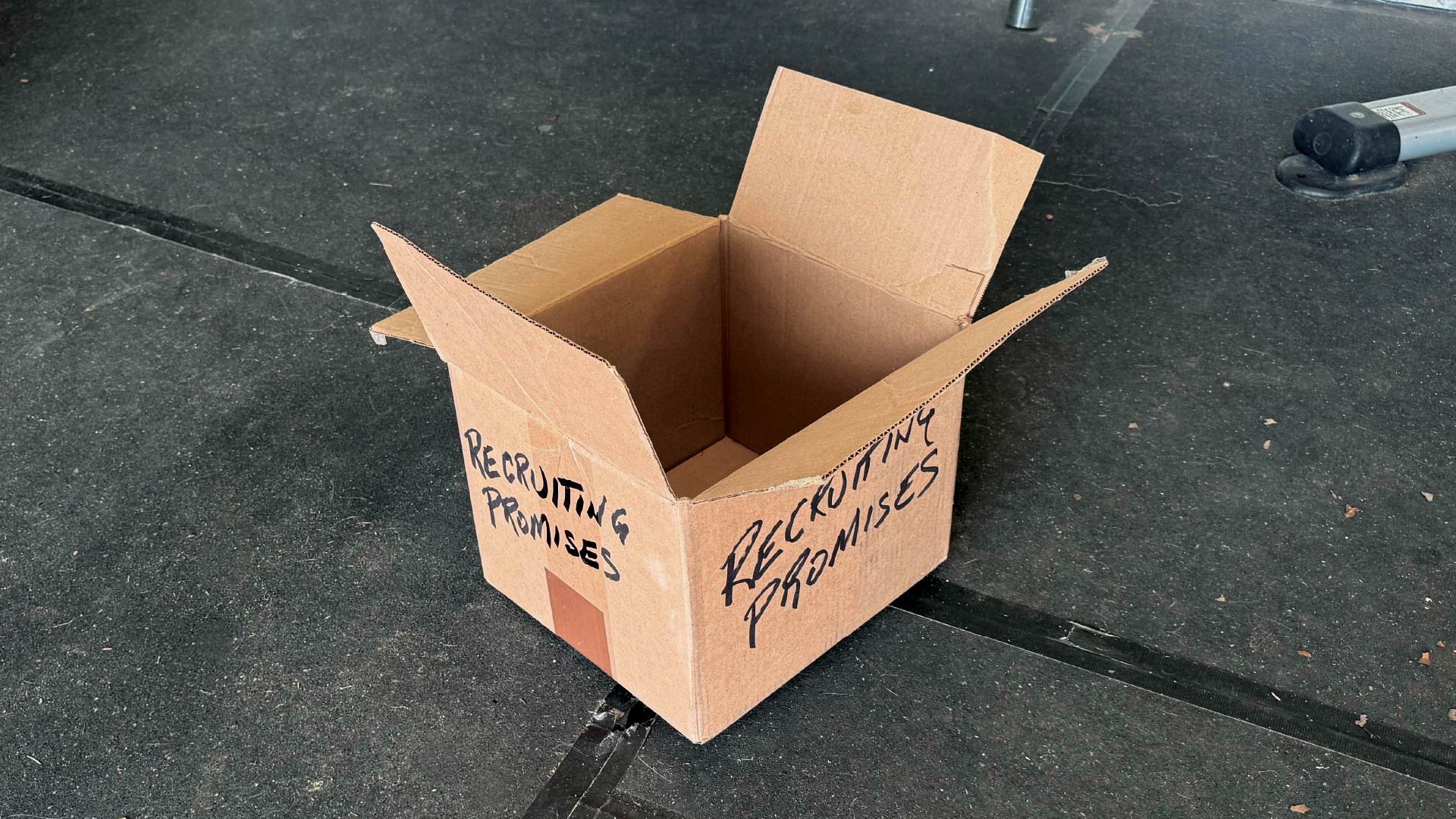
Walk into any police recruiting event in America and you will see the same booth. Different city, different patch, identical pitch: “Join our family,” “Serve your community,” “Make a difference,” “Competitive benefits,” “Opportunities for advancement.” Cover the logo and you wouldn’t know if you’re looking at NYPD or a 30-officer department in rural Ohio. The marketing is interchangeable because every agency thinks the problem is messaging. It’s not.
The problem is that policing treats branding like a marketing function when it’s a strategic leadership issue. Large agencies spend thousands of dollars on recruitment materials and campaigns that promise culture, opportunity and support. Then organizational systems deliver none of it. The recruit shows up, realizes the pitch was fiction and leaves. High performers stick around long enough to confirm the agency doesn’t keep promises, then lateral to somewhere that does.
Today’s candidates are career-driven and value-aware, and they know their market value. They’re not showing up hat in hand hoping for a job. They’re evaluating agencies the same way agencies evaluate them. Chiefs who haven’t recognized this shift aren’t losing candidates to competing agencies; they’re losing them to their own reputation. The lateral transfer market has made movement between departments easier than ever.
Pension structures that once anchored officers through difficult working conditions are weakening, and in some departments they’re disappearing entirely. That retention lever leadership has quietly relied on for decades is losing its grip. What replaces it isn’t a better benefits package or a signing bonus. It’s something far more difficult to manufacture and far more powerful when it exists: brand.
No number of slick brochures fixes that gap, because the challenge isn’t about finding candidates. It’s about whether agencies deliver what they advertise to people who have real options and aren’t afraid to use them.
What brand actually means
Brand isn’t logos or slogans. It’s the gap between what an organization promises and what people experience. When that gap is small, talent stays. When it widens, people walk — and they tell everyone why.
Agencies with strong brand alignment don’t just attract better candidates. They create something harder to manufacture and impossible to fake: officers who are proud of what they represent. That pride shows up in how they talk about the job off duty, how they treat the community on duty and whether they recruit their peers or warn them away. It’s the difference between an agency that chases talent and one that attracts it without trying.
That’s what is at stake: not just recruitment numbers, but the kind of culture that makes good officers stay and makes the job itself worth doing.
The Promise Gap
Most departments have a Promise Gap, the distance between what gets advertised and what officers actually experience. It shows up everywhere, once you know what to look for.
Take the agency that builds its entire recruiting pitch around community policing. The materials emphasize relationship-building, problem-solving and meaningful community engagement. The chief gives compelling speeches about trust and legitimacy.
Then the new hire discovers that performance evaluations measure only enforcement activity. Citations, arrests and calls for service are what get tracked and rewarded. Time spent building relationships with community members doesn’t show up anywhere in the metrics. Officers who invest in prevention work get questioned about their productivity. The ones who maximize enforcement numbers get recognized at award ceremonies.
The message is clear. The community policing philosophy is for public consumption. The enforcement-driven culture is what gets rewarded. Officers who joined believing the recruiting pitch either adapt and become cynical or leave for agencies where the stated philosophy matches operational reality.
Or consider the department that advertises work–life balance and officer wellness. The new hire discovers mandatory overtime is standard and mental health resources exist on paper, but organizational culture discourages using them. And the sergeant who publicly dismisses anyone taking personal time just got promoted to lieutenant.
The external brand says, “We value our people,” while the internal reality tells a different story. And unlike previous generations who quietly accepted that gap, today’s officer shares that story with their network. That is not a retention problem; it is a delivery problem. The agency made promises it had no systems to keep.
What reputation does
The real brand lives in the report room, off-duty events and stories former officers tell their networks. It’s the answer to one question: “What’s it really like to work there?”
When the answer contradicts the recruiting pitch, the agency’s reputation becomes its biggest obstacle. Strong brands turn officers into recruiters who bring in peers from neighboring agencies and defend the agency publicly. Weak brands turn officers into detractors who warn people away.
Five years of broken promises doesn’t just create a retention problem. It fundamentally changes who’s willing to work there.
The assessment most agencies skip
Most agencies have never honestly assessed their Promise Gap because the work feels uncomfortable. They have mission statements, values printed in handbooks and chiefs who give compelling speeches about culture. None of that matters if organizational systems contradict what officers experience daily.
The assessment starts with three uncomfortable conversations.
First, sit down with officers who left in their first three years. Not the sanitized exit interview version — meet them after they’ve moved on, in their space, off the record. Ask what they were promised during recruiting, where reality diverged and what the specific moment was that made them decide to leave. Ask where they went and why that agency felt different.
Then talk to high performers who stayed but stopped caring. Ask when they stopped believing the agency keeps its promises. Ask what they tell their peers at other agencies when the subject comes up. Ask what would have to change for them to start recruiting their peers into the department rather than steering them elsewhere.
Finally, compare what the agency says externally against what officers live — recruitment materials against daily reality, stated values against what behavior gets rewarded and leadership speeches against what organizational systems incentivize.
When chiefs run this assessment, the patterns that emerge are remarkably consistent. The Promise Gap isn’t one big lie, it’s a dozen small ones that compound over time. The promotional process that “rewards merit” but hasn’t promoted anyone outside the chief’s inner circle in five years. The open-door policy that exists until someone uses it to raise an uncomfortable issue. The training budget that gets reallocated every year to cover operational shortfalls.
Most chiefs also discover they’re not the problem; their systems are. Leadership genuinely wants to deliver on promises. But decades of inherited policies, budget constraints treated as permanent and political pressures have created organizational infrastructure that contradicts stated values. The gap between what leadership wants to be true and what systems deliver is often wider than anyone realized.
The gaps reveal exactly where the Promise Gap breaks down. What agencies do with that information is what separates the ones that build sustainable cultures from the ones that keep wondering why the same problems never go away.
What separates agencies that fix this from those that don’t
When the pension held people, leadership could afford to ignore the brand. That era is over. What keeps people now is belief that the organization operates with integrity. That’s not an HR function, that’s a leadership fundamental.
The agencies that deliver on their promises don’t struggle with recruitment or retention. Their officers stay, not out of financial necessity but because staying feels worth it. The agencies that ignore the Promise Gap keep losing their best people first, the ones with options and the self-awareness to use them.
Where to start Monday
Pick one promise the agency makes that organizational systems currently can’t support — not the biggest one, but the most visible. Maybe it’s the professional development program that exists on paper but never happens in practice, or the supervisor everyone knows is problematic but organizational inertia protects. Fix it publicly, and show officers this isn’t another initiative with a launch date and a quiet death when priorities shift. Then move to the next disconnect.
The Promise Gap in your agency isn’t closing by itself. Decide this week which promise gets addressed first. Because every week without action, the gap widens, reputation deteriorates and the best people walk. The interchangeable tactics aren’t the problem. The Promise Gap is, and closing it is no longer optional.

Tim Kucerovy, MBA
As seen in the April 2026 issue of American Police Beat magazine.
Don’t miss out on another issue today! Click below: