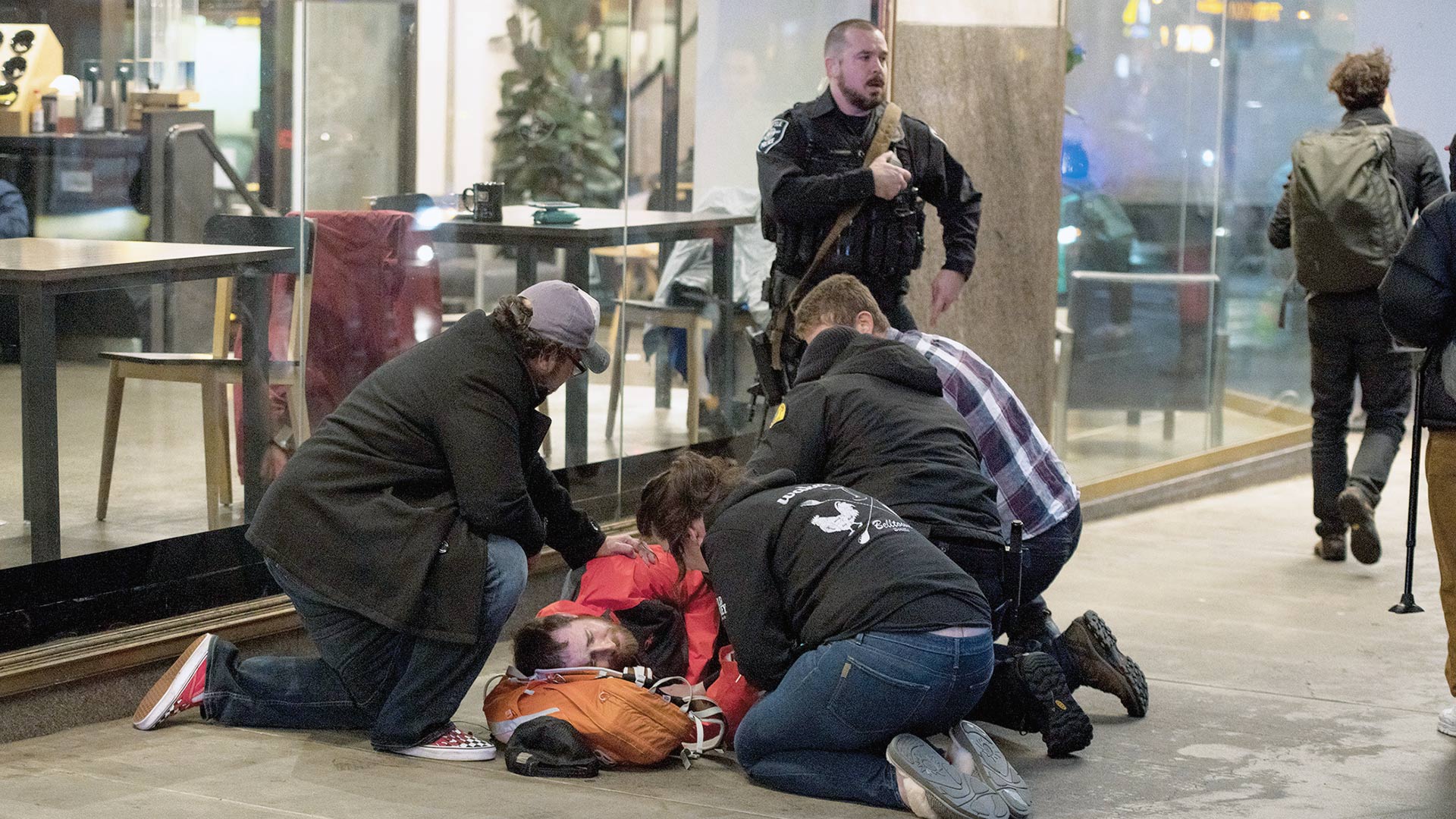
We have all stood on too many highways at 2 a.m., red and blue lights cutting through the dark, watching an officer kneel beside a critically injured driver and doing everything they were ever taught in first aid — while knowing it wasn’t enough. Or we’ve been at shootings and assaults or even a mass casualty event when local EMS has been overwhelmed.
Policing has changed. The threats have evolved. The expectations have expanded. What has not kept pace in many agencies is the level of medical training we provide to the men and women who are almost always first on scene.
We ask patrol officers to respond to shootings, stabbings, catastrophic crashes, overdoses, cardiac arrests, industrial accidents, tornado damage and active violence. We expect them to secure the scene, assess threats, control chaos — and preserve life. Yet in many departments, the formal medical training requirement remains CPR, basic first aid and AED familiarization.
That gap is no longer defensible.
This isn’t a new idea
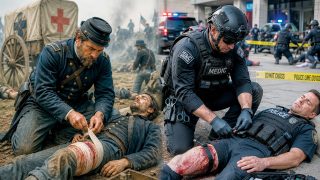
Advanced medical training for law enforcement is not some progressive experiment. In 1979, the National Highway Traffic Safety Administration (NHTSA) created the Crash Injury Management program specifically for police officers. The Federal Bureau of Investigation (FBI) helped deliver that 40-hour curriculum nationwide. Officers were issued emergency response bags. They were trained in airway control, shock management, bleeding control and extrication support.
The message then was clear: police officers were frontline medical assets.
As EMS systems professionalized and fire departments evolved into advanced life support providers with paramedics and transport capabilities, law enforcement stepped back. Training hours in firearms, legal updates, defensive tactics, taser, OC, accreditation standards and federal mandates expanded. Chiefs made rational resource decisions. Fire-based EMS filled the medical niche.
But the environment has changed again.
Active shooter incidents, ambushes, opioid overdoses, rural EMS shortages and increasingly severe natural disasters have placed patrol officers squarely back into the gap between injury and advanced medical care. Events like the Sandy Hook Elementary School shooting reshaped national doctrine around hemorrhage control. The Hartford Consensus emphasized immediate bleeding control because victims die in minutes — not in ambulance transport time.
In areas like rural Kansas, Montana, Wyoming and many other states and thousands of rural jurisdictions across America, EMS may be several minutes — or many miles — away. In active scenes, EMS may not enter until officers secure the threat.
Law enforcement is already the medical bridge, whether we embrace it or not. The only question is how well prepared we are to serve in that role.
The equipment is already in the car
Consider what we have done over the past decade. Patrol vehicles across America now carry automated external defibrillators (AEDs), which are also in police departments, lockups and county jails. Officers routinely deploy AEDs before EMS arrival, restoring cardiac rhythm and saving lives. Many agencies equip every officer with a tourniquet. Surveys show overwhelming adoption of bleeding control tools in patrol assignments. Naloxone has become standard-issue in countless departments, reversing opioid overdoses daily.
We have embraced the tools. But tools without standardized, structured training create uneven outcomes.
Emergency medical responder (EMR) certification formalizes what many agencies are already attempting piecemeal. Nationally, EMR certification typically requires approximately 50 to 60 hours of classroom and practical instruction, followed by competency evaluation through the National Registry of Emergency Medical Technicians. By comparison, EMT certification generally exceeds 120 hours and includes additional clinical components.
EMR training does not turn officers into paramedics. It does something more practical: it teaches structured patient assessment, airway management, shock recognition, trauma stabilization and clinical decision-making under stress. It builds physiological literacy — and that matters.
An officer who understands oxygenation, positional compromise, head trauma and circulatory shock is better equipped to manage high-risk arrests, in-custody medical events and combative subjects experiencing medical crisis. That knowledge reduces preventable injuries. It reduces liability exposure. It protects careers.
“Chief, how much is this going to cost me?”
Every chief I speak with eventually raises the same concern. Training hours cost money. Overtime costs money. Backfilling shifts costs money. Certification programs cost money.
Those are legitimate operational realities. But we must ask a harder question: What is the cost of not doing it?
- The cost of a preventable in-custody death
- The cost of an officer bleeding out before EMS reaches them
- The cost of litigation alleging failure to render aid
- The cost of public trust eroded because we were perceived as tactically prepared but medically unprepared
When weighed against multimillion-dollar civil judgments, reputational damage, recruitment challenges and officer funerals, the training investment becomes proportionally modest.
More importantly, the argument that cost alone justifies inaction does not withstand professional scrutiny. We do not sidestep firearms qualifications because ammunition is expensive. We do not cancel defensive tactics training because instructors cost money. We do not abandon crisis intervention team (CIT) training because it requires hours away from patrol.
We recognize those competencies as essential. Medical competence deserves to sit at the same table.
Equal to CIT and de-escalation
CIT and de-escalation training reshaped modern policing because they addressed predictable challenges officers face daily. EMR training addresses an equally predictable reality: people get hurt in our presence. Sometimes we are the only ones there.
When a tornado tears through a neighborhood, an ambush wounds an officer, an active shooter leaves multiple victims bleeding or EMS is tied up on another call 20 miles away, the patrol officer is not a supplemental responder. The patrol officer is the responder.
Officer survival and professional identity
As a profession, we should view EMR training primarily as an officer survival program. Self-aid and buddy-aid skills are not abstract concepts. They are life-preserving interventions measured in seconds. The FBI’s annual Law Enforcement Officers Killed and Assaulted data reminds us that serious assaults on officers remain a reality. Hemorrhage control and airway management are not academic exercises; they are survival skills.
But beyond survival, there is something deeper at stake.
Communities increasingly judge us not only by how effectively we enforce the law, but by how competently we preserve life. When officers confidently deploy an AED, reverse an overdose, stabilize a crash victim or control bleeding before EMS arrives, they embody the guardian ethos that modern policing strives to reclaim.
A strategic correction
This is not mission creep. It is mission alignment.
In 1979, federal leaders recognized that police officers were often first to the injured. That reality has not changed. What has changed is the complexity of threats and the strain on emergency systems nationwide.
EMR certification restores a capability law enforcement once embraced and adapts it to today’s environment. It formalizes lifesaving expectations already placed on patrol officers. It strengthens officer safety, mitigates liability, enhances public trust and builds disaster resilience.
Policing today demands more than cuffs and citations. It demands competence when someone cannot breathe. It demands confidence when someone is bleeding. It demands preparation when backup — medical or tactical — is minutes away.
The question for chiefs is not whether we can afford EMR training. It is whether we can afford to continue without it.
You can learn more about EMR certification at nremt.org/Handbooks/EMR.

Robert Spinks
As seen in the April 2026 issue of American Police Beat magazine.
Don’t miss out on another issue today! Click below: