It didn’t start as an investigation. It started with a cup of coffee.
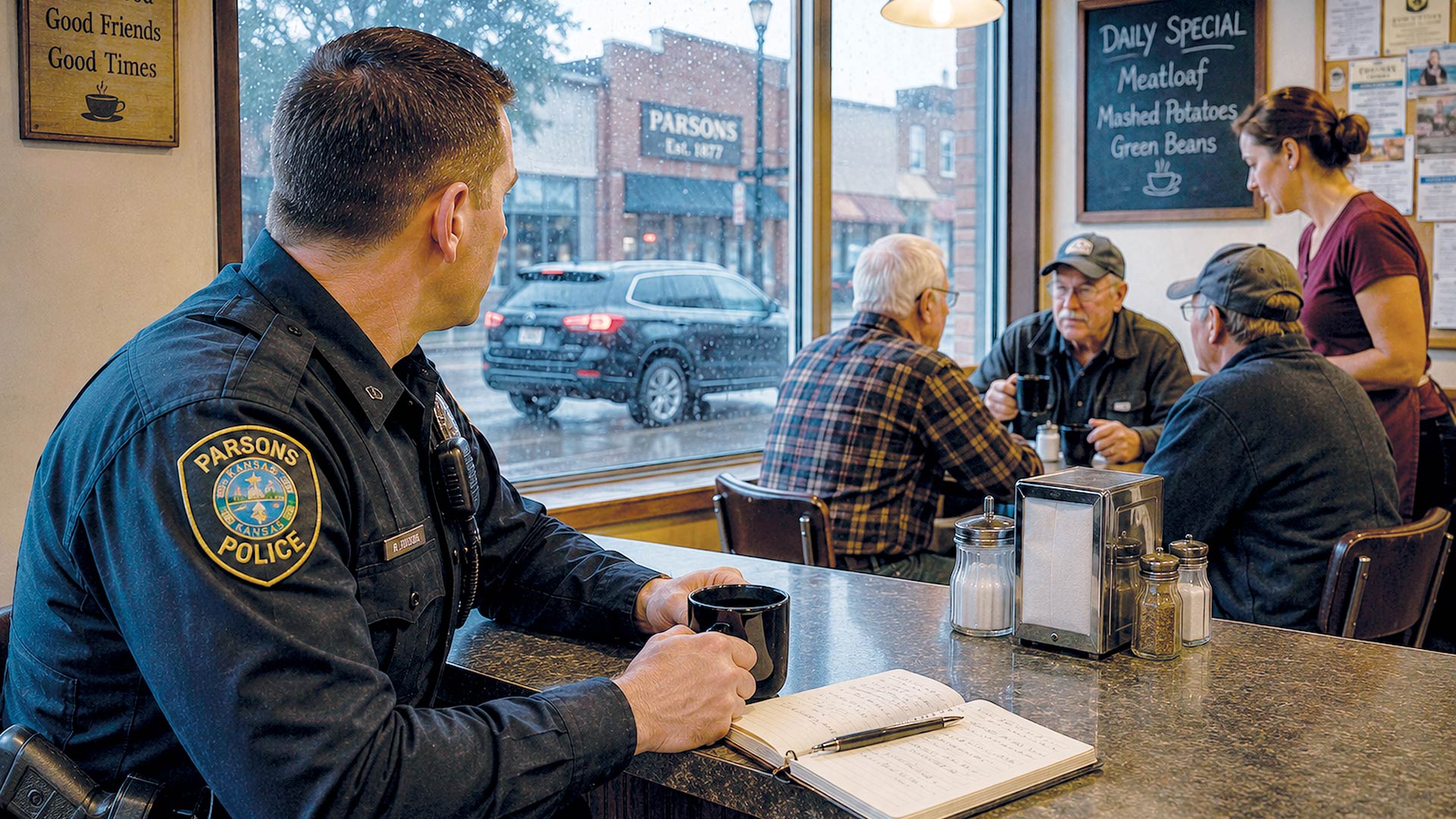
One of our officers had made it a habit to stop by a local coffee shop a few mornings each week. No agenda, no call for service. Just a few minutes to talk with the same group of regulars — people who knew the neighborhood, watched what was going on and paid attention to things most of us would never notice.
One morning, a casual comment came up. A vehicle had been circling a nearby block late at night. It didn’t seem urgent. It didn’t sound like a crime in progress. It was just one of those observations people make when they feel comfortable enough to talk to a peace officer. That small piece of information was noted, documented and shared.
A few days later, that same vehicle description surfaced again — this time connected to a theft report. What started as a casual conversation over coffee became a thread. And that thread, once pulled, helped tie together multiple incidents and led to an arrest. That’s coffee shop intel. And it’s one of the most underutilized tools in modern policing.
The conversations we’re losing
Policing has changed. The patrol car has replaced the foot beat. The laptop has replaced handwritten notes. Reports are typed, uploaded and stored faster than ever before. Technology has made us more efficient in many ways, but it has also pulled us away from something policing once depended on: face-to-face conversation.
Today, officers often move from call to call with little downtime. When there is a moment to catch up, it’s usually spent on a computer, clearing reports. Meanwhile, much of society communicates through cellphones and social media rather than direct conversation. The result is subtle but significant. We are talking less to people — and listening less as well.
Long before databases, policing relied on relationships and information gathered through everyday contact. The principles established by Sir Robert Peel emphasized that police effectiveness depends on public cooperation and trust. That cooperation doesn’t happen automatically; it is built through interaction. When those interactions decline, so does the flow of information.
Every contact is intelligence
One of the most important shifts modern officers can make is recognizing that every contact is an opportunity to gather information — not just during an investigation or a stop, but every contact. Whether it’s a conversation with a store clerk, a check-in with a business owner, a casual exchange with someone sitting on a park bench or even a brief interaction during a call for service, each of those moments contributes to what might be called a living intelligence network.
Most of the information gathered in these interactions doesn’t seem critical at the time. A nickname, a vehicle description, a new person staying at a residence, a pattern that seems unusual but not necessarily criminal — individually, those details may not mean much. But collectively, and over time, they form a picture.
When documented through field interview cards and CAD notes and entered into records systems, those small pieces of information become searchable, linkable and actionable. They help establish associations, confirm patterns and identify suspects. They can lead to
locating missing people, serving warrants or preventing crimes before they occur.
In many ways, it mirrors what people see in fictional TV shows like Tracker, Marshals or CIA. While dramatized, those stories highlight a truth officers already know: small pieces of information, when connected, can solve big problems. The difference is that in real policing, those pieces don’t appear on their own. They come from people.
The cost of the warrior-only mindset
Over the past two decades, policing has understandably emphasized officer safety and tactical readiness, particularly following the September 11 attacks. But there has been an unintended consequence. In some cases, the profession drifted away from the community connections that once defined it.
The “warrior mindset,” when taken to an extreme, can create distance between officers and the public. When every interaction is approached as a potential threat, opportunities for conversation and relationship-building are often lost. Research has shown that policing effectiveness depends heavily on legitimacy and public trust (President’s Task Force on 21st Century Policing, 2015). Without that trust, information flow slows down. And when information slows down, so does crime prevention.
The solution is not to abandon officer safety, but to balance it.
The return of the peace officer
That balance is reflected in emerging frameworks like those promoted by Police2Peace, which emphasize the role of the police as peace officers. This concept is not new. In fact, it reflects the original mission of policing.
The peace officer approach recognizes that officers must be prepared to respond to danger while also being skilled communicators, problem solvers and relationship builders. It reinforces the idea that maintaining peace often depends on preventing problems before they escalate into crimes.
That prevention frequently begins with something simple: a conversation. A conversation that builds trust and yields information, and one that someone would not have had if they didn’t feel comfortable speaking to a peace officer.
Making time for the moments that matter
One of the most common concerns officers raise is time. “How do I do this when I’m running call to call?” It’s a fair question.
The answer isn’t adding more to an already full workload. It’s changing how we view the time we already have. A few extra minutes at a convenience store or a routine walk through a business instead of sitting in the parking lot — these are not wasted moments. They are opportunities. Over time, those small interactions build familiarity. Familiarity builds trust. Trust leads to information. And information prevents crime.
What’s in it for you?
For patrol officers and sergeants, this approach isn’t just about philosophy; it delivers practical benefits. Officers who build relationships and gather information consistently find themselves walking into calls with better awareness of the people and environment involved. That awareness can improve officer safety by reducing uncertainty.
Investigations also become more efficient when officers already have background knowledge about individuals, locations or patterns of behavior, instead of starting from zero.
Furthermore, community cooperation increases when citizens feel comfortable sharing what they know. That cooperation can lead to faster case resolution and fewer repeat incidents.
Rebuilding what we’ve lost
The traditional image of the foot patrol officer who knew everyone on the beat may be less common today, but the principle behind it still matters. Policing was never meant to be done solely from behind a tinted windshield or a computer screen. It was meant to be done in partnership with the community.
Rebuilding that connection doesn’t require sweeping changes. It starts with small, intentional actions: conversations, listening and taking the time to learn names, patterns and concerns. Those efforts may not generate immediate results. But over time, they create something powerful. They create a network of information that cannot be replicated by technology alone.
The bigger picture
Modern policing continues to evolve. Technology will advance. Expectations will shift. The demand on officers will remain high. But one thing will not change: people will always know what’s happening in their neighborhoods. The question is whether they will share that information with us. And that often depends on something as simple as whether we took the time to have a conversation when it mattered. Sometimes the most valuable intelligence doesn’t come from a database. Sometimes it starts with a cup of coffee.

Robert Spinks
As seen in the June 2026 issue of American Police Beat magazine.
Don’t miss out on another issue today! Click below: