• Skip to primary navigation
  • Skip to main content
  • Skip to primary sidebar
  • Skip to footer
  • Home
  • About
  • The Magazine
  • Events
  • Partners
  • Products
  • Contact
  • Jobs and Careers
  • Advertise
  • Facebook
  • Instagram
  • Twitter
  • Subscribe
American Police Beat

American Police Beat Magazine

Law Enforcement Publication

  • Home
  • Leadership
    • Clarifying your “true north”
      The job has changed — have you?
      Perpetual recognition of line-of-duty deaths
      Understanding the boundaries of professional relationships with the...
      Why you should lead from 30,000 feet
  • Topics
    • Leadership
      • Clarifying your “true north”
        The job has changed — have you?
        Perpetual recognition of line-of-duty deaths
        Understanding the boundaries of professional relationships with the...
        Why you should lead from 30,000 feet
    • Editor’s Picks
      • Smile and let them swing
        The job has changed — have you?
        The days that follow
        Perpetual recognition of line-of-duty deaths
        Let’s get moving!
    • On the Job
      • K-9 officer turns children’s book author
        K-9 Day demonstrates scope of officers’ duties
        Testing the waters — literally
        Frankpledge to forensics: A brief history of law enforcement
        Villains and heroes in the Big Apple
    • Labor
      • Smile and let them swing
        The Promise Gap
        Cut the cops, save a dollar?
        Labor release under fire
        Who’s watching the watchmen?
    • Tech
      • NYC’s electric vehicle fleet for LE passes milestone
        New Mexico license plate readers save lives, lead to “precise...
        A modern field guide to understanding research in policing
        Gear that moves with you
        A new breed of cop car
    • Training
      • Pushback as a training signal
        Let’s get moving!
        The five minutes before the ambulance
        Navigating danger
        Critical thinking in police training
    • Policy
      • Police and local government leaders join forces to build community...
        Police pause license plate readers
        Corruption, collusion and impunity
        E-bikes spark public safety concerns
        Try racing without wheels
    • Health/Wellness
      • The days that follow
        Addressing stress, vicarious trauma and burnout
        Nervous system regulation
        The nature of the job
        Promoting organizational wellness
    • Community
      • Cops promote National Donate Life Month
        Police officer kicks up social media praise
        Donning denim in solidarity with victims and survivors of sexual...
        Improving autism awareness
        Shop with a Cop
    • Offbeat
      • “Teenage Mutant Ninja Deer” rescued
        An unexpected burglar
        Police humor only a cop would understand
        Not eggzactly a perfect heist
        Pizza … with a side of alligator?
    • We Remember
      • A Tribute to Fallen Heroes
        Markers of service and remembrance
        Tragedy strikes Baker to Vegas
        Heroes of the World Trade Center
        Forty heroes: United Airlines Flight 93
    • HOT Mail
      • The War on Cops Continues Unabated
  • On the Job
    • K-9 officer turns children’s book author
      K-9 Day demonstrates scope of officers’ duties
      Testing the waters — literally
      Frankpledge to forensics: A brief history of law enforcement
      Villains and heroes in the Big Apple
  • Labor
    • Smile and let them swing
      The Promise Gap
      Cut the cops, save a dollar?
      Labor release under fire
      Who’s watching the watchmen?
  • Tech
    • NYC’s electric vehicle fleet for LE passes milestone
      New Mexico license plate readers save lives, lead to “precise...
      A modern field guide to understanding research in policing
      Gear that moves with you
      A new breed of cop car
  • Training
    • Pushback as a training signal
      Let’s get moving!
      The five minutes before the ambulance
      Navigating danger
      Critical thinking in police training
  • Policy
    • Police and local government leaders join forces to build community...
      Police pause license plate readers
      Corruption, collusion and impunity
      E-bikes spark public safety concerns
      Try racing without wheels
  • Health/Wellness
    • The days that follow
      Addressing stress, vicarious trauma and burnout
      Nervous system regulation
      The nature of the job
      Promoting organizational wellness
  • Community
    • Cops promote National Donate Life Month
      Police officer kicks up social media praise
      Donning denim in solidarity with victims and survivors of sexual...
      Improving autism awareness
      Shop with a Cop
  • Offbeat
    • “Teenage Mutant Ninja Deer” rescued
      An unexpected burglar
      Police humor only a cop would understand
      Not eggzactly a perfect heist
      Pizza … with a side of alligator?
  • We Remember
    • A Tribute to Fallen Heroes
      Markers of service and remembrance
      Tragedy strikes Baker to Vegas
      Heroes of the World Trade Center
      Forty heroes: United Airlines Flight 93
  • HOT Mail
    • The War on Cops Continues Unabated
  • About
  • The Magazine
  • Events
  • Partners
  • Products
  • Contact
  • Jobs and Careers
  • Advertise
  • Subscribe
Search

Policy

New Jersey Supreme Court weighs in on police marijuana impairment tests

APB Team Published May 17, 2022 @ 12:00 pm PDT

iStock.com/kali9

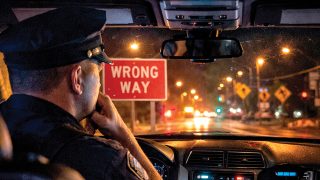
A New Jersey Supreme Court case will soon decide how police conduct marijuana impairment tests.

The case, State v. Olenowski, regards the protocols used by Drug Recognition Experts (DREs), who are trained in conducting marijuana sobriety tests. According to court documents, defendant Michael Olenowski was charged with driving while intoxicated and related offenses. Through an appeal process, the case eventually passed to the state Supreme Court, where the Office of the Public Defender argued on the basis of an expert witness that evidence submitted by DREs was not admissible in the case and challenged the validity of the methods DREs use to detect drug impairment, especially among drivers suspected to be under the influence of cannabis.

Voters opted to legalize adult recreational use of marijuana in the Garden State in 2020, and commercial sales began in April 2022.

Experts say the court case could have multiple ramifications for law enforcement. “We are waiting to see what is going to happen with that case,” Cannabis Regulatory Commissioner Krista Nash told NJ.com. “We don’t want to write rules and then have a court case settled be in conflict.”

Marijuana is known to affect driving skills by decreasing coordination and reaction time. Currently, however, no real-time technology exists that enables officers to pinpoint the exact threshold at which a user is too impaired to drive. For instance, cannabis breathalyzers can only detect recent cannabis use, but cannot establish whether a driver is actually impaired. Instead, officers have relied on 12-step sobriety tests administered by DREs.

“New Jersey has long taken a proactive approach to impaired driving, which historically accounts for about a quarter of all of our traffic fatalities,” Lisa Coryell of the Attorney General’s Office stated. “We have embraced the DRE program as an effective tool in addressing drug-related impaired driving.”

The state’s new cannabis law made provisions for agencies to receive funding to add more DREs to their force. The court case’s decision could impact that funding and how they assess levels of intoxication in traffic stops.

According to former DRE instructor Nick Morrow, the tests rely on a selective methodology and fail to take into account a person’s baseline performance —assessing impairment by testing whether a person can stand on one foot, for instance, without knowing whether they can even do that under normal circumstances. He even said that many of his officers would fail the tests themselves while sober.

While some are experimenting with newer impairment measurement tests, such as a phone app called DRUID, larger studies still need to be conducted.

“At no point did the DRUID study subjects attempt to drive an actual or a simulated car (as has been done in other, better studies), so there’s no way to know whether any of the DRUID study’s subjects were impaired to the point of being unsafe drivers,” Rutgers law professor William McNichol said.

Thomas Shea, program director for the police graduate studies program at Seton Hall and a former police officer, said he does not believe that cannabis plays a role in most car accidents compared with other drugs and alcohol.

“I don’t think I ever responded to an accident where someone was high on pot, but I responded to a bunch of people who were high on other drugs and alcohol,” he said. “Honestly, I just don’t see a mass increase in driving under the influence in marijuana arrests.”

However, it remains to be seen whether the legalization of marijuana in the state will lead to an increase in impaired driving and vehicle accidents, and how the court’s decision could affect police methods of enforcing road safety.


Categories: Policy Tags: New Jersey, marijuana, traffic stop, legal, DUI, weed impairment test, State v. Olenowski, Drug Recognition Expert, sobriety test, Supreme court

Primary Sidebar

Recent Articles

  • “Teenage Mutant Ninja Deer” rescued
  • NLEOMF announces April 2026 Officers of the Month
  • K-9 officer turns children’s book author
  • Police and local government leaders join forces to build community trust
  • K-9 Day demonstrates scope of officers’ duties
  • Cops promote National Donate Life Month
  • NYC’s electric vehicle fleet for LE passes milestone
  • Police officer kicks up social media praise
  • Donning denim in solidarity with victims and survivors of sexual assault
  • Clarifying your “true north”

Footer

Our Mission
To serve as a trusted voice of the nation’s law enforcement community, providing informative, entertaining and inspiring content on interesting and engaging topics affecting peace officers today.

Contact us: info@apbweb.com | (800) 234-0056.

  • Facebook
  • Instagram
  • Twitter

Categories

  • Editor’s Picks
  • On the Job
  • Labor
  • Tech
  • Training
  • Policy
  • Health/Wellness
  • Community
  • Offbeat
  • We Remember
  • Jobs and Careers
  • Events

Editor’s Picks

Smile and let them swing

Smile and let them swing

May 16, 2026

The job has changed — have you?

The job has changed — have you?

May 15, 2026

The days that follow

The days that follow

May 11, 2026

Perpetual recognition of line-of-duty deaths

Perpetual recognition of line-of-duty deaths

May 10, 2026

Policies | Consent Preferences | Copyright © 2026 APB Media, LLC | Website design, development and maintenance by 911MEDIA

Open

Subscribe

Close

Receive the latest news and updates from American Police Beat directly to your inbox!

  • This field is for validation purposes and should be left unchanged.