• Skip to primary navigation
  • Skip to main content
  • Skip to primary sidebar
  • Skip to footer
  • Home
  • About
  • The Magazine
  • Events
  • Partners
  • Products
  • Contact
  • Jobs and Careers
  • Advertise
  • Facebook
  • Instagram
  • Twitter
  • Subscribe
American Police Beat

American Police Beat Magazine

Law Enforcement Publication

  • Home
  • Leadership
    • Clarifying your “true north”
      The job has changed — have you?
      Perpetual recognition of line-of-duty deaths
      Understanding the boundaries of professional relationships with the...
      Why you should lead from 30,000 feet
  • Topics
    • Leadership
      • Clarifying your “true north”
        The job has changed — have you?
        Perpetual recognition of line-of-duty deaths
        Understanding the boundaries of professional relationships with the...
        Why you should lead from 30,000 feet
    • Editor’s Picks
      • Smile and let them swing
        The job has changed — have you?
        The days that follow
        Perpetual recognition of line-of-duty deaths
        Let’s get moving!
    • On the Job
      • K-9 officer turns children’s book author
        K-9 Day demonstrates scope of officers’ duties
        Testing the waters — literally
        Frankpledge to forensics: A brief history of law enforcement
        Villains and heroes in the Big Apple
    • Labor
      • Smile and let them swing
        The Promise Gap
        Cut the cops, save a dollar?
        Labor release under fire
        Who’s watching the watchmen?
    • Tech
      • NYC’s electric vehicle fleet for LE passes milestone
        New Mexico license plate readers save lives, lead to “precise...
        A modern field guide to understanding research in policing
        Gear that moves with you
        A new breed of cop car
    • Training
      • Pushback as a training signal
        Let’s get moving!
        The five minutes before the ambulance
        Navigating danger
        Critical thinking in police training
    • Policy
      • Police and local government leaders join forces to build community...
        Police pause license plate readers
        Corruption, collusion and impunity
        E-bikes spark public safety concerns
        Try racing without wheels
    • Health/Wellness
      • The days that follow
        Addressing stress, vicarious trauma and burnout
        Nervous system regulation
        The nature of the job
        Promoting organizational wellness
    • Community
      • Cops promote National Donate Life Month
        Police officer kicks up social media praise
        Donning denim in solidarity with victims and survivors of sexual...
        Improving autism awareness
        Shop with a Cop
    • Offbeat
      • An unexpected burglar
        Police humor only a cop would understand
        Not eggzactly a perfect heist
        Pizza … with a side of alligator?
        Wisconsin man charged with impersonating Border Patrol agent twice in...
    • We Remember
      • A Tribute to Fallen Heroes
        Markers of service and remembrance
        Tragedy strikes Baker to Vegas
        Heroes of the World Trade Center
        Forty heroes: United Airlines Flight 93
    • HOT Mail
      • The War on Cops Continues Unabated
  • On the Job
    • K-9 officer turns children’s book author
      K-9 Day demonstrates scope of officers’ duties
      Testing the waters — literally
      Frankpledge to forensics: A brief history of law enforcement
      Villains and heroes in the Big Apple
  • Labor
    • Smile and let them swing
      The Promise Gap
      Cut the cops, save a dollar?
      Labor release under fire
      Who’s watching the watchmen?
  • Tech
    • NYC’s electric vehicle fleet for LE passes milestone
      New Mexico license plate readers save lives, lead to “precise...
      A modern field guide to understanding research in policing
      Gear that moves with you
      A new breed of cop car
  • Training
    • Pushback as a training signal
      Let’s get moving!
      The five minutes before the ambulance
      Navigating danger
      Critical thinking in police training
  • Policy
    • Police and local government leaders join forces to build community...
      Police pause license plate readers
      Corruption, collusion and impunity
      E-bikes spark public safety concerns
      Try racing without wheels
  • Health/Wellness
    • The days that follow
      Addressing stress, vicarious trauma and burnout
      Nervous system regulation
      The nature of the job
      Promoting organizational wellness
  • Community
    • Cops promote National Donate Life Month
      Police officer kicks up social media praise
      Donning denim in solidarity with victims and survivors of sexual...
      Improving autism awareness
      Shop with a Cop
  • Offbeat
    • An unexpected burglar
      Police humor only a cop would understand
      Not eggzactly a perfect heist
      Pizza … with a side of alligator?
      Wisconsin man charged with impersonating Border Patrol agent twice in...
  • We Remember
    • A Tribute to Fallen Heroes
      Markers of service and remembrance
      Tragedy strikes Baker to Vegas
      Heroes of the World Trade Center
      Forty heroes: United Airlines Flight 93
  • HOT Mail
    • The War on Cops Continues Unabated
  • About
  • The Magazine
  • Events
  • Partners
  • Products
  • Contact
  • Jobs and Careers
  • Advertise
  • Subscribe
Search

Training

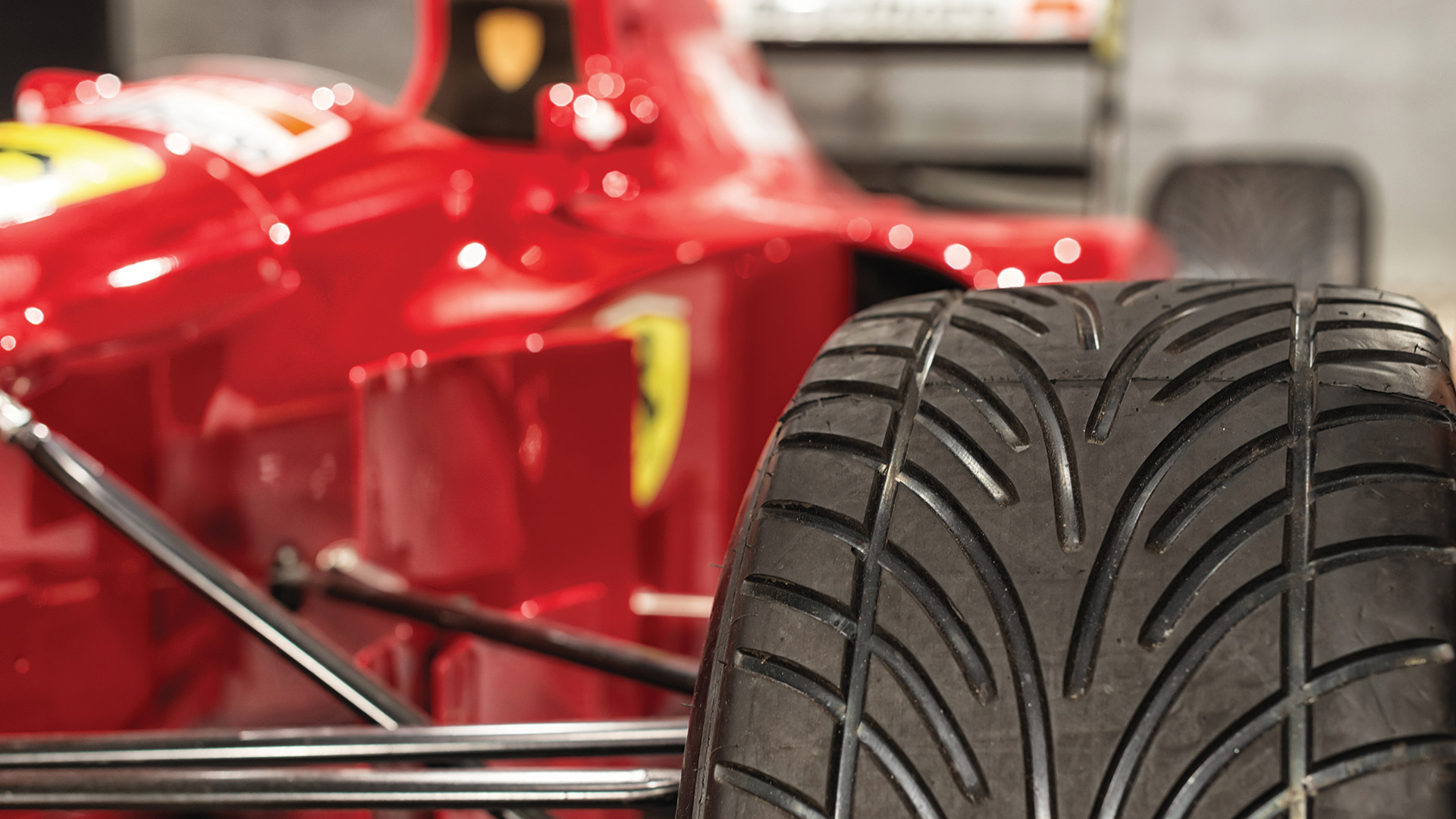
Formula 1 racing: “Push, push” to perform under pressure

How F1 drivers rise to the occasion in pressure situations

Dr. Stephanie Barone McKenny Published September 2, 2022 @ 6:00 am PDT

iStock.com/assalve

Watching high-risk operators deploy equipment to hold off their challengers with split-second decisions while wearing body cameras has everything to do with modern policing! Formula 1 (F1) drivers, like cops, must maintain physical strength and speed to meet the job demands while also protecting against injury due to the weight of the equipment on their bodies. Fitness for duty includes high-performance reaction training via classroom, simulation and live fieldwork. Even the F1 motto — We Race As One — sounds like the diverse fraternity that we are. Although black-and-whites do not necessarily reach speeds of 230 mph, we do have bystanders watching and recording our every tactic, every social media post and every move on and off the job. What can we learn from these agile athletes who risk their lives every time they go to work? How do they handle the pressure and rise to the occasion?

F1 drivers practice for failure. When imperfection happens in real life, the training takes away the need for conscious decision-making.

Tips, tricks and methods to handle the pressure

How do you portray the best version of yourself in a high-pressure situation? Here’s how F1 drivers do it.

  • Identify, anticipate and practice pressurized moments. Pressurized moments are about the stress or urgency of matters requiring your individual attention, the burden of distress (physical, mental and/or spiritual) and the constraint of the circumstances. Consider a pit stop when the driver stops short or overshoots the marks. What should the pit crew do when they are otherwise set and perfectly prepared at the marks?  
    F1 teams set up a training regimen where randomly (but very deliberately) the driver overshoots the car on certain occasions, and then the driver and crew practice how they would deal with those scenarios. They practice exactly what each person would do, where each would step and how each would utilize their equipment at that moment. They practice that over and over again until it becomes as much muscle memory as the perfect pit stop scenario. 
    They practice everything else that could go wrong in the pit (e.g., wheel gun failures, jack failures when the car falls on the floor, tire punctures and the car being so low that they can’t get the jack under the front wing). They think about every scenario that could create a pressurized moment necessitating anyone to make decisions in the moment. They remove and prepare for as many of those as possible. They get better at them when they happen.
    In addition, they practice everything that could go wrong for the driver (e.g., a poor start, the car going into anti-stall on the grid or a warning light while rolling into the grid stop). They go through every single one of those tiny little detailed scenarios. They prepare a solution for if and when they happen. F1 drivers practice for failure. When imperfection happens in real life, the training takes away the need for conscious decision-making. The decision was made long before the (let’s say) critical incident even occurred.  
    Now, consider what causes pressurized moments for you. Spend time reflecting on those precise moments. Identify them. Anticipate that they will happen. Practice, practice, practice, just like you would any other tactical situation until it becomes muscle memory. In this way, you strive to mitigate against the dangers inherent in your pressurized moments.
  • Relabel stress as excitement. Many of the physiological indicators of stress (e.g., increased heart rate, increased galvanic skin response, change in respiration) are the same physiological indicators of excitement. When F1 drivers are experiencing these sensations, they tell themselves, “this is excitement!”  You can train your brain, too. Tell your brain how you want it to interpret those signals. You can practice this mentally in advance.
  • Focus on your breath. F1 drivers practice some form of breathing, and so can you (e.g., pursed lips breathing, diaphragmatic breathing, box breathing, resonant or coherent breathing). It can be any form that draws your attention back to your breath in the moment. This is a physical, tactical, psychological and ancient religious strategy all rolled into one. Olympic- and elite-level athletes use breath focus to distance themselves from others to succeed. This may also be why some F1 drivers (e.g., Pierre Gasly, Sergio Perez and Lewis Hamilton) make prayer a priority before they go on the grid or in the car, or when they are injured and still need to perform in the moment. 
  • Visualize the perfect performance. F1 drivers visualize the race ahead of time.  When something goes wrong (say) at the start of a race, they take a moment and refocus on a positive mindset (e.g., visualizing the perfect start). They revert back to this focus multiple times a day. The perfect start or the perfect pit stop becomes a natural response. You can do this in your job as well. Visualize the perfect performance ahead of time and do it regularly. Your brain will eventually revert to that scenario instantly without having to really think about it. Imagine how this could work for community-police advisory board meetings, let alone tactical situations.
  • Evaluate biometrics. Biometrics, particularly derived from the driver’s “wearables,” is the future of F1 racing overalls. Drivers use cutting-edge technology in a high-tech battleground to perform better and longer, win the day and go home safely. Biometric gloves give teams and officials real-time feedback on the driver’s physiology (e.g., pulse rate, blood oxygen levels, stress levels, body temperature and vital functions). This data has also been very helpful in determining how the driver is medically doing in real-time in the immediate aftermath of an accident. The uniform itself provides biometric feedback about the body’s ventilation. F1 teams are even developing driver underwear to provide more biometrics about heat ventilation, what body parts are moving when braking and how to get more performance out of the driver.  
    Consider your own wearables (e.g., Fitbit, Apple Watch, Oura Ring). Are you tracking your sleep quality, resting heart rate, activity time and distance, calories burned and more? Are you optimizing your sleep tonight for your performance tomorrow? Are you evaluating your biometrics to give you a performance edge today?
  • Focus and remain calm. F1 drivers focus on what they need to do today, now, in this moment (aka mindfulness). They explain in calm and clear tones (without any panic in their voice) what is happening, what they need people to do and what equipment is needed.
    In so doing, they help others remain calm and focused on their jobs. You can do this, too. Regardless of what is happening around you, you can project calmness and a sense of control of the situation.

Set yourself apart 

Stresses are inevitable in life. The important thing is how we react to those moments.  And it is those reactions that will set us apart from others. If we want to be the best versions of ourselves that we can be, if we want to succeed where others cannot and if we want to get to the top of our industry, our reactions to the difficult moments in life are what really matter.

Keep fighting the good fight! Keep running the good race!

Dr. Stephanie Barone McKenny

Dr. Stephanie Barone McKenny

Dr. Stephanie Barone McKenny is the chair of the International Association of Chiefs of Police (IACP) Police Psychological Services Section (PPSS). She proudly served the men and women of the Los Angeles Police Department for over 20 years and continues to provide consultation to law enforcement agencies around the world as her mission. She is also a diplomate in sports psychology. All correspondence concerning this article should be addressed to Dr. McKenny at smckenny@gmail.com.

View articles by Dr. Stephanie Barone McKenny

As seen in the August 2022 issue of American Police Beat magazine.
Don’t miss out on another issue today! Click below:


SUBSCRIBE TODAY!

Categories: Training

Primary Sidebar

Recent Articles

  • K-9 officer turns children’s book author
  • Police and local government leaders join forces to build community trust
  • K-9 Day demonstrates scope of officers’ duties
  • Cops promote National Donate Life Month
  • NYC’s electric vehicle fleet for LE passes milestone
  • Police officer kicks up social media praise
  • Donning denim in solidarity with victims and survivors of sexual assault
  • Clarifying your “true north”
  • Smile and let them swing
  • The job has changed — have you?

Footer

Our Mission
To serve as a trusted voice of the nation’s law enforcement community, providing informative, entertaining and inspiring content on interesting and engaging topics affecting peace officers today.

Contact us: info@apbweb.com | (800) 234-0056.

  • Facebook
  • Instagram
  • Twitter

Categories

  • Editor’s Picks
  • On the Job
  • Labor
  • Tech
  • Training
  • Policy
  • Health/Wellness
  • Community
  • Offbeat
  • We Remember
  • Jobs and Careers
  • Events

Editor’s Picks

Smile and let them swing

Smile and let them swing

May 16, 2026

The job has changed — have you?

The job has changed — have you?

May 15, 2026

The days that follow

The days that follow

May 11, 2026

Perpetual recognition of line-of-duty deaths

Perpetual recognition of line-of-duty deaths

May 10, 2026

Policies | Consent Preferences | Copyright © 2026 APB Media, LLC | Website design, development and maintenance by 911MEDIA

Open

Subscribe

Close

Receive the latest news and updates from American Police Beat directly to your inbox!

  • This field is for validation purposes and should be left unchanged.