• Skip to primary navigation
  • Skip to main content
  • Skip to primary sidebar
  • Skip to footer
  • Home
  • About
  • The Magazine
  • Events
  • Partners
  • Products
  • Contact
  • Jobs and Careers
  • Advertise
  • Facebook
  • Instagram
  • Twitter
  • Subscribe
American Police Beat

American Police Beat Magazine

Law Enforcement Publication

  • Home
  • Leadership
    • Clarifying your “true north”
      The job has changed — have you?
      Perpetual recognition of line-of-duty deaths
      Understanding the boundaries of professional relationships with the...
      Why you should lead from 30,000 feet
  • Topics
    • Leadership
      • Clarifying your “true north”
        The job has changed — have you?
        Perpetual recognition of line-of-duty deaths
        Understanding the boundaries of professional relationships with the...
        Why you should lead from 30,000 feet
    • Editor’s Picks
      • Smile and let them swing
        The job has changed — have you?
        The days that follow
        Perpetual recognition of line-of-duty deaths
        Let’s get moving!
    • On the Job
      • High-rise rescue in Brooklyn
        Swift thinking
        K-9 officer turns children’s book author
        K-9 Day demonstrates scope of officers’ duties
        Testing the waters — literally
    • Labor
      • Smile and let them swing
        The Promise Gap
        Cut the cops, save a dollar?
        Labor release under fire
        Who’s watching the watchmen?
    • Tech
      • NYC’s electric vehicle fleet for LE passes milestone
        New Mexico license plate readers save lives, lead to “precise...
        A modern field guide to understanding research in policing
        Gear that moves with you
        A new breed of cop car
    • Training
      • Rules or results?
        Enhance your preparedness
        Good enough never is
        Pushback as a training signal
        Let’s get moving!
    • Policy
      • Police and local government leaders join forces to build community...
        Police pause license plate readers
        Corruption, collusion and impunity
        E-bikes spark public safety concerns
        Try racing without wheels
    • Health/Wellness
      • The days that follow
        Addressing stress, vicarious trauma and burnout
        Nervous system regulation
        The nature of the job
        Promoting organizational wellness
    • Community
      • Working community connections
        Cops promote National Donate Life Month
        Police officer kicks up social media praise
        Donning denim in solidarity with victims and survivors of sexual...
        Improving autism awareness
    • Offbeat
      • “Teenage Mutant Ninja Deer” rescued
        An unexpected burglar
        Police humor only a cop would understand
        Not eggzactly a perfect heist
        Pizza … with a side of alligator?
    • We Remember
      • Shooting of Chicago police officers prompts call for new regulations...
        The sacrifice continues
        A Tribute to Fallen Heroes
        Markers of service and remembrance
        Tragedy strikes Baker to Vegas
    • HOT Mail
      • The War on Cops Continues Unabated
  • On the Job
    • High-rise rescue in Brooklyn
      Swift thinking
      K-9 officer turns children’s book author
      K-9 Day demonstrates scope of officers’ duties
      Testing the waters — literally
  • Labor
    • Smile and let them swing
      The Promise Gap
      Cut the cops, save a dollar?
      Labor release under fire
      Who’s watching the watchmen?
  • Tech
    • NYC’s electric vehicle fleet for LE passes milestone
      New Mexico license plate readers save lives, lead to “precise...
      A modern field guide to understanding research in policing
      Gear that moves with you
      A new breed of cop car
  • Training
    • Rules or results?
      Enhance your preparedness
      Good enough never is
      Pushback as a training signal
      Let’s get moving!
  • Policy
    • Police and local government leaders join forces to build community...
      Police pause license plate readers
      Corruption, collusion and impunity
      E-bikes spark public safety concerns
      Try racing without wheels
  • Health/Wellness
    • The days that follow
      Addressing stress, vicarious trauma and burnout
      Nervous system regulation
      The nature of the job
      Promoting organizational wellness
  • Community
    • Working community connections
      Cops promote National Donate Life Month
      Police officer kicks up social media praise
      Donning denim in solidarity with victims and survivors of sexual...
      Improving autism awareness
  • Offbeat
    • “Teenage Mutant Ninja Deer” rescued
      An unexpected burglar
      Police humor only a cop would understand
      Not eggzactly a perfect heist
      Pizza … with a side of alligator?
  • We Remember
    • Shooting of Chicago police officers prompts call for new regulations...
      The sacrifice continues
      A Tribute to Fallen Heroes
      Markers of service and remembrance
      Tragedy strikes Baker to Vegas
  • HOT Mail
    • The War on Cops Continues Unabated
  • About
  • The Magazine
  • Events
  • Partners
  • Products
  • Contact
  • Jobs and Careers
  • Advertise
  • Subscribe
Search

Health/Wellness

Old stigmas die hard

Addressing mental health in law enforcement

Cliff Couch Published September 20, 2022 @ 6:00 am PDT

iStock.com/Motortion

Despite its litany of faults, social media does have some good qualities. I’ve recently reconnected with a lot of old buddies from my days in the Marine Corps via various groups on Facebook. It’s interesting to see who ended up where. Some, like me, went on to various careers outside the military. It’s disconcerting to think that some of the wild and unpredictable young lance corporals I served with have gone on to lead companies of Marines, but I suppose we all grow up. The biggest surprise from these re-established connections came recently. A man I served under, who recently retired, made a post asking if anyone had any experience in applying for VA benefits. He then talked rather openly about his various battle scars, including PTSD.

When I knew the guy, the mere acknowledgement that either of us had actual feelings would have led to months of vicious harassment. To see my old sergeant talk so openly about the war wounds he carried was surprising.

It was also encouraging. It’s possible that guys just mature after 20 years, but I hope it’s more than that. I hope it’s indicative of a culture shift that encourages warriors to speak openly about the scourge that is post-traumatic stress disorder. The interaction also gives me hope that we might be at a place where law enforcement officers can show the same courage and compassion toward one another.

A real issue that needs real change

In all likelihood, suicide claims the lives of more officers every year than on-duty incidents. In 2019, a nonprofit organization that collects data about officer suicides tallied 239 incidents. For frame of reference, that’s more than twice the number of officers’ lives claimed by other on-duty deaths that year. It’s an issue serious enough to even garner attention by the federal government. In 2020, Congress passed the Law Enforcement Suicide Data Collection Act, an action requiring the FBI to begin tracking the statistic.

The problems with trauma go far beyond the consequences evidenced by officer suicide. Untreated trauma can reveal itself in numerous other ways that all make for a really shattered life.

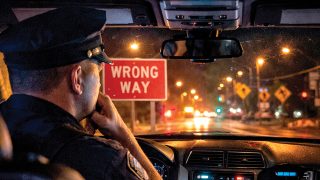
None of this should come as a surprise. On a day-to-day basis, police officers deal with things that the average person will (hopefully) never even realize exists. They’re the wall that holds back all the horror that takes place in every town. They deal with it so that the average citizen doesn’t have to. Most people go about their lives blissfully ignorant of the truly rotten things that happen in their town every day. They don’t have to deal with these things because officers do.

Cops hear children relate how they’ve been abused. They watch people take their last breath. They tell folks that they’ll never see their loved ones again. They pour their hearts and souls into seeking justice for victims, only to see it denied by an imperfect justice system. On a daily basis, they wade into the abyss, hoping that they don’t bring a part of it back home with them at the end of their shift.

Cops, feelings and other things we don’t talk about

Several years back, I had a conversation with a colleague about critical debriefs. My conversational partner was the sheriff of a rural western county; the kind of character that John Wayne might have played. We discussed the importance of ensuring officers are given outlets to psychologically deal with the things they encounter. The ol’ sheriff’s position was, essentially, that officers who were bothered by being exposed to trauma aren’t suited to be in the law enforcement profession. It would be easy to dismiss the sheriff as simply being ignorant, but that’s far from the case. The man was incredibly intelligent and certainly one of the better law enforcement leaders I’ve ever worked with. His position, then, didn’t stem from ignorance or a lack of intelligence. It was representative of a prevailing view within the law enforcement culture at one time. That’s where he got it from.

That realization was a sobering one for me. I’ve been to countless lessons, seminars and events where speakers have eloquently argued the need for more open dialogue about mental health in the law enforcement profession. I’m on board and (I assume) most law enforcement leaders are as well. But my conversation with the sheriff convinced me of the deep-seated, tough-guy mentality we’re up against. When we discuss the need for a new attitude about mental health in law enforcement, it’s not just a matter of tweaking our training. We’re talking about changing an entire culture.

iStock.com/Renphoto

What to do

There are many things the law enforcement profession can do to help address these issues.

Mandatory critical debriefs are a no-brainer. Officers need to be provided a setting where they can discuss what happened. These post-incident gatherings allow officers to decompress and process what happened alongside their fellow officers.

Departments should ensure that traditional mental health counseling is available for officers, should they need to avail themselves of it. It should be confidential and easily accessible. If a government (be it city, county, state or federal) doesn’t fund these services for their first responders, they should be ashamed of themselves. Access to mental health services should be viewed in the same way as paying for a doctor’s visit after an officer has injured themselves on the job. Cities have a moral obligation to provide adequate access to mental health services for their officers, regardless of the cost.

But none of these services will adequately address the issue unless the culture’s viewpoint toward mental health is changed. That can’t be achieved by policy or legislation. Changing the law enforcement culture’s view toward seeking help can only be achieved by example. Just like my old sergeant on Facebook, law enforcement officers must be willing to be vulnerable. Culture starts at the individual level, and it’s the responsibility of individual officers to communicate that their fellow guardians won’t be looked down upon if they seek help.

Cops see the dark side of society. They tread where others fear and deal with horrors so that everyone else won’t have to. That type of thing takes a toll, and the profession needs to communicate that there’s no shame in seeking help for dealing with it. Needing help to deal with the death and destruction that cops see doesn’t mean you’re weak; it means you’re human.


Reference

Perine, T. (2021, May 26). “The Law Enforcement Suicide Data Collection: The FBI’s New Data Collection on Officer Suicide and Attempted Suicide.” Retrieved from Police Chief Online: tinyurl.com/28pdrdeu.

Cliff Couch

Cliff Couch

Cliff Couch is a former police chief and a graduate of the FBI National Academy. He holds a master’s degree in public administration from Florida State University. He’s also attended Harvard’s Executive Education Program and Northwestern University’s School of Police Staff and Command. You can follow him on Twitter at @CliftonDCouch or on his blog, LifeofaLawman.com.

View articles by Cliff Couch

As seen in the September 2022 issue of American Police Beat magazine.
Don’t miss out on another issue today! Click below:


SUBSCRIBE TODAY!

Categories: Health/Wellness

Primary Sidebar

Recent Articles

  • Shooting of Chicago police officers prompts call for new regulations on electronic monitoring
  • High-rise rescue in Brooklyn
  • Swift thinking
  • Cheektowaga P.D. boosts patrol efficiency with Patrolfinder
  • Working community connections
  • “Teenage Mutant Ninja Deer” rescued
  • NLEOMF announces April 2026 Officers of the Month
  • Rules or results?
  • The sacrifice continues
  • Enhance your preparedness

Footer

Our Mission
To serve as a trusted voice of the nation’s law enforcement community, providing informative, entertaining and inspiring content on interesting and engaging topics affecting peace officers today.

Contact us: info@apbweb.com | (800) 234-0056.

  • Facebook
  • Instagram
  • Twitter

Categories

  • Editor’s Picks
  • On the Job
  • Labor
  • Tech
  • Training
  • Policy
  • Health/Wellness
  • Community
  • Offbeat
  • We Remember
  • Jobs and Careers
  • Events

Editor’s Picks

Smile and let them swing

Smile and let them swing

May 16, 2026

The job has changed — have you?

The job has changed — have you?

May 15, 2026

The days that follow

The days that follow

May 11, 2026

Perpetual recognition of line-of-duty deaths

Perpetual recognition of line-of-duty deaths

May 10, 2026

Policies | Consent Preferences | Copyright © 2026 APB Media, LLC | Website design, development and maintenance by 911MEDIA

Open

Subscribe

Close

Receive the latest news and updates from American Police Beat directly to your inbox!

  • This field is for validation purposes and should be left unchanged.