• Skip to primary navigation
  • Skip to main content
  • Skip to primary sidebar
  • Skip to footer
  • Home
  • About
  • The Magazine
  • Events
  • Partners
  • Products
  • Contact
  • Jobs and Careers
  • Advertise
  • Facebook
  • Instagram
  • Twitter
  • Subscribe
American Police Beat

American Police Beat Magazine

Law Enforcement Publication

  • Home
  • Leadership
    • The job has changed — have you?
      Perpetual recognition of line-of-duty deaths
      Understanding the boundaries of professional relationships with the...
      Why you should lead from 30,000 feet
      Public perception and trust
  • Topics
    • Leadership
      • The job has changed — have you?
        Perpetual recognition of line-of-duty deaths
        Understanding the boundaries of professional relationships with the...
        Why you should lead from 30,000 feet
        Public perception and trust
    • Editor’s Picks
      • Let’s get moving!
        Heroes of the World Trade Center
        The Promise Gap
        Corruption, collusion and impunity
        Liability challenges in contemporary policing
    • On the Job
      • Testing the waters — literally
        Frankpledge to forensics: A brief history of law enforcement
        Villains and heroes in the Big Apple
        Right place, right time — again
        Some good news on crime
    • Labor
      • The Promise Gap
        Cut the cops, save a dollar?
        Labor release under fire
        Who’s watching the watchmen?
        Crime and punishment (or lack thereof) in Seattle
    • Tech
      • New Mexico license plate readers save lives, lead to “precise...
        A modern field guide to understanding research in policing
        Gear that moves with you
        A new breed of cop car
        The future of patrol is here
    • Training
      • Pushback as a training signal
        Let’s get moving!
        The five minutes before the ambulance
        Navigating danger
        Critical thinking in police training
    • Policy
      • Police pause license plate readers
        Corruption, collusion and impunity
        E-bikes spark public safety concerns
        Try racing without wheels
        Law enforcement accreditation: Why it matters
    • Health/Wellness
      • The days that follow
        Addressing stress, vicarious trauma and burnout
        Nervous system regulation
        The nature of the job
        Promoting organizational wellness
    • Community
      • Improving autism awareness
        Shop with a Cop
        Community engagement: What is it moving forward?
        Contradictory crossroads
        Back-to-school season brings out police support nationwide
    • Offbeat
      • An unexpected burglar
        Police humor only a cop would understand
        Not eggzactly a perfect heist
        Pizza … with a side of alligator?
        Wisconsin man charged with impersonating Border Patrol agent twice in...
    • We Remember
      • A Tribute to Fallen Heroes
        Markers of service and remembrance
        Tragedy strikes Baker to Vegas
        Heroes of the World Trade Center
        Forty heroes: United Airlines Flight 93
    • HOT Mail
      • The War on Cops Continues Unabated
  • On the Job
    • Testing the waters — literally
      Frankpledge to forensics: A brief history of law enforcement
      Villains and heroes in the Big Apple
      Right place, right time — again
      Some good news on crime
  • Labor
    • The Promise Gap
      Cut the cops, save a dollar?
      Labor release under fire
      Who’s watching the watchmen?
      Crime and punishment (or lack thereof) in Seattle
  • Tech
    • New Mexico license plate readers save lives, lead to “precise...
      A modern field guide to understanding research in policing
      Gear that moves with you
      A new breed of cop car
      The future of patrol is here
  • Training
    • Pushback as a training signal
      Let’s get moving!
      The five minutes before the ambulance
      Navigating danger
      Critical thinking in police training
  • Policy
    • Police pause license plate readers
      Corruption, collusion and impunity
      E-bikes spark public safety concerns
      Try racing without wheels
      Law enforcement accreditation: Why it matters
  • Health/Wellness
    • The days that follow
      Addressing stress, vicarious trauma and burnout
      Nervous system regulation
      The nature of the job
      Promoting organizational wellness
  • Community
    • Improving autism awareness
      Shop with a Cop
      Community engagement: What is it moving forward?
      Contradictory crossroads
      Back-to-school season brings out police support nationwide
  • Offbeat
    • An unexpected burglar
      Police humor only a cop would understand
      Not eggzactly a perfect heist
      Pizza … with a side of alligator?
      Wisconsin man charged with impersonating Border Patrol agent twice in...
  • We Remember
    • A Tribute to Fallen Heroes
      Markers of service and remembrance
      Tragedy strikes Baker to Vegas
      Heroes of the World Trade Center
      Forty heroes: United Airlines Flight 93
  • HOT Mail
    • The War on Cops Continues Unabated
  • About
  • The Magazine
  • Events
  • Partners
  • Products
  • Contact
  • Jobs and Careers
  • Advertise
  • Subscribe
Search

Training

Realism and stress inoculation in training

Shaun Fleming Published March 24, 2023 @ 6:00 am PDT

iStock.com/Lorado

The state of Ohio requires approximately 80 hours of defensive tactics training for new cadets. In those 80 hours, cadets are required to learn and satisfactorily perform a multitude of techniques, including arrest and control holds, takedowns, ground manipulation, weapons retention and handcuffing. Very few departments address training in these techniques after the academy, due to either staffing issues, budget constraints, focusing on training new policy or devoting in-service training to the required firearms and EDC annual qualifications. Complacency, ego, time and the physical discomfort inherent to the training usually prevent officers from pursuing further instruction on their own time.

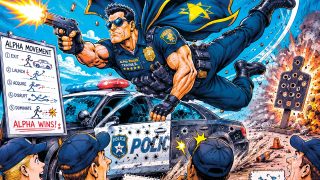
Teaching in multiple academies for the last few years, I have noticed a disturbing trend in the rosters of the classes. In every academy class I have taught, more than half of the students have never been in a physical altercation of any kind. There occasionally is someone who wrestled in high school or studied martial arts, but a majority of the cadets have not ever been in an “actual fight.” As an instructor, not only do I have to make sure there is an adequate understanding of the technique and its application, but I have to try to instill a fundamental shift in thinking and situational awareness. Simply performing a satisfactory armbar on a nonresistant partner will not serve the students in a real and dangerous situation. There must be physical and mental stress added to the training to ensure an appropriate response and understanding. There must be stress inoculation. After the introduction and instruction in the principles and application of the techniques, students must be able to “pressure test them.”

One method to achieve this is repetition with an increasingly noncompliant partner. This will allow the student to develop a greater understanding of the application and opportunities for use of each technique, as well as instill confidence in the student. Students should routinely work with partners of different body types and familiarity to increase this understanding. Students should be placed in positions of disadvantage to add familiarity and increase problem solving.

Another method for stress inoculation is adding physical stress (strength and cardio) to the training. When the students are tired, weakened and winded, the training will force them to internalize that understanding and allow them to utilize the techniques more efficiently. This is a relatively safe way to simulate the fatigue of fighting and adrenaline usage. It also allows students to address their own deficiencies in their physical training. While a physical encounter can be exhausting regardless, students need an understanding that they must maintain physical and mental readiness as much as possible. Not being able to perform a technique in a relatively safe and structured environment will prove disastrous in dangerous and rapidly evolving encounters.

Scenario training allows for a safe, structured and practical way to induce stress and test skill. In training scenarios, I usually keep parameters limited to just their role and a desired outcome. This is to prevent the students from overthinking and to observe their genuine reaction to the situation. Use of a box or blindfold while entering the scenario disorients the student, adds anxiety and forces students to quickly react; effectively mimicking the surprise, stress and adrenaline dump of a real situation. However, for scenario training to be effective, there must be a prior understanding of the principles and application of the techniques presented, or otherwise students will regress into previous learned behaviors.

It is important to note that while I have framed this article as instructing cadets, all officers should incorporate realism and stress inoculation into their training. Shooting paper only once a year or just assuming experience will carry you through an encounter is an extreme risk. Officers literally face the risk of injury and death daily.

Every routine pat-down and arrest is a hands-on subject control situation. With the increased danger, scrutiny and liability in this profession, the importance of consistent and quality training cannot be overemphasized. Departments need to address comprehensive and realistic training regularly, in all aspects. In post-incident briefings, constructively address training and experience deficiencies with yourself and other officers. Departments need to be encouraged to conduct further training to lessen the chance of officer and suspect injuries, and to allow officers to have the confidence and skills to de-escalate and prevent greater use-of-force instances. All officers should seek advanced training routinely and maintain a state of physical fitness and readiness.

Routinely test yourself and your skills, push yourself and inspire others to do the same.

Shaun Fleming

Shaun Fleming

Shaun Fleming is an instructor for the Sinclair Criminal Justice Training Academy and the Ohio Peace Officer Training Academy. He is a certified use-of-force instructor by the state of Ohio and the Federal Law Enforcement Training Center, teaching firearms, subject control, impact weapons, OC and officer tactics. He has 27 years of experience working in law enforcement, corrections and private security. He also has over 30 years of experience studying a multitude of martial arts and combatives programs.

View articles by Shaun Fleming

As seen in the March 2023 issue of American Police Beat magazine.
Don’t miss out on another issue today! Click below:


SUBSCRIBE TODAY!

Categories: Training

Primary Sidebar

Recent Articles

  • The job has changed — have you?
  • New National Law Enforcement Museum exhibit revisits D.C. snipers case
  • A hero’s legacy through a mother’s love
  • The days that follow
  • Perpetual recognition of line-of-duty deaths
  • A Tribute to Fallen Heroes
  • NLEOMF Fund announces March 2026 Officers of the Month
  • Markers of service and remembrance
  • Testing the waters — literally
  • Police pause license plate readers

Footer

Our Mission
To serve as a trusted voice of the nation’s law enforcement community, providing informative, entertaining and inspiring content on interesting and engaging topics affecting peace officers today.

Contact us: info@apbweb.com | (800) 234-0056.

  • Facebook
  • Instagram
  • Twitter

Categories

  • Editor’s Picks
  • On the Job
  • Labor
  • Tech
  • Training
  • Policy
  • Health/Wellness
  • Community
  • Offbeat
  • We Remember
  • Jobs and Careers
  • Events

Editor’s Picks

Let’s get moving!

Let’s get moving!

April 27, 2026

Heroes of the World Trade Center

Heroes of the World Trade Center

April 24, 2026

The Promise Gap

The Promise Gap

April 22, 2026

Corruption, collusion and impunity

Corruption, collusion and impunity

April 21, 2026

Policies | Consent Preferences | Copyright © 2026 APB Media, LLC | Website design, development and maintenance by 911MEDIA

Open

Subscribe

Close

Receive the latest news and updates from American Police Beat directly to your inbox!

  • This field is for validation purposes and should be left unchanged.