• Skip to primary navigation
  • Skip to main content
  • Skip to primary sidebar
  • Skip to footer
  • Home
  • About
  • The Magazine
  • Events
  • Partners
  • Products
  • Contact
  • Jobs and Careers
  • Advertise
  • Facebook
  • Instagram
  • Twitter
  • Subscribe
American Police Beat

American Police Beat Magazine

Law Enforcement Publication

  • Home
  • Leadership
    • Clarifying your “true north”
      The job has changed — have you?
      Perpetual recognition of line-of-duty deaths
      Understanding the boundaries of professional relationships with the...
      Why you should lead from 30,000 feet
  • Topics
    • Leadership
      • Clarifying your “true north”
        The job has changed — have you?
        Perpetual recognition of line-of-duty deaths
        Understanding the boundaries of professional relationships with the...
        Why you should lead from 30,000 feet
    • Editor’s Picks
      • Smile and let them swing
        The job has changed — have you?
        The days that follow
        Perpetual recognition of line-of-duty deaths
        Let’s get moving!
    • On the Job
      • High-rise rescue in Brooklyn
        Swift thinking
        K-9 officer turns children’s book author
        K-9 Day demonstrates scope of officers’ duties
        Testing the waters — literally
    • Labor
      • Smile and let them swing
        The Promise Gap
        Cut the cops, save a dollar?
        Labor release under fire
        Who’s watching the watchmen?
    • Tech
      • NYC’s electric vehicle fleet for LE passes milestone
        New Mexico license plate readers save lives, lead to “precise...
        A modern field guide to understanding research in policing
        Gear that moves with you
        A new breed of cop car
    • Training
      • Rules or results?
        Enhance your preparedness
        Good enough never is
        Pushback as a training signal
        Let’s get moving!
    • Policy
      • Police and local government leaders join forces to build community...
        Police pause license plate readers
        Corruption, collusion and impunity
        E-bikes spark public safety concerns
        Try racing without wheels
    • Health/Wellness
      • The days that follow
        Addressing stress, vicarious trauma and burnout
        Nervous system regulation
        The nature of the job
        Promoting organizational wellness
    • Community
      • Working community connections
        Cops promote National Donate Life Month
        Police officer kicks up social media praise
        Donning denim in solidarity with victims and survivors of sexual...
        Improving autism awareness
    • Offbeat
      • “Teenage Mutant Ninja Deer” rescued
        An unexpected burglar
        Police humor only a cop would understand
        Not eggzactly a perfect heist
        Pizza … with a side of alligator?
    • We Remember
      • Shooting of Chicago police officers prompts call for new regulations...
        The sacrifice continues
        A Tribute to Fallen Heroes
        Markers of service and remembrance
        Tragedy strikes Baker to Vegas
    • HOT Mail
      • The War on Cops Continues Unabated
  • On the Job
    • High-rise rescue in Brooklyn
      Swift thinking
      K-9 officer turns children’s book author
      K-9 Day demonstrates scope of officers’ duties
      Testing the waters — literally
  • Labor
    • Smile and let them swing
      The Promise Gap
      Cut the cops, save a dollar?
      Labor release under fire
      Who’s watching the watchmen?
  • Tech
    • NYC’s electric vehicle fleet for LE passes milestone
      New Mexico license plate readers save lives, lead to “precise...
      A modern field guide to understanding research in policing
      Gear that moves with you
      A new breed of cop car
  • Training
    • Rules or results?
      Enhance your preparedness
      Good enough never is
      Pushback as a training signal
      Let’s get moving!
  • Policy
    • Police and local government leaders join forces to build community...
      Police pause license plate readers
      Corruption, collusion and impunity
      E-bikes spark public safety concerns
      Try racing without wheels
  • Health/Wellness
    • The days that follow
      Addressing stress, vicarious trauma and burnout
      Nervous system regulation
      The nature of the job
      Promoting organizational wellness
  • Community
    • Working community connections
      Cops promote National Donate Life Month
      Police officer kicks up social media praise
      Donning denim in solidarity with victims and survivors of sexual...
      Improving autism awareness
  • Offbeat
    • “Teenage Mutant Ninja Deer” rescued
      An unexpected burglar
      Police humor only a cop would understand
      Not eggzactly a perfect heist
      Pizza … with a side of alligator?
  • We Remember
    • Shooting of Chicago police officers prompts call for new regulations...
      The sacrifice continues
      A Tribute to Fallen Heroes
      Markers of service and remembrance
      Tragedy strikes Baker to Vegas
  • HOT Mail
    • The War on Cops Continues Unabated
  • About
  • The Magazine
  • Events
  • Partners
  • Products
  • Contact
  • Jobs and Careers
  • Advertise
  • Subscribe
Search

Training

Working effectively in low light

Todd Fletcher Published March 25, 2023 @ 6:00 am PDT

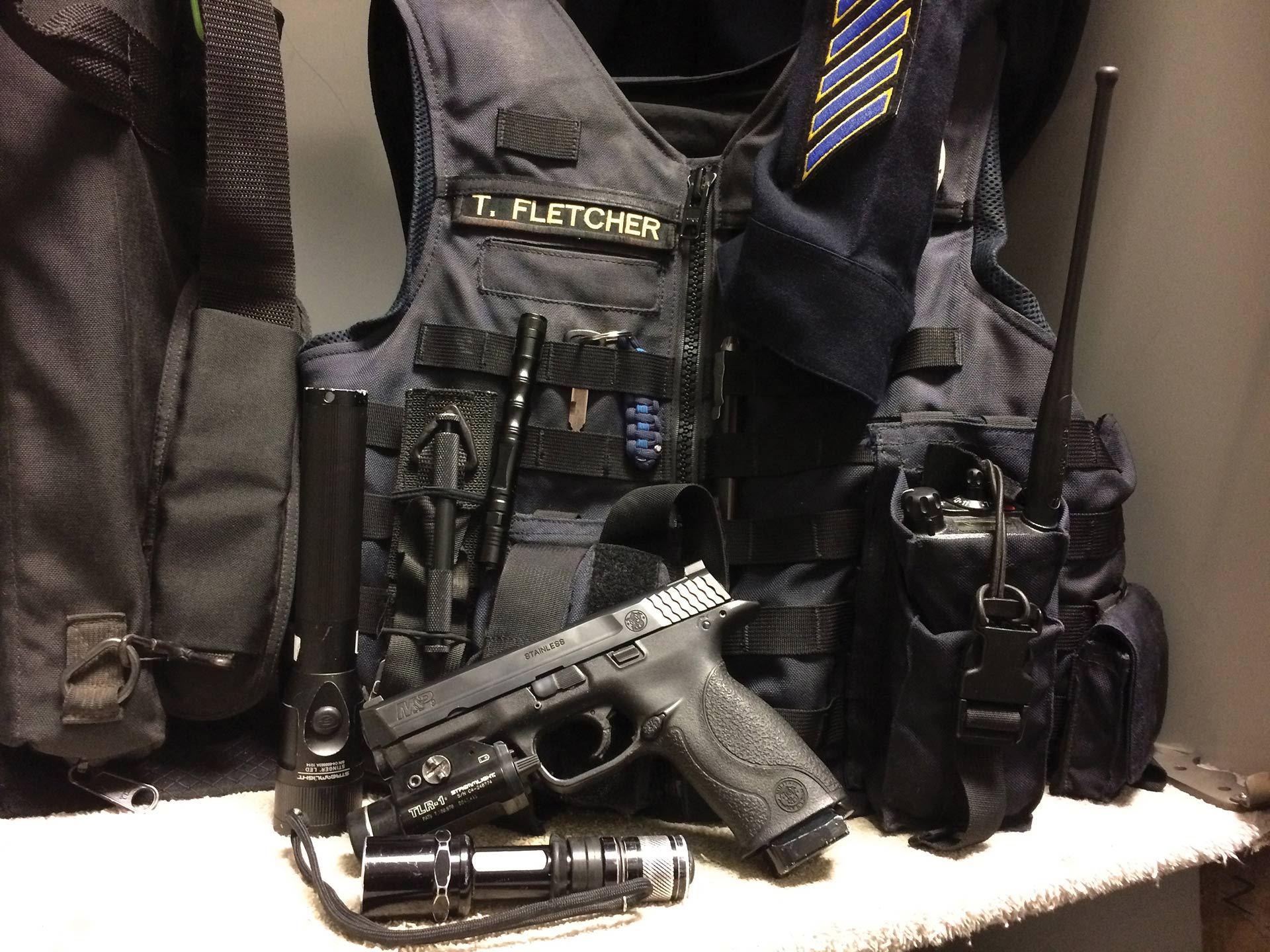
A dayshift loadout of light included weapon-mounted lights on my handgun and patrol rifle, a full-size flashlight, a small handheld light and a pen light. That’s right. Five flashlights for dayshift. (Todd Fletcher)

The most crucial time of day for law enforcement to work is at night. When the rest of the world is asleep, it’s important to have sheepdogs protecting the slumbering flock. The problem is humans are designed to operate best during the day. Our eyes are designed to be more effective in full daylight where we can see in detail over a variety of distances. At night and in low-light environments, we need assistance to see what we need to see to make good decisions.

That’s where quality flashlights come into the equation. Officers know it’s important to have a flashlight during low-light operations. Especially when working at night, flashlights are the tool we turn to most often. But nighttime isn’t the only time to have a flashlight. Dark buildings exist on dayshift, too. The foundational concept behind all low-light operations is the ability to navigate, locate, conceal and identify.

Navigate

Being able to see while moving from place to place is critical in low-light environments. There are various techniques we can use, but knowing when to leave the flashlight on and when to use momentary flashes of light requires training and experience.

A flashlight continuously on is useful to light a secured area. A secured area means it’s been cleared and monitored by officers. For example, working a secured crime scene at night while having a flashlight continuously on can help locate evidence. Similarly, using a spotlight during traffic stops is a good way to light up a vehicle while helping you avoid obstacles in your path during your approach.

On the other hand, momentary short flashes of light allow officers to move more discreetly while investigating an alarm or other suspicious activity. We need to see what’s in front of us to establish a route of travel and avoid obstacles. Short bursts of light can illuminate our path while we commit the route to memory before moving under the cover of darkness.

Locate

Using artificial light to locate items is the most obvious use of a flashlight. In low light, a flashlight can help locate whatever it is we need to find. This includes helping to detect threats in our operational area. We need to know what is coming and going all around us. Light allows us to locate potential threats that require attention.

Once we locate what we’re looking for, we need to decide whether to use the light in momentary flashes or to leave the light on. The best tactic to use is situationally dependent. If a potential threat to you or someone else is located, leaving the light on can help with threat assessment.

However, there are times to turn off the light. If we get in the habit of leaving the light on, we risk losing whatever night vision we have gained. After your eyes have adjusted to the dark, when you go into a well-lit room, your eyes adjust to the bright light relatively quickly. But when you go back into a dark area again, it takes several minutes for your night vision to return. As we age, it takes even longer for our eyes to adjust to sudden changes in light levels.

Another consideration is, once our eyes adjust to low light, they are fairly good at picking up movement. We can use this to our benefit. But if we get in the habit of using a flashlight too often, we lose this important advantage.

Officers can effectively use a “shield of light” to conceal their movement while putting others at a tactical disadvantage by taking away their night vision. (Todd Fletcher)

Conceal

Using light as concealment is an often overlooked but highly effective use of light. Officers can effectively cast a “shield of light” to conceal themselves and place other people at a disadvantage. Think about it this way: During a traffic stop at night, a “shield of light” is cast using takedown lights, headlights and spotlights. This illuminates the interior of the offender’s vehicle while giving officers a “shield of light” to conceal their movement to the vehicle. Moving in the shadows helps keep officers safe during low-light traffic stops.

This technique can keep officers safe in other situations, too. The shield of light is especially effective when the light is unexpected. A shot of intense light to someone’s eyes can cause them to suddenly turn their head away, giving an officer time to evaluate their intentions while gaining a tactical advantage. I used this to great effect while working night shifts. Most people I encountered in the dark got a quick splash of light in their eyes as I approached. This was immediately followed by me being apologetic for my clumsiness while I changed locations and assessed their level of cooperation. It affected their ability to see for a short period of time and provided me with a tactical advantage.

Identify

Over the years, I have been involved in many classes on the use of light. I’ve been a low-light student, and I’ve taught classes on the tactics and techniques of using light. In every class, we see how officers allow their vision to become focused on where the “hot spot” of their light is. Once this is pointed out, they understand how light can be a hindrance by tricking them into looking through “the straw of light.” This can even occur with well-trained and experienced officers. Tunnel vision is developed by focusing on what is directly lit by their flashlight. It takes practice and discipline to use the light away from the hot spot, but this is the light that allows officers to see more effectively.

Our eyes see movement more efficiently to the side of our field of vision. We can maximize our night vision by using the eccentric or off-center vision technique. This involves looking off to the side of the object of interest, then scanning its periphery using short three-second movements. Three seconds allows light to stimulate the rods in your eyes. The rods are located on the periphery of the retina and provide the best vision in low light. In the dark, extra stimulation time is needed for the rods to gather sufficient information to form visual images. Making better use of the rods in our eyes improves our ability to detect motion and improves peripheral vision and depth perception.

No “perfect” light

This brings us to the topic of which light to choose. Unfortunately, there is no “perfect” flashlight for every situation. Some flashlights generate enough lumens to illuminate the entire countryside and are great for searching open areas. But these same flashlights can be overwhelming during a search of a residence. Too many lumens can inhibit our ability to see as much as too little light. For example, getting blinded by a bright light during a search of a small room is counterproductive. Conversely, small pocket lights may not produce enough light to illuminate a residential yard while searching for a hidden suspect.

This means we need different tools for different jobs. A hammer isn’t useful when painting a large wall. We need a broad paintbrush. When working a uniform assignment, I carried a variety of flashlights to be ready for every occasion. I had a full-size flashlight in my cargo pocket whether working day or night, weapon-mounted lights on my handgun and patrol rifle, a pen light for illumination while taking notes and looking for small items in tight spaces, and a backup light to use when my primary flashlight was out of juice. This means on day shift, I always had five flashlights on me. Overkill? Maybe. But I always had a light on me when I needed it.

A mentor of mine and fellow firearm instructor, Mike Boyle, once told me, “If you carry a gun for self-defense, you need to carry a light. Most bad things happen at night. I can’t predict the weather with any degree of certainty, but I can tell you with a 100% degree of assurance it will get dark tonight. Carry a light!”

Todd Fletcher

Todd Fletcher

Todd Fletcher is a retired sergeant from central Oregon with over 30 years of law enforcement experience. He presents firearms training, instructor certification and instructor development classes nationwide. Todd has presented at multiple regional, national and international conferences, including multiple ILEETA conferences and IALEFI events. He owns Combative Firearms Training, LLC, providing firearms training, handgun and patrol rifle instructor certification, and instructor development classes to law enforcement, military and private security. He can be contacted at Todd@CombativeFirearms.com.

View articles by Todd Fletcher

As seen in the March 2023 issue of American Police Beat magazine.
Don’t miss out on another issue today! Click below:


SUBSCRIBE TODAY!

Categories: Training

Primary Sidebar

Recent Articles

  • Shooting of Chicago police officers prompts call for new regulations on electronic monitoring
  • High-rise rescue in Brooklyn
  • Swift thinking
  • Cheektowaga P.D. boosts patrol efficiency with Patrolfinder
  • Working community connections
  • “Teenage Mutant Ninja Deer” rescued
  • NLEOMF announces April 2026 Officers of the Month
  • Rules or results?
  • The sacrifice continues
  • Enhance your preparedness

Footer

Our Mission
To serve as a trusted voice of the nation’s law enforcement community, providing informative, entertaining and inspiring content on interesting and engaging topics affecting peace officers today.

Contact us: info@apbweb.com | (800) 234-0056.

  • Facebook
  • Instagram
  • Twitter

Categories

  • Editor’s Picks
  • On the Job
  • Labor
  • Tech
  • Training
  • Policy
  • Health/Wellness
  • Community
  • Offbeat
  • We Remember
  • Jobs and Careers
  • Events

Editor’s Picks

Smile and let them swing

Smile and let them swing

May 16, 2026

The job has changed — have you?

The job has changed — have you?

May 15, 2026

The days that follow

The days that follow

May 11, 2026

Perpetual recognition of line-of-duty deaths

Perpetual recognition of line-of-duty deaths

May 10, 2026

Policies | Consent Preferences | Copyright © 2026 APB Media, LLC | Website design, development and maintenance by 911MEDIA

Open

Subscribe

Close

Receive the latest news and updates from American Police Beat directly to your inbox!

  • This field is for validation purposes and should be left unchanged.