• Skip to primary navigation
  • Skip to main content
  • Skip to primary sidebar
  • Skip to footer
  • Home
  • About
  • The Magazine
  • Events
  • Partners
  • Products
  • Contact
  • Jobs and Careers
  • Advertise
  • Facebook
  • Instagram
  • Twitter
  • Subscribe
American Police Beat

American Police Beat Magazine

Law Enforcement Publication

  • Home
  • Leadership
    • When performance reviews are a waste of time
      Taking a page from Toyota’s playbook
      Tattoos can be self-inflicted handicaps
      Hardcore experts should not be decision-makers!
      Law enforcement’s missing weapon
  • Topics
    • Leadership
      • When performance reviews are a waste of time
        Taking a page from Toyota’s playbook
        Tattoos can be self-inflicted handicaps
        Hardcore experts should not be decision-makers!
        Law enforcement’s missing weapon
    • Editor’s Picks
      • Law enforcement’s missing weapon
        Has law enforcement changed?
        Policing the police
        Fit for duty
        Effective in-service training
    • On the Job
      • Some good news on crime
        Mom-to-be named Cop of the Year
        Fatherly instincts save boy from icy water
        More than a call for service
        Has law enforcement changed?
    • Labor
      • Who’s watching the watchmen?
        Crime and punishment (or lack thereof) in Seattle
        Labor leadership out in the field
        When you are falsely accused
        Is anyone listening?
    • Tech
      • A modern field guide to understanding research in policing
        Gear that moves with you
        A new breed of cop car
        The future of patrol is here
        New York governor highlights $24 million investment to modernize law...
    • Training
      • Threshold neuroscience
        Integrated virtual reality training
        Hit the pause button
        Effective in-service training
        The untrained trainer
    • Policy
      • Law enforcement accreditation: Why it matters
        Liability challenges in contemporary policing
        The war on drugs is evolving
        Drug policy and enforcement
        Policing the police
    • Health/Wellness
      • Proactive wellness visits
        Fit for duty
        Maintain your mental armor
        Beyond crisis response
        Mental health checks … in the training room?
    • Community
      • Shop with a Cop
        Community engagement: What is it moving forward?
        Contradictory crossroads
        Back-to-school season brings out police support nationwide
        A bold idea for reducing homelessness in America
    • Offbeat
      • An unexpected burglar
        Police humor only a cop would understand
        Not eggzactly a perfect heist
        Pizza … with a side of alligator?
        Wisconsin man charged with impersonating Border Patrol agent twice in...
    • We Remember
      • The Pentagon
        A nation propelled to war, lives changed forever
        A Christmas loss
        York County ambush leaves three officers dead, others critically...
        Honoring the Fallen Heroes of 9/11
    • HOT Mail
      • The War on Cops Continues Unabated
  • On the Job
    • Some good news on crime
      Mom-to-be named Cop of the Year
      Fatherly instincts save boy from icy water
      More than a call for service
      Has law enforcement changed?
  • Labor
    • Who’s watching the watchmen?
      Crime and punishment (or lack thereof) in Seattle
      Labor leadership out in the field
      When you are falsely accused
      Is anyone listening?
  • Tech
    • A modern field guide to understanding research in policing
      Gear that moves with you
      A new breed of cop car
      The future of patrol is here
      New York governor highlights $24 million investment to modernize law...
  • Training
    • Threshold neuroscience
      Integrated virtual reality training
      Hit the pause button
      Effective in-service training
      The untrained trainer
  • Policy
    • Law enforcement accreditation: Why it matters
      Liability challenges in contemporary policing
      The war on drugs is evolving
      Drug policy and enforcement
      Policing the police
  • Health/Wellness
    • Proactive wellness visits
      Fit for duty
      Maintain your mental armor
      Beyond crisis response
      Mental health checks … in the training room?
  • Community
    • Shop with a Cop
      Community engagement: What is it moving forward?
      Contradictory crossroads
      Back-to-school season brings out police support nationwide
      A bold idea for reducing homelessness in America
  • Offbeat
    • An unexpected burglar
      Police humor only a cop would understand
      Not eggzactly a perfect heist
      Pizza … with a side of alligator?
      Wisconsin man charged with impersonating Border Patrol agent twice in...
  • We Remember
    • The Pentagon
      A nation propelled to war, lives changed forever
      A Christmas loss
      York County ambush leaves three officers dead, others critically...
      Honoring the Fallen Heroes of 9/11
  • HOT Mail
    • The War on Cops Continues Unabated
  • About
  • The Magazine
  • Events
  • Partners
  • Products
  • Contact
  • Jobs and Careers
  • Advertise
  • Subscribe
Search

We Remember

FBI agent of mercy: Remembering Supervisory Special Agent Danny Knapp

Joseph McDonagh Published April 13, 2024 @ 6:00 am PDT

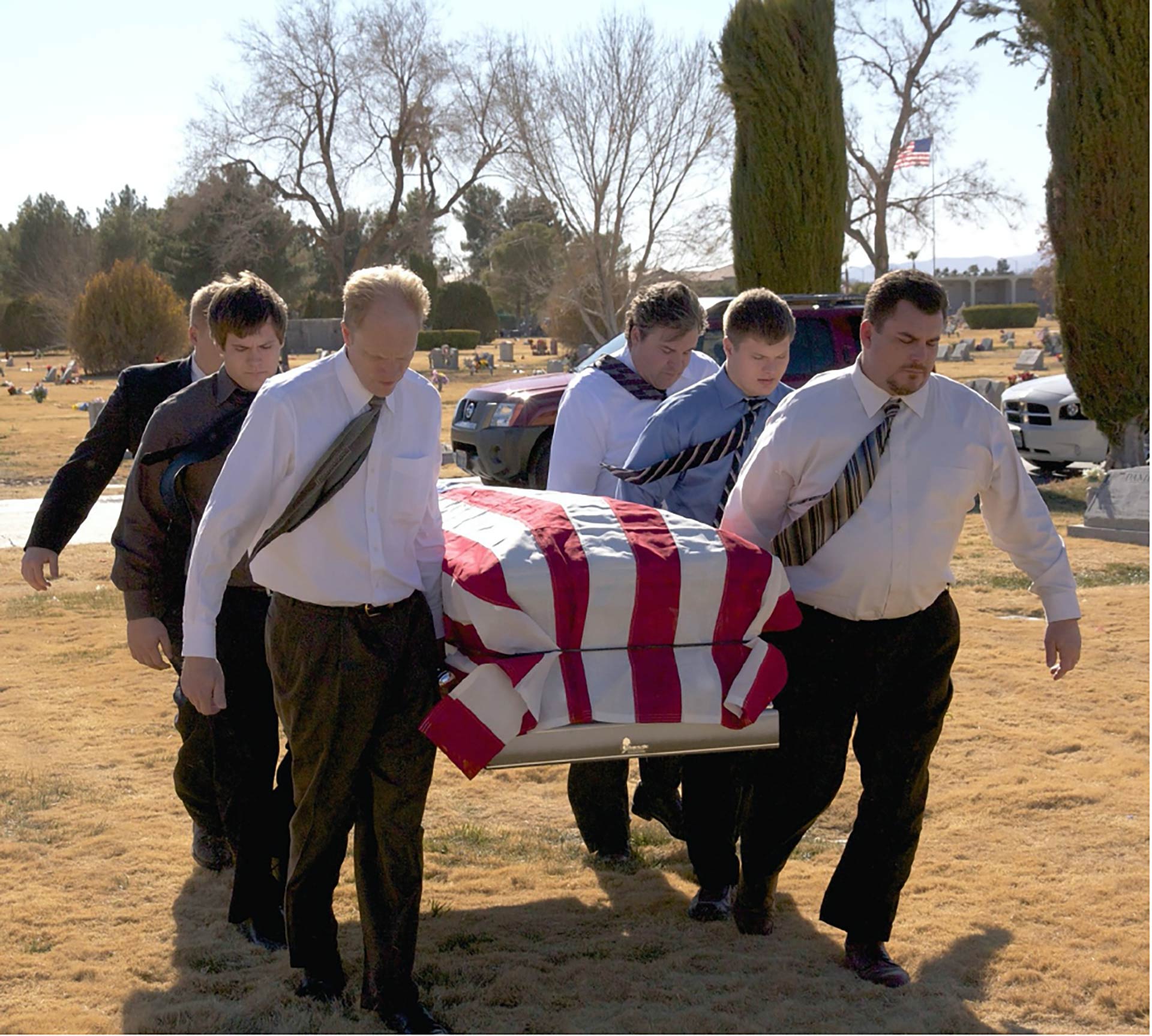
Danny Knapp’s pallbearers carrying his casket on January 7, 2012. Left side: brother David Knapp, nephew Kevin Knapp and brother Rich Knapp. Right side: brother Michael Knapp, nephew Steven Knapp and brother Barry Knapp. (Renae Knapp)
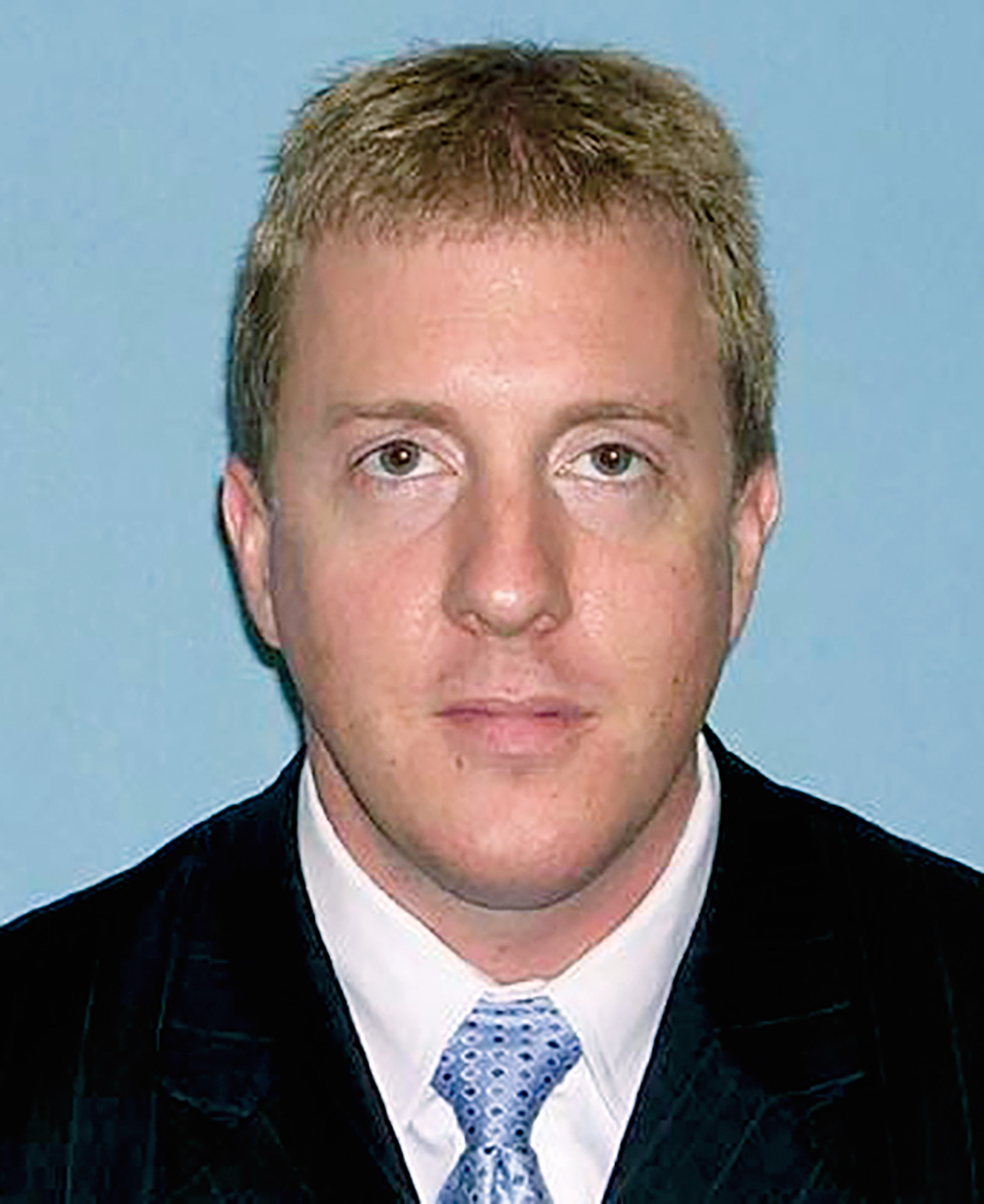
FBI Supervisory Special Agent Danny Knapp (FBI)

“Some people called him the male Mother Teresa.”

That’s one of the descriptions shared by fellow agents of FBI Supervisory Special Agent Danny Knapp. Knapp was a well-respected, well-liked, highly decorated agent who gave his own life as he strove to successfully rescue a young man off the coast of Puerto Rico on December 29, 2011.

Danny was very religious and never missed church. His faith was very important to him, and he strove to put it into practice in his life every day. His mother, Renae Knapp, said that people would gravitate to him for advice, for help, for encouragement. His low-key, quiet demeanor and his ability to always be a good listener made him a favorite in the family.

People who interacted with him described him as the most Christ-like person they had ever met. He consistently put others before himself and lived what he preached. He was always an example for good in the world, which is what eventually made him a hero to others. Agents who worked with him said, “He lived in the arrogant-free zone.” He never wanted to be the center of attention.

He studied psychology at Brigham Young University and the University of Utah. He told his mother that he had an ability to see what a person could become and not what they were. That uncanny ability and the study of psychology served him well in his time as an FBI agent.

At FBI Headquarters in Washington, D.C., as you come through the Visitors Center and its security points, pass through a lobby and some security tubes, and walk out onto the courtyard at the center of the historic building, you will see slightly off to your left a bronze sculpture depicting the American flag and three figures in the foreground of the sculpture symbolizing the FBI motto: Fidelity, Bravery and Integrity.

To FBI employees, these words are a way of life. Danny put these words into practice.

Fidelity

When Danny’s brother David was on a hiking trip with a group, he lost his footing at one point along the way and fell 50 feet. David suffered severe injuries and was taken to a hospital, where Danny met him and stayed with him.

Several years later, David faced major kidney problems, which in all probability were caused by his horrific fall. He was dying. The only hope he had was a kidney transplant, and testing showed Danny was a perfect match. The results of the compatibility test put all of his life — with all its heady promise — on hold. Without a second thought, he immediately approached the special agent in charge (SAC) of the San Juan office and told him he had to go to help his brother; he was going to donate a kidney for the transplant.

The SAC asked Danny if he wanted to think more about this life-altering decision, because he was working a on a violent crime squad and staying on that squad required him to be in the best of physical shape. If the removal of his kidney would cause significant physical harm, Danny would not be able to remain on the squad and would probably have to work at a desk for the remainder of his career.

Knowing this was a possibility, Danny still decided without hesitation to be his brother’s donor. The surgery was successful. David received the kidney without issues, and Danny made a full and swift recovery. He returned to the violent crime squad in San Juan. He had saved his brother.

Renae Knapp coming home from the hospital with her newborn son, Danny, as her older sons Barry and Michael stand by (Renae Knapp)

Integrity

Then came the work of the FBI: investigating, surveilling, arresting, tracking. That tracking he was doing would help lead to the largest takedown of corrupt police officers by the FBI in its 122-year history.

Danny, by being assigned to the San Juan Division of the FBI, was already in place to contribute his skills as a leader to a multi-pronged takedown, which ultimately involved more than 1,000 FBI personnel. The operation — known as Operation Guard Shack — was carried out over the span of two years, snagging 89 law enforcement officers and 44 non-officers.

The takedown grew out of the work of an undercover FBI agent who posed as a drug dealer selling kilograms of cocaine and putting the word out that he needed security when transacting the drug deals. To the agent’s mortification, those who responded to the call for security were police officers.

When the police officers saw how the well the undercover agents were living and how their cover was very effective, they made it clear they wanted in on the action. He said Danny and the squad had been wanting to do something big, make a major impact, so they devised this operation.

Tyler McCurdy is an FBI agent who was a close friend of Danny’s in the San Juan office. “Our squad really worked together,” he said. “There were no egos — there was no one person in charge.”

Danny and his FBI colleagues and members of the Puerto Rico Police and Puerto Rico Special Investigations Bureau earned the FBI Director’s Annual Award for Outstanding Criminal Investigation.
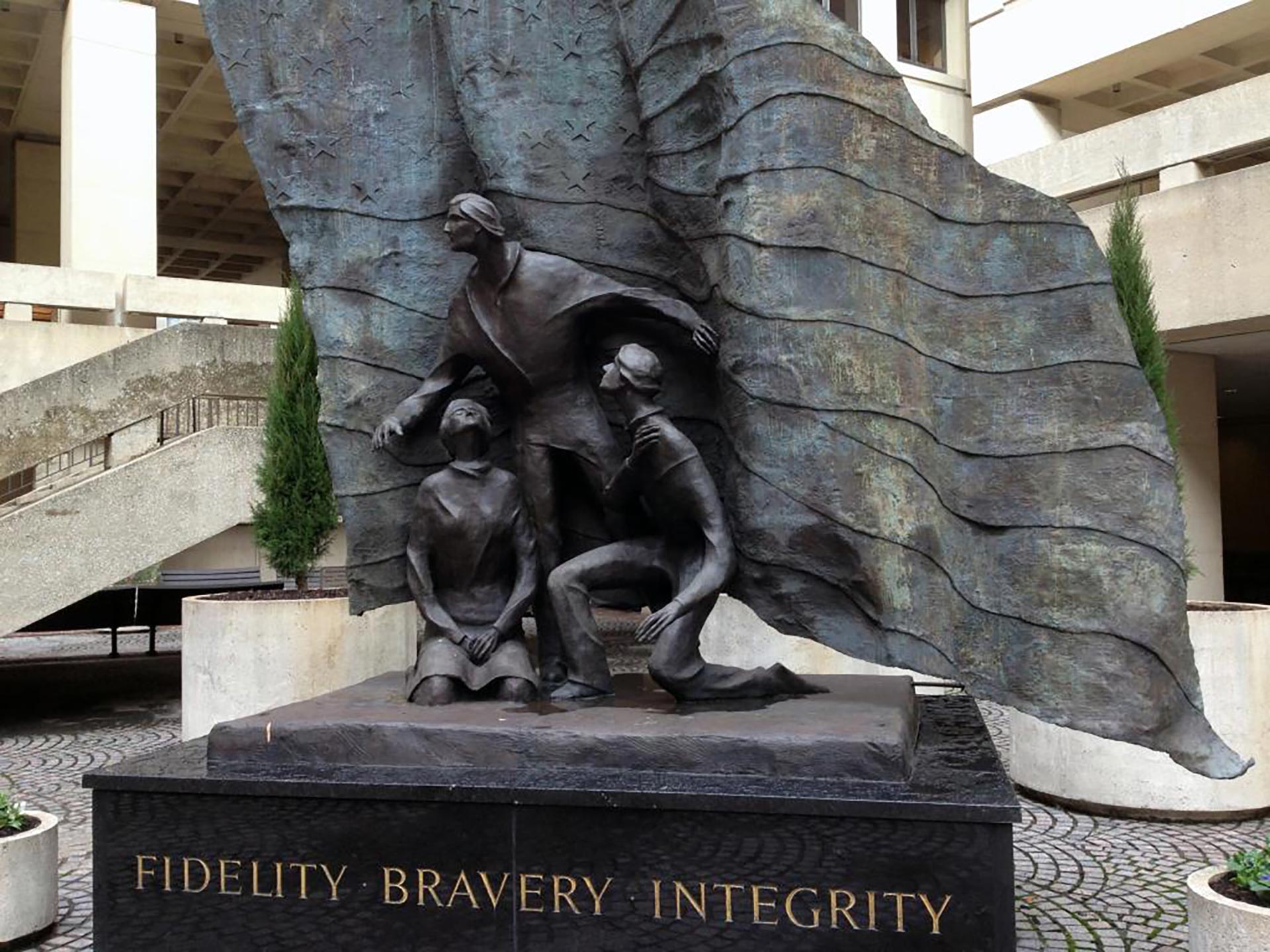
Frederick Charles Shrady’s 1976 sculpture Fidelity, Bravery, Integrity stands in the interior courtyard of the J. Edgar Hoover FBI Building in Washington, D.C. (U.S. General Services Administration)

Bravery

The sun was shining and the surface of the water was calm and inviting for Hector Gonzalez and two of his friends — all around 15 years of age — to get together and swim.

Hector noticed that the shore was receding and that he was feeling a strong current beneath the placid surface of the water, so he suggested to his friends that they begin swimming back to the shore. But what became a frightening reality was that the shore still remained the same distance from them.

Eventually, two of his friends did manage to get out of the water onto shore, and a third friend who was very strong pushed very hard and also got to ground. That friend called 9-1-1. Hector grabbed onto a rock, but it broke, and he was in the water again.

He saw someone swimming toward him. It was Danny. Hector said the first words he heard from Danny were that he would be all right. “His voice was very calming,” Hector said. “I don’t know how he could be so calm, but his calmness helped me to feel calmer.” The two locked arms and pressed forward, but then the forces of nature took over and the two were separated. Fortunately, Hector found some rocks to anchor onto.

An hour passed before the Joint Forces of Rapid Action (FURA) were able to get a helicopter to the scene and begin the operation to rescue Hector. They let down a rope and Hector latched onto it, but his grip slipped, and he fell back into the water. Finally, he was able to reach the rope and tie it around his waist, and the helicopter got him to the beach.

The water and its currents were too much for Danny. During his own rescue, Hector caught sight of Danny’s motionless body. “Danny was face down, and I saw no sign of life,” Hector said. Medics came to rescue Danny, but they could not revive him. They said he died on the way to the hospital.

Members of FURA had jumped into the water to help Danny, but they saw he was unconscious. In an incredible act of strength and endurance, Danny had held Hector up in the water for approximately 20 minutes, a feat that amazed officers in the U.S. Coast Guard.

“So many people have told me how good a person Danny was. I want to be like him.” Hector has been studying digital forensics at the Polytechnic University of Puerto Rico with the ultimate hope to become an FBI agent. “I will always cherish what Danny did for me.”

Because of his heroic sacrifice, Danny Knapp was awarded the Gold Life Saving Medal by the U.S. Coast Guard.

Farewell

As part of FBI security protocol, after an agent’s death, his private residence needs to be swept to ensure that FBI property and materials are accounted for. After his death, some of Danny’s fellow agents examined his apartment. They were stunned: In the apartment were Danny’s bed, a picture of Jesus Christ, some books, a chair, a desk and a computer. He had owned two cars, one a 1995 Nissan that looked terrible; people thought it resembled a drug dealer’s car. He would wear his tennis shoes for at least six years. His favorite restaurants were McDonald’s and Taco Bell.


Joseph McDonagh

Joseph McDonagh

Joseph McDonagh has been working as an analyst for 20 years at the Federal Bureau of Investigation in Washington, D.C. He is a graduate of Duquesne University and the University of Pittsburgh School of Law. He lives in West Virginia with his wife. They have three children, and one of them is now working for the FBI as well.

View articles by Joseph McDonagh

Categories: We Remember

Primary Sidebar

Recent Articles

  • Some good news on crime
  • Mom-to-be named Cop of the Year
  • National Law Enforcement Officers Memorial Fund announces January 2026 Officer of the Month
  • Law enforcement accreditation: Why it matters
  • Liability challenges in contemporary policing
  • When performance reviews are a waste of time
  • Proactive wellness visits
  • National Law Enforcement Museum to open “Without Warning: Ending the Terror of the D.C. Snipers” exhibit
  • Taking a page from Toyota’s playbook
  • National Law Enforcement Museum hosts inaugural Pathways in Criminal Justice Career Fair Series event

Footer

Our Mission
To serve as a trusted voice of the nation’s law enforcement community, providing informative, entertaining and inspiring content on interesting and engaging topics affecting peace officers today.

Contact us: info@apbweb.com | (800) 234-0056.

  • Facebook
  • Instagram
  • Twitter

Categories

  • Editor’s Picks
  • On the Job
  • Labor
  • Tech
  • Training
  • Policy
  • Health/Wellness
  • Community
  • Offbeat
  • We Remember
  • Jobs and Careers
  • Events

Editor’s Picks

Law enforcement’s missing weapon

Law enforcement’s missing weapon

January 28, 2026

Has law enforcement changed?

Has law enforcement changed?

January 26, 2026

Policing the police

Policing the police

January 23, 2026

Fit for duty

Fit for duty

January 19, 2026

Policies | Consent Preferences | Copyright © 2026 APB Media, LLC | Website design, development and maintenance by 911MEDIA

Open

Subscribe

Close

Receive the latest news and updates from American Police Beat directly to your inbox!

  • This field is for validation purposes and should be left unchanged.