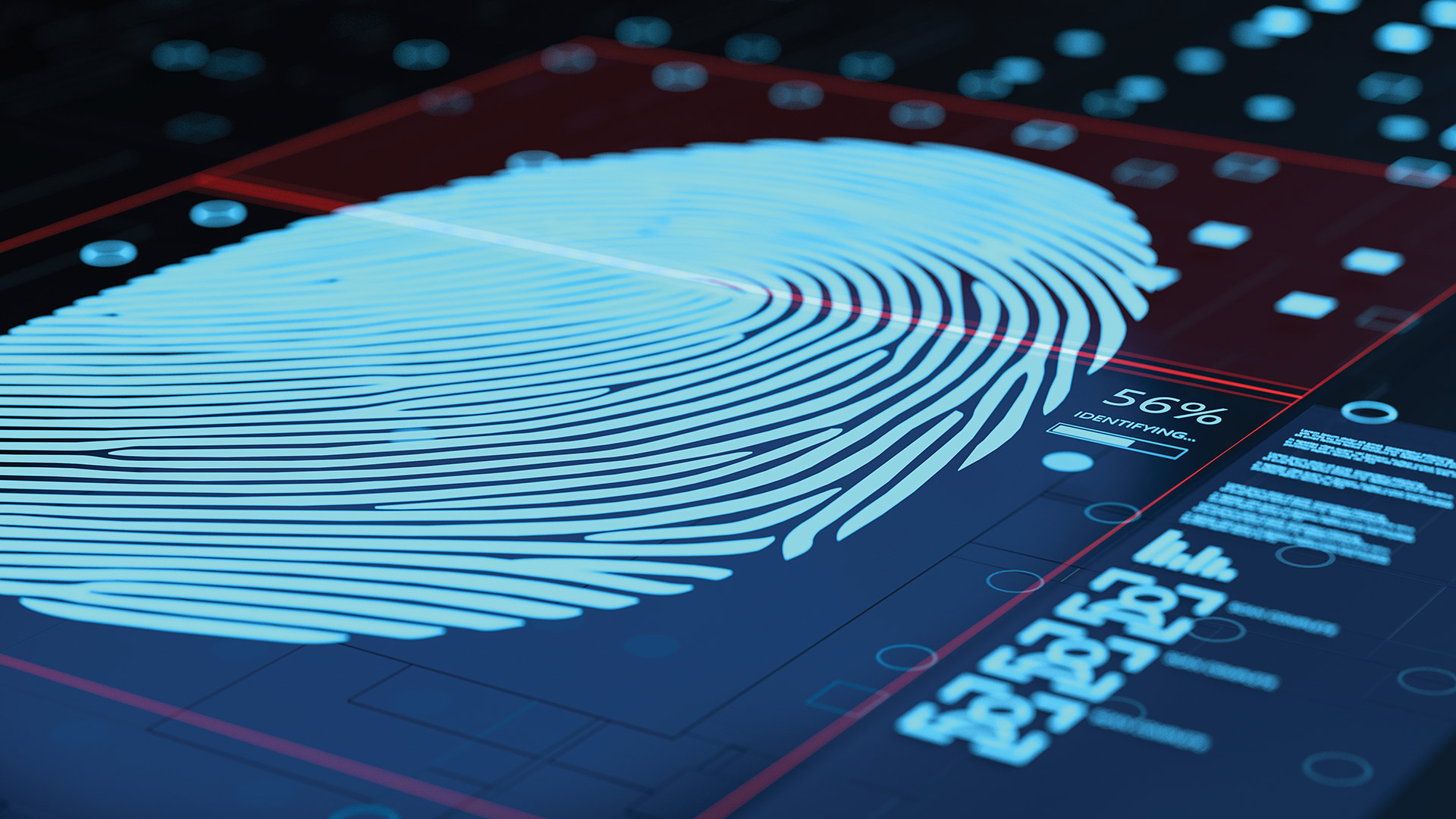
The role of technology in policing has advanced dramatically over the past century, reshaping how agencies prevent crime, protect officers and serve communities. What began with whistles and bicycles has evolved into a complex network of digital systems, artificial intelligence and real-time data sharing. Grasping this evolution is essential for law enforcement leaders tasked with adopting and managing new tools while maintaining public trust and operational efficiency. To gain a better understanding of how police technology has evolved from basic tools to highly sophisticated digital systems, we’ll begin with a historical perspective.
Early 20th century: Foundations of modern policing
In the early 1900s, law enforcement relied almost entirely on basic, manual tools.
Identification. Significant progress in identification followed from the development of fingerprinting (1901), replacing the unreliable Bertillon system (from 1879), which identified individuals using photographs and detailed body measurements, height, limb lengths and distinctive features like scars, eye color and deformities. Once it became widely adopted, fingerprinting replaced Bertillon to become the gold standard for suspect identification.
Communication and evolving technology. Patrol officers relied on whistles and call boxes to request backup. Bicycles (1909) expanded the officer patrol range. The introduction of one-way radios in 1928, followed by two-way radios in 1934, revolutionized real-time field communication. The 9-1-1 emergency system (1960s) standardized the public’s access to emergency response.
Officer safety and traffic enforcement. Kevlar body armor (1972) was a game-changer for officer survival in armed confrontations. From the mid-1950s on, radar devices became critical for enforcing traffic safety and speed limits.
These innovations helped to establish the foundation for the technological breakthroughs that followed.
Mid-to-late 20th century: The computerization era
As computers became smaller and more powerful, law enforcement began transitioning from paper records and manual tracking to digital systems.
Early data systems (1950s–1970s). Electronic systems began logging arrests and tracking criminal records. Computer-aided dispatch (CAD) systems improved response times by streamlining communication between dispatchers and field units. In 1967, the FBI launched the NCIC, the first national database system, allowing agencies to share criminal data across jurisdictions. This milestone paved the way for cross-agency collaboration and intelligence sharing. Night vision equipment (1970s) expanded tactical capabilities for SWAT and nighttime patrols. The automated fingerprint identification systems (AFIS) (1974) digitized fingerprint analysis, significantly speeding up suspect identification.
By the end of the 20th century, law enforcement had entered the era of data-driven policing, using analytics and centralized systems to enhance decision-making, such as crime mapping software (1990s), enabling strategic
deployment of resources using geographic crime analysis.
21st century: The digital revolution
Modern policing has moved into a fully digital age. Today’s tools combine artificial intelligence (AI), cloud computing and mobile technology to improve situational awareness, reduce response times and increase accountability. Mobile computing and connectivity provide real-time links for individuals and inter-agency operations. In-car computers, smartphones and tablets allow officers to access reports, warrants and databases from the field. Cloud-based systems enable real-time data sharing between agencies, breaking down jurisdictional barriers.
Body-worn cameras (BWCs) provide evidence collection and increase transparency. Advanced BWCs now activate automatically when a weapon is drawn or during high-risk calls. Surveillance and predictive policing software uses historical data to identify crime “hotspots,” widely used in the developing field of proactive policing — operations meant to prevent crimes before they occur. Automatic license plate recognition (ALPR) tracks stolen vehicles and suspects in real time.
Drones are being used in a wide variety of applications, such as crash reconstruction, search and rescue, and tactical surveillance, among others. ShotSpotter and similar systems detect gunfire, providing faster and more accurate responses.
Arguably, AI-driven applications represent the cutting edge for the future of law enforcement, supporting many aspects of policing, including object recognition for weapons or suspicious behavior in surveillance feeds, early intervention systems to monitor officer conduct, risk-assessment algorithms to prioritize investigations — as some critics of this cutting edge, and often misunderstand technology, warn of potential biases in determining an individual’s intentions, whichever side of the law they may be on.
Emerging and specialized technologies
New technologies are continually pushing the boundaries of modern policing. Police Robots have been used to assist with bomb disposal, hostage situations, and dangerous standoffs. In 2016, a bomb-disposal robot was used in Dallas to neutralize a sniper, saving many lives. K-9 cameras are being mounted on police dogs to provide live video feeds during building searches or other dangerous operations. Facial recognition software has come a long way since the widespread use of the Bertillon system, helping in reliably identifying suspects and victims, aiding in human trafficking and fraud investigations. While the literature on the subject notes some significant challenges to this technology — including privacy concerns, false positives and public backlash — it’s not likely to disappear
going forward.
Biometrics have evolved well beyond fingerprints. Law enforcement now uses iris scans, voice recognition, palm prints and even heartbeat patterns. The FBI’s Next Generation Identification (NGI) system houses the world’s largest biometric database, improving by orders of magnitude the efficiency and accuracy of earlier biometric services to address evolving local, state, tribal, federal, national and international criminal justice requirements. New capabilities include a national rap back service, which allows authorized agencies to receive ongoing electronic notifications of new criminal or civil activity linked to an individual’s fingerprints after an initial background check. Enhancements to biometric identification systems continue to advance exponentially.
In the private sector, numerous organizations offer a wide range of cutting-edge technological tools. One such leader in this field, Axon, represents advanced innovations in public safety tools with systems designed to unify field operations and real-time intelligence. One such innovation is called Community Connect, which allows residents to voluntarily register home security cameras to assist investigations. They also offer systems that can detect and neutralize unauthorized drones near critical locations. These are just a few of the ideas that are increasingly developing in the marketplace of cutting-edge police technology.
Future trends: 2025 and beyond
Dr. Erik Fritsvold serves as the academic director for the Master of Science in Law Enforcement and Public Safety Leadership program at the University of San Diego. Recently, updating a decade-old paper, “Emerging Police Technologies,” Fritsvold identifies several cutting-edge tools now shaping the future of policing, such as the Peregrine information platform, which represents the cutting edge in digital forensics, as it can recover deleted files, text messages and social media evidence, among other things.
The Peregrine, and other such platforms, can provide extensive virtual reality (VR) training for law enforcement professionals, presenting immersive simulations for active shooter responses and mental health crisis interventions. Such advanced technology can also provide voice command systems, which include hands-free operation of vehicles and field technology. Fritsvold describes augmented reality (AR) glasses, which provide real-time tactical overlays and live database access during field operations. Another technical marvel is thermal imaging devices, which can detect heat signatures through walls and other barriers for search and rescue or suspect pursuit.
Challenges of rapid technological growth
While Dr. Fritsvold extols the many positive possibilities of such “the future is now” machinery, he also notes some of the more precarious aspects that may be inherent in employing such tools. “While technology has expanded capabilities, it brings new operational and ethical challenges. Tools like facial recognition and ShotSpotter raise questions about government surveillance and civil liberties … without proper training and policy development, agencies risk misuse or underutilization of advanced tools.”
Fritsvold emphasizes the importance of “maintaining public trust and accountability …” The path forward requires ethical, data-driven policing. “The future of policing depends on integrating technology responsibly.”

Dr. Gene Ira Katz, DMCJ
As seen in the October 2025 issue of American Police Beat magazine.
Don’t miss out on another issue today! Click below: