
• Skip to primary navigation
  • Skip to main content
  • Skip to primary sidebar
  • Skip to footer
  • Home
  • About
  • The Magazine
  • Events
  • Partners
  • Products
  • Contact
  • Jobs and Careers
  • Advertise
  • Facebook
  • Instagram
  • Twitter
  • Subscribe
American Police Beat

American Police Beat Magazine

Law Enforcement Publication

  • Home
  • Leadership
    • Your agency needs you
      Pursuit termination option: Radiator disablement
      Liability — not always a showstopper!
      A candid chat with law enforcement Explorer scouts
      Do you know your emotional intelligence?
  • Topics
    • Leadership
      • Your agency needs you
        Pursuit termination option: Radiator disablement
        Liability — not always a showstopper!
        A candid chat with law enforcement Explorer scouts
        Do you know your emotional intelligence?
    • Editor’s Picks
      • Mental health checks … in the training room?
        Crime doesn’t take a vacation
        The power of mediation
        Therapy isn’t just for the broken
        Police humor only a cop would understand
    • On the Job
      • “Wanna hop in?” Louisiana officer gets a lift from a good...
        “Nothing else mattered”: Heroic NYPD trio rescues girl from river
        “Just gut reaction”: Maine officer makes great save
        Crime doesn’t take a vacation
        Hot on the scent
    • Labor
      • The power of mediation
        Differentiation in police recruitment
        Building positive media relations
        LEO labor and community outreach — make the haters scoff
        Racing with a purpose
    • Tech
      • The future of patrol is here
        New York governor highlights $24 million investment to modernize law...
        Cutting-edge police technology
        One step closer
        New Jersey school district first to adopt AI gun detection and...
    • Training
      • The vision behind precision
        Mentorship: Ensuring future success
        Unlocking innovation
        Training dipshittery
        Police Academy 20
    • Policy
      • The phenomenon of trauma bonding in law enforcement
        Betrayed from within
        Supreme Court declines to revive Missouri gun law
        Quotas come to the end of the road
        Consolidation in action
    • Health/Wellness
      • Mental health checks … in the training room?
        Surviving and thriving in retirement
        Fit for duty, fit for life
        A wake-up call for cops
        Therapy isn’t just for the broken
    • Community
      • Community engagement: What is it moving forward?
        Contradictory crossroads
        Back-to-school season brings out police support nationwide
        A bold idea for reducing homelessness in America
        Operation Brain Freeze keeps community cool
    • Offbeat
      • Police humor only a cop would understand
        Not eggzactly a perfect heist
        Pizza … with a side of alligator?
        Wisconsin man charged with impersonating Border Patrol agent twice in...
        Only in California?
    • We Remember
      • York County ambush leaves three officers dead, others critically...
        Honoring the Fallen Heroes of 9/11
        Team Romeo
        National Police Week 2025
        Honoring Fallen Heroes
    • HOT Mail
      • The War on Cops Continues Unabated
  • On the Job
    • “Wanna hop in?” Louisiana officer gets a lift from a good...
      “Nothing else mattered”: Heroic NYPD trio rescues girl from river
      “Just gut reaction”: Maine officer makes great save
      Crime doesn’t take a vacation
      Hot on the scent
  • Labor
    • The power of mediation
      Differentiation in police recruitment
      Building positive media relations
      LEO labor and community outreach — make the haters scoff
      Racing with a purpose
  • Tech
    • The future of patrol is here
      New York governor highlights $24 million investment to modernize law...
      Cutting-edge police technology
      One step closer
      New Jersey school district first to adopt AI gun detection and...
  • Training
    • The vision behind precision
      Mentorship: Ensuring future success
      Unlocking innovation
      Training dipshittery
      Police Academy 20
  • Policy
    • The phenomenon of trauma bonding in law enforcement
      Betrayed from within
      Supreme Court declines to revive Missouri gun law
      Quotas come to the end of the road
      Consolidation in action
  • Health/Wellness
    • Mental health checks … in the training room?
      Surviving and thriving in retirement
      Fit for duty, fit for life
      A wake-up call for cops
      Therapy isn’t just for the broken
  • Community
    • Community engagement: What is it moving forward?
      Contradictory crossroads
      Back-to-school season brings out police support nationwide
      A bold idea for reducing homelessness in America
      Operation Brain Freeze keeps community cool
  • Offbeat
    • Police humor only a cop would understand
      Not eggzactly a perfect heist
      Pizza … with a side of alligator?
      Wisconsin man charged with impersonating Border Patrol agent twice in...
      Only in California?
  • We Remember
    • York County ambush leaves three officers dead, others critically...
      Honoring the Fallen Heroes of 9/11
      Team Romeo
      National Police Week 2025
      Honoring Fallen Heroes
  • HOT Mail
    • The War on Cops Continues Unabated
  • About
  • The Magazine
  • Events
  • Partners
  • Products
  • Contact
  • Jobs and Careers
  • Advertise
  • Subscribe
Search

Labor

Dallas Police Chief introduces algorithm-based personnel intervention system to assess officer behavioral risk, raises concerns that it could be used to punish officers

APB Team Published November 1, 2021 @ 12:00 pm PDT

iStock.com/Kirkikis
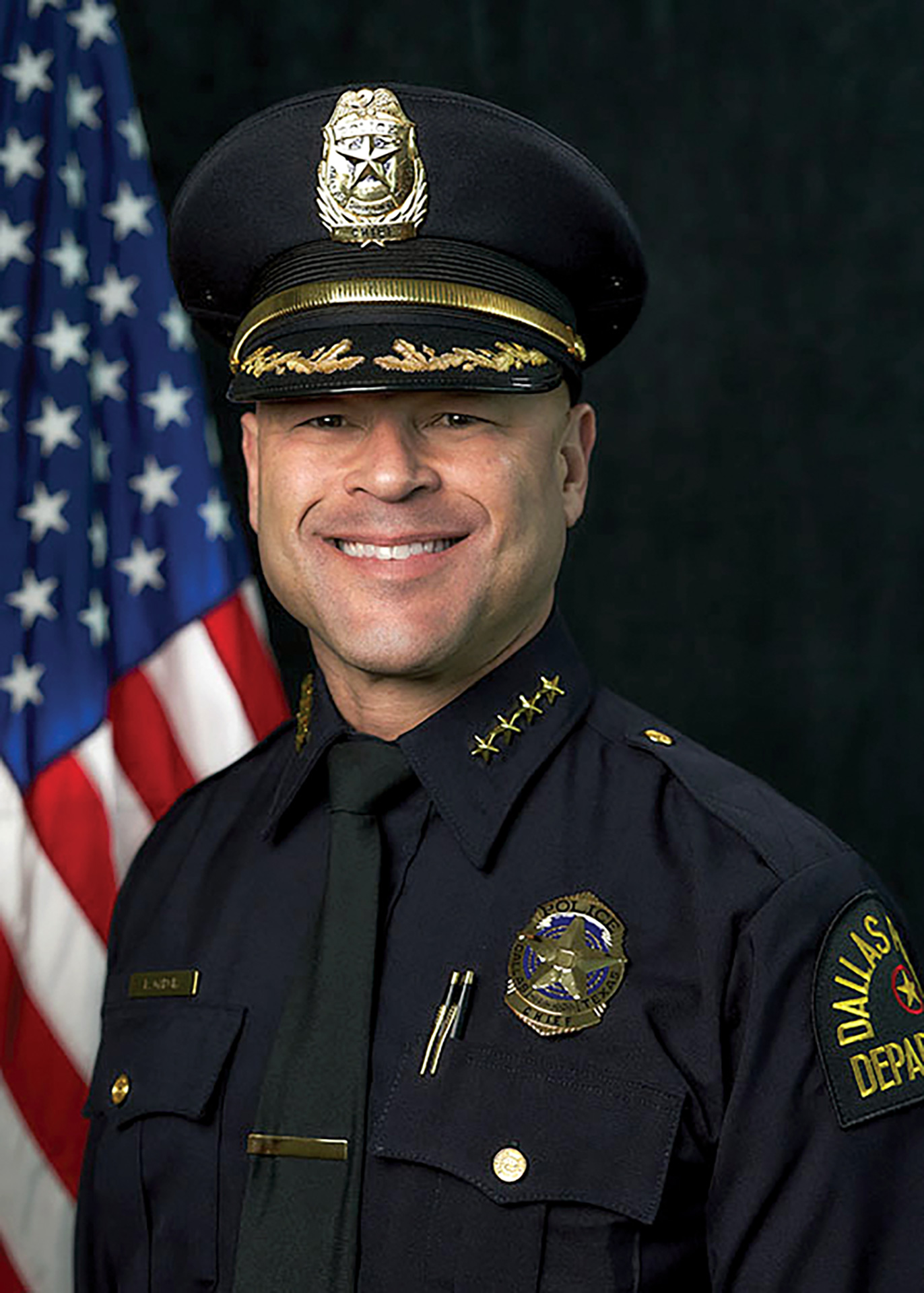
Dallas Police Chief Eddie Garcia (Dallas Police Department)

The Dallas Police Chief introduced the department’s tentative new personnel intervention system to the city council, which will assess officer behavioral risk and allow supervisors to intervene and manage officers flagged for atypical behavior patterns.

While the chief defended the system developed by law enforcement technology company Benchmark Analytics as a means to help officers with their productivity without punishing them, police union officials are concerned it will be used rather as a means to label and punish officers.

Chief Eddie Garcia argued that the new alert system will help restore the community’s trust by identifying officers who need greater supervision. He told the city’s public safety committee that the goal of the system is to intervene in a “nonpunitive” way to help officers have a successful career.

Officials say the system focuses on improving officers’ interpersonal skills, such as time management, respectfulness, leadership, community engagement and conflict resolution.

“Regardless (of) the caliber of officer on day one, sometimes that caliber of officer in year five, year six, year seven is a different individual based on things that occurred in his or her career,” García said.

The Benchmark Management System (BMS) aggregates data about an officer and compares it with data from an officer’s peers. For example, it evaluates an officer’s use-of-force background, external and internal complaints, traffic stops, arrests and other information, and compares that with data from colleagues of similar rank and level of experience.

According to The Dallas Morning News, the system then calculates a risk assessment for each officer based on the data, quantifying how far their behavioral patterns stray from the norm. Officers with activity patterns outside the norm and who are determined to be at risk are “flagged,” which alerts supervisors to implement “advisory or actionable intervention.” Supervisors then meet with the officer to discuss their behaviors, actions and well-being, as well as determine areas for improvement.

Deputy police Chief William Griffith said the system is already being used by some metropolitan cities like Phoenix, Arizona, adding that its research-based approach can proactively help officers before adverse events occur.

Nick Montgomery, chief research officer with Benchmark Analytics, said an average of 4 to 6% of Dallas’ officers – roughly 126 to 189 – will be flagged over the course of a year based on the algorithm.

Some council members, like Cara Mendelsohn, raised concerns about the system’s punitive nature, as it generates a list of “flagged” officers rather than a list for supportive outreach. She also was wary about evaluating officers based on an algorithm.

“What I’m concerned about is that officers are going to be identified by an algorithm that we don’t even know what’s part of it, sounds a little like Facebook to me, and we’re going to have no input on,” Mendelsohn said.

Garcia assured that the system will not be used for disciplinary action but for proactive career support.

“This is not necessarily going towards a disciplinary action, this is to save our officers and to save their careers and to save the integrity and professionalism of the Dallas Police Department,” García assured. “And to try to find ways to intervene sooner rather than later.”

However, some police union officials are not convinced, arguing that such a system could infringe on officers’ rights.

Dallas Police Association president Mike Mata called for greater transparency, and criticized the system for keeping “a record of officers and circumvents any type of due process,” as well as labeling officers without “properly looking at the situation.”

“They need to be a little bit more transparent with the rank and file on how this is exactly going to be implemented before anything goes into actual use,” Mata said.

Police officials at the council meeting said that transparency is built into the system since supervisors must send their decision up the chain of command for approval.

Mata said he will closely observe the system’s reports to ensure they’re being carried out fairly.

“We’re going to keep very close eyes on it and if there’s any abuse or improper labeling of officers we will take whatever means necessary to address it,” he said.


Categories: Labor Tags: labor, officer behavior, punitive, Dallas Police Association, City Council, Dallas Police Department, Eddie Garcia, personnel intervention system, Benchmark Analytics, management

Primary Sidebar

Recent Articles

  • “Wanna hop in?” Louisiana officer gets a lift from a good Samaritan
  • “Nothing else mattered”: Heroic NYPD trio rescues girl from river
  • “Just gut reaction”: Maine officer makes great save
  • The phenomenon of trauma bonding in law enforcement
  • Mental health checks … in the training room?
  • Betrayed from within
  • Surviving and thriving in retirement
  • Your agency needs you
  • Crime doesn’t take a vacation
  • The power of mediation

Footer

Our Mission
To serve as a trusted voice of the nation’s law enforcement community, providing informative, entertaining and inspiring content on interesting and engaging topics affecting peace officers today.

Contact us: info@apbweb.com | (800) 234-0056.

  • Facebook
  • Instagram
  • Twitter

Categories

  • Editor’s Picks
  • On the Job
  • Labor
  • Tech
  • Training
  • Policy
  • Health/Wellness
  • Community
  • Offbeat
  • We Remember
  • Jobs and Careers
  • Events

Editor’s Picks

Mental health checks … in the training room?

Mental health checks … in the training room?

November 25, 2025

Crime doesn’t take a vacation

Crime doesn’t take a vacation

November 21, 2025

The power of mediation

The power of mediation

November 20, 2025

Therapy isn’t just for the broken

Therapy isn’t just for the broken

November 14, 2025

Policies | Consent Preferences | Copyright © 2025 APB Media, LLC | Website design, development and maintenance by 911MEDIA

Open

Subscribe

Close

Receive the latest news and updates from American Police Beat directly to your inbox!

  • This field is for validation purposes and should be left unchanged.