• Skip to primary navigation
  • Skip to main content
  • Skip to primary sidebar
  • Skip to footer
  • Home
  • About
  • The Magazine
  • Events
  • Partners
  • Products
  • Contact
  • Jobs and Careers
  • Advertise
  • Facebook
  • Instagram
  • Twitter
  • Subscribe
American Police Beat

American Police Beat Magazine

Law Enforcement Publication

  • Home
  • Leadership
    • Clarifying your “true north”
      The job has changed — have you?
      Perpetual recognition of line-of-duty deaths
      Understanding the boundaries of professional relationships with the...
      Why you should lead from 30,000 feet
  • Topics
    • Leadership
      • Clarifying your “true north”
        The job has changed — have you?
        Perpetual recognition of line-of-duty deaths
        Understanding the boundaries of professional relationships with the...
        Why you should lead from 30,000 feet
    • Editor’s Picks
      • Let’s get moving!
        Heroes of the World Trade Center
        The Promise Gap
        Corruption, collusion and impunity
        Liability challenges in contemporary policing
    • On the Job
      • K-9 Day demonstrates scope of officers’ duties
        Testing the waters — literally
        Frankpledge to forensics: A brief history of law enforcement
        Villains and heroes in the Big Apple
        Right place, right time — again
    • Labor
      • Smile and let them swing
        The Promise Gap
        Cut the cops, save a dollar?
        Labor release under fire
        Who’s watching the watchmen?
    • Tech
      • NYC’s electric vehicle fleet for LE passes milestone
        New Mexico license plate readers save lives, lead to “precise...
        A modern field guide to understanding research in policing
        Gear that moves with you
        A new breed of cop car
    • Training
      • Pushback as a training signal
        Let’s get moving!
        The five minutes before the ambulance
        Navigating danger
        Critical thinking in police training
    • Policy
      • Police pause license plate readers
        Corruption, collusion and impunity
        E-bikes spark public safety concerns
        Try racing without wheels
        Law enforcement accreditation: Why it matters
    • Health/Wellness
      • The days that follow
        Addressing stress, vicarious trauma and burnout
        Nervous system regulation
        The nature of the job
        Promoting organizational wellness
    • Community
      • Cops promote National Donate Life Month
        Police officer kicks up social media praise
        Donning denim in solidarity with victims and survivors of sexual...
        Improving autism awareness
        Shop with a Cop
    • Offbeat
      • An unexpected burglar
        Police humor only a cop would understand
        Not eggzactly a perfect heist
        Pizza … with a side of alligator?
        Wisconsin man charged with impersonating Border Patrol agent twice in...
    • We Remember
      • A Tribute to Fallen Heroes
        Markers of service and remembrance
        Tragedy strikes Baker to Vegas
        Heroes of the World Trade Center
        Forty heroes: United Airlines Flight 93
    • HOT Mail
      • The War on Cops Continues Unabated
  • On the Job
    • K-9 Day demonstrates scope of officers’ duties
      Testing the waters — literally
      Frankpledge to forensics: A brief history of law enforcement
      Villains and heroes in the Big Apple
      Right place, right time — again
  • Labor
    • Smile and let them swing
      The Promise Gap
      Cut the cops, save a dollar?
      Labor release under fire
      Who’s watching the watchmen?
  • Tech
    • NYC’s electric vehicle fleet for LE passes milestone
      New Mexico license plate readers save lives, lead to “precise...
      A modern field guide to understanding research in policing
      Gear that moves with you
      A new breed of cop car
  • Training
    • Pushback as a training signal
      Let’s get moving!
      The five minutes before the ambulance
      Navigating danger
      Critical thinking in police training
  • Policy
    • Police pause license plate readers
      Corruption, collusion and impunity
      E-bikes spark public safety concerns
      Try racing without wheels
      Law enforcement accreditation: Why it matters
  • Health/Wellness
    • The days that follow
      Addressing stress, vicarious trauma and burnout
      Nervous system regulation
      The nature of the job
      Promoting organizational wellness
  • Community
    • Cops promote National Donate Life Month
      Police officer kicks up social media praise
      Donning denim in solidarity with victims and survivors of sexual...
      Improving autism awareness
      Shop with a Cop
  • Offbeat
    • An unexpected burglar
      Police humor only a cop would understand
      Not eggzactly a perfect heist
      Pizza … with a side of alligator?
      Wisconsin man charged with impersonating Border Patrol agent twice in...
  • We Remember
    • A Tribute to Fallen Heroes
      Markers of service and remembrance
      Tragedy strikes Baker to Vegas
      Heroes of the World Trade Center
      Forty heroes: United Airlines Flight 93
  • HOT Mail
    • The War on Cops Continues Unabated
  • About
  • The Magazine
  • Events
  • Partners
  • Products
  • Contact
  • Jobs and Careers
  • Advertise
  • Subscribe
Search

Editor's Picks

Justice in a free society

The real meaning of the “thin blue line”

Mike Geier Published December 25, 2024 @ 6:00 am PST

Dreamstime.com/Evcrow

Back in the mid-1980s, Chief Fred Stoecker of the Wilmette Police Department posted the phrase “Justice in a Free Society” on the side of all marked police cars. At this time, I really don’t remember if he explained why he wanted this phrase on our vehicles. Most of the officers I worked with never really understood how to respond when people asked us what it meant. Chief Stoecker made a profound statement when he had that phrase placed on our squad cars some 40 years ago. I believe he saw how critical our profession was to the quality of life of the people we serve. He was a visionary, although the rest of us failed to grasp what he was trying to say with his message.

Herman Goldstein, the founder of problem-oriented policing, described this concept as follows: “The strength of a democracy and the quality of life enjoyed by all citizens are determined in large measure by the ability of the police to discharge their duties. If we think what we do on the front lines doesn’t affect the quality of life of all those in the community, we need to wake up and understand the impact of what we do every day.” Police officers today are the frontline protectors of our democracy. We strive to achieve and promote justice every day, and we are sworn to uphold and protect the U.S. Constitution.

Police officers embrace and serve a cause greater than themselves — they serve the greater good.

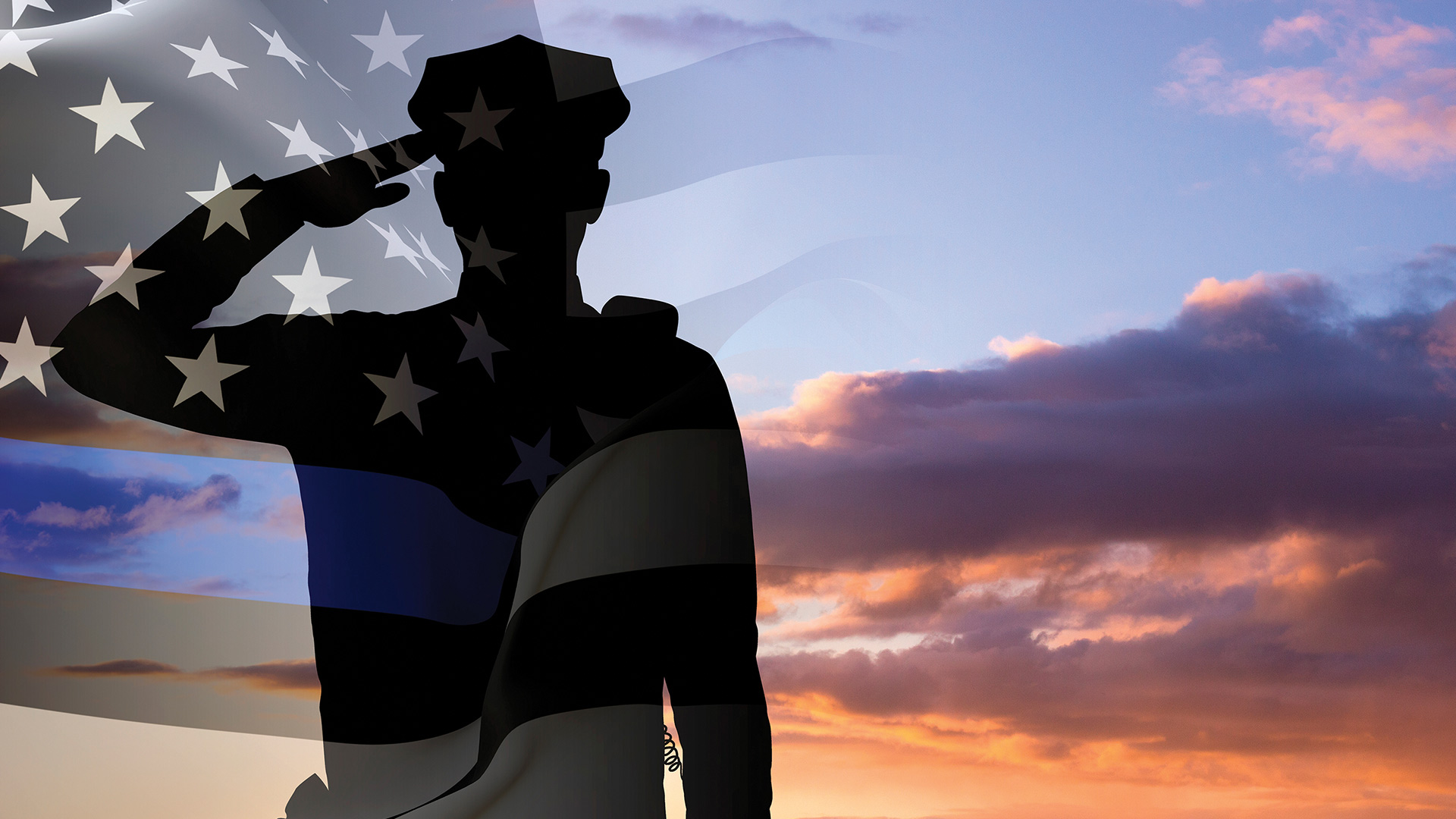
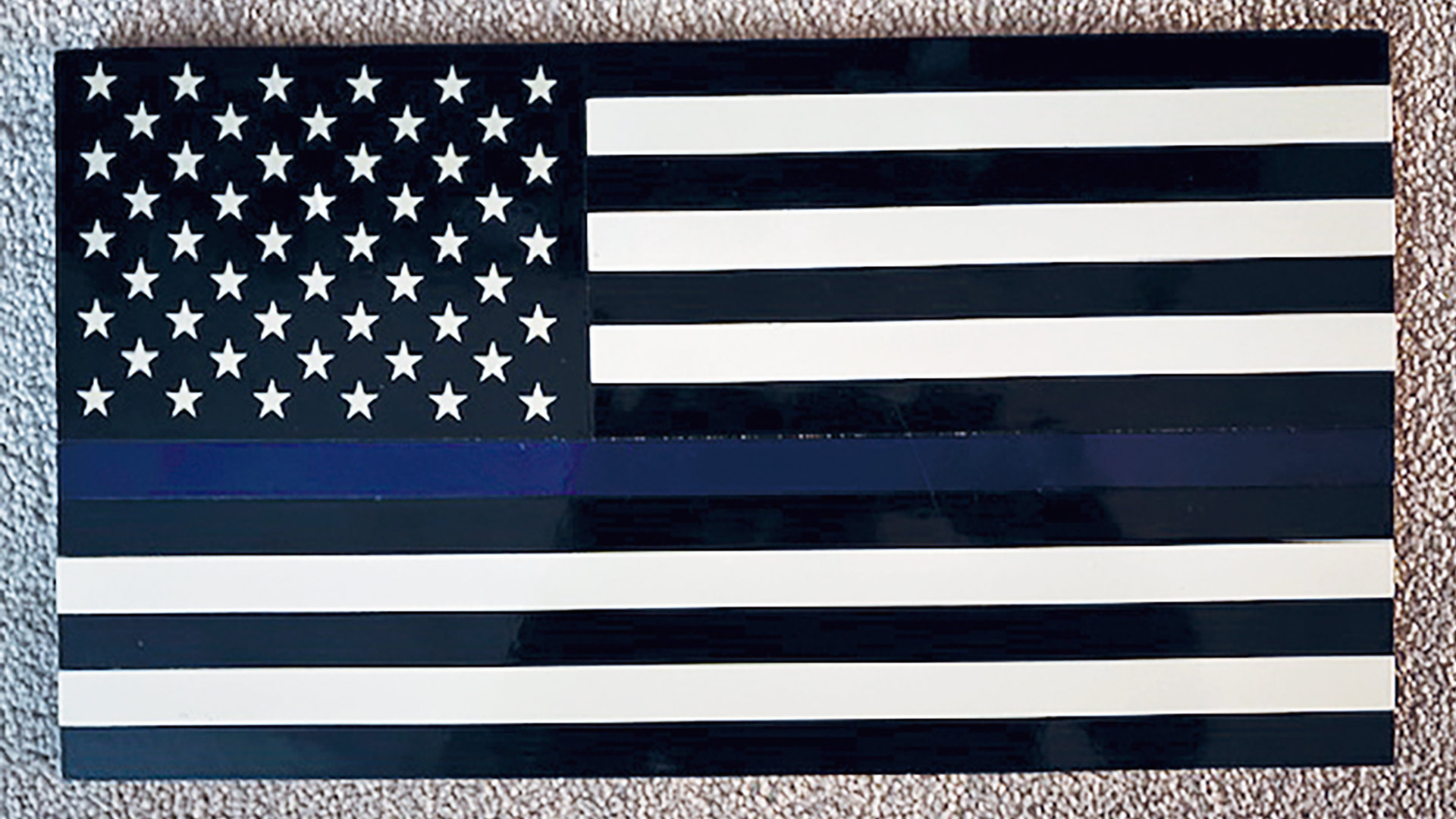
The “thin blue line” is a term typically used to assert that police officers are the line that keeps society from descending into violent chaos. The symbol embodies the concept of law enforcement standing as a safety barrier between the law-abiding citizens of America and the criminally inclined. It also represents the guardian and protector responsibilities of our profession.

The term originated in the 1950s when law enforcement professionals adopted the blue line to represent their sacrifice and courage in protecting the American people. The “thin blue line” emblem was created to symbolize all law enforcement personnel, much like the Red Cross symbol represents medical personnel. The “blue” in “thin blue line” refers to the color of the uniforms worn by many police departments. Usage of the term became prevalent in the ’50s, with Los Angeles Police Chief William Parker frequently referencing it. It was even used as the title of a ’50s TV show, The Thin Blue Line, which promoted the LAPD in a positive light. The phrase was further popularized in the ’50s and ’60s by the TV show Dragnet.

In the ’70s and ’80s, the blue line started to be widely used among U.S. police departments. I recall it even appearing in police novels written by LAPD Sergeant Joseph Wambaugh. I recently heard a reference to a documentary called The Thin Blue Line on the TV show Blue Bloods. Ironically enough, in January 2023, the LAPD was one of the first agencies to ban the use of the “thin blue line” flag.
Mike Geier

Supporters of the symbol say it represents paying respects to law enforcement officers slain in the line of duty and allows officers to show solidarity against false attacks by critics. The blue line symbol and flag have been criticized and called offensive by those who oppose the mission of law enforcement and who have been misled by the narrative of brutality, racism and corruption as commonplace among the hundreds of thousands of police officers who serve our communities and are accountable to them. The “thin blue line” is not the blue wall of silence!

Former President Ronald Reagan once stated, “Evil is powerless if the good are unafraid.” The “thin blue line” represents a demarcation between good and evil. Police officers take risks and put their lives on the line daily. The “thin blue line” is a small tribute and reminder that the primary mission and purpose of law enforcement is to establish peace and reduce criminality and violence in our communities.

The American flag pays tribute to all people and our country’s sacrifices to gain freedom and independence. Similarly, the slogan and the symbol of the “thin blue line” pays homage and support to all police officers for their thankless efforts in keeping peace in our communities and our country. That is the same underlying message Chief Stoecker was trying to convey with putting “Justice in a Free Society” on our police cars.

The symbolism of the “thin blue line” even conveys the ideals of Sir Robert Peel — that the police are the public, and the public are the police. We are all on the same side. Police officers are accountable to and in partnership with the community. They are not part of any radical, self-serving or oppressive organization. The blue line is a symbol of pride and dedication to their profession. Officers today sometimes get discouraged and feel that their work is not appreciated or really doesn’t make a difference. The “thin blue line” is a reminder that when people call for help and others fail or are unwilling to act, our officers are always ready and prepared to serve and protect.

Officers should never doubt or underestimate the role they play and the value of the career paths they have taken. Most officers have made a lifetime commitment to their profession without hesitation. This commitment is a noble challenge that most people would not make. Cops are willing to accept challenges that only the finest are capable of honoring. They take risks, knowing that with those risks comes the opportunity to make a difference every day and to honor a noble cause.

The International Association of Chiefs of Police once issued this statement: “Police officers take risks and secure the safety of fellow citizens, and they endure such risks and tolerate such inconveniences on behalf of strangers. Consequently, police work is one of the most noble and selfless occupations in society. Making a difference in the quality of life is an opportunity that policing provides — and few other professions can offer.”

Police officers embrace and serve a cause greater than themselves — they serve the greater good. We live in a democracy based on principles and legal rules. As Chief Stoecker implied back in the ’80s, a society needs dedicated servants whose mission is to preserve those principles and uphold the rules of law. That is the essence of how “Justice in a Free Society” is achieved and safeguarded by the brave men and women in law enforcement.

Throughout all the challenges, conflicts and changes in our careers, always remember your sense of purpose and never forget the reasons why you entered our noble profession. The passions that originally motivated us sometime fade, and we tend to become cynical and negative. All of us were called to this field because we had a desire to serve others and make our communities safe from criminals. That was the real reason we became cops — to preserve and hold that “thin blue line.” Redirect your energy and that of your fellow officers toward those passions. Never, never give up the good fight. You do make a difference!

Mike Geier

Mike Geier

Mike Geier is the former chief of police of the Albuquerque, New Mexico, Police Department. His career began in 1974 with the Wilmette, Illinois, Police Department, where he retired as a lieutenant after 20 years in 1994. He then joined APD as a recruit and served another 20 years, retiring in 2014 as a commander to become the police chief in Rio Rancho, New Mexico. He returned to APD in 2017 as the chief until he retired in 2020. For additional information on reality-based training, contact rbtconsulting.net.

View articles by Mike Geier

As seen in the December 2024 issue of American Police Beat magazine.
Don’t miss out on another issue today! Click below:

SUBSCRIBE TODAY!

Categories: Editor's Picks, Policy

Primary Sidebar

Recent Articles

  • K-9 Day demonstrates scope of officers’ duties
  • Cops promote National Donate Life Month
  • NYC’s electric vehicle fleet for LE passes milestone
  • Police officer kicks up social media praise
  • Donning denim in solidarity with victims and survivors of sexual assault
  • Clarifying your “true north”
  • Smile and let them swing
  • The job has changed — have you?
  • New National Law Enforcement Museum exhibit revisits D.C. snipers case
  • A hero’s legacy through a mother’s love

Footer

Our Mission
To serve as a trusted voice of the nation’s law enforcement community, providing informative, entertaining and inspiring content on interesting and engaging topics affecting peace officers today.

Contact us: info@apbweb.com | (800) 234-0056.

  • Facebook
  • Instagram
  • Twitter

Categories

  • Editor’s Picks
  • On the Job
  • Labor
  • Tech
  • Training
  • Policy
  • Health/Wellness
  • Community
  • Offbeat
  • We Remember
  • Jobs and Careers
  • Events

Editor’s Picks

Let’s get moving!

Let’s get moving!

April 27, 2026

Heroes of the World Trade Center

Heroes of the World Trade Center

April 24, 2026

The Promise Gap

The Promise Gap

April 22, 2026

Corruption, collusion and impunity

Corruption, collusion and impunity

April 21, 2026

Policies | Consent Preferences | Copyright © 2026 APB Media, LLC | Website design, development and maintenance by 911MEDIA

Open

Subscribe

Close

Receive the latest news and updates from American Police Beat directly to your inbox!

  • This field is for validation purposes and should be left unchanged.