• Skip to primary navigation
  • Skip to main content
  • Skip to primary sidebar
  • Skip to footer
  • Home
  • About
  • The Magazine
  • Events
  • Partners
  • Products
  • Contact
  • Jobs and Careers
  • Advertise
  • Facebook
  • Instagram
  • Twitter
  • Subscribe
American Police Beat

American Police Beat Magazine

Law Enforcement Publication

  • Home
  • Leadership
    • Understanding the boundaries of professional relationships with the...
      Why you should lead from 30,000 feet
      Public perception and trust
      When performance reviews are a waste of time
      Taking a page from Toyota’s playbook
  • Topics
    • Leadership
      • Understanding the boundaries of professional relationships with the...
        Why you should lead from 30,000 feet
        Public perception and trust
        When performance reviews are a waste of time
        Taking a page from Toyota’s playbook
    • Editor’s Picks
      • Liability challenges in contemporary policing
        When performance reviews are a waste of time
        Proactive wellness visits
        Taking a page from Toyota’s playbook
        Law enforcement’s missing weapon
    • On the Job
      • Villains and heroes in the Big Apple
        Right place, right time — again
        Some good news on crime
        Mom-to-be named Cop of the Year
        Fatherly instincts save boy from icy water
    • Labor
      • The Promise Gap
        Cut the cops, save a dollar?
        Labor release under fire
        Who’s watching the watchmen?
        Crime and punishment (or lack thereof) in Seattle
    • Tech
      • New Mexico license plate readers save lives, lead to “precise...
        A modern field guide to understanding research in policing
        Gear that moves with you
        A new breed of cop car
        The future of patrol is here
    • Training
      • Pushback as a training signal
        Let’s get moving!
        The five minutes before the ambulance
        Navigating danger
        Critical thinking in police training
    • Policy
      • Corruption, collusion and impunity
        E-bikes spark public safety concerns
        Try racing without wheels
        Law enforcement accreditation: Why it matters
        Liability challenges in contemporary policing
    • Health/Wellness
      • Addressing stress, vicarious trauma and burnout
        Nervous system regulation
        The nature of the job
        Promoting organizational wellness
        Telling cops to get more sleep isn’t working
    • Community
      • Improving autism awareness
        Shop with a Cop
        Community engagement: What is it moving forward?
        Contradictory crossroads
        Back-to-school season brings out police support nationwide
    • Offbeat
      • An unexpected burglar
        Police humor only a cop would understand
        Not eggzactly a perfect heist
        Pizza … with a side of alligator?
        Wisconsin man charged with impersonating Border Patrol agent twice in...
    • We Remember
      • Heroes of the World Trade Center
        Forty heroes: United Airlines Flight 93
        The Pentagon
        A nation propelled to war, lives changed forever
        A Christmas loss
    • HOT Mail
      • The War on Cops Continues Unabated
  • On the Job
    • Villains and heroes in the Big Apple
      Right place, right time — again
      Some good news on crime
      Mom-to-be named Cop of the Year
      Fatherly instincts save boy from icy water
  • Labor
    • The Promise Gap
      Cut the cops, save a dollar?
      Labor release under fire
      Who’s watching the watchmen?
      Crime and punishment (or lack thereof) in Seattle
  • Tech
    • New Mexico license plate readers save lives, lead to “precise...
      A modern field guide to understanding research in policing
      Gear that moves with you
      A new breed of cop car
      The future of patrol is here
  • Training
    • Pushback as a training signal
      Let’s get moving!
      The five minutes before the ambulance
      Navigating danger
      Critical thinking in police training
  • Policy
    • Corruption, collusion and impunity
      E-bikes spark public safety concerns
      Try racing without wheels
      Law enforcement accreditation: Why it matters
      Liability challenges in contemporary policing
  • Health/Wellness
    • Addressing stress, vicarious trauma and burnout
      Nervous system regulation
      The nature of the job
      Promoting organizational wellness
      Telling cops to get more sleep isn’t working
  • Community
    • Improving autism awareness
      Shop with a Cop
      Community engagement: What is it moving forward?
      Contradictory crossroads
      Back-to-school season brings out police support nationwide
  • Offbeat
    • An unexpected burglar
      Police humor only a cop would understand
      Not eggzactly a perfect heist
      Pizza … with a side of alligator?
      Wisconsin man charged with impersonating Border Patrol agent twice in...
  • We Remember
    • Heroes of the World Trade Center
      Forty heroes: United Airlines Flight 93
      The Pentagon
      A nation propelled to war, lives changed forever
      A Christmas loss
  • HOT Mail
    • The War on Cops Continues Unabated
  • About
  • The Magazine
  • Events
  • Partners
  • Products
  • Contact
  • Jobs and Careers
  • Advertise
  • Subscribe
Search

Community

A firsthand look at the job

The benefits of civilian ride-along programs

Dave Bryant Published December 26, 2024 @ 6:00 am PST

iStock.com/wsfurlan

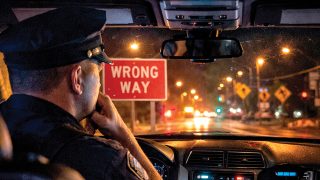
What was once an effective tool to educate citizens and inspire potential recruits has disappeared in most agencies. That’s too bad. We are missing out on a great public relations opportunity that is low on cost but high on impact. Exposing the public to the unique perspective of a law enforcement patrol officer has benefits for everyone. Citizens get a firsthand experience of real life. Instead of the sanitized images on television or the dramatized Hollywood versions, they get a sense of what we really do. Officers get to be ambassadors for our profession, connecting with community members who are not offenders, victims or witnesses.

Some administrators reject the concept of such programs by citing civil liability concerns. These can be addressed by waivers, releases, agreements and common sense. The physical set-up of the patrol car can be another problem if there is no room in the front seat for an observer. Do not have your guest spending the shift in the back seat like a prisoner. The selection of the right patrol officer is critical to success. No one should be forced to babysit a civilian if they lack enthusiasm for the program. It should also not be a supervisor or poster child recruiting model. Any experienced, motivated uniformed patrol officer who does the job daily in a busy sector is the perfect choice to keep it a real experience. The goal is not merely to tour your jurisdiction with a ride in a police car, but to provide some genuine insight and appreciation for policing.

The intensely intimate setting of the front seat of a patrol car is ideal for a memorable educational experience. Start with an orientation. Put the civilian observer in a ballistic vest and an agency baseball cap. Give them a key to the car and handcuffs. Instruct them to only watch and listen, and not to get involved in conversations or take any action unless specifically
told to do so. 

Talk about emergency plans for worst-case scenarios. Show them how to use the radio and point out the location of the first-aid kit, extra ammo and the shotgun/rifle lock release. Let them talk to dispatch on the radio just to enhance the thrill for them. Make sure everyone on the shift is aware that you have a civilian observer riding along. 

Arrange to be assigned to multiple backup calls rather than being the primary officer on a long report case. A wide variety of calls is beneficial for experiencing the resilience needed to handle the fast pace and ever-changing demands of the job. Debrief after each call. Share your thought process from first contact, safety issues, knowledge of history, prior contacts, criminal matters, services, referrals, emotional support, empathy, wrap-up and documenting. 

Find a good reason to run with lights and siren, even briefly. If you don’t make an arrest, offer to transport for another unit so you can take them to jail to see booking. Even when driving, think out loud. Talk about what you notice. Give driving safety tips. Describe what catches your attention and motivates you to investigate further as a trained observer on patrol, reading the street. 

If calls are slow, make some traffic stops. Explain that safety is the mission, not revenue enhancement. Writing tickets should never be the goal of law enforcement, yet that is the perception of many. Talk openly about what you like and don’t like and how helping people is what motivates you. 

Tell some war stories that illustrate the compassion we have for victims, the frustration of dealing with repeat offenders, mental illness, substance abuse and failures of the criminal justice system. In short, humanize the job for them by being an honest representative of street cops everywhere.

I once took a new city attorney, who would be representing the police department in civil matters, out on night shift patrol. I advised dispatch to send us anywhere that would make the most of his time. I introduced him to one of my informants who was a working crack whore. He had a sheltered life and had never met a prostitute. She shocked him with her candid talk of street life and her values. Most memorable for him was a mini riot in the projects where we backed up another unit making an arrest. I had him stay safely in the car as I helped cuff and stuff the resisting offender into the patrol car in front of us while the indigent residents threw rocks, bottles and insults at us. He was terrified and expressed a fear he had never known before. This experience gave him a new appreciation of police work, making him better at his job. It also gave him stories I heard him retelling years later. All judges, lawyers, professors and community leaders who claim wisdom on the role of the police would benefit from such a taste of our reality!

When the shift is over, give them a souvenir — used crime scene tape, the handcuff key, a challenge coin, a patch, a hat, etc. Thank them for being involved in their community and having enough interest to take the time to learn firsthand what it’s like to do this work. Encourage them to follow up with questions and stay in touch. You are their liaison to your agency, and they are another contact in the community.

Remember, even if these citizens have no interest in policing as a career, they vote, share opinions with friends and family, and serve on juries. Direct knowledge of the reality of how we protect and serve is a good thing.

Take care of yourself and stay safe.

Dave Bryant

Dave Bryant

Dave Bryant is a retired police officer with over 30 years of experience with several agencies. He is an FDLE and NRA law enforcement instructor and active member of IALEFI. He has a private business as a polygraph examiner in Tampa, Florida. He can be reached at SenseiDave@msn.com.

View articles by Dave Bryant

As seen in the December 2024 issue of American Police Beat magazine.
Don’t miss out on another issue today! Click below:


SUBSCRIBE TODAY!

Categories: Community

Primary Sidebar

Recent Articles

  • Pushback as a training signal
  • Let’s get moving!
  • Heroes of the World Trade Center
  • The Promise Gap
  • Corruption, collusion and impunity
  • The five minutes before the ambulance
  • New Mexico license plate readers save lives, lead to “precise policing”
  • Addressing stress, vicarious trauma and burnout
  • Understanding the boundaries of professional relationships with the boss
  • E-bikes spark public safety concerns

Footer

Our Mission
To serve as a trusted voice of the nation’s law enforcement community, providing informative, entertaining and inspiring content on interesting and engaging topics affecting peace officers today.

Contact us: info@apbweb.com | (800) 234-0056.

  • Facebook
  • Instagram
  • Twitter

Categories

  • Editor’s Picks
  • On the Job
  • Labor
  • Tech
  • Training
  • Policy
  • Health/Wellness
  • Community
  • Offbeat
  • We Remember
  • Jobs and Careers
  • Events

Editor’s Picks

Liability challenges in contemporary policing

Liability challenges in contemporary policing

February 27, 2026

When performance reviews are a waste of time

When performance reviews are a waste of time

February 26, 2026

Proactive wellness visits

Proactive wellness visits

February 25, 2026

Taking a page from Toyota’s playbook

Taking a page from Toyota’s playbook

February 23, 2026

Policies | Consent Preferences | Copyright © 2026 APB Media, LLC | Website design, development and maintenance by 911MEDIA

Open

Subscribe

Close

Receive the latest news and updates from American Police Beat directly to your inbox!

  • This field is for validation purposes and should be left unchanged.