
• Skip to primary navigation
  • Skip to main content
  • Skip to primary sidebar
  • Skip to footer
  • Home
  • About
  • The Magazine
  • Events
  • Partners
  • Products
  • Contact
  • Jobs and Careers
  • Advertise
  • Facebook
  • Instagram
  • Twitter
  • Subscribe
American Police Beat

American Police Beat Magazine

Law Enforcement Publication

  • Home
  • Leadership
    • Developing and enhancing assertiveness
      Clarifying your “true north”
      The job has changed — have you?
      Perpetual recognition of line-of-duty deaths
      Understanding the boundaries of professional relationships with the...
  • Topics
    • Leadership
      • Developing and enhancing assertiveness
        Clarifying your “true north”
        The job has changed — have you?
        Perpetual recognition of line-of-duty deaths
        Understanding the boundaries of professional relationships with the...
    • Editor’s Picks
      • Smile and let them swing
        The job has changed — have you?
        The days that follow
        Perpetual recognition of line-of-duty deaths
        Let’s get moving!
    • On the Job
      • Coffee shop intel
        Curbing teen takeovers
        2026 Top Cops
        High-rise rescue in Brooklyn
        Swift thinking
    • Labor
      • Why more staff won’t fix your operational slowdowns
        Drama in Georgia: Mayor fires entire police department for...
        Smile and let them swing
        The Promise Gap
        Cut the cops, save a dollar?
    • Tech
      • The virtual beat
        Training with an AI partner?
        NYC’s electric vehicle fleet for LE passes milestone
        New Mexico license plate readers save lives, lead to “precise...
        A modern field guide to understanding research in policing
    • Training
      • Rules or results?
        Enhance your preparedness
        Good enough never is
        Pushback as a training signal
        Let’s get moving!
    • Policy
      • The impact of the Graham v. Connor decision
        Mexican cartels recruit like industry titans on both sides of the...
        Police and local government leaders join forces to build community...
        Police pause license plate readers
        Corruption, collusion and impunity
    • Health/Wellness
      • Supporting your peer support team
        Down to divorce
        The days that follow
        Addressing stress, vicarious trauma and burnout
        Nervous system regulation
    • Community
      • Working community connections
        Cops promote National Donate Life Month
        Police officer kicks up social media praise
        Donning denim in solidarity with victims and survivors of sexual...
        Improving autism awareness
    • Offbeat
      • “Teenage Mutant Ninja Deer” rescued
        An unexpected burglar
        Police humor only a cop would understand
        Not eggzactly a perfect heist
        Pizza … with a side of alligator?
    • We Remember
      • Unsung heroes: New York City correction officers
        National Police Week 2026
        Shooting of Chicago police officers prompts call for new regulations...
        The sacrifice continues
        A Tribute to Fallen Heroes
    • HOT Mail
      • The War on Cops Continues Unabated
  • On the Job
    • Coffee shop intel
      Curbing teen takeovers
      2026 Top Cops
      High-rise rescue in Brooklyn
      Swift thinking
  • Labor
    • Why more staff won’t fix your operational slowdowns
      Drama in Georgia: Mayor fires entire police department for...
      Smile and let them swing
      The Promise Gap
      Cut the cops, save a dollar?
  • Tech
    • The virtual beat
      Training with an AI partner?
      NYC’s electric vehicle fleet for LE passes milestone
      New Mexico license plate readers save lives, lead to “precise...
      A modern field guide to understanding research in policing
  • Training
    • Rules or results?
      Enhance your preparedness
      Good enough never is
      Pushback as a training signal
      Let’s get moving!
  • Policy
    • The impact of the Graham v. Connor decision
      Mexican cartels recruit like industry titans on both sides of the...
      Police and local government leaders join forces to build community...
      Police pause license plate readers
      Corruption, collusion and impunity
  • Health/Wellness
    • Supporting your peer support team
      Down to divorce
      The days that follow
      Addressing stress, vicarious trauma and burnout
      Nervous system regulation
  • Community
    • Working community connections
      Cops promote National Donate Life Month
      Police officer kicks up social media praise
      Donning denim in solidarity with victims and survivors of sexual...
      Improving autism awareness
  • Offbeat
    • “Teenage Mutant Ninja Deer” rescued
      An unexpected burglar
      Police humor only a cop would understand
      Not eggzactly a perfect heist
      Pizza … with a side of alligator?
  • We Remember
    • Unsung heroes: New York City correction officers
      National Police Week 2026
      Shooting of Chicago police officers prompts call for new regulations...
      The sacrifice continues
      A Tribute to Fallen Heroes
  • HOT Mail
    • The War on Cops Continues Unabated
  • About
  • The Magazine
  • Events
  • Partners
  • Products
  • Contact
  • Jobs and Careers
  • Advertise
  • Subscribe
Search

Editor's Picks

The part of the job that changes you

How moral injury affects police officers

Dr. Cherylynn Lee Published December 27, 2024 @ 6:00 am PST

iStock.com/Jacob Wackerhausen

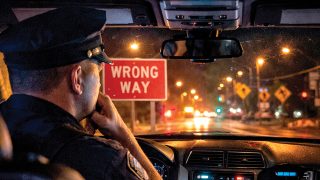
In this profession, there are inevitable atrocities. Everything from the break room sink full of dishes (no, your mom does not work here) to calls for service where the victim’s teeth are falling out as they try to explain which way the subject ran. Perhaps you might feel irritated by your co-workers’ lack of respect for the break room or decide to skip the trip to Universal Fright Night this year, but generally, cops are resilient and can shake off most things. You have likely been to a class where you learned about stress and trauma. You’ve heard that “it’s OK not to be OK,” and maybe your department does debriefs after critical incidents or has an embedded clinician. All of this is great — as a culture, we are moving in the right direction by taking action to care for our people. However, we are not where we need to be and are still trying to understand all that needs to be woven into officer wellness. I want to introduce you to something called moral injury.

His compassion and relentless pursuit of justice made him a good detective, but after four years in the unit, he found it harder and harder to care about his victims. Why pour his energy and soul into this case when there were 10 more in the queue? There were always more in the queue. No matter how many child molesters and rapists he put away, there was always more work to do. After this last trial, which came out favorably, might I add — the guy got 30 to life — he found himself sitting at home, staring out the window and feeling numb. What was the point?

She was on her ninth day in a row pushing a black-and-white. She was supposed to be on vacation with her family, but staffing sucked and it was her on-call week, so work was an easy out for her. As she waved goodbye to her husband and kids, she felt a sense of relief. “One less thing to worry about,” she thought to herself. And then came the self-loathing. “That one less thing is your family … something is wrong with you …” She started her workday the same way she had for the previous eight days: at the hospital. A little over a week ago, she was first on scene to a bad TC, one where there were multiple victims all needing immediate medical attention. There were two children on scene, but she was only one person and had to make a choice. The kid she didn’t render aid to was still in the hospital, and his prognosis wasn’t looking good.

He had been on the job for almost 11 years. Motors had always been his passion, and the spot he had been working toward was finally open. Everyone, even the undersheriff, told him (off the record, of course) that he had this one in the bag. He and his wife talked almost daily about how much better life was going to be. Yes, he was going to be on call, but he would be working day shift, which meant that he could coach his son’s baseball team. After testing was done, he was called in to the commanders’ office and that’s when they told him he wasn’t going to be getting the spot. “It’s outside of my hands. Sorry, man. You know this place — politics.”

By definition, moral injury refers to the psychological, biological, spiritual and behavioral impact of, or bearing witness to, acts that transgress deeply held moral beliefs and expectations. Examples include: “It shouldn’t have been that house, or that family,” almost any kind of kid-related call, “I was supposed to stop it,” “I had to choose who to render aid to; they both needed my help,” suicide calls, “humans shouldn’t be capable of doing that to other humans,” administrative betrayal and more. These aren’t necessarily the “big” calls where the world shows up and you’re on the 5 o’clock news; many of these circumstances fly way below the radar. Often, the officer who is struggling with a moral injury is left wondering why they have negative feelings. If they didn’t use their duty weapon, their life wasn’t in danger and everyone went home, what do they have to be upset about anyway?

One way to think about it is this: stress is the part of the job that is hard, trauma is the part of the job that hurts and moral injury is the part of the job that changes you. Let’s pretend for a moment that you haven’t worked out in years (hopefully, that’s not the case, but work with me). Today, you decide to do some sit-ups. Twenty sit-ups are hard, 50 sit-ups hurt and 200 sit-ups leave you questioning your life decisions. Would you expect to be sore for a few days after doing 200? Absolutely! More than a few days? Maybe. If the soreness persisted or got worse over time, you would probably seek out a professional who could tell you if you injured yourself, how bad it is and what you need to do about it. Some traumas and moral injuries are like doing 200 sit-ups. It makes sense that you feel sore for a few days or, frankly, weeks. But if, over time, the soreness gets worse (you start doing shitty investigative work because you don’t want to develop relationships with your victims; you avoid all TC calls and your partners are noticing; or you can’t even look your commander in the eyes three years after you were passed up for the promotion), maybe there is a bit more to the injury than just feeling sore.

My suspicion is as you’ve read this article your own experiences on the job over the years have come to mind. There is nothing wrong with remembering the things that have hurt and changed you. What I want you to understand is that there is a reason — a good reason — for why you might think and feel the way you do. Moral injuries are not excuses for bad feelings or bad behaviors; they are often the gateway to things like burnout, substance abuse and a bad case of the “f— its.” And if that’s where you find yourself, you have a choice to make. You can continue grappling with the soreness and hope that the injury isn’t so bad that it won’t ever go away (hope is not a plan, by the way) or you can choose to seek some professional help and solve the problem.

In this profession, there are inevitable atrocities. Your mental health doesn’t have to be one of them.

Dr. Cherylynn Lee

Dr. Cherylynn Lee

Dr. Cherylynn Lee is a police psychologist and works full-time for the Santa Barbara Sheriff’s Office as the Behavioral Sciences manager, overseeing the mental health co-response teams, CIT training and Wellness Unit, including Peer Support. As part of her duties, Dr. Lee is a member of the county’s threat management team and serves on the crisis negotiation response teams for both the Santa Barbara Sheriff’s Office and the Santa Barbara Police Department. Dr. Lee has a private practice in the Santa Ynez Valley where she sees first responders exclusively, specializing in trauma, post-traumatic stress, mindfulness and job performance improvement. She can be reached at crl5034@sbsheriff.org.

View articles by Dr. Cherylynn Lee

As seen in the December 2024 issue of American Police Beat magazine.
Don’t miss out on another issue today! Click below:


SUBSCRIBE TODAY!

Categories: Editor's Picks, Health/Wellness

Primary Sidebar

Recent Articles

  • Supporting your peer support team
  • The impact of the Graham v. Connor decision
  • Coffee shop intel
  • Developing and enhancing assertiveness
  • Mexican cartels recruit like industry titans on both sides of the border — and it’s working
  • Down to divorce
  • Unsung heroes: New York City correction officers
  • The virtual beat
  • Why more staff won’t fix your operational slowdowns
  • Training with an AI partner?

Footer

Our Mission
To serve as a trusted voice of the nation’s law enforcement community, providing informative, entertaining and inspiring content on interesting and engaging topics affecting peace officers today.

Contact us: info@apbweb.com | (800) 234-0056.

  • Facebook
  • Instagram
  • Twitter

Categories

  • Editor’s Picks
  • On the Job
  • Labor
  • Tech
  • Training
  • Policy
  • Health/Wellness
  • Community
  • Offbeat
  • We Remember
  • Jobs and Careers
  • Events

Editor’s Picks

Smile and let them swing

Smile and let them swing

May 16, 2026

The job has changed — have you?

The job has changed — have you?

May 15, 2026

The days that follow

The days that follow

May 11, 2026

Perpetual recognition of line-of-duty deaths

Perpetual recognition of line-of-duty deaths

May 10, 2026

Policies | Consent Preferences | Copyright © 2026 APB Media, LLC | Website design, development and maintenance by 911MEDIA

Open

Subscribe

Close

Receive the latest news and updates from American Police Beat directly to your inbox!

  • This field is for validation purposes and should be left unchanged.