• Skip to primary navigation
  • Skip to main content
  • Skip to primary sidebar
  • Skip to footer
  • Home
  • About
  • The Magazine
  • Events
  • Partners
  • Products
  • Contact
  • Jobs and Careers
  • Advertise
  • Facebook
  • Instagram
  • Twitter
  • Subscribe
American Police Beat

American Police Beat Magazine

Law Enforcement Publication

  • Home
  • Leadership
    • When performance reviews are a waste of time
      Taking a page from Toyota’s playbook
      Tattoos can be self-inflicted handicaps
      Hardcore experts should not be decision-makers!
      Law enforcement’s missing weapon
  • Topics
    • Leadership
      • When performance reviews are a waste of time
        Taking a page from Toyota’s playbook
        Tattoos can be self-inflicted handicaps
        Hardcore experts should not be decision-makers!
        Law enforcement’s missing weapon
    • Editor’s Picks
      • Law enforcement’s missing weapon
        Has law enforcement changed?
        Policing the police
        Fit for duty
        Effective in-service training
    • On the Job
      • Fatherly instincts save boy from icy water
        More than a call for service
        Has law enforcement changed?
        SROs in action
        Stay in your lane
    • Labor
      • Who’s watching the watchmen?
        Crime and punishment (or lack thereof) in Seattle
        Labor leadership out in the field
        When you are falsely accused
        Is anyone listening?
    • Tech
      • A modern field guide to understanding research in policing
        Gear that moves with you
        A new breed of cop car
        The future of patrol is here
        New York governor highlights $24 million investment to modernize law...
    • Training
      • Threshold neuroscience
        Integrated virtual reality training
        Hit the pause button
        Effective in-service training
        The untrained trainer
    • Policy
      • Law enforcement accreditation: Why it matters
        Liability challenges in contemporary policing
        The war on drugs is evolving
        Drug policy and enforcement
        Policing the police
    • Health/Wellness
      • Proactive wellness visits
        Fit for duty
        Maintain your mental armor
        Beyond crisis response
        Mental health checks … in the training room?
    • Community
      • Shop with a Cop
        Community engagement: What is it moving forward?
        Contradictory crossroads
        Back-to-school season brings out police support nationwide
        A bold idea for reducing homelessness in America
    • Offbeat
      • An unexpected burglar
        Police humor only a cop would understand
        Not eggzactly a perfect heist
        Pizza … with a side of alligator?
        Wisconsin man charged with impersonating Border Patrol agent twice in...
    • We Remember
      • The Pentagon
        A nation propelled to war, lives changed forever
        A Christmas loss
        York County ambush leaves three officers dead, others critically...
        Honoring the Fallen Heroes of 9/11
    • HOT Mail
      • The War on Cops Continues Unabated
  • On the Job
    • Fatherly instincts save boy from icy water
      More than a call for service
      Has law enforcement changed?
      SROs in action
      Stay in your lane
  • Labor
    • Who’s watching the watchmen?
      Crime and punishment (or lack thereof) in Seattle
      Labor leadership out in the field
      When you are falsely accused
      Is anyone listening?
  • Tech
    • A modern field guide to understanding research in policing
      Gear that moves with you
      A new breed of cop car
      The future of patrol is here
      New York governor highlights $24 million investment to modernize law...
  • Training
    • Threshold neuroscience
      Integrated virtual reality training
      Hit the pause button
      Effective in-service training
      The untrained trainer
  • Policy
    • Law enforcement accreditation: Why it matters
      Liability challenges in contemporary policing
      The war on drugs is evolving
      Drug policy and enforcement
      Policing the police
  • Health/Wellness
    • Proactive wellness visits
      Fit for duty
      Maintain your mental armor
      Beyond crisis response
      Mental health checks … in the training room?
  • Community
    • Shop with a Cop
      Community engagement: What is it moving forward?
      Contradictory crossroads
      Back-to-school season brings out police support nationwide
      A bold idea for reducing homelessness in America
  • Offbeat
    • An unexpected burglar
      Police humor only a cop would understand
      Not eggzactly a perfect heist
      Pizza … with a side of alligator?
      Wisconsin man charged with impersonating Border Patrol agent twice in...
  • We Remember
    • The Pentagon
      A nation propelled to war, lives changed forever
      A Christmas loss
      York County ambush leaves three officers dead, others critically...
      Honoring the Fallen Heroes of 9/11
  • HOT Mail
    • The War on Cops Continues Unabated
  • About
  • The Magazine
  • Events
  • Partners
  • Products
  • Contact
  • Jobs and Careers
  • Advertise
  • Subscribe
Search

Policy

Washington law enforcement agencies to receive funding for expanded sexual assault evidence storage capacity

APB Team Published March 27, 2022 @ 12:00 pm PDT

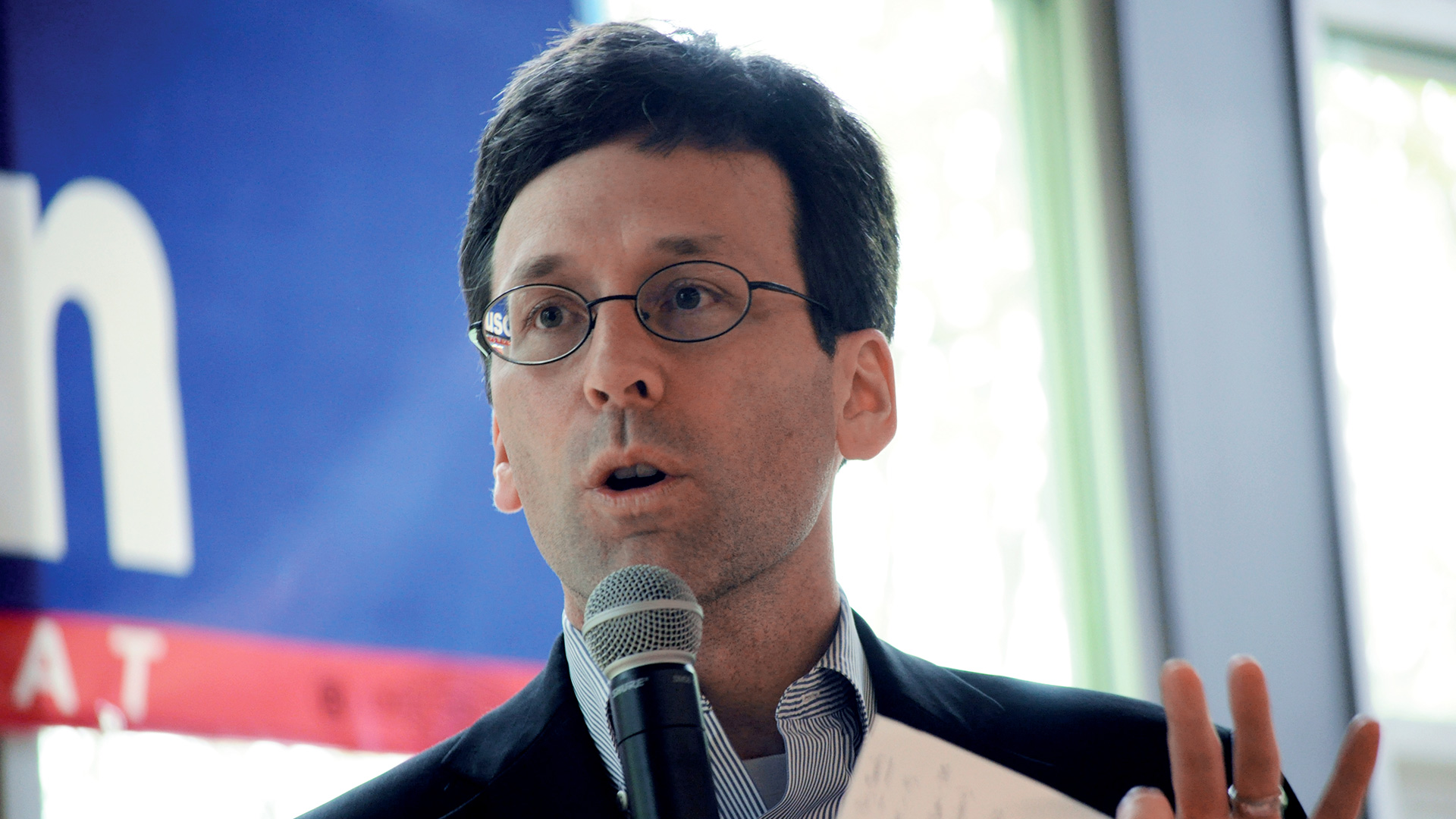
Washington Attorney General Bob Ferguson (Joe Mabel via Wikimedia Commons)

Attorney General Bob Ferguson recently announced that law enforcement agencies in Washington would receive funding to expand storage space for sexual assault evidence kits.

According to a new grant program, 53 law enforcement agencies will be awarded $177,000 in federal grants to purchase refrigeration units to store evidence from sexual assault cases.

This funding will enable agencies to comply with legislation passed in 2020 requiring evidence from “unreported” sexual assault kits obtained at a hospital to be appropriately stored for up to 20 years. If reported to the police, the evidence must be maintained for 100 years.

The hope is that the funding and legislation will speed up the processing of sexual assault kits to facilitate investigations and prosecutions against sex criminals.

Sexual assault kits consist of evidence obtained by medical professionals — such as by a nurse at a hospital — from a sexual assault survivor. The kit is then sent to a crime lab to test the evidence for DNA that could help law enforcement solve a case.

The law came after years of backlogged evidence and a lack of prosecutions in sexual assault cases. The new law aims to speed up these investigations.

Sexual assault survivor Leah Griffin was a catalyst behind the law.

“Everything was broken about the system back in 2014. Everything from the way that hospitals interacted with survivors, to the police, to the prosecutors, to the very definitions in the law,” Griffin said. She then took her complaint to Representative Tina Orwall.

“We had a number of kits sitting on shelves for a number of reasons. One, maybe the lab didn’t have the capacity to test. Maybe the investigator didn’t choose to submit it,” Orwall explained.

Ferguson said that the expanded storage capacity would ensure evidence does not expire. He added that there was a lot of pressure from smaller agencies to increase their storage capabilities.

“Literally from Aberdeen to Yakima and about 50 jurisdictions in between all across the state, they raised their hands and said ‘Hey, we could use assistance.’ And so we’re providing those grant funds so they can get those storage units,” Ferguson told KING5.

The attorney general’s funds stem from a $3 million grant awarded in 2017 by the Department of Justice to facilitate the testing of backlogged kits. The office received another $2.5 million in 2019.

The attorney general’s office has used a portion of the funds to construct a crime lab in Vancouver to process a higher volume of DNA to enter into CODIS, the national DNA database.

The hope is that more DNA matches will lead to the reopening of cold cases and more prosecutions of sex crimes.


Categories: Policy Tags: Attorney General’s Office, evidence, crime lab, DNA, sexual assault, sexual assault kits, sex crime, Bob Ferguson, Washington, legislation

Primary Sidebar

Recent Articles

  • Law enforcement accreditation: Why it matters
  • Liability challenges in contemporary policing
  • When performance reviews are a waste of time
  • Proactive wellness visits
  • National Law Enforcement Museum to open “Without Warning: Ending the Terror of the D.C. Snipers” exhibit
  • Taking a page from Toyota’s playbook
  • National Law Enforcement Museum hosts inaugural Pathways in Criminal Justice Career Fair Series event
  • A modern field guide to understanding research in policing
  • Tattoos can be self-inflicted handicaps
  • The Pentagon

Footer

Our Mission
To serve as a trusted voice of the nation’s law enforcement community, providing informative, entertaining and inspiring content on interesting and engaging topics affecting peace officers today.

Contact us: info@apbweb.com | (800) 234-0056.

  • Facebook
  • Instagram
  • Twitter

Categories

  • Editor’s Picks
  • On the Job
  • Labor
  • Tech
  • Training
  • Policy
  • Health/Wellness
  • Community
  • Offbeat
  • We Remember
  • Jobs and Careers
  • Events

Editor’s Picks

Law enforcement’s missing weapon

Law enforcement’s missing weapon

January 28, 2026

Has law enforcement changed?

Has law enforcement changed?

January 26, 2026

Policing the police

Policing the police

January 23, 2026

Fit for duty

Fit for duty

January 19, 2026

Policies | Consent Preferences | Copyright © 2026 APB Media, LLC | Website design, development and maintenance by 911MEDIA

Open

Subscribe

Close

Receive the latest news and updates from American Police Beat directly to your inbox!

  • This field is for validation purposes and should be left unchanged.