• Skip to primary navigation
  • Skip to main content
  • Skip to primary sidebar
  • Skip to footer
  • Home
  • About
  • The Magazine
  • Events
  • Partners
  • Products
  • Contact
  • Jobs and Careers
  • Advertise
  • Facebook
  • Instagram
  • Twitter
  • Subscribe
American Police Beat

American Police Beat Magazine

Law Enforcement Publication

  • Home
  • Leadership
    • Why you should lead from 30,000 feet
      Public perception and trust
      When performance reviews are a waste of time
      Taking a page from Toyota’s playbook
      Tattoos can be self-inflicted handicaps
  • Topics
    • Leadership
      • Why you should lead from 30,000 feet
        Public perception and trust
        When performance reviews are a waste of time
        Taking a page from Toyota’s playbook
        Tattoos can be self-inflicted handicaps
    • Editor’s Picks
      • Liability challenges in contemporary policing
        When performance reviews are a waste of time
        Proactive wellness visits
        Taking a page from Toyota’s playbook
        Law enforcement’s missing weapon
    • On the Job
      • Right place, right time — again
        Some good news on crime
        Mom-to-be named Cop of the Year
        Fatherly instincts save boy from icy water
        More than a call for service
    • Labor
      • Labor release under fire
        Who’s watching the watchmen?
        Crime and punishment (or lack thereof) in Seattle
        Labor leadership out in the field
        When you are falsely accused
    • Tech
      • A modern field guide to understanding research in policing
        Gear that moves with you
        A new breed of cop car
        The future of patrol is here
        New York governor highlights $24 million investment to modernize law...
    • Training
      • Navigating danger
        Critical thinking in police training
        Threshold neuroscience
        Integrated virtual reality training
        Hit the pause button
    • Policy
      • Try racing without wheels
        Law enforcement accreditation: Why it matters
        Liability challenges in contemporary policing
        The war on drugs is evolving
        Drug policy and enforcement
    • Health/Wellness
      • Nervous system regulation
        The nature of the job
        Promoting organizational wellness
        Telling cops to get more sleep isn’t working
        Proactive wellness visits
    • Community
      • Shop with a Cop
        Community engagement: What is it moving forward?
        Contradictory crossroads
        Back-to-school season brings out police support nationwide
        A bold idea for reducing homelessness in America
    • Offbeat
      • An unexpected burglar
        Police humor only a cop would understand
        Not eggzactly a perfect heist
        Pizza … with a side of alligator?
        Wisconsin man charged with impersonating Border Patrol agent twice in...
    • We Remember
      • Forty heroes: United Airlines Flight 93
        The Pentagon
        A nation propelled to war, lives changed forever
        A Christmas loss
        York County ambush leaves three officers dead, others critically...
    • HOT Mail
      • The War on Cops Continues Unabated
  • On the Job
    • Right place, right time — again
      Some good news on crime
      Mom-to-be named Cop of the Year
      Fatherly instincts save boy from icy water
      More than a call for service
  • Labor
    • Labor release under fire
      Who’s watching the watchmen?
      Crime and punishment (or lack thereof) in Seattle
      Labor leadership out in the field
      When you are falsely accused
  • Tech
    • A modern field guide to understanding research in policing
      Gear that moves with you
      A new breed of cop car
      The future of patrol is here
      New York governor highlights $24 million investment to modernize law...
  • Training
    • Navigating danger
      Critical thinking in police training
      Threshold neuroscience
      Integrated virtual reality training
      Hit the pause button
  • Policy
    • Try racing without wheels
      Law enforcement accreditation: Why it matters
      Liability challenges in contemporary policing
      The war on drugs is evolving
      Drug policy and enforcement
  • Health/Wellness
    • Nervous system regulation
      The nature of the job
      Promoting organizational wellness
      Telling cops to get more sleep isn’t working
      Proactive wellness visits
  • Community
    • Shop with a Cop
      Community engagement: What is it moving forward?
      Contradictory crossroads
      Back-to-school season brings out police support nationwide
      A bold idea for reducing homelessness in America
  • Offbeat
    • An unexpected burglar
      Police humor only a cop would understand
      Not eggzactly a perfect heist
      Pizza … with a side of alligator?
      Wisconsin man charged with impersonating Border Patrol agent twice in...
  • We Remember
    • Forty heroes: United Airlines Flight 93
      The Pentagon
      A nation propelled to war, lives changed forever
      A Christmas loss
      York County ambush leaves three officers dead, others critically...
  • HOT Mail
    • The War on Cops Continues Unabated
  • About
  • The Magazine
  • Events
  • Partners
  • Products
  • Contact
  • Jobs and Careers
  • Advertise
  • Subscribe
Search

Policy

Tennessee bill would expand the definition of “law enforcement officer”

APB Team Published February 10, 2022 @ 6:00 am PST

iStock.com/wellphoto

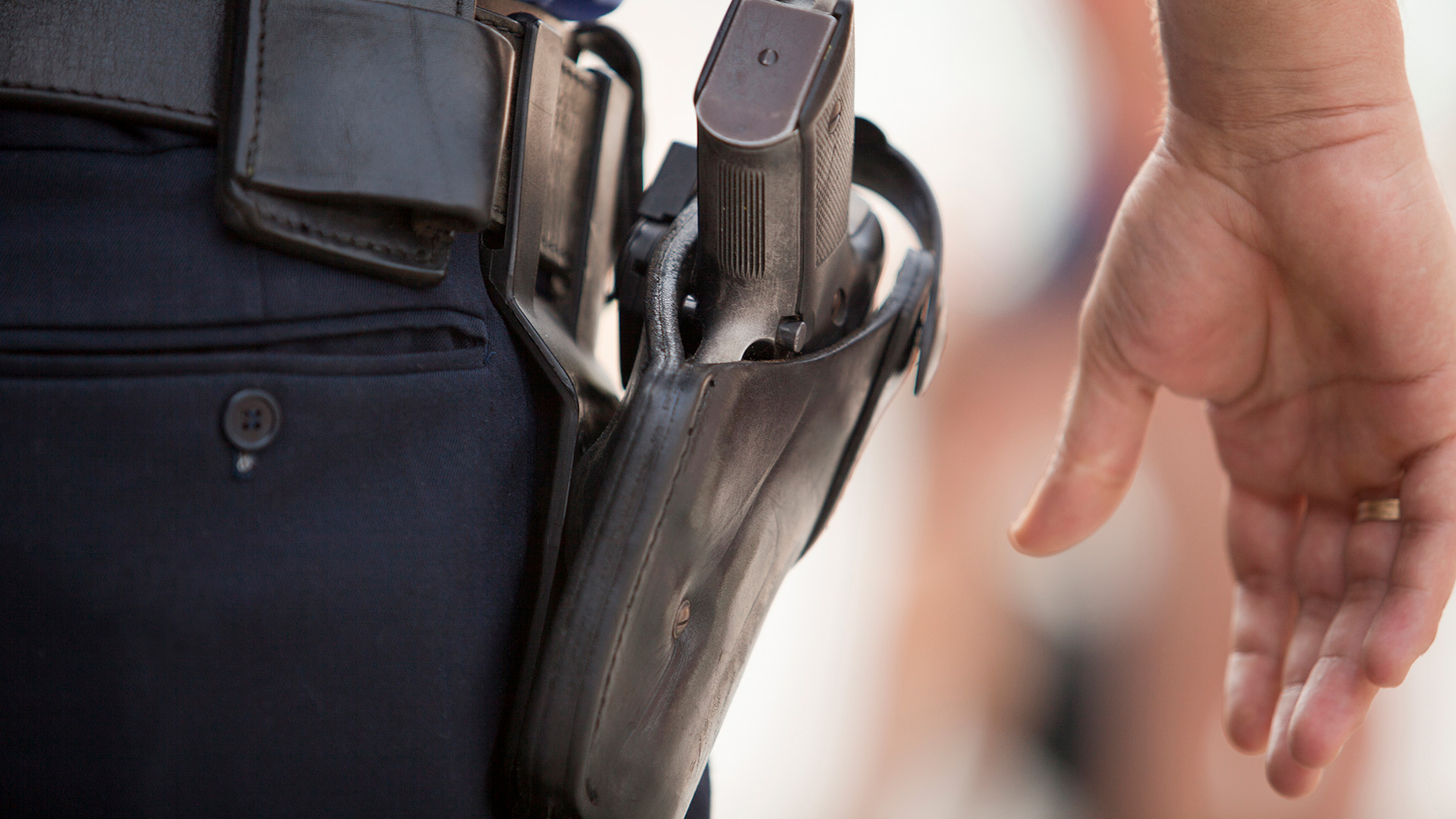
The Tennessee Legislature will vote on a bill that aims to expand the definition of “law enforcement officer” to include holders of enhanced handgun permits.

Enhanced handgun permits are given to gun owners who complete eight hours of training. Currently, sworn law enforcement officers must undergo training at the police academy for around 12 to 24 weeks.

Bill HB 2554/SB 2523 states that any individual with an enhanced handgun carry permit is a “law enforcement officer” unless the license is suspended, revoked or expired.

Currently, the Tennessee code defines a full-time police officer as one who has been certified by the Peace Officer Standards and Training Commission or is a commissioned reserve deputy sheriff who has received written authorization from the sheriff.

Some members of the law enforcement community have been skeptical of the proposal to broaden that definition.

“There’s a huge contrast between the number of hours of training,” retired Metro Police Lieutenant Melvin Brown told WYMT.

Brown noted that police must go through 12 to 24 weeks of training at an academy, in addition to 40 hours of additional yearly training.

“Included in that 40 hours is eight hours of firearms training qualifications,” Brown said.

The former police veteran was also concerned about further implications of expanding the definition of “law enforcement officer” to a wider group of citizens.

“What if you have to be a sworn law enforcement officer to carry a firearm in a state courthouse? Is this going to expand it to where anyone with eight hours of training and an enhanced carry permit can carry a loaded firearm into a state courthouse?” Brown said.

Currently, Tennessee law states that businesses can prohibit firearms from their property. However, law enforcement officers get a pass. By equating permit holders with law enforcement, this could negate current laws.

“If I read it correctly, it’s expanding the definition as it relates to being able to carry a firearm or have certain types of ammunition in private places that have the legal right to prohibit non-law enforcement officers from carrying,” Brown said. “The law gives the Legislature the right to let businesses prohibit non-law enforcement from being armed. But if law enforcement could be armed, do we want that same privilege to go to anyone that can go through eight hours of training and get a permit and not have to train anymore?” he said.

Brown’s advice to lawmakers is to discuss the bill with law enforcement agencies and citizen groups.

“It’s important to hear both sides of the discussion because the state Fraternal Order of Police, the Tennessee Association of Chiefs of Police and sheriffs’ association may or may not all agree. And some citizen groups about crime might have other ideas.”


Categories: Policy Tags: law enforcement officer, Melvin Brown, train-ing, firearm prohibition, Tennessee, police academy, legislation, bill, business, handgun permits

Primary Sidebar

Recent Articles

  • Nervous system regulation
  • Navigating danger
  • The nature of the job
  • Forty heroes: United Airlines Flight 93
  • Why you should lead from 30,000 feet
  • Promoting organizational wellness
  • Critical thinking in police training
  • Public perception and trust
  • Labor release under fire
  • Reminder: Apply now for the 2026 Destination Zero Awards

Footer

Our Mission
To serve as a trusted voice of the nation’s law enforcement community, providing informative, entertaining and inspiring content on interesting and engaging topics affecting peace officers today.

Contact us: info@apbweb.com | (800) 234-0056.

  • Facebook
  • Instagram
  • Twitter

Categories

  • Editor’s Picks
  • On the Job
  • Labor
  • Tech
  • Training
  • Policy
  • Health/Wellness
  • Community
  • Offbeat
  • We Remember
  • Jobs and Careers
  • Events

Editor’s Picks

Liability challenges in contemporary policing

Liability challenges in contemporary policing

February 27, 2026

When performance reviews are a waste of time

When performance reviews are a waste of time

February 26, 2026

Proactive wellness visits

Proactive wellness visits

February 25, 2026

Taking a page from Toyota’s playbook

Taking a page from Toyota’s playbook

February 23, 2026

Policies | Consent Preferences | Copyright © 2026 APB Media, LLC | Website design, development and maintenance by 911MEDIA

Open

Subscribe

Close

Receive the latest news and updates from American Police Beat directly to your inbox!

  • This field is for validation purposes and should be left unchanged.