• Skip to primary navigation
  • Skip to main content
  • Skip to primary sidebar
  • Skip to footer
  • Home
  • About
  • The Magazine
  • Events
  • Partners
  • Products
  • Contact
  • Jobs and Careers
  • Advertise
  • Facebook
  • Instagram
  • Twitter
  • Subscribe
American Police Beat

American Police Beat Magazine

Law Enforcement Publication

  • Home
  • Leadership
    • Leadership with heart
      Smart power
      Can your staff keep pace with your leadership goals?
      Your agency needs you
      Pursuit termination option: Radiator disablement
  • Topics
    • Leadership
      • Leadership with heart
        Smart power
        Can your staff keep pace with your leadership goals?
        Your agency needs you
        Pursuit termination option: Radiator disablement
    • Editor’s Picks
      • Mental health checks … in the training room?
        Crime doesn’t take a vacation
        The power of mediation
        Therapy isn’t just for the broken
        Police humor only a cop would understand
    • On the Job
      • Has law enforcement changed?
        SROs in action
        Stay in your lane
        Santa’s helpers
        The power of calm-edy
    • Labor
      • Labor leadership out in the field
        When you are falsely accused
        Is anyone listening?
        The power of mediation
        Differentiation in police recruitment
    • Tech
      • Gear that moves with you
        A new breed of cop car
        The future of patrol is here
        New York governor highlights $24 million investment to modernize law...
        Cutting-edge police technology
    • Training
      • Hit the pause button
        Effective in-service training
        The untrained trainer
        The vision behind precision
        Mentorship: Ensuring future success
    • Policy
      • Policing the police
        Utah repeals ban on collective bargaining
        Violence against officers is on the rise
        New Mexico’s Law Enforcement Retention Fund keeps experienced,...
        The phenomenon of trauma bonding in law enforcement
    • Health/Wellness
      • Fit for duty
        Maintain your mental armor
        Beyond crisis response
        Mental health checks … in the training room?
        Surviving and thriving in retirement
    • Community
      • Shop with a Cop
        Community engagement: What is it moving forward?
        Contradictory crossroads
        Back-to-school season brings out police support nationwide
        A bold idea for reducing homelessness in America
    • Offbeat
      • An unexpected burglar
        Police humor only a cop would understand
        Not eggzactly a perfect heist
        Pizza … with a side of alligator?
        Wisconsin man charged with impersonating Border Patrol agent twice in...
    • We Remember
      • A nation propelled to war, lives changed forever
        A Christmas loss
        York County ambush leaves three officers dead, others critically...
        Honoring the Fallen Heroes of 9/11
        Team Romeo
    • HOT Mail
      • The War on Cops Continues Unabated
  • On the Job
    • Has law enforcement changed?
      SROs in action
      Stay in your lane
      Santa’s helpers
      The power of calm-edy
  • Labor
    • Labor leadership out in the field
      When you are falsely accused
      Is anyone listening?
      The power of mediation
      Differentiation in police recruitment
  • Tech
    • Gear that moves with you
      A new breed of cop car
      The future of patrol is here
      New York governor highlights $24 million investment to modernize law...
      Cutting-edge police technology
  • Training
    • Hit the pause button
      Effective in-service training
      The untrained trainer
      The vision behind precision
      Mentorship: Ensuring future success
  • Policy
    • Policing the police
      Utah repeals ban on collective bargaining
      Violence against officers is on the rise
      New Mexico’s Law Enforcement Retention Fund keeps experienced,...
      The phenomenon of trauma bonding in law enforcement
  • Health/Wellness
    • Fit for duty
      Maintain your mental armor
      Beyond crisis response
      Mental health checks … in the training room?
      Surviving and thriving in retirement
  • Community
    • Shop with a Cop
      Community engagement: What is it moving forward?
      Contradictory crossroads
      Back-to-school season brings out police support nationwide
      A bold idea for reducing homelessness in America
  • Offbeat
    • An unexpected burglar
      Police humor only a cop would understand
      Not eggzactly a perfect heist
      Pizza … with a side of alligator?
      Wisconsin man charged with impersonating Border Patrol agent twice in...
  • We Remember
    • A nation propelled to war, lives changed forever
      A Christmas loss
      York County ambush leaves three officers dead, others critically...
      Honoring the Fallen Heroes of 9/11
      Team Romeo
  • HOT Mail
    • The War on Cops Continues Unabated
  • About
  • The Magazine
  • Events
  • Partners
  • Products
  • Contact
  • Jobs and Careers
  • Advertise
  • Subscribe
Search

Tech

What are peer-to-peer darknets?

Keven Hendricks Published January 28, 2025 @ 6:00 am PST

iStock.com/anilyanik

I would be remiss if I didn’t acknowledge that the law enforcement community’s perception of the “dark web”  has remained uncomfortably stagnant over the past decade. As I have previously written about in American Police Beat — see “Your guide to the alternate ‘dark nets’” in 2022 — the “dark web” is composed of various compartmentalized “darknets.” The advent of blockchain technology and subsequent implementation of blockchain DNS (domain name service) has caused a paradigm shift for the internet en masse, putting us on the precipice of what is commonly dubbed  “Web3.” While the traditional darknets like TOR, I2P and Hyphanet (Freenet) maintain their loyal usership and unmatched popularity, peer-to-peer darknets have found their way from a being niche interest to widespread adoption.
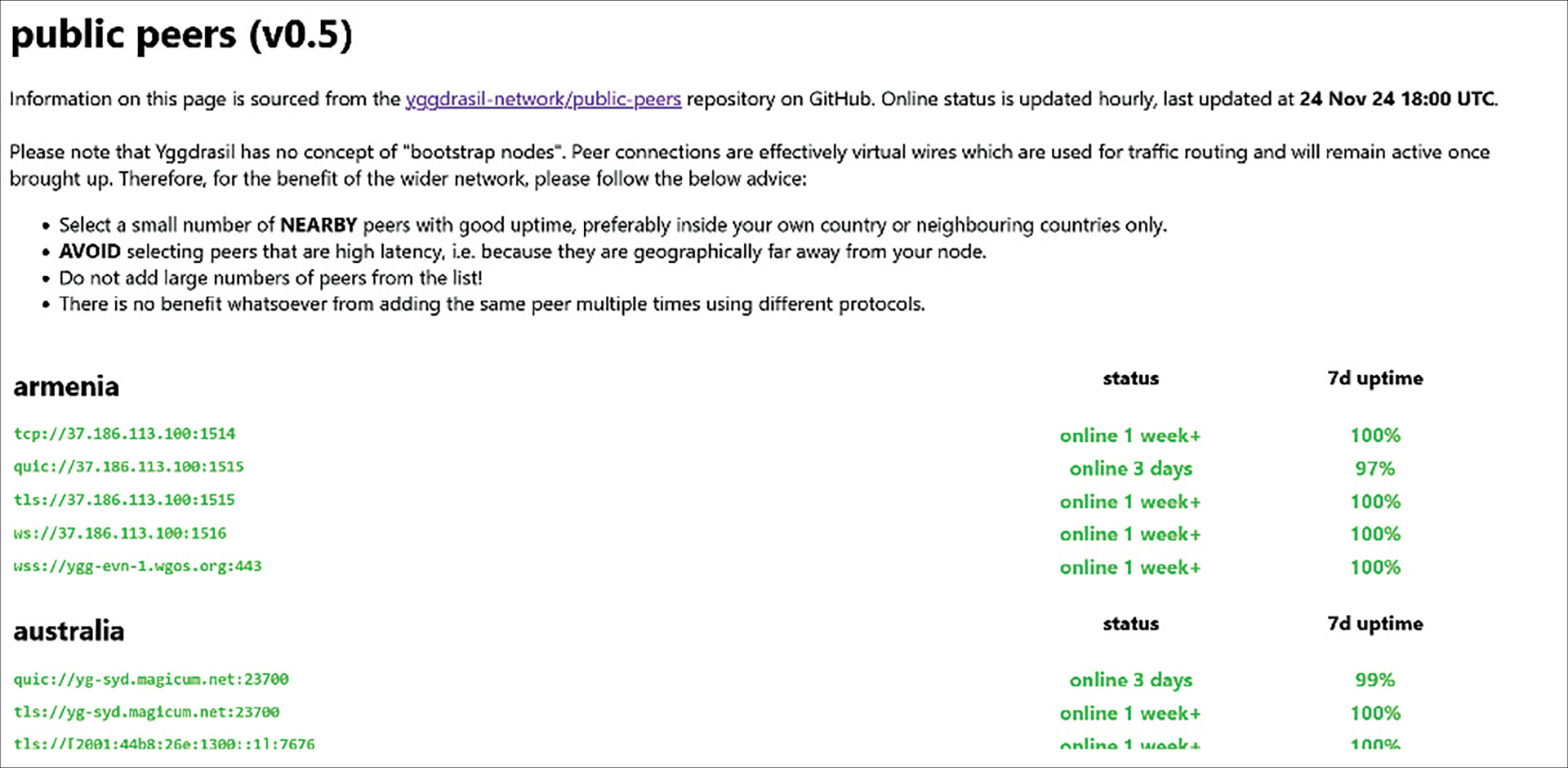
Yggdrasil network public peers: https://publicpeers.neilalexander.dev

The difference between peer-to-peer darknets and “traditional” darknets is rooted in how the internet traffic enters and traverses the darknet. TOR, for example, implements “onion routing,” consisting of the TOR circuit. I2P, on the other hand, implements “tunneling” or something colloquially known as “garlic routing.” To traverse any of the sites hosted on these “traditional” darknets, the internet traffic must adhere to the prescribed protocol and also requires software to be utilized by the end user to satisfy those requirements. Said software can be a specific internet browser (like the TOR Browser), an executable file or an operating system configuration. Peer-to-peer darknets, on the other hand, operate with much more portability. 
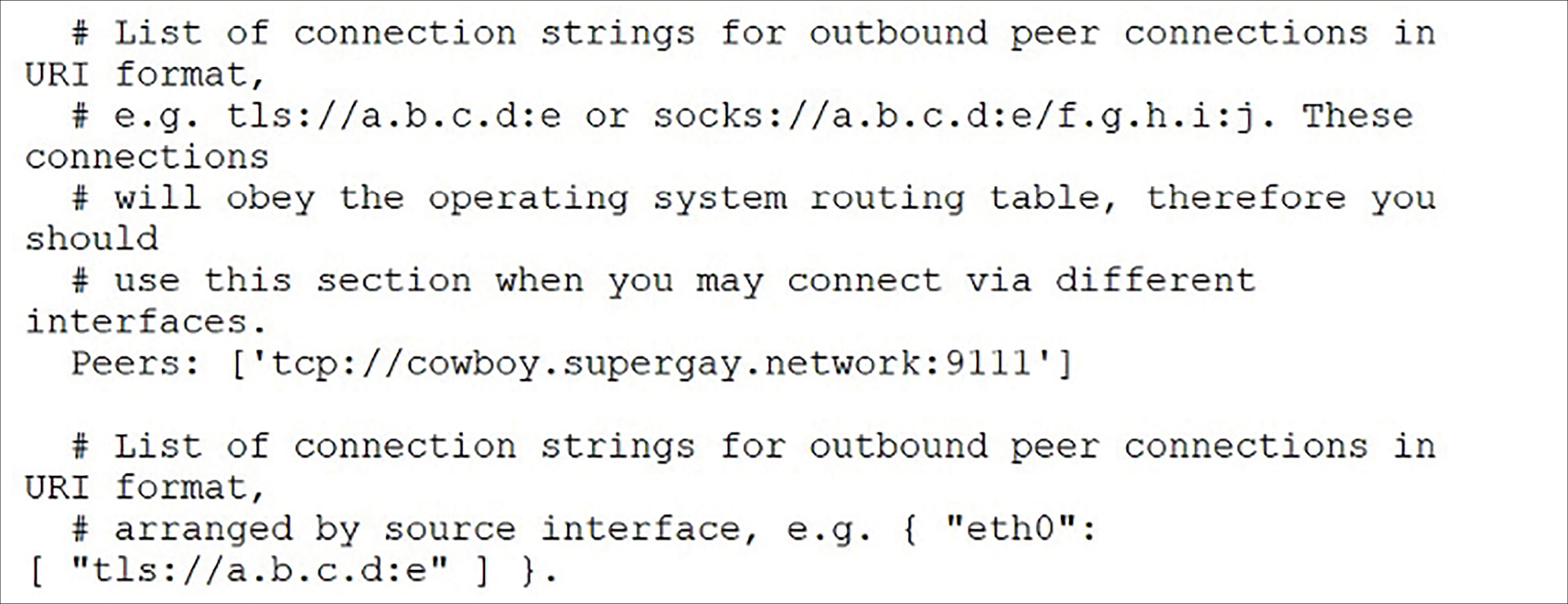
Configuring the Yggdrasil router to connect into peer

Peer-to-peer darknets merely require access via a peer for entry. For example, Telegram’s The Open Network (TON) requires a user to configure their internet browser to access the TON proxies in order to visit TON domains (URLs that end in .ton). Without accessing proxies, visiting the TON domains would not be possible. Revisiting the “traditional” darknet connectivity comparison, it is important for readers to comprehend that your traffic inbound to a peer is completely visible, meaning you are visible to the darknet. This is drastically different from the “traditional” darknets that obfuscate a user’s identity before connection to the darknet. With peer-to-peer darknets, only once you are connected to a peer can your traffic become anonymized and conflated with the other users’ traffic.

Example of Yggdrasil router running as Windows service, connected to peer via port 15,492

One such peer-to-peer darknet to highlight is Yggdrasil. What makes Yggdrasil most interesting is that shares a software component, similar to the “traditional” darknets like TOR and I2P; however, it simply allows for the routing of traffic into the Yggdrasil network, and the user must select their peer. As with all peer-to-peer darknets, the peers have to be visible and maintained in some sort of centralized repository. 

Peer-to-peer darknets are not browser-specific, unlike the TOR browser, which is built upon the Mozilla Firefox framework. You can use whichever browser you prefer; e.g., Chrome, Firefox, Edge, etc. Pertaining to Yggdrasil configuration specifically, the software router is merely allowing your internet traffic to connect to one of the network’s peers via one of your internet’s 65,500-plus available ports. Your traffic is not obfuscated, meaning the peer can see your true IP address as you enter. To reiterate, once connection with a peer has been established, only then can the peer-to-peer darknet sites be traversed.

Yggdrasil site directory

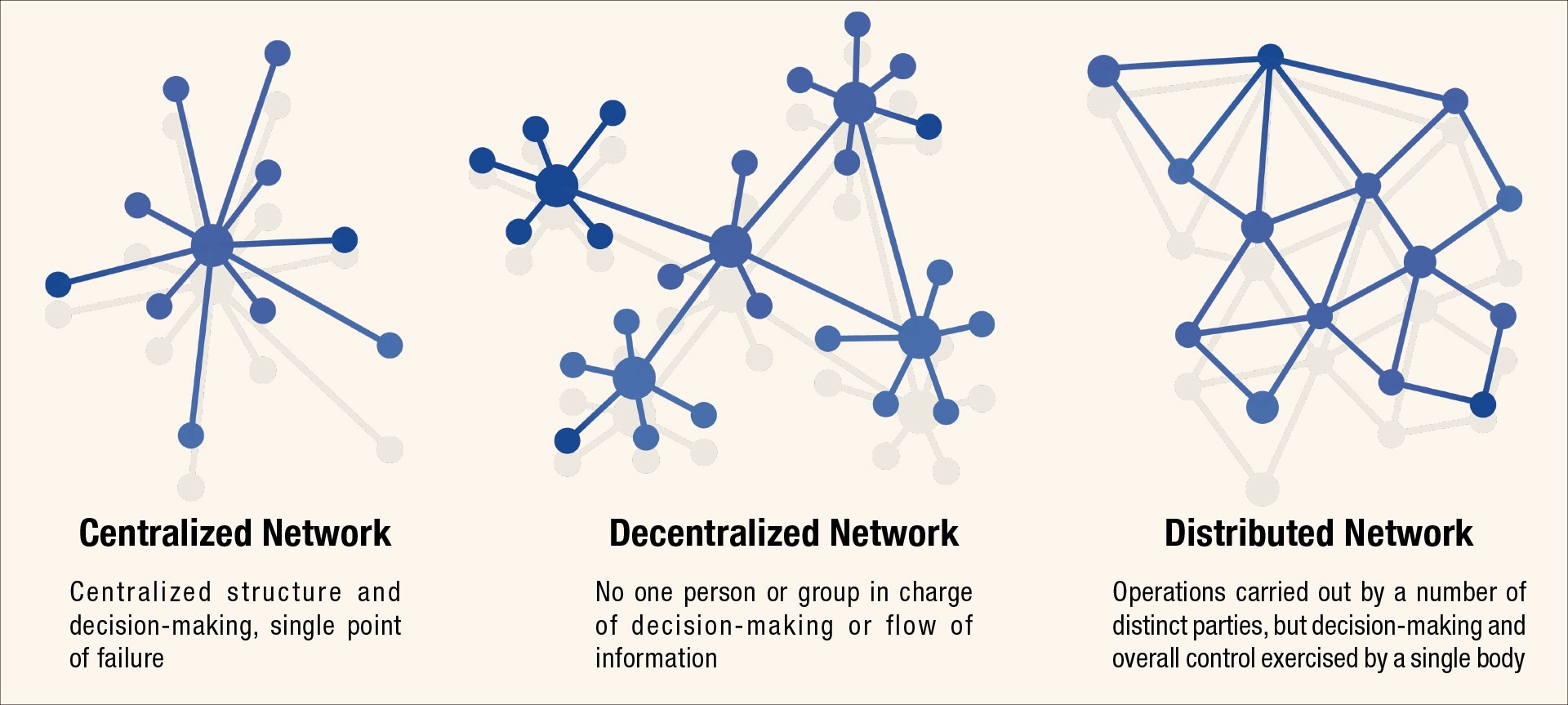
It is not lost on me that, to the law enforcement community, everything I have just covered may seem nebulous or abstract. And that is certainly OK! You do not have to be an “expert” in this space in order to be able to investigate suspects utilizing peer-to-peer darknet services. But it is also imperative for even the lay reader to understand that the internet as we know it is changing, and that while peer-to-peer darknets may be a smaller fiefdom of the internet, the advent of decentralized and distributed networks is already here.

For further reading on peer-to-peer darknets, and well as the possibilities of the decentralized and distributed web, I highly encourage you to visit such projects as Urbit (urbit.org), TON (ton.org), Tribler (github.com/Tribler/tribler) and Agregore (agregore.mauve.moe). In my humble opinion, these networks are the future of what we in law enforcement colloquially refer to as the “dark web,” and I believe we will see the aforementioned “traditional” darknets gravitating their infrastructure toward the distributed/decentralized network overlays. With privacy as well as anonymity remaining paramount concerns for the internet experience today, it is only natural that services like peer-to-peer darknets offer an alternative to what we all know as the “dark web.”

Keven Hendricks

Keven Hendricks

Keven Hendricks is an 18-year law enforcement veteran serving on FBI and DEA task forces combating cybercrime. He is a published author with the FBI Law Enforcement Bulletin and is currently working as an instructor for various training companies, teaching classes for law enforcement on the dark web and cybercrimes. He is recognized as a subject-matter expert in the field of dark web investigations and the founder of the Ubivis Project (ubivisproject.org).

View articles by Keven Hendricks

As seen in the January 2025 issue of American Police Beat magazine.
Don’t miss out on another issue today! Click below:


SUBSCRIBE TODAY!

Categories: Tech

Primary Sidebar

Recent Articles

  • Has law enforcement changed?
  • Leadership with heart
  • SROs in action
  • Policing the police
  • Labor leadership out in the field
  • Hit the pause button
  • A nation propelled to war, lives changed forever
  • Fit for duty
  • Stay in your lane
  • Utah repeals ban on collective bargaining

Footer

Our Mission
To serve as a trusted voice of the nation’s law enforcement community, providing informative, entertaining and inspiring content on interesting and engaging topics affecting peace officers today.

Contact us: info@apbweb.com | (800) 234-0056.

  • Facebook
  • Instagram
  • Twitter

Categories

  • Editor’s Picks
  • On the Job
  • Labor
  • Tech
  • Training
  • Policy
  • Health/Wellness
  • Community
  • Offbeat
  • We Remember
  • Jobs and Careers
  • Events

Editor’s Picks

Mental health checks … in the training room?

Mental health checks … in the training room?

November 25, 2025

Crime doesn’t take a vacation

Crime doesn’t take a vacation

November 21, 2025

The power of mediation

The power of mediation

November 20, 2025

Therapy isn’t just for the broken

Therapy isn’t just for the broken

November 14, 2025

Policies | Consent Preferences | Copyright © 2026 APB Media, LLC | Website design, development and maintenance by 911MEDIA

Open

Subscribe

Close

Receive the latest news and updates from American Police Beat directly to your inbox!

  • This field is for validation purposes and should be left unchanged.