• Skip to primary navigation
  • Skip to main content
  • Skip to primary sidebar
  • Skip to footer
  • Home
  • About
  • The Magazine
  • Events
  • Partners
  • Products
  • Contact
  • Jobs and Careers
  • Advertise
  • Facebook
  • Instagram
  • Twitter
  • Subscribe
American Police Beat

American Police Beat Magazine

Law Enforcement Publication

  • Home
  • Leadership
    • The job has changed — have you?
      Perpetual recognition of line-of-duty deaths
      Understanding the boundaries of professional relationships with the...
      Why you should lead from 30,000 feet
      Public perception and trust
  • Topics
    • Leadership
      • The job has changed — have you?
        Perpetual recognition of line-of-duty deaths
        Understanding the boundaries of professional relationships with the...
        Why you should lead from 30,000 feet
        Public perception and trust
    • Editor’s Picks
      • Let’s get moving!
        Heroes of the World Trade Center
        The Promise Gap
        Corruption, collusion and impunity
        Liability challenges in contemporary policing
    • On the Job
      • Testing the waters — literally
        Frankpledge to forensics: A brief history of law enforcement
        Villains and heroes in the Big Apple
        Right place, right time — again
        Some good news on crime
    • Labor
      • The Promise Gap
        Cut the cops, save a dollar?
        Labor release under fire
        Who’s watching the watchmen?
        Crime and punishment (or lack thereof) in Seattle
    • Tech
      • New Mexico license plate readers save lives, lead to “precise...
        A modern field guide to understanding research in policing
        Gear that moves with you
        A new breed of cop car
        The future of patrol is here
    • Training
      • Pushback as a training signal
        Let’s get moving!
        The five minutes before the ambulance
        Navigating danger
        Critical thinking in police training
    • Policy
      • Police pause license plate readers
        Corruption, collusion and impunity
        E-bikes spark public safety concerns
        Try racing without wheels
        Law enforcement accreditation: Why it matters
    • Health/Wellness
      • The days that follow
        Addressing stress, vicarious trauma and burnout
        Nervous system regulation
        The nature of the job
        Promoting organizational wellness
    • Community
      • Improving autism awareness
        Shop with a Cop
        Community engagement: What is it moving forward?
        Contradictory crossroads
        Back-to-school season brings out police support nationwide
    • Offbeat
      • An unexpected burglar
        Police humor only a cop would understand
        Not eggzactly a perfect heist
        Pizza … with a side of alligator?
        Wisconsin man charged with impersonating Border Patrol agent twice in...
    • We Remember
      • A Tribute to Fallen Heroes
        Markers of service and remembrance
        Tragedy strikes Baker to Vegas
        Heroes of the World Trade Center
        Forty heroes: United Airlines Flight 93
    • HOT Mail
      • The War on Cops Continues Unabated
  • On the Job
    • Testing the waters — literally
      Frankpledge to forensics: A brief history of law enforcement
      Villains and heroes in the Big Apple
      Right place, right time — again
      Some good news on crime
  • Labor
    • The Promise Gap
      Cut the cops, save a dollar?
      Labor release under fire
      Who’s watching the watchmen?
      Crime and punishment (or lack thereof) in Seattle
  • Tech
    • New Mexico license plate readers save lives, lead to “precise...
      A modern field guide to understanding research in policing
      Gear that moves with you
      A new breed of cop car
      The future of patrol is here
  • Training
    • Pushback as a training signal
      Let’s get moving!
      The five minutes before the ambulance
      Navigating danger
      Critical thinking in police training
  • Policy
    • Police pause license plate readers
      Corruption, collusion and impunity
      E-bikes spark public safety concerns
      Try racing without wheels
      Law enforcement accreditation: Why it matters
  • Health/Wellness
    • The days that follow
      Addressing stress, vicarious trauma and burnout
      Nervous system regulation
      The nature of the job
      Promoting organizational wellness
  • Community
    • Improving autism awareness
      Shop with a Cop
      Community engagement: What is it moving forward?
      Contradictory crossroads
      Back-to-school season brings out police support nationwide
  • Offbeat
    • An unexpected burglar
      Police humor only a cop would understand
      Not eggzactly a perfect heist
      Pizza … with a side of alligator?
      Wisconsin man charged with impersonating Border Patrol agent twice in...
  • We Remember
    • A Tribute to Fallen Heroes
      Markers of service and remembrance
      Tragedy strikes Baker to Vegas
      Heroes of the World Trade Center
      Forty heroes: United Airlines Flight 93
  • HOT Mail
    • The War on Cops Continues Unabated
  • About
  • The Magazine
  • Events
  • Partners
  • Products
  • Contact
  • Jobs and Careers
  • Advertise
  • Subscribe
Search

Editor's Picks

Crime doesn’t take a vacation

Policing challenges in tourist jurisdictions

Jack R. Gates Published November 21, 2025 @ 12:00 pm PST

iStock.com/Joel Carillet

Every law enforcement agency across the U.S. has its own unique challenges. However, policing in areas associated with tourism and seasonal population increases presents obstacles and issues that many other departments don’t deal with as much, or at all.

Vacation destinations offer visitors ample opportunities for fun, adventure and entertainment — and are all too often affected by criminal activity. Tourism is a $100 billion-per-year industry in the U.S., hosting over 57 million visitors and supporting 204 million jobs related to tourism.

Overall, the most common crimes in tourist-based locales include property crimes, financial crimes, violent crimes and organized crime. Organized crime can involve activities such as human trafficking, which may not be as well reported or documented as violent or property crimes.

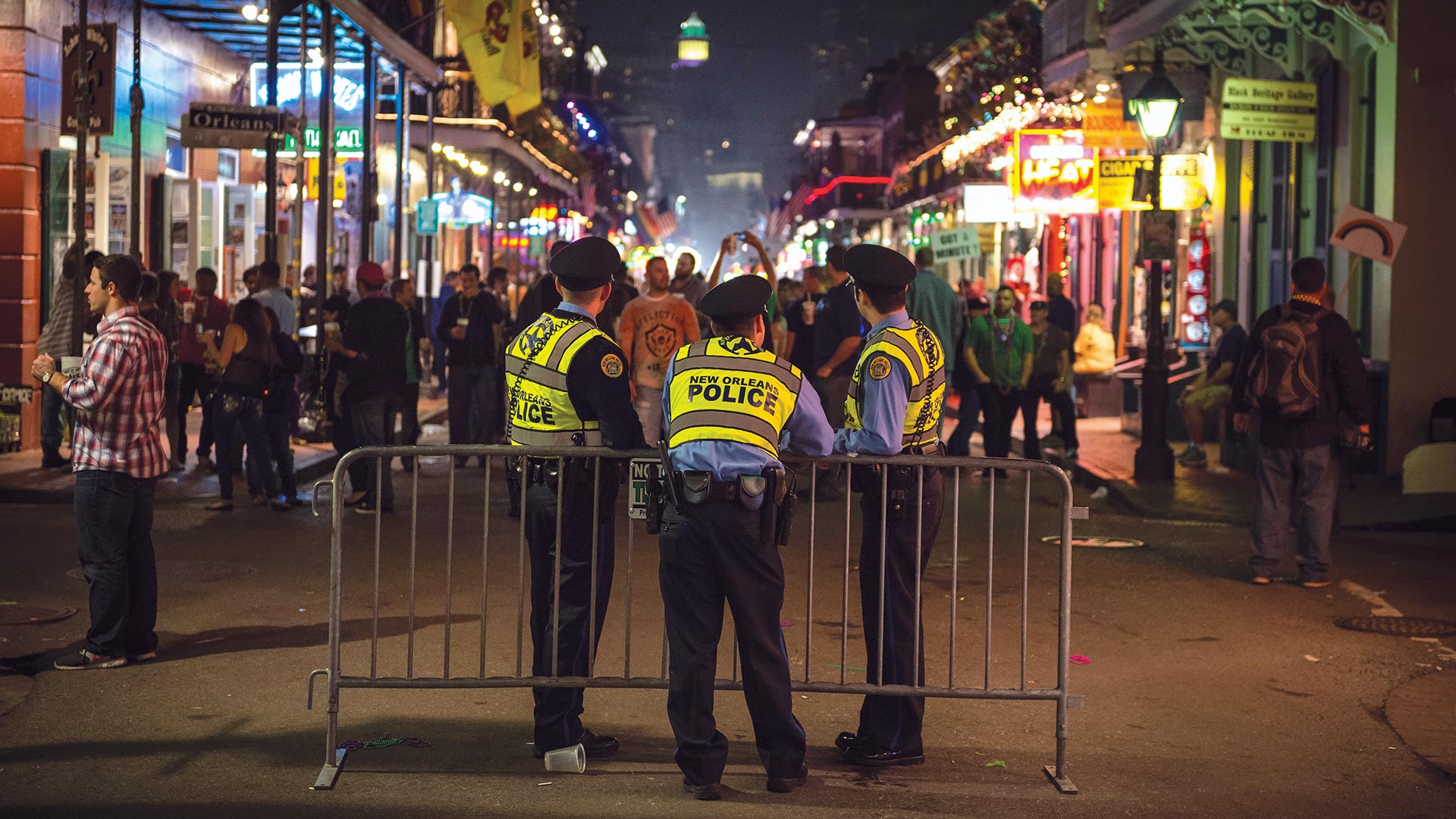
A top-20 list of cities with the most criminal activity includes several tourist-centered jurisdictions, such as New Orleans, Orlando and Las Vegas. For example, New Orleans has a crime rate of 60.98 crimes per 1,000 people; Orlando sees 48.54 crimes per 1,000 people; and Las Vegas has a crime rate of 35.41 per 1,000 people.

Officers in these areas frequently encounter situations that many of us do not see on a regular basis. The upside is that law enforcement agencies in these jurisdictions tend to be well funded; the downside is that these officers are some of the busiest in the country. Beyond criminal cases, they are often tasked with traffic control, investigating traffic accidents and other such incidentals.

The tourists

Nestled in the Ozark Mountains, Branson, Missouri, sees millions of visitors each year. The main thoroughfare through the small city, State Highway 76, is called “the Strip.” Along the Strip, vacationers will find live music theaters, amusement centers, restaurants, motels and souvenir shops. Deemed the “poor man’s Las Vegas,” Branson has expanded with thousands of motel rooms to accommodate its visitors. What most tourists never see is the day-to-day turmoil, traffic accidents and shoplifting incidents. One former Branson officer mused about the interesting activities some of the more adventurous tourists get involved in, coining a simple unofficial motto adopted by many touristy jurisdictions: “They come on vacation, leave on probation.”

Tourists can and have been targets of criminals — pickpocketing, vehicle burglaries and scams are just a few of the obstacles they may face. Tourists can also be the criminals themselves, committing offenses such as driving under the influence, drug possession and domestic violence, which officers cite as common problems during the busy tourist season.

The transients

Most tourist towns have a large number of transient workers living in extended-stay motels or low-income housing. This population may only stay for one or two seasons before moving on to other areas. Many officers would quickly agree that this group makes up a large contingency of those they arrest for various crimes. One of the difficulties in investigating crimes involving transients is their ability to pick up and leave at a moment’s notice. This complicates investigations, and sometimes identifying them can be just as challenging.

Additionally, tourist locations are magnets for the homeless. They often live in less savory areas, perhaps on the outskirts, but are inevitably present in public venues during the day. Panhandling is generally their modus operandi as they seek money for their vices or, when soup kitchens aren’t available, for sustenance. Others may take odd jobs or wash dishes in local restaurants.

Transient workers usually seek low-priced housing, often in long-term-stay motels. Agencies in towns with these types of units are very likely familiar with the residents and often are on a first-name basis with the managers and desk clerks. While typical crimes in these areas involve domestic violence and drug and alcohol abuse, these locations are prime spots to find suspects connected to crimes elsewhere in the jurisdiction.

The criminals

Professional criminals love tourist towns. They can operate a host of lucrative activities, including drug trafficking, theft rings, fraud, counterfeiting, prostitution and other types of human trafficking. There is also no shortage of other types of crimes, such as white-collar financial offenses, including various types of fraud.

Organized crime is almost always an issue in tourist locations, even if only peripherally. Tourists are often viewed as easy targets for such schemes like pickpocketing or vehicle accident insurance fraud.

Investigating criminals in tourist towns can also be tricky. These offenders can be as transient as some of the local inhabitants. Investigators attempting to locate or even identify them often face incredible hurdles due to the suspects’ ability to just bug out and move on to a new location.

Local efforts to reduce crimes against tourists

Police agencies in tourist destinations should strive to maintain a conspicuous presence in high-traffic areas such as shopping malls, theme parks, public events and hotel or motel public spaces, including parking lots. Having video surveillance cameras placed in strategic locations may provide an additional layer of security in these tourist-centered areas. Moreover, prosecutors and courts should develop programs allowing crime victims to testify via teleconferencing, rather than having to travel hundreds of miles to appear in person.

There are many aspects of working in a tourist town that most other law enforcement officers are fortunate enough not to have to navigate in their day-to-day duties. Even the sheer volume of people surging into a small area during tourist season is enough to intimidate many officers. Our hats are off to the hardworking individuals who pursue this avenue of police work. The obstacles they overcome each day make some of our other duties pale in comparison.

Jack R. Gates

Jack R. Gates

Jack R. Gates is a former law enforcement officer in Missouri, currently serving as a civilian employee with a police department in southwest Missouri. He can be contacted at numis1967@gmail.com.

View articles by Jack R. Gates

As seen in the November 2025 issue of American Police Beat magazine.
Don’t miss out on another issue today! Click below:


SUBSCRIBE TODAY!

Categories: Editor's Picks, On the Job

Primary Sidebar

Recent Articles

  • The job has changed — have you?
  • New National Law Enforcement Museum exhibit revisits D.C. snipers case
  • A hero’s legacy through a mother’s love
  • The days that follow
  • Perpetual recognition of line-of-duty deaths
  • A Tribute to Fallen Heroes
  • NLEOMF Fund announces March 2026 Officers of the Month
  • Markers of service and remembrance
  • Testing the waters — literally
  • Police pause license plate readers

Footer

Our Mission
To serve as a trusted voice of the nation’s law enforcement community, providing informative, entertaining and inspiring content on interesting and engaging topics affecting peace officers today.

Contact us: info@apbweb.com | (800) 234-0056.

  • Facebook
  • Instagram
  • Twitter

Categories

  • Editor’s Picks
  • On the Job
  • Labor
  • Tech
  • Training
  • Policy
  • Health/Wellness
  • Community
  • Offbeat
  • We Remember
  • Jobs and Careers
  • Events

Editor’s Picks

Let’s get moving!

Let’s get moving!

April 27, 2026

Heroes of the World Trade Center

Heroes of the World Trade Center

April 24, 2026

The Promise Gap

The Promise Gap

April 22, 2026

Corruption, collusion and impunity

Corruption, collusion and impunity

April 21, 2026

Policies | Consent Preferences | Copyright © 2026 APB Media, LLC | Website design, development and maintenance by 911MEDIA

Open

Subscribe

Close

Receive the latest news and updates from American Police Beat directly to your inbox!

  • This field is for validation purposes and should be left unchanged.