• Skip to primary navigation
  • Skip to main content
  • Skip to primary sidebar
  • Skip to footer
  • Home
  • About
  • The Magazine
  • Events
  • Partners
  • Products
  • Contact
  • Jobs and Careers
  • Advertise
  • Facebook
  • Instagram
  • Twitter
  • Subscribe
American Police Beat

American Police Beat Magazine

Law Enforcement Publication

  • Home
  • Leadership
    • The relentless pursuit of excellence
      An effective strategy for difficult discussions
      Developing and enhancing assertiveness
      Clarifying your “true north”
      The job has changed — have you?
  • Topics
    • Leadership
      • The relentless pursuit of excellence
        An effective strategy for difficult discussions
        Developing and enhancing assertiveness
        Clarifying your “true north”
        The job has changed — have you?
    • Editor’s Picks
      • Smile and let them swing
        The job has changed — have you?
        The days that follow
        Perpetual recognition of line-of-duty deaths
        Let’s get moving!
    • On the Job
      • Hats off to a new uniform look
        Overcoming climate and conditions to rescue child
        Father and son mark career milestones together
        Officer’s determination closes case and surprises cancer patient
        CPD sergeant receives commendation for holiday boat rescue
    • Labor
      • Facing the oral board
        Why good cops quit
        Succession planning
        Why more staff won’t fix your operational slowdowns
        Drama in Georgia: Mayor fires entire police department for...
    • Tech
      • Take Me Home program offers effective tool for police and families
        Get the most out of simulation training
        The virtual beat
        Training with an AI partner?
        NYC’s electric vehicle fleet for LE passes milestone
    • Training
      • Precision, adaptability and response: The need for LPVOs in equipping...
        Training dipshittery, Part 2
        Tactical medicine for cops
        Get the most out of simulation training
        Training like the pros
    • Policy
      • Portlanders will not vote on diverting climate funds for police...
        Surviving internal affairs investigations
        Fighting human trafficking at the local level
        Minneapolis mayor ordered to meet police staffing mandate
        New Hampshire’s new bail notification system closes gaps between...
    • Health/Wellness
      • Understanding why police officers think alcohol works
        Has the job quietly stolen your humanity?
        No two days are ever the same
        Changing the narrative
        Supporting your peer support team
    • Community
      • Wyoming girl on a mission to collect “hero patches”
        Texas sheriff’s office nominates 7-year-old for commendation
        Cops try to net DEA agents
        A different type of teen takeover
        Working community connections
    • Offbeat
      • Police chief catches cat in the act
        “Teenage Mutant Ninja Deer” rescued
        An unexpected burglar
        Police humor only a cop would understand
        Not eggzactly a perfect heist
    • We Remember
      • Distant cousins connect to honor fallen family member 110 years after...
        9/11 Victim Compensation Fund: A journey to coverage
        Driver charged with murder after striking LAPD sergeant at 112 mph
        Unsung heroes: New York City correction officers
        National Police Week 2026
    • HOT Mail
      • The War on Cops Continues Unabated
  • On the Job
    • Hats off to a new uniform look
      Overcoming climate and conditions to rescue child
      Father and son mark career milestones together
      Officer’s determination closes case and surprises cancer patient
      CPD sergeant receives commendation for holiday boat rescue
  • Labor
    • Facing the oral board
      Why good cops quit
      Succession planning
      Why more staff won’t fix your operational slowdowns
      Drama in Georgia: Mayor fires entire police department for...
  • Tech
    • Take Me Home program offers effective tool for police and families
      Get the most out of simulation training
      The virtual beat
      Training with an AI partner?
      NYC’s electric vehicle fleet for LE passes milestone
  • Training
    • Precision, adaptability and response: The need for LPVOs in equipping...
      Training dipshittery, Part 2
      Tactical medicine for cops
      Get the most out of simulation training
      Training like the pros
  • Policy
    • Portlanders will not vote on diverting climate funds for police...
      Surviving internal affairs investigations
      Fighting human trafficking at the local level
      Minneapolis mayor ordered to meet police staffing mandate
      New Hampshire’s new bail notification system closes gaps between...
  • Health/Wellness
    • Understanding why police officers think alcohol works
      Has the job quietly stolen your humanity?
      No two days are ever the same
      Changing the narrative
      Supporting your peer support team
  • Community
    • Wyoming girl on a mission to collect “hero patches”
      Texas sheriff’s office nominates 7-year-old for commendation
      Cops try to net DEA agents
      A different type of teen takeover
      Working community connections
  • Offbeat
    • Police chief catches cat in the act
      “Teenage Mutant Ninja Deer” rescued
      An unexpected burglar
      Police humor only a cop would understand
      Not eggzactly a perfect heist
  • We Remember
    • Distant cousins connect to honor fallen family member 110 years after...
      9/11 Victim Compensation Fund: A journey to coverage
      Driver charged with murder after striking LAPD sergeant at 112 mph
      Unsung heroes: New York City correction officers
      National Police Week 2026
  • HOT Mail
    • The War on Cops Continues Unabated
  • About
  • The Magazine
  • Events
  • Partners
  • Products
  • Contact
  • Jobs and Careers
  • Advertise
  • Subscribe
Search

Policy

Betrayed from within

Unmasking the hidden wounds in policing

Sherri Martin, MA, LPCA Published November 24, 2025 @ 12:00 pm PST

iStock.com/TarikVision

by Sherri Martin, MA, LPCA

Editor’s note: This article is reprinted with permission from the September 2025 issue of the FOP Journal, the official publication of the National Fraternal Order of Police.

It is well known that police officers witness exponentially larger numbers of traumatic events in the course of their careers than do members of the general public. On some level, we are prepared for these exposures. From our first conceptions of what the job is when we are driven to apply, through our academy training and beyond, we are trained to expect and to effectively handle chaos in calls for service.

We are trained to be the calm in the storm and to restore order where it becomes absent. We are told that we may be involved in critical incidents in the course of our duties. We train repeatedly for the exchange of gunfire that many of us will never actually experience, and we are educated about the effects it may have on us if we are called to take a life in the course of our duties.

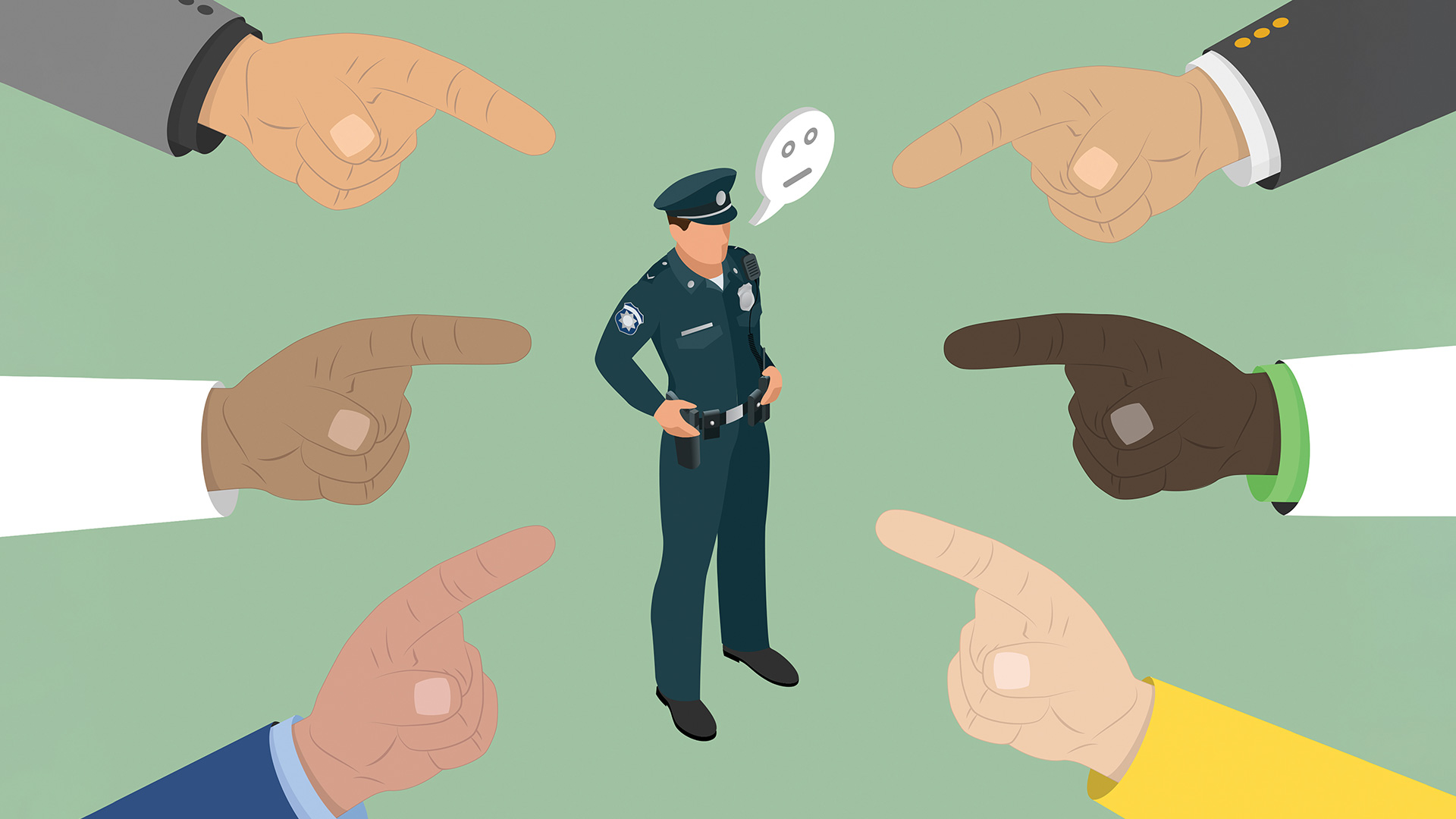
However, talking with officers across the country, it often isn’t the critical incident, even when it involves taking the life of another, that causes the greatest stress and harm for the officer. It is what they experience afterward. The extreme scrutiny, the “Monday morning quarterbacking.” The lengthy investigation and second-guessing by people who weren’t involved. Sometimes, the distance from co-workers and the camaraderie of the profession when one is put on official leave during the investigation. The unfortunate failure of some leaders to assure the officer that they are supported.

Organizational betrayal, sometimes referred to as institutional betrayal, is a concept introduced by psychologist Jennifer Freyd, which describes wrongdoings perpetrated by an institution against individuals who rely on that institution for support.

In law enforcement, organizational betrayal may play out in any number of circumstances, including failures to address misconduct, failure to intervene in workplace bullying and failure to provide support to employees, especially those who may be in the most urgent need. We have heard from officers that it wasn’t the critical incident in their career that was the worst for them, but rather the way that the organization treated them after the incident.

In both the 2021 and 2023 FOP Critical Issues in Policing surveys, nationwide surveys of law enforcement officers in the United States, conducted by the National Fraternal Order of Police, respondents overwhelmingly indicated that organizational stressors were much more impactful than those related to traditional critical incidents. Respondents cited inconsistent or poor leadership and favoritism as some of the key organizational stressors that impacted them, in many cases causing them significantly higher levels of stress than working in a physically demanding and dangerous job. It makes sense. We don’t have training in the academy that prepares us for how our organization or our leaders will behave when the police become involved in an incident that draws public attention or scrutiny.

Why does this occur? While organizational betrayal touches almost every profession, it has recently become more frequently discussed in law enforcement. The profession has come under significantly more scrutiny from outside sources in recent years, causing all levels of police agencies to feel pressure. As discussions about mental health and sources of stress increase in law enforcement, and we start to research and dig deep into the causes, we are learning that maybe we have missed a big chunk of the picture by only looking at the trauma caused by critical incident exposures. We are only now becoming aware of the significant impact that organizational policies, practices and actions can have on the well-being of employees. While our profession is one that fosters camaraderie and often strong bonds among employees, it can feel like an extra stinging wallop when we feel betrayed by the organization; a violation of the brotherhood or sisterhood, and a turning of backs from the people who were always supposed to “have our six.”

So, what can we do about this? First, we can generate awareness of the impacts that organizations have on employees and increase understanding that policies and practices can be harmful even when not intended to be, and even at times when they are actually intended to protect the officer.

For example, when an officer is involved in an incident in which they must take the life of a suspect, they are often physically separated from all other officers, told not to speak to anyone about the incident, and they may spend hours alone without any support or anyone to talk to. This practice, while well-meaning and designed to protect the rights of the officer, can actually be harmful, as it may feel to the involved officer that they are being ostracized because their actions are being judged or second-guessed, and that they have done something wrong.

We must educate police leaders and supervisors about the concept of organizational betrayal, including the circumstances that lead to it, how instances can be prevented and how to recover once it has occurred. Leaders must listen carefully to employees, observe the impacts of policies and practices, and then acknowledge negative impacts when they occur, examining what led to the issue and how it can be prevented in the future.

When people feel wronged, they need to be heard, and this may mean that emotions will surface. While we are often not comfortable with emotion in law enforcement, especially within the workplace, ignoring emotions won’t make them go away, and forcing people to swallow them is unhealthy for both the individual and the organization, leading the employee to feel even more distanced from leadership. Agencies and leaders must take responsibility for mistakes and become invested in taking tangible
steps to improve the situation by involving the employee in the problem-solving process and carefully considering their input.

As managers, administrators and other law enforcement leaders learn about the impact of perceived organizational betrayal, we all have a role, even the newest line officer. It starts by recognizing that almost all of us want to do the very best job we can. In leadership and management roles, this may take a different kind of courage. Acknowledging mistakes, recognizing how employees may feel the impacts of decisions or even failures to make necessary decisions, and taking tangible and visible steps to make improvements, not just for the affected employee, but for strengthening the entire agency. The affected employee also has a responsibility to speak up when they feel that they have been betrayed by the agency, to clearly explain the impacts that leadership or agency decisions or actions have had on them, and then to give the agency grace when steps are taken in an attempt to improve the situation. We can all play a role in examining our current policies and practices and considering how they are experienced in the workplace. After all, this profession, this brotherhood, belongs to all of us to be the best it can be. Truly having each other’s six starts with awareness and open communication, and then having the courage to follow through.

Sherri Martin, MA, LPCA

Sherri Martin, MA, LPCA

Sherri Martin, MA, LPCA, is the director of Wellness Services for the National Fraternal Order of Police.

View articles by Sherri Martin, MA, LPCA

As seen in the November 2025 issue of American Police Beat magazine.
Don’t miss out on another issue today! Click below:


SUBSCRIBE TODAY!

Categories: Policy

Primary Sidebar

Recent Articles

  • Take Me Home program offers effective tool for police and families
  • Hats off to a new uniform look
  • Portlanders will not vote on diverting climate funds for police staffing
  • Facing the oral board
  • Distant cousins connect to honor fallen family member 110 years after EOW
  • Overcoming climate and conditions to rescue child
  • NLEOMF announces June 2026 Officers of the Month
  • Father and son mark career milestones together
  • Police chief catches cat in the act
  • Officer’s determination closes case and surprises cancer patient

Footer

Our Mission
To serve as a trusted voice of the nation’s law enforcement community, providing informative, entertaining and inspiring content on interesting and engaging topics affecting peace officers today.

Contact us: info@apbweb.com | (800) 234-0056.

  • Facebook
  • Instagram
  • Twitter

Categories

  • Editor’s Picks
  • On the Job
  • Labor
  • Tech
  • Training
  • Policy
  • Health/Wellness
  • Community
  • Offbeat
  • We Remember
  • Jobs and Careers
  • Events

Editor’s Picks

Smile and let them swing

Smile and let them swing

May 16, 2026

The job has changed — have you?

The job has changed — have you?

May 15, 2026

The days that follow

The days that follow

May 11, 2026

Perpetual recognition of line-of-duty deaths

Perpetual recognition of line-of-duty deaths

May 10, 2026

Policies | Consent Preferences | Copyright © 2026 APB Media, LLC | Website design, development and maintenance by 911MEDIA

Open

Subscribe

Close

Receive the latest news and updates from American Police Beat directly to your inbox!

  • This field is for validation purposes and should be left unchanged.