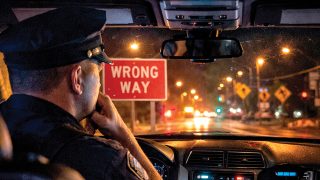
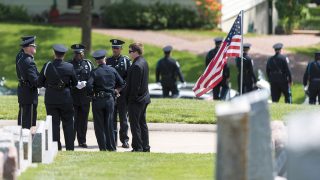
These are uniquely stressful and difficult times for police officers and their families. In my 25-year law enforcement counseling career, I have never seen anything like it. The effects of the COVID-19 era have been hard for everyone, but for first responders they have especially hard. Officers are out in the field, coming into contact with the deadly virus and worrying about bringing it home to family and loved ones. In addition, we are going through a vicious anti-police narrative that has been demoralizing to officers who are just trying to protect and serve the community. I have even heard of little kids being bullied because their parent is a police officer. Police spouses have told me that they have lost lifelong friends over their prejudiced, negative attitudes toward law enforcement. And just to add to the perfect storm, many cities and counties are jumping on the “defund the police” bandwagon, resulting in significant staffing and budget cuts that will make the job of officers even harder. All of this just adds more stressors for people in law enforcement who may already have been near coping capacity. This raises the concern that some officers may be reaching a psychological tipping point. For that reason, I want to discuss the nature and prevention of police suicide.
Suicide is preventable. In the mental health profession, we do not think any suicide is inevitable.
Nature of suicidality
- Suicide is preventable. In the mental health profession, we do not think any suicide is inevitable.
- Suicidality is a temporary state of mind. This fact is one of the keys to suicide prevention.
- Suicide requires a plan. It almost always involves a detailed plan of how the person intends to take their life.
- The main motive of suicide is not a person’s desire to die. It is about stopping the pain.
- Suicidality grows from a feeling of isolation and alienation.
- There is almost always a precipitating event or crisis that seems insurmountable to the person experiencing it. This is their perception, but it is rarely true.
Dangerous myths
- “If I ask about suicidal thoughts, it will give them the idea.” This is so wrong. Opening a discussion about suicidal ideation and normalizing it is one of the most helpful things you can do. By normalizing, I mean it is helpful to let a person know that most people have some level of suicidal thinking in their lifetime. It is important for officers to understand that having these thoughts does not make them crazy or weak.
- “People will not say if they are really thinking about it.” In fact, a person will often tell you if you ask. This is especially true if they trust you and do not feel you will judge them. The trust factor is critical for officers, because they need to know you want to help and are not going to green-sheet them.
- “People who talk about it don’t do it.” This is not true, but it is key to have the discussion and not ignore the person’s comments.
- “Hospitals will keep them safe.” Based on recent data, hospitalization (5150 or green-sheeting) does not reduce a person’s likelihood of committing suicide. We are far better off intervening ourselves and helping the person through the suicidal window.
- “We need a specialist to help.” Waiting to find a doctor is not always wise. It will take precious time, and the officer may not trust them. I have seen situations in which peers took a suicidal officer to an emergency room, where he was seen by a psychiatrist. Of course, the officer did not open up to the doctor. He was sent home and the outcome was tragic.
- “Police officers are more likely to commit suicide than the general population.” In fact, police are 52% more likely to commit suicide than the general population, but when compared to the statistics for males between the ages of 25 and 55, the rate is about the same. The fact that law enforcement is still a male-dominated profession accounts for this misperception. Having said that, no police suicide is acceptable, and we should work to lower the rates to zero.
Warning signs and warning bells
- Substance abuse, which for police is usually alcohol abuse in combination with PTSD and/or untreated depression. In my experience, this lethal combination has almost always been present for officers who have taken their lives.
- Agitation.
- Anxiety/panic.
- Isolation, which is usually hidden by the officer. Many times, their peers do not know the private hell the officer is hiding. I have heard many say after a suicide that the officer was fun-loving, joking and one of the guys. They never saw it coming.
- Severe insomnia, a serious risk indicator that, in combination with the other factors, erodes a person’s ability to cope and find perspective. This is one of the first symptoms we need to address for a person at risk.
- Exhaustion.
- Serious intent, by which I mean a specific and detailed plan.
- Recent discharge from a psychiatric unit.
Interventions
- Means restriction, which for police is taking all of their guns. Police almost always commit suicide with a gun.
- Identify the precipitating event or crisis. In the vast majority of cases, something has just happened and the officer’s psychological field of vision has been drastically, unrealistically narrowed. Once we can determine what that event was, we can begin the process of helping the officer reframe their view of the problem and see that there are better options available.
- Teach problem-solving skills. This is related to identifying the precipitating event. It involves engaging the pre-frontal cortex, or rational mind, to manage the ancient/emotional brain reaction.
- Increase social support and connection. The more we can disprove the officer’s feeling of total isolation, the less likely they are to see only one way out of the crisis.
- Support the officer’s sobriety, at least until they can get through the crisis window. Ultimately, treatment for alcohol/drug abuse may be necessary.
- Medication may ultimately be necessary to avoid future suicidal ideation. For this, of course, we do need a medical professional. The first thing we may need to address is the severe insomnia, and prescription sleep medication will do that. Ultimately, for officers suffering from PTSD and/or depression, SSRI antidepressants should be considered. It is OK for police officers to use antidepressants. Even those who are later involved in an OIS will not be in trouble if they disclose that they are using an antidepressant, according to the International Association of Chiefs of Police.
Suicidal ideation is not unusual or even abnormal. But these unusually stressful and trying times make some officers vulnerable to being at risk for suicide. We cannot allow suicide to take the life of another officer. If you feel you may be at risk or are concerned about a friend, please talk to a trusted peer or a police counselor. I promise it will help. You may also anonymously contact a hotline set up to help police and veterans, such as:
- CopLine, a 24/7 service staffed by crisis-trained ex-law-enforcement folks who are there to help: 800-COPLINE (267-5463)
- Veterans Crisis Line: 800-273-TALK (8255)
Take care of yourselves and look out for one another. Like the old football cheer goes, “We’re all we’ve got! We’re all we need!”
As seen in the September 2020 issue of American Police Beat magazine.
Don’t miss out on another issue today! Click below: