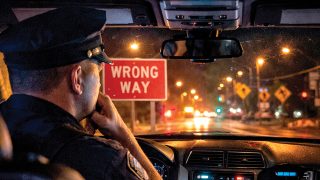
As a police officer, you rely on your own memory and people’s memory to solve crimes. Importantly, memory formation is a fragile, malleable process. It is easily distorted by stress, bias and the passage of time — even leading to the unintentional fabrication of details that never happened. Memory doesn’t store everything we perceive, but instead takes what we have seen or heard and associates it with what we already know. Understanding the surprising science behind how memory functions is crucial for effective police work. Here are eight things you should know about memory.
1. How memories are formed
Many people wrongly believe that memory works like a recording device. You record the memory and just play the memory back. However, memory doesn’t work like that. Human memory does not capture every detail accurately and permanently. Memory is actually a constructive process. When we remember something, we are not playing a single recording back but taking many bits and pieces of experiences to construct what seems to us a single coherent memory. For example, memory is not like a file saved on a hard drive. In reality, memory is more like working on a shared document in the cloud. You can access it and make edits, but so can other people.
2. The type of questions you ask matters
Law enforcement have long known the type of questions we ask people make a difference. Specifically, if police ask leading questions compared to neutral questions, we often get different answers. According to psychologist and pioneering memory researcher Dr. Elizabeth Loftus, if you ask somebody “How fast were the cars going when they smashed into each other?,” you’re going to get a higher estimate of speed than if you ask a question with a more neutral verb like, “How fast were the cars going when they hit each other?” The former question’s wording affects the answer that people will give. Specifically, if you ask how fast the cars were going when they smashed into each other after the passage of time, witnesses are more likely to tell you they saw broken glass at the scene, even though there wasn’t any broken glass.
3. Suggestive versus neutral questions can alter memory
It could be argued we get different answers to suggestive compared to neutral questions. Surprisingly, the suggestive nature of leading questions can actually alter the memory of those recalling. In short, memories can be contaminated by leading questions. Likewise, witness memories can be contaminated by talking to other witnesses about what happened before police arrive at the scene to interview them. Jurors can get contaminated by seeing a high-profile event on the news before they begin their jury duty. Children are especially vulnerable to leading questions and suggestibility. This is why forensic interviews with children who may have experienced abuse are designed to gather information in a nonsuggestive way. The goal is to elicit a detailed narrative from the child in their own words.
4. Even asking neutral questions can fail
In divorce cases involving children, it’s not uncommon for one divorcing parent to engage in unrestricted divorce warfare, fabricating or exaggerating claims of abuse or neglect against the other to gain an advantage in child custody proceedings. This can be especially prevalent when a narcissist is involved in a divorce. Academics refer to the phenomenon as “malicious parent syndrome.” Yet, even if officers are aware of these unfortunate dynamics of divorce and still use forensic interview techniques of children to mitigate lies, officers also need to be aware of how vivid but false memories can develop.
5. People can have vivid memories of things that never happened
Memory expert Dr. Elizabeth Loftus conducted a groundbreaking experiment known as the “lost in the mall” experiment. Through suggestive techniques, she got about 25% of 5- and 6-year-old kids to believe and remember a made-up experience that they were lost in a shopping mall with certain family members present. However, the shocking part is that even though the children had these vivid memories of this event, getting lost in the mall never happened. In fact, there have been many similar experiments where normal people have been led to believe they almost drowned and had to be rescued by a lifeguard, were attacked by an animal or committed a crime as a teenager. The problem is none of these happened. Academics refer to this phenomenon as “rich false memories.” If police don’t know that victims can be tricked by rich false memories through suggestibility, wrongful convictions can occur.
6. What to do if you think vivid false memories are being recalled
Laws and rules vary widely regarding polygraphs being admissible in civil and criminal proceedings. Sometimes, taking the extra step of obtaining a polygraph against the accused is helpful in clearing up potential false accusations and identifying false memories. Inherent difficulties exist in trying to differentiate true and false memories. However, a simple question to ask the person remembering the suspected false memory is, “Do you see yourself in the third person?” If they do, they are probably recalling a false or contaminated memory.
7. Stress can negatively impact memories
Acute stress also impacts the formation of memories. Under stressful events, stress hormones are released that can damage memories. Often, memory will improve after a few sleep cycles because your body is able to process out the hormones. However, dramatic events like an officer-involved shooting can also negatively affect sleep. Moreover, officers in stressful situations may experience loss of motor skills, auditory exclusion, tunnel vision/selective attention and environmental factors during a critical event that may also impact memories.
8. How to get to the truth
Debate surrounds whether officers should be interviewed immediately after an event or if a delay of a few sleep cycles is preferable. Additionally, opinions differ on whether officers should be permitted to review video footage soon after an incident to aid in memory preservation, or if this might inadvertently taint their recollection. Another concern arises if an officer honestly recalls an event differently from the actual video footage, potentially leading to legal complications. What might be the repercussions? If the Department of Justice is involved, would they invoke a federal statute that criminalizes making false statements to the government? Perhaps an agenda-driven prosecutor might use this discrepancy to make the case that the officer has been less than honest in a potential case against them. Even if the prosecutor or investigator is not intentionally biased, do they understand the nuances of how memory works? The unfortunate reality is, there doesn’t seem to be a strong consensus about getting to the truth after an officer was involved in a shooting or critical incident. Perhaps it would be best to get an initial statement and also let the officer view the video soon after and provide a follow-up statement to communicate any differences in perception of the event. However, competent investigators and prosecutors must understand how memory operates for this approach to be effective at getting to the truth.
Conclusion
We rely on memory to live our lives and do our jobs as police officers. Usually, memory serves us pretty well. Yet, memory can also lead us astray if we are not careful. Although memory feels like a recording device when we recall information, it is not. People connect together many aspects of an event into a coherent interpretation. The fragile nature of memory has a profound impact on getting to the truth. Police need to use discernment when it comes to the accuracy of memory. When in doubt, it is always best to question the origins of memories and seek independent corroboration of the event. Also, police should adopt best practices in relation to receiving statements from victims, witnesses, suspects and officers after a high-stress critical incident to avoid misunderstanding. In sum, we all have a lot to learn about the formation and retrieval of memories, especially in acute stressful situations.
References
Cincinnati Law. (2018, November 19). Memory Malleability, Dr. Elizabeth Loftus [Video]. YouTube.
Di Nota, P. M., Stoliker, B. E., Vaughan, A. D., Andersen, J. P., & Anderson, G. S. (2020). Stress and memory: A systematic state-of-the-art review with evidence-gathering recommendations for police. Policing: An International Journal, 44(1), 1–17. https://doi.org/10.1108/pijpsm-06-2020-0093.
Gardner, R. A. (2002). Parental alienation syndrome vs. parental alienation: Which diagnosis should evaluators use in child-custody disputes? The American Journal of Family Therapy, 30(2), 93–115. https://doi.org/10.1080/019261802753573821.
Loftus, E. F. (1975). Leading questions and the eyewitness report. Cognitive Psychology, 7(4), 560–572. https://doi.org/10.1016/0010-0285(75)90023-7.
Loftus, E. F., & Bernstein, D. M. (2006). Rich false memories: The royal road to success. In Experimental cognitive psychology and its applications (pp. 101–113). American Psychological Association. https://doi.org/10.1037/10895-008.

Dr. Matthew Loeslie
As seen in the June 2024 issue of American Police Beat magazine.
Don’t miss out on another issue today! Click below: