• Skip to primary navigation
  • Skip to main content
  • Skip to primary sidebar
  • Skip to footer
  • Home
  • About
  • The Magazine
  • Events
  • Partners
  • Products
  • Contact
  • Jobs and Careers
  • Advertise
  • Facebook
  • Instagram
  • Twitter
  • Subscribe
American Police Beat

American Police Beat Magazine

Law Enforcement Publication

  • Home
  • Leadership
    • Understanding the boundaries of professional relationships with the...
      Why you should lead from 30,000 feet
      Public perception and trust
      When performance reviews are a waste of time
      Taking a page from Toyota’s playbook
  • Topics
    • Leadership
      • Understanding the boundaries of professional relationships with the...
        Why you should lead from 30,000 feet
        Public perception and trust
        When performance reviews are a waste of time
        Taking a page from Toyota’s playbook
    • Editor’s Picks
      • Let’s get moving!
        Heroes of the World Trade Center
        The Promise Gap
        Corruption, collusion and impunity
        Liability challenges in contemporary policing
    • On the Job
      • Frankpledge to forensics: A brief history of law enforcement
        Villains and heroes in the Big Apple
        Right place, right time — again
        Some good news on crime
        Mom-to-be named Cop of the Year
    • Labor
      • The Promise Gap
        Cut the cops, save a dollar?
        Labor release under fire
        Who’s watching the watchmen?
        Crime and punishment (or lack thereof) in Seattle
    • Tech
      • New Mexico license plate readers save lives, lead to “precise...
        A modern field guide to understanding research in policing
        Gear that moves with you
        A new breed of cop car
        The future of patrol is here
    • Training
      • Pushback as a training signal
        Let’s get moving!
        The five minutes before the ambulance
        Navigating danger
        Critical thinking in police training
    • Policy
      • Corruption, collusion and impunity
        E-bikes spark public safety concerns
        Try racing without wheels
        Law enforcement accreditation: Why it matters
        Liability challenges in contemporary policing
    • Health/Wellness
      • Addressing stress, vicarious trauma and burnout
        Nervous system regulation
        The nature of the job
        Promoting organizational wellness
        Telling cops to get more sleep isn’t working
    • Community
      • Improving autism awareness
        Shop with a Cop
        Community engagement: What is it moving forward?
        Contradictory crossroads
        Back-to-school season brings out police support nationwide
    • Offbeat
      • An unexpected burglar
        Police humor only a cop would understand
        Not eggzactly a perfect heist
        Pizza … with a side of alligator?
        Wisconsin man charged with impersonating Border Patrol agent twice in...
    • We Remember
      • Heroes of the World Trade Center
        Forty heroes: United Airlines Flight 93
        The Pentagon
        A nation propelled to war, lives changed forever
        A Christmas loss
    • HOT Mail
      • The War on Cops Continues Unabated
  • On the Job
    • Frankpledge to forensics: A brief history of law enforcement
      Villains and heroes in the Big Apple
      Right place, right time — again
      Some good news on crime
      Mom-to-be named Cop of the Year
  • Labor
    • The Promise Gap
      Cut the cops, save a dollar?
      Labor release under fire
      Who’s watching the watchmen?
      Crime and punishment (or lack thereof) in Seattle
  • Tech
    • New Mexico license plate readers save lives, lead to “precise...
      A modern field guide to understanding research in policing
      Gear that moves with you
      A new breed of cop car
      The future of patrol is here
  • Training
    • Pushback as a training signal
      Let’s get moving!
      The five minutes before the ambulance
      Navigating danger
      Critical thinking in police training
  • Policy
    • Corruption, collusion and impunity
      E-bikes spark public safety concerns
      Try racing without wheels
      Law enforcement accreditation: Why it matters
      Liability challenges in contemporary policing
  • Health/Wellness
    • Addressing stress, vicarious trauma and burnout
      Nervous system regulation
      The nature of the job
      Promoting organizational wellness
      Telling cops to get more sleep isn’t working
  • Community
    • Improving autism awareness
      Shop with a Cop
      Community engagement: What is it moving forward?
      Contradictory crossroads
      Back-to-school season brings out police support nationwide
  • Offbeat
    • An unexpected burglar
      Police humor only a cop would understand
      Not eggzactly a perfect heist
      Pizza … with a side of alligator?
      Wisconsin man charged with impersonating Border Patrol agent twice in...
  • We Remember
    • Heroes of the World Trade Center
      Forty heroes: United Airlines Flight 93
      The Pentagon
      A nation propelled to war, lives changed forever
      A Christmas loss
  • HOT Mail
    • The War on Cops Continues Unabated
  • About
  • The Magazine
  • Events
  • Partners
  • Products
  • Contact
  • Jobs and Careers
  • Advertise
  • Subscribe
Search

Policy

Arizona voters to decide whether LEOs can arrest migrants

APB Team Published June 30, 2024 @ 6:00 am PDT

iStock.com/MattGush

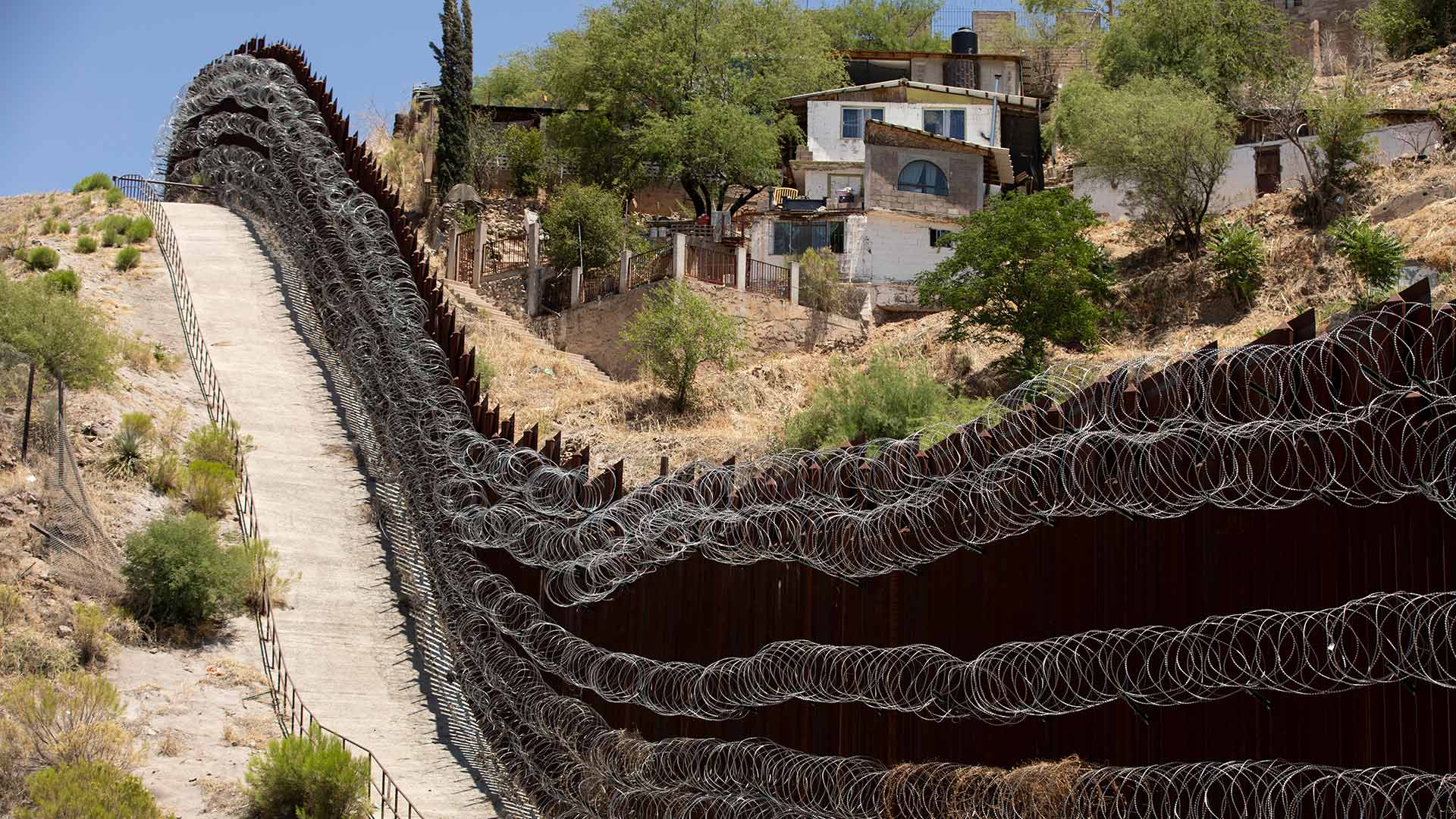
In what surely what must seem like déjà vu, Arizonans will vote in November on a statewide ballot measure that would give state and local law enforcement the authority to arrest people who cross illegally from Mexico into Arizona. A similar measure was passed by the State Legislature in March, but Governor Katie Hobbs vetoed it.

If this sounds a bit familiar, it’s because Arizona passed a somewhat related bill in 2010. That measure allowed police in Arizona to question people on the suspicion of being in the country illegally. It was later pared back when the U.S. Supreme Court decided that it infringed on the jurisdiction of the federal government.

The new measure seems to go much further than the 2010 legislation, making it a criminal offense at the state level to cross into Arizona illegally.

If you’re not a political science professor, all of the jargon, levels, jurisdictions, bicameral houses and measures are probably a bit confusing. Not to worry, that just means you’ve got better things to do with your time (catch bad guys) than read dusty books and watch talking heads on the news. To better understand the situation, here’s your APB primer.

The U.S. technically employs a “federal” system of government. Each of the 50 states are individual entities, sovereign governments that all come together for specific functions that they can do better together. The Constitution clearly lays out specific things that the federal government is supposed to take care of, such as national defense, managing commerce and currency, and running a post office. Other duties outside of these “enumerated” powers are supposed to be left up to the states. Things like education, setting criminal laws and all the other stuff local governments do would fall under this heading.

“Naturalization” (deciding what someone has to do to be a citizen) is one of the federal government’s responsibilities. The argument against Arizona’s 2010 law focused on the fact that Arizona was interfering with something that’s always been handled by the federal government (immigration).

In terms of Arizona’s ballot measure, that’s something many states have provisions for. Some states allow legislators (or even individual citizens) to put a law on the ballot to be voted on. So, in the case of Arizona’s latest law, the State Legislature passed it. The governor used her authority to veto it. Now, legislators have put the law on the ballot to be voted on by the citizens.

Though Arizona’s bill seems to be novel, it’s not unique. The state of Texas actually passed a similar bill several months ago, which has since been stalled in the courts. These bills seem to be part of a growing trend of individual states attempting to pass their own legislation when they feel the federal government is not doing an adequate job of addressing specific issues. In the case of Arizona and Texas, proponents of these bills argue that the borders being crossed are not only U.S. borders, but also state borders. In Arizona, they are likely to argue that the state is only criminalizing the actual act of illegally crossing, not attempting to enforce federal immigration laws.

What does this mean for individual officers? That remains to be seen. As the measure would essentially criminalize crossing illegally into the state, it would allow officers to arrest for several actions. According the Arizona Mirror, these include crossing the border between official points of entry and submitting false information to apply for jobs and public benefits. It apparently also creates a new class of felony to punish people who cause someone’s death by selling them fentanyl.

Opponents have pointed out that the measure includes no funding for the departments that would be responsible for enforcing it, which are already financially strained and struggling with recruitment and retention. According to the Arizona Republic, the Arizona Department of Public Safety is facing a severe shortage of troopers, leaving many rural areas unsupervised at night. In a legislative analysis released in June, the DPS estimated complying with the proposal would cost it $3.8 million annually, and that the total price tag for law enforcement agencies across the state could be as much as $41 million.

So, what’s the likelihood of Arizona’s ballot measure becoming law? This is America, so that’s going to be decided by the will of the people expressed through their sacred right to cast their vote at the ballot box (and a whole bunch of judges in subsequent lawsuits).


Categories: Policy

Primary Sidebar

Recent Articles

  • Frankpledge to forensics: A brief history of law enforcement
  • Pushback as a training signal
  • Let’s get moving!
  • Heroes of the World Trade Center
  • The Promise Gap
  • Corruption, collusion and impunity
  • The five minutes before the ambulance
  • New Mexico license plate readers save lives, lead to “precise policing”
  • Addressing stress, vicarious trauma and burnout
  • Understanding the boundaries of professional relationships with the boss

Footer

Our Mission
To serve as a trusted voice of the nation’s law enforcement community, providing informative, entertaining and inspiring content on interesting and engaging topics affecting peace officers today.

Contact us: info@apbweb.com | (800) 234-0056.

  • Facebook
  • Instagram
  • Twitter

Categories

  • Editor’s Picks
  • On the Job
  • Labor
  • Tech
  • Training
  • Policy
  • Health/Wellness
  • Community
  • Offbeat
  • We Remember
  • Jobs and Careers
  • Events

Editor’s Picks

Let’s get moving!

Let’s get moving!

April 27, 2026

Heroes of the World Trade Center

Heroes of the World Trade Center

April 24, 2026

The Promise Gap

The Promise Gap

April 22, 2026

Corruption, collusion and impunity

Corruption, collusion and impunity

April 21, 2026

Policies | Consent Preferences | Copyright © 2026 APB Media, LLC | Website design, development and maintenance by 911MEDIA

Open

Subscribe

Close

Receive the latest news and updates from American Police Beat directly to your inbox!

  • This field is for validation purposes and should be left unchanged.