• Skip to primary navigation
  • Skip to main content
  • Skip to primary sidebar
  • Skip to footer
  • Home
  • About
  • The Magazine
  • Events
  • Partners
  • Products
  • Contact
  • Jobs and Careers
  • Advertise
  • Facebook
  • Instagram
  • Twitter
  • Subscribe
American Police Beat

American Police Beat Magazine

Law Enforcement Publication

  • Home
  • Leadership
    • Perpetual recognition of line-of-duty deaths
      Understanding the boundaries of professional relationships with the...
      Why you should lead from 30,000 feet
      Public perception and trust
      When performance reviews are a waste of time
  • Topics
    • Leadership
      • Perpetual recognition of line-of-duty deaths
        Understanding the boundaries of professional relationships with the...
        Why you should lead from 30,000 feet
        Public perception and trust
        When performance reviews are a waste of time
    • Editor’s Picks
      • Let’s get moving!
        Heroes of the World Trade Center
        The Promise Gap
        Corruption, collusion and impunity
        Liability challenges in contemporary policing
    • On the Job
      • Testing the waters — literally
        Frankpledge to forensics: A brief history of law enforcement
        Villains and heroes in the Big Apple
        Right place, right time — again
        Some good news on crime
    • Labor
      • The Promise Gap
        Cut the cops, save a dollar?
        Labor release under fire
        Who’s watching the watchmen?
        Crime and punishment (or lack thereof) in Seattle
    • Tech
      • New Mexico license plate readers save lives, lead to “precise...
        A modern field guide to understanding research in policing
        Gear that moves with you
        A new breed of cop car
        The future of patrol is here
    • Training
      • Pushback as a training signal
        Let’s get moving!
        The five minutes before the ambulance
        Navigating danger
        Critical thinking in police training
    • Policy
      • Police pause license plate readers
        Corruption, collusion and impunity
        E-bikes spark public safety concerns
        Try racing without wheels
        Law enforcement accreditation: Why it matters
    • Health/Wellness
      • The days that follow
        Addressing stress, vicarious trauma and burnout
        Nervous system regulation
        The nature of the job
        Promoting organizational wellness
    • Community
      • Improving autism awareness
        Shop with a Cop
        Community engagement: What is it moving forward?
        Contradictory crossroads
        Back-to-school season brings out police support nationwide
    • Offbeat
      • An unexpected burglar
        Police humor only a cop would understand
        Not eggzactly a perfect heist
        Pizza … with a side of alligator?
        Wisconsin man charged with impersonating Border Patrol agent twice in...
    • We Remember
      • A Tribute to Fallen Heroes
        Markers of service and remembrance
        Tragedy strikes Baker to Vegas
        Heroes of the World Trade Center
        Forty heroes: United Airlines Flight 93
    • HOT Mail
      • The War on Cops Continues Unabated
  • On the Job
    • Testing the waters — literally
      Frankpledge to forensics: A brief history of law enforcement
      Villains and heroes in the Big Apple
      Right place, right time — again
      Some good news on crime
  • Labor
    • The Promise Gap
      Cut the cops, save a dollar?
      Labor release under fire
      Who’s watching the watchmen?
      Crime and punishment (or lack thereof) in Seattle
  • Tech
    • New Mexico license plate readers save lives, lead to “precise...
      A modern field guide to understanding research in policing
      Gear that moves with you
      A new breed of cop car
      The future of patrol is here
  • Training
    • Pushback as a training signal
      Let’s get moving!
      The five minutes before the ambulance
      Navigating danger
      Critical thinking in police training
  • Policy
    • Police pause license plate readers
      Corruption, collusion and impunity
      E-bikes spark public safety concerns
      Try racing without wheels
      Law enforcement accreditation: Why it matters
  • Health/Wellness
    • The days that follow
      Addressing stress, vicarious trauma and burnout
      Nervous system regulation
      The nature of the job
      Promoting organizational wellness
  • Community
    • Improving autism awareness
      Shop with a Cop
      Community engagement: What is it moving forward?
      Contradictory crossroads
      Back-to-school season brings out police support nationwide
  • Offbeat
    • An unexpected burglar
      Police humor only a cop would understand
      Not eggzactly a perfect heist
      Pizza … with a side of alligator?
      Wisconsin man charged with impersonating Border Patrol agent twice in...
  • We Remember
    • A Tribute to Fallen Heroes
      Markers of service and remembrance
      Tragedy strikes Baker to Vegas
      Heroes of the World Trade Center
      Forty heroes: United Airlines Flight 93
  • HOT Mail
    • The War on Cops Continues Unabated
  • About
  • The Magazine
  • Events
  • Partners
  • Products
  • Contact
  • Jobs and Careers
  • Advertise
  • Subscribe
Search

Leadership

Eliminating calls for service through military-grade technology

Keith Bushey Published July 24, 2024 @ 6:00 am PDT

istockphoto.com/Antonio_Diaz

Having just participated in a law enforcement–military–private business symposium on joint partnerships to make our communities safer, I was tremendously impressed by how military-grade technology can be leveraged in a joint effort with local law enforcement and their community partners to eliminate (yes, eliminate!) a very high percentage of calls for police service. 

First, a recap on several nationwide realities that we know all too well: Contrary to the assertions of some politicians, property crime is not going down, but police resources are declining. Law enforcement response time and calls for service are continuing to increase. Commercial crimes are going up, along with the sophistication of criminals in complex crimes. There is great consternation among police executives about the private sector’s growing lack of confidence in law enforcement’s ability to protect their premises. In the symposium, despite obvious support for law enforcement, the overriding theme was that true and effective protection of goods and premises can only realistically come from a law enforcement and private-sector partnership. Increasingly, law enforcement is not always available and, sadly, is often not even called.

In a series of robust discussions on the elements of the “ideal remote property protection system,” the following essential components were agreed upon:

  • Remote guarding configuration with multiple overlapping video cameras capable of 100% coverage over the protected premises
  • Cameras that can penetrate most foliage and are able to detect the presence of a human before it can be identified by the human eye
  • Military-level cameras that can make a distinction between human beings and large animals
  • Immediate live coverage from the cameras of the protected premises into the company’s command center (agreed upon as 10 seconds or less)
  • A company command center with well-trained and supervised operators who have solid credibility with local law enforcement agencies

Additional essential factors for the “ideal system” include: 

  • A realistic program where operators have been trained and certified in law enforcement information and are able to reduce valuable time because of excellent verbalization training with police dispatch
  • Routine interaction and training between company operators and police dispatchers in the “team building mode” (visits, luncheons, etc.)
  • In-house technical staff for immediate and maximum effectiveness in law enforcement and company equipment interoperability
  • Enabling live image exchange between the command center and responding law enforcement and supervisors

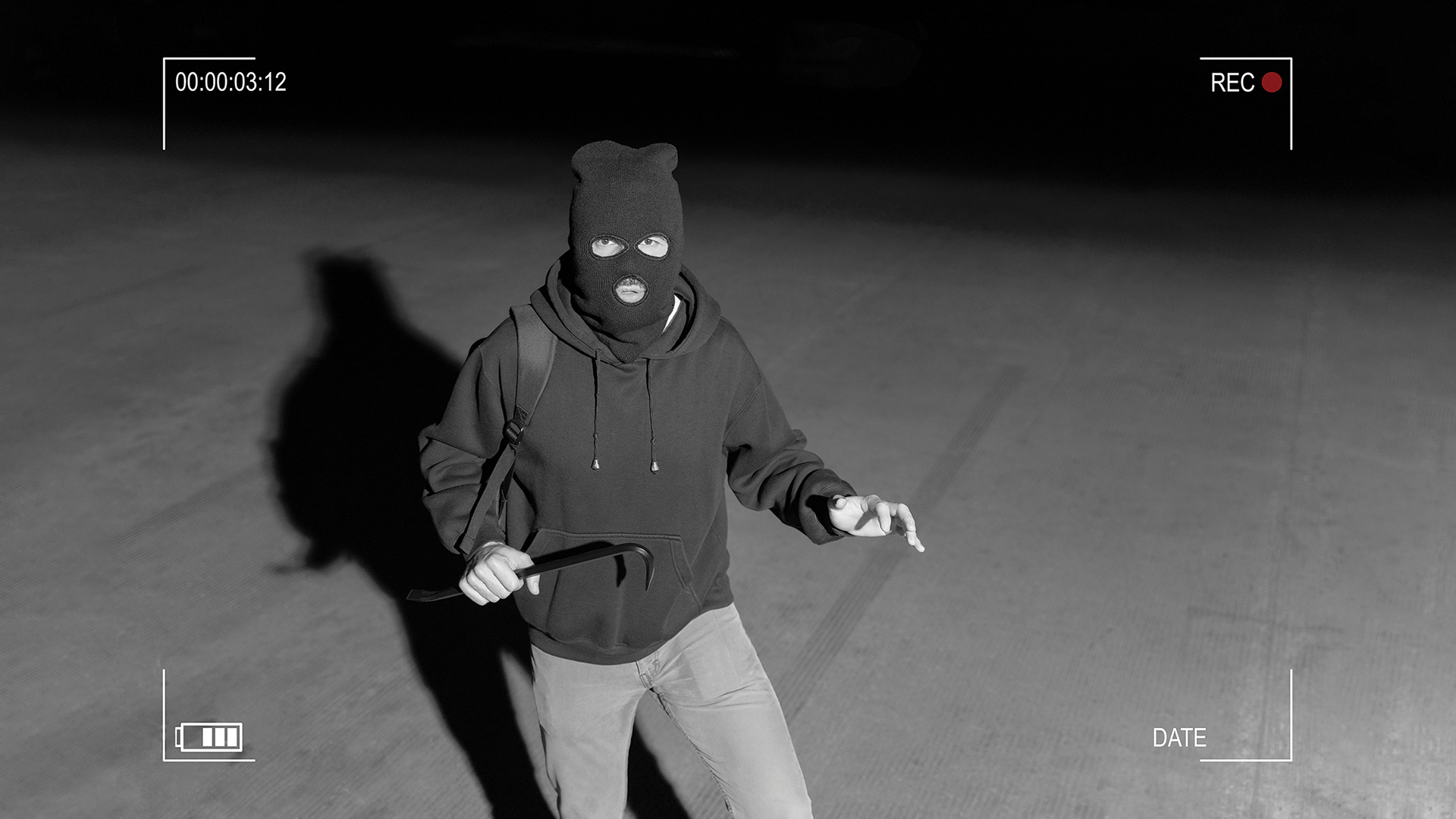
A truly unique additional feature of the “ideal system” is worthy of special mention: an amplified speaker system covering the entire outdoor and indoor portions of the protected premises. Without minimizing the value of other features, a military-grade talk-down system enables — with the flip of a switch and instant visualization — immediate dialogue with an intruder. In most cases, these situations can be resolved without law enforcement even being contacted. As examples, a person prowling on the premises, kids on skateboards or potential customers on the premises for after-hours delivery — all can be given clear and unmistakable instructions to leave the premises.

In the “ideal system,” if it appears that criminals are entering the property to commit a crime, the combination of military-grade optics and intrusion technologies provides for immediate live dialogue between the company operator and the police dispatcher, enabling a priority law enforcement response. Every aspect of every interaction — regardless of the disposition — is captured on audio and video and retained consistent with the respective company policies. Not surprisingly, companies that have ongoing relationships with law enforcement are frequently able to assist law enforcement not only in situations involving the primary premises, but also in the investigation of situations involving nearby premises by sharing information and visual recordings, made possible by remote guarding. 

The various features of the “ideal system” also create a great advantage in terms of safety for law enforcement or security personnel. Every moment and every movement of an intruder is captured on video and is being watched live by security operators, including 100% of movement throughout the premises as the intruder moves from one video camera coverage area to another. Responding officers, via the company and law enforcement command centers, are given real-time updates of an intruder’s every action! Any threat seen by a company operator is immediately reported to officers on the scene. 

The symposium made clear the enormous strides that are taking place in the managed remote guarding industry. It is an industry that is rapidly growing. Virtually every participant in the symposium was actively exploring ways to enhance their services within the bounds of their fiscal financial abilities, with many — especially the smaller firms — actively exploring corporate consolidations. One firm, Elite Interactive Solutions, headquartered in Los Angeles, was the first to seek and obtain Underwriter Laboratories (UL) certification to deliver security services by using live camera feeds and related technologies to form  all or part of the electronic security system for a property location or organization. This coveted and difficult-to-achieve classification required a level of excellence that few other providers have been able to match, including an overall 96% of alerts into the Elite Command Center that were resolved without the need for police response! That level of performance translates into a significant reduction in calls for already limited police resources. The certification of Underwriter Laboratories has significantly raised the bar nationwide for remote guarding service providers. 

In summary, at the end of the symposium I left with several important takeaways. First, I felt awe and appreciation for how some of the technologies I had employed during my Marine Corps service have been so well adapted and are being so well integrated into the private sector. Second, we should take seriously the various components discussed in the “ideal remote property protection system” and ensure that any potential vendor truly has the technical and personnel resources to deliver these levels of performance. Finally, we must acknowledge the sad reality that law enforcement has limited resources and personnel. Property protection and a robust partnership between law enforcement and companies using advanced remote guarding technology is essential for crime prevention and property protection.

Keith Bushey

Keith Bushey

Keith Bushey retired from the Los Angeles Police Department as a commander, from the San Bernardino County Sheriff’s Department as a deputy chief and from the United States Marine Corps Reserve as a colonel. Other law enforcement experience includes having served as a Los Angeles County deputy sheriff, a state of California deputy game warden and the marshal of San Bernardino County. He is an instructor emeritus for the FBI Law Enforcement Executive Development Association and has lectured and written extensively in the areas of leadership, management and ethics. His entire eight-booklet Leadership Series is in the public domain and may be downloaded without cost from KeithBushey.com. He may be contacted at kdbs255@aol.com.

View articles by Keith Bushey

As seen in the July 2024 issue of American Police Beat magazine.
Don’t miss out on another issue today! Click below:


SUBSCRIBE TODAY!

Categories: Leadership, Tech

Primary Sidebar

Recent Articles

  • A hero’s legacy through a mother’s love
  • The days that follow
  • Perpetual recognition of line-of-duty deaths
  • A Tribute to Fallen Heroes
  • NLEOMF Fund announces March 2026 Officers of the Month
  • Markers of service and remembrance
  • Testing the waters — literally
  • Police pause license plate readers
  • Tragedy strikes Baker to Vegas
  • Frankpledge to forensics: A brief history of law enforcement

Footer

Our Mission
To serve as a trusted voice of the nation’s law enforcement community, providing informative, entertaining and inspiring content on interesting and engaging topics affecting peace officers today.

Contact us: info@apbweb.com | (800) 234-0056.

  • Facebook
  • Instagram
  • Twitter

Categories

  • Editor’s Picks
  • On the Job
  • Labor
  • Tech
  • Training
  • Policy
  • Health/Wellness
  • Community
  • Offbeat
  • We Remember
  • Jobs and Careers
  • Events

Editor’s Picks

Let’s get moving!

Let’s get moving!

April 27, 2026

Heroes of the World Trade Center

Heroes of the World Trade Center

April 24, 2026

The Promise Gap

The Promise Gap

April 22, 2026

Corruption, collusion and impunity

Corruption, collusion and impunity

April 21, 2026

Policies | Consent Preferences | Copyright © 2026 APB Media, LLC | Website design, development and maintenance by 911MEDIA

Open

Subscribe

Close

Receive the latest news and updates from American Police Beat directly to your inbox!

  • This field is for validation purposes and should be left unchanged.