
• Skip to primary navigation
  • Skip to main content
  • Skip to primary sidebar
  • Skip to footer
  • Home
  • About
  • The Magazine
  • Events
  • Partners
  • Products
  • Contact
  • Jobs and Careers
  • Advertise
  • Facebook
  • Instagram
  • Twitter
  • Subscribe
American Police Beat

American Police Beat Magazine

Law Enforcement Publication

  • Home
  • Leadership
    • Clarifying your “true north”
      The job has changed — have you?
      Perpetual recognition of line-of-duty deaths
      Understanding the boundaries of professional relationships with the...
      Why you should lead from 30,000 feet
  • Topics
    • Leadership
      • Clarifying your “true north”
        The job has changed — have you?
        Perpetual recognition of line-of-duty deaths
        Understanding the boundaries of professional relationships with the...
        Why you should lead from 30,000 feet
    • Editor’s Picks
      • Let’s get moving!
        Heroes of the World Trade Center
        The Promise Gap
        Corruption, collusion and impunity
        Liability challenges in contemporary policing
    • On the Job
      • K-9 Day demonstrates scope of officers’ duties
        Testing the waters — literally
        Frankpledge to forensics: A brief history of law enforcement
        Villains and heroes in the Big Apple
        Right place, right time — again
    • Labor
      • Smile and let them swing
        The Promise Gap
        Cut the cops, save a dollar?
        Labor release under fire
        Who’s watching the watchmen?
    • Tech
      • NYC’s electric vehicle fleet for LE passes milestone
        New Mexico license plate readers save lives, lead to “precise...
        A modern field guide to understanding research in policing
        Gear that moves with you
        A new breed of cop car
    • Training
      • Pushback as a training signal
        Let’s get moving!
        The five minutes before the ambulance
        Navigating danger
        Critical thinking in police training
    • Policy
      • Police pause license plate readers
        Corruption, collusion and impunity
        E-bikes spark public safety concerns
        Try racing without wheels
        Law enforcement accreditation: Why it matters
    • Health/Wellness
      • The days that follow
        Addressing stress, vicarious trauma and burnout
        Nervous system regulation
        The nature of the job
        Promoting organizational wellness
    • Community
      • Cops promote National Donate Life Month
        Police officer kicks up social media praise
        Donning denim in solidarity with victims and survivors of sexual...
        Improving autism awareness
        Shop with a Cop
    • Offbeat
      • An unexpected burglar
        Police humor only a cop would understand
        Not eggzactly a perfect heist
        Pizza … with a side of alligator?
        Wisconsin man charged with impersonating Border Patrol agent twice in...
    • We Remember
      • A Tribute to Fallen Heroes
        Markers of service and remembrance
        Tragedy strikes Baker to Vegas
        Heroes of the World Trade Center
        Forty heroes: United Airlines Flight 93
    • HOT Mail
      • The War on Cops Continues Unabated
  • On the Job
    • K-9 Day demonstrates scope of officers’ duties
      Testing the waters — literally
      Frankpledge to forensics: A brief history of law enforcement
      Villains and heroes in the Big Apple
      Right place, right time — again
  • Labor
    • Smile and let them swing
      The Promise Gap
      Cut the cops, save a dollar?
      Labor release under fire
      Who’s watching the watchmen?
  • Tech
    • NYC’s electric vehicle fleet for LE passes milestone
      New Mexico license plate readers save lives, lead to “precise...
      A modern field guide to understanding research in policing
      Gear that moves with you
      A new breed of cop car
  • Training
    • Pushback as a training signal
      Let’s get moving!
      The five minutes before the ambulance
      Navigating danger
      Critical thinking in police training
  • Policy
    • Police pause license plate readers
      Corruption, collusion and impunity
      E-bikes spark public safety concerns
      Try racing without wheels
      Law enforcement accreditation: Why it matters
  • Health/Wellness
    • The days that follow
      Addressing stress, vicarious trauma and burnout
      Nervous system regulation
      The nature of the job
      Promoting organizational wellness
  • Community
    • Cops promote National Donate Life Month
      Police officer kicks up social media praise
      Donning denim in solidarity with victims and survivors of sexual...
      Improving autism awareness
      Shop with a Cop
  • Offbeat
    • An unexpected burglar
      Police humor only a cop would understand
      Not eggzactly a perfect heist
      Pizza … with a side of alligator?
      Wisconsin man charged with impersonating Border Patrol agent twice in...
  • We Remember
    • A Tribute to Fallen Heroes
      Markers of service and remembrance
      Tragedy strikes Baker to Vegas
      Heroes of the World Trade Center
      Forty heroes: United Airlines Flight 93
  • HOT Mail
    • The War on Cops Continues Unabated
  • About
  • The Magazine
  • Events
  • Partners
  • Products
  • Contact
  • Jobs and Careers
  • Advertise
  • Subscribe
Search

Editor's Picks

What constitutes a well-rounded wellness program?

To do it right, start with the mindset

Dr. Cherylynn Lee Published June 23, 2024 @ 6:00 am PDT

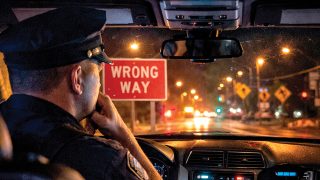
If you had a magic wand, what would you do for your wellness program? Begin with that idea, then work backward to figure out how to make it a reality. (iStock.com/vchal)

Wellness is a topic that has permeated almost every aspect of today’s law enforcement culture. It’s unlikely you’ll attend a conference this year where officer wellness isn’t a topic discussed during a breakout session, if not the keynote itself. Individuals and organizations are now having to contend with how they are going to navigate this relatively new epoch for themselves and for their colleagues. There is some palpable tension regarding who exactly is responsible for the wellness of officers. Is it up to the individual to take care of themselves, or is it the responsibility of the organization? Regardless of how you feel about it, the fact of the matter is that the organization is responsible. At least, partly.

Quick question (work with me here): Have you ever drunk a lot of water and really had to pee? The answer is probably yes. Drinking water and having to pee is a bodily function that is entirely of your doing (you pick up the water, you drink it). It is your responsibility to pace yourself so you don’t have to pee every 10 minutes while pushing a black-and-white, sure. If you don’t pace yourself, at some point your body is going to override your ability to hold back. But how realistic would it be for your agency to tell you that because the pee situation is your responsibility, the stations don’t have bathrooms? “Sorry, man, the fact that you need to pee is on you. We don’t have bathrooms in this station, but I can refer you to the Starbucks or Jack in the Box down the street.” 

Wellness is about human connection and about evidence-based interventions that offset the impact of the job on how and who you are.

Sounds a bit ridiculous, right? When organizations tell their employees that their mental anguish, their stress, their trauma is entirely theirs and theirs alone to deal with, I hear the same cadence of ridiculousness. For the record, as a cop you are drinking stress and trauma through a fire hose, and at some point, you are going to have to use the bathroom. Within the context of trauma, pacing yourself means you take care of yourself mentally, emotionally and spiritually throughout your career. And if you don’t pace yourself, your brain is going to override your ability to hold back and you will start experiencing symptoms of post-traumatic stress injury (PTSI). It’s the organization’s responsibility to provide the infrastructure for you to mitigate the stress and trauma, just like it’s their responsibility to provide bathrooms.

I hope I’ve made my point.

So what does a wellness program look like? What are the elements that constitute doing it right versus checking a box?

Let’s start with what a wellness program is not. A wellness program is not a massage chair, and it’s not an app that looks at CAD and tells you which cops responded to what call when. Wellness is about human connection and about evidence-based interventions that offset the impact of the job on how and who you are. Automating (or dehumanizing) the interventions creates more problems on top of a problem. A massage chair is nice — maybe — but are you maximizing your wellness funds, or are you doing the bare minimum because no one asked if you wanted to be the wellness coordinator anyway?

The definition of wellness is “the quality or state of being in good health, especially as an actively sought goal.” A program, by definition, is “a set of related measures or activities with a particular long-term aim.” Thus, an officer wellness program could be defined as the infrastructure that supports the good health of its officers.

It’s not difficult to find articles and courses that discuss the fundamental programmatic pieces: peer support, critical incident stress debriefs, therapy, chaplains, fitness initiatives and nutritional programs. All are essential components of a well-rounded wellness program, but the focus of this article is not the nuts and bolts. It’s the mindset.

Think back to when you were in the academy. The instructors wanted you to succeed and valued the mechanisms that were in place to help you reach your goal of becoming a peace officer. Your mental, physical and emotional fitness were tested and where you fell short, the comradery within your class was there to pick you up. Your agency would receive updates on your progress and administration was in your corner cheering you along (this might be a stretch for some agencies, but let’s pretend this was the case). The bar was set high. It’s not easy to become a cop, and you did it! The department invested in you, quite literally, and the investment paid off. On to FTO you went.

Since that time, how has the department invested in your mental, physical and emotional fitness? When, since the academy, has your agency supported you in the mission to sustain the standard of being a badass, healthy cop?

If we agree that mental fitness and physical fitness are important as you become a peace officer, why don’t we believe those things are important when enduring the career as one? If you ask any administrator that question, of course their answer will be that they care. And they do. But caring isn’t enough. Unfortunately, somewhere between what is right and what is doable, what is needed and what is budgeted, what is easy and what is difficult, we lost sight of that mission.

Let’s suspend reality for a moment. If you had a magic wand (it’s big, very sparkly, very magical) what would you do? Would you implement on-duty PT? Wellness visits with a culturally competent psychologist? A county or city EAP program to fund clinical services? Healthy vending machines? My suggestion to you is you work backward from how you would answer that question. After you’re done thinking about all the reasons how and why it won’t work, have a shift in your mindset and start to approach the problem from the perspective that it is going to work — you just have to figure out how. It’s much like when you are doing a puzzle: you know what the puzzle is supposed to look like once completed, and the work involved is putting the right pieces in the right places one at a time.

Listen, I get it. There are some who believe wellness is the flavor of the day and in a couple of years we will move on to the next shiny topic in law enforcement, but what if wellness didn’t have to be that way? What if we capitalized on the moment and those fundamental programmatic pieces I spoke of earlier become the way we’ve always done it?

I challenge you to that end, regardless of rank or time on. It’s up to you, right here, right now, to change the culture. After all, according to osha.gov, restrooms weren’t a part of workplace regulation until the mid-1970s.

Dr. Cherylynn Lee

Dr. Cherylynn Lee

Dr. Cherylynn Lee is a police psychologist and works full-time for the Santa Barbara Sheriff’s Office as the Behavioral Sciences manager, overseeing the mental health co-response teams, CIT training and Wellness Unit, including Peer Support. As part of her duties, Dr. Lee is a member of the county’s threat management team and serves on the crisis negotiation response teams for both the Santa Barbara Sheriff’s Office and the Santa Barbara Police Department. Dr. Lee has a private practice in the Santa Ynez Valley where she sees first responders exclusively, specializing in trauma, post-traumatic stress, mindfulness and job performance improvement. She can be reached at crl5034@sbsheriff.org.

View articles by Dr. Cherylynn Lee

As seen in the June 2024 issue of American Police Beat magazine.
Don’t miss out on another issue today! Click below:


SUBSCRIBE TODAY!

Categories: Editor's Picks, Health/Wellness

Primary Sidebar

Recent Articles

  • K-9 Day demonstrates scope of officers’ duties
  • Cops promote National Donate Life Month
  • NYC’s electric vehicle fleet for LE passes milestone
  • Police officer kicks up social media praise
  • Donning denim in solidarity with victims and survivors of sexual assault
  • Clarifying your “true north”
  • Smile and let them swing
  • The job has changed — have you?
  • New National Law Enforcement Museum exhibit revisits D.C. snipers case
  • A hero’s legacy through a mother’s love

Footer

Our Mission
To serve as a trusted voice of the nation’s law enforcement community, providing informative, entertaining and inspiring content on interesting and engaging topics affecting peace officers today.

Contact us: info@apbweb.com | (800) 234-0056.

  • Facebook
  • Instagram
  • Twitter

Categories

  • Editor’s Picks
  • On the Job
  • Labor
  • Tech
  • Training
  • Policy
  • Health/Wellness
  • Community
  • Offbeat
  • We Remember
  • Jobs and Careers
  • Events

Editor’s Picks

Let’s get moving!

Let’s get moving!

April 27, 2026

Heroes of the World Trade Center

Heroes of the World Trade Center

April 24, 2026

The Promise Gap

The Promise Gap

April 22, 2026

Corruption, collusion and impunity

Corruption, collusion and impunity

April 21, 2026

Policies | Consent Preferences | Copyright © 2026 APB Media, LLC | Website design, development and maintenance by 911MEDIA

Open

Subscribe

Close

Receive the latest news and updates from American Police Beat directly to your inbox!

  • This field is for validation purposes and should be left unchanged.