• Skip to primary navigation
  • Skip to main content
  • Skip to primary sidebar
  • Skip to footer
  • Home
  • About
  • The Magazine
  • Events
  • Partners
  • Products
  • Contact
  • Jobs and Careers
  • Advertise
  • Facebook
  • Instagram
  • Twitter
  • Subscribe
American Police Beat

American Police Beat Magazine

Law Enforcement Publication

  • Home
  • Leadership
    • Clarifying your “true north”
      The job has changed — have you?
      Perpetual recognition of line-of-duty deaths
      Understanding the boundaries of professional relationships with the...
      Why you should lead from 30,000 feet
  • Topics
    • Leadership
      • Clarifying your “true north”
        The job has changed — have you?
        Perpetual recognition of line-of-duty deaths
        Understanding the boundaries of professional relationships with the...
        Why you should lead from 30,000 feet
    • Editor’s Picks
      • Let’s get moving!
        Heroes of the World Trade Center
        The Promise Gap
        Corruption, collusion and impunity
        Liability challenges in contemporary policing
    • On the Job
      • Testing the waters — literally
        Frankpledge to forensics: A brief history of law enforcement
        Villains and heroes in the Big Apple
        Right place, right time — again
        Some good news on crime
    • Labor
      • Smile and let them swing
        The Promise Gap
        Cut the cops, save a dollar?
        Labor release under fire
        Who’s watching the watchmen?
    • Tech
      • New Mexico license plate readers save lives, lead to “precise...
        A modern field guide to understanding research in policing
        Gear that moves with you
        A new breed of cop car
        The future of patrol is here
    • Training
      • Pushback as a training signal
        Let’s get moving!
        The five minutes before the ambulance
        Navigating danger
        Critical thinking in police training
    • Policy
      • Police pause license plate readers
        Corruption, collusion and impunity
        E-bikes spark public safety concerns
        Try racing without wheels
        Law enforcement accreditation: Why it matters
    • Health/Wellness
      • The days that follow
        Addressing stress, vicarious trauma and burnout
        Nervous system regulation
        The nature of the job
        Promoting organizational wellness
    • Community
      • Police officer kicks up social media praise
        Donning denim in solidarity with victims and survivors of sexual...
        Improving autism awareness
        Shop with a Cop
        Community engagement: What is it moving forward?
    • Offbeat
      • An unexpected burglar
        Police humor only a cop would understand
        Not eggzactly a perfect heist
        Pizza … with a side of alligator?
        Wisconsin man charged with impersonating Border Patrol agent twice in...
    • We Remember
      • A Tribute to Fallen Heroes
        Markers of service and remembrance
        Tragedy strikes Baker to Vegas
        Heroes of the World Trade Center
        Forty heroes: United Airlines Flight 93
    • HOT Mail
      • The War on Cops Continues Unabated
  • On the Job
    • Testing the waters — literally
      Frankpledge to forensics: A brief history of law enforcement
      Villains and heroes in the Big Apple
      Right place, right time — again
      Some good news on crime
  • Labor
    • Smile and let them swing
      The Promise Gap
      Cut the cops, save a dollar?
      Labor release under fire
      Who’s watching the watchmen?
  • Tech
    • New Mexico license plate readers save lives, lead to “precise...
      A modern field guide to understanding research in policing
      Gear that moves with you
      A new breed of cop car
      The future of patrol is here
  • Training
    • Pushback as a training signal
      Let’s get moving!
      The five minutes before the ambulance
      Navigating danger
      Critical thinking in police training
  • Policy
    • Police pause license plate readers
      Corruption, collusion and impunity
      E-bikes spark public safety concerns
      Try racing without wheels
      Law enforcement accreditation: Why it matters
  • Health/Wellness
    • The days that follow
      Addressing stress, vicarious trauma and burnout
      Nervous system regulation
      The nature of the job
      Promoting organizational wellness
  • Community
    • Police officer kicks up social media praise
      Donning denim in solidarity with victims and survivors of sexual...
      Improving autism awareness
      Shop with a Cop
      Community engagement: What is it moving forward?
  • Offbeat
    • An unexpected burglar
      Police humor only a cop would understand
      Not eggzactly a perfect heist
      Pizza … with a side of alligator?
      Wisconsin man charged with impersonating Border Patrol agent twice in...
  • We Remember
    • A Tribute to Fallen Heroes
      Markers of service and remembrance
      Tragedy strikes Baker to Vegas
      Heroes of the World Trade Center
      Forty heroes: United Airlines Flight 93
  • HOT Mail
    • The War on Cops Continues Unabated
  • About
  • The Magazine
  • Events
  • Partners
  • Products
  • Contact
  • Jobs and Careers
  • Advertise
  • Subscribe
Search

Policy

The challenge of procedural justice when situations get tense

Dr. Megan Price Published June 30, 2024 @ 6:00 am PDT

iStock.com/400tmax

Procedural justice, broadly speaking, refers to the extent to which people believe that authorities are fair in the execution of their authority. When people believe that authorities are fair, the perception is that the authority’s power is legitimate and worthy of compliance. This is critical in policing. To effectively enforce the law and prevent crime, police need community members to consent to their authority and cooperate with their efforts to maintain safety and enforce the law.

Tom Tyler, a professor at Yale University, is known as the father of procedural justice. In 1990, he conducted a study showing that an authority is seen as legitimate when they employ procedurally just practices. To be procedurally just, these practices require four key principles: authorities must treat citizens with respect, give them a voice, show neutrality and demonstrate trustworthiness. The more procedurally just a law enforcement interaction is, the greater legitimacy the officer has in the eyes of the citizen and the more compliance and cooperation they are given in return.

Stated simply, when officers’ interactions are perceived as fair, they earn the cooperation of the citizens they are interacting with. Conversely, when the interaction is perceived as unfair, citizens are more likely to resist. In a way, this is common sense. But in policing, it poses a challenge.

How does an officer uphold the practices of procedural justice when citizens resist and the officer’s job is to exert control?

This question has become increasingly important in policing, especially with the rise in public dissent and frustration over highly publicized police use of force, regardless of whether the use of force has been deemed justifiable in the courts.

What gets in the way of procedural justice?

Interestingly, research is emerging on what gets in the way of procedurally just policing in police–citizen interactions. Research has shown that a citizen’s demeanor, more than race-based bias or citizen attire, is the primary instigator of procedurally unjust practices. This makes sense. Research shows that noncooperation, noncompliance and a citizen’s willingness to offend in the presence of an officer lead officers to use practices considered to be less legitimate, like increased use of force.

When citizens are behaving badly, in other words, officers use techniques to get control that are considered to be less fair and consequently feed into negative perceptions of police legitimacy.

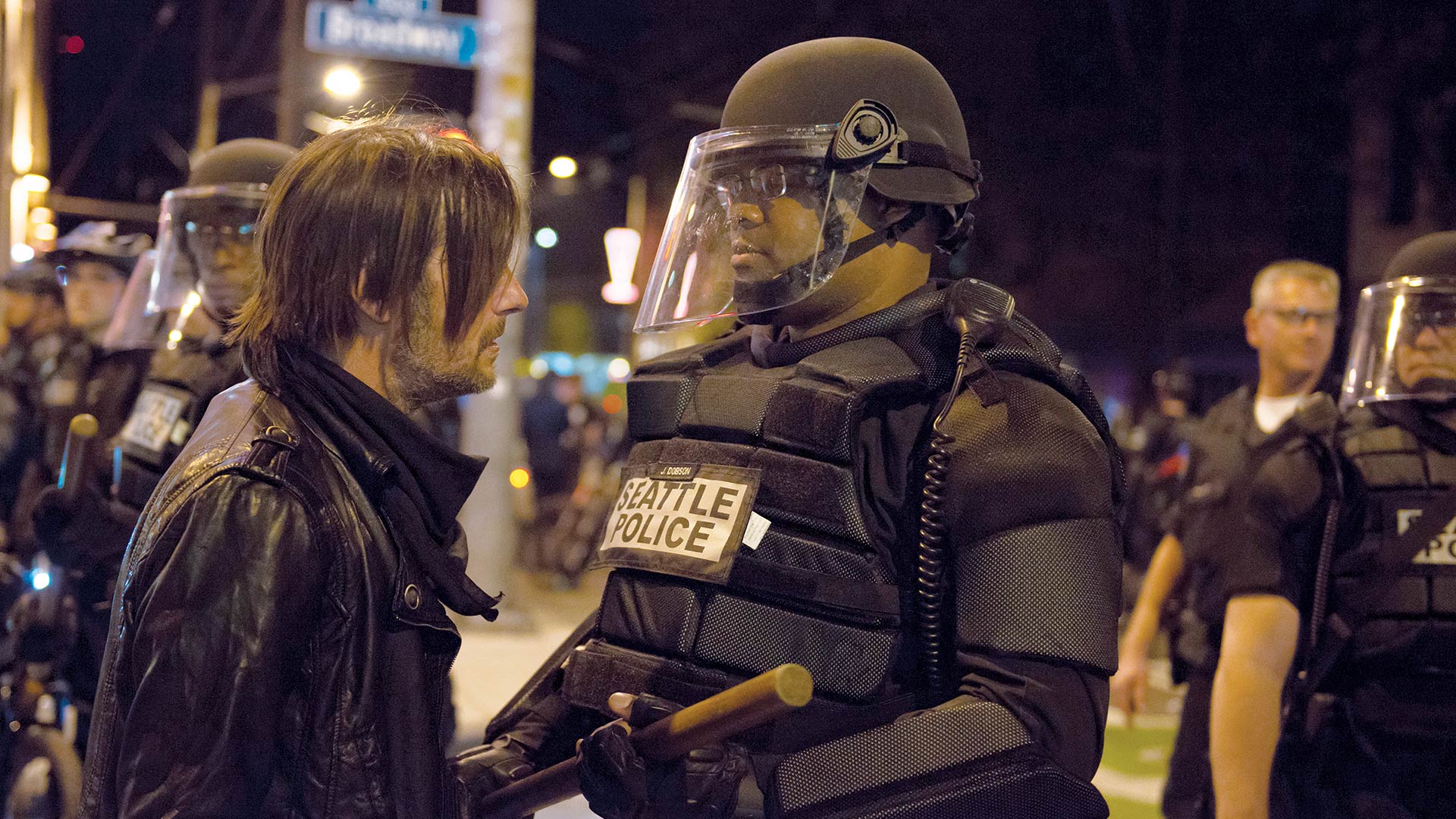
This is logical. In fact, scholars have argued that procedurally just practices are difficult to implement in police–citizen encounters that involve violence, mental impairment or aggressive challenges to police authority. This is because when police feel under threat, often signaled by civilian disrespect or resistance, not only is it seen as acceptable for them to exert their authority through force in order to maintain control, but it is their constitutional mandate. They are given the leeway to use force in order to do their jobs. The flipside to that is that when they do so, disobedience, resistance and, consequently, impressions of illegitimacy increase.

This leaves officers in a bind. While most officers strive to act in procedurally just ways in order to get compliance and build trust with the community, when situations get challenging, and people are aggressive or resistant, their toolbox may not be sufficiently robust.
Because most research on procedural justice is based on low-tension interactions, scholars have yet to show how police can consistently implement procedurally just practices when encounters with citizens involve contentious situations. 

Procedural justice when situations get tense

What procedural justice scholars have shown is that communication skills are the most effective mode of procedural justice. When officers have advanced communication skills and use them in their interactions, they are more likely to have interactions that are perceived by the public as fair.

What this tells us is that communication skills that are targeted toward de-escalating and opening dialogue during contentious interactions that are characterized by conflict behaviors, including resistance, aggression and noncompliance, could have a positive effect on procedural justice judgments and, consequently, fairness and trust. In fact, research shows that subjects who are guilty of a crime are more likely to voluntarily comply when they feel fairly treated, even when they are faced with a legal consequence. Officers who have completed Insight Policing: Conflict Resolution for Law Enforcement report that learning a communication strategy based on targeted curiosity has helped them gain compliance in tense situations.

For example, a campus police officer reported that she was responding to a belligerent fan at a college soccer game. The fan was yelling at the referee and making a scene. When she responded, he directed his anger at her, presumably for interfering. Rather than ordering him to leave the game or be arrested, she communicated with him. First, she named that he was upset and asked him what was upsetting him. He told her about his problems with the referee’s calls, and as she listened, she gave him voice. She heard his concerns, and he calmed down. This prepared him to hear from her that if he wanted to stay at the game, he needed to control himself, but that he was welcome to cool down outside of the gates. In a situation that could have easily gone hands-on, the options she presented showed neutrality and respect. The parent chose to stay, thanked the officer for her help and apologized for his behavior. There was no further incident.

Officers face potentially volatile situations every day. When they can use conflict communication skills to prevent them from overheating, they are able to maintain safety and order in procedurally just ways.

Evidence confirming the positive effects of procedurally just practices has been accumulating. It shows that procedural justice increases cooperation with officers, facilitates compliance with officer directives and enhances perceptions of police legitimacy, easing the difficult job of policing and making communities safer.

While more difficult to implement in situations of conflict where a subject is resistant, aggressive or noncompliant, officers can learn targeted communication techniques that de-escalate the encounter and open dialogue in a way that advances the four principles of procedural justice: respect, voice, neutrality and trustworthiness. More research into conflict communication strategies could help officers feel confident that they have tools they can use other than force when encounters with the public get tense.

Dr. Megan Price

Dr. Megan Price

Dr. Megan Price is the director of the Center for Applied Insight Conflict Resolution in Washington, D.C., and is founder and trainer of Insight Policing: Conflict Resolution for Law Enforcement (insightpolicing.com), which teaches officers the foundations of conflict decision-making and targeted, curiosity-based communication skills for controlling escalation and problem-solving effectively. Dr. Price is adjunct professor in Conflict Analysis and Resolution at George Mason University and associate faculty in the Conflict Management master’s program at Royal Roads University.

View articles by Dr. Megan Price

As seen in the June 2024 issue of American Police Beat magazine.
Don’t miss out on another issue today! Click below:


SUBSCRIBE TODAY!

Categories: Policy

Primary Sidebar

Recent Articles

  • Police officer kicks up social media praise
  • Donning denim in solidarity with victims and survivors of sexual assault
  • Clarifying your “true north”
  • Smile and let them swing
  • The job has changed — have you?
  • New National Law Enforcement Museum exhibit revisits D.C. snipers case
  • A hero’s legacy through a mother’s love
  • The days that follow
  • Perpetual recognition of line-of-duty deaths
  • A Tribute to Fallen Heroes

Footer

Our Mission
To serve as a trusted voice of the nation’s law enforcement community, providing informative, entertaining and inspiring content on interesting and engaging topics affecting peace officers today.

Contact us: info@apbweb.com | (800) 234-0056.

  • Facebook
  • Instagram
  • Twitter

Categories

  • Editor’s Picks
  • On the Job
  • Labor
  • Tech
  • Training
  • Policy
  • Health/Wellness
  • Community
  • Offbeat
  • We Remember
  • Jobs and Careers
  • Events

Editor’s Picks

Let’s get moving!

Let’s get moving!

April 27, 2026

Heroes of the World Trade Center

Heroes of the World Trade Center

April 24, 2026

The Promise Gap

The Promise Gap

April 22, 2026

Corruption, collusion and impunity

Corruption, collusion and impunity

April 21, 2026

Policies | Consent Preferences | Copyright © 2026 APB Media, LLC | Website design, development and maintenance by 911MEDIA

Open

Subscribe

Close

Receive the latest news and updates from American Police Beat directly to your inbox!

  • This field is for validation purposes and should be left unchanged.