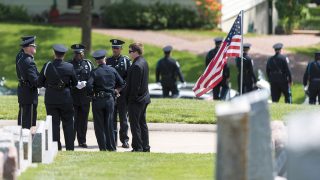
I recall an incident many years ago when two significantly overweight officers experienced difficulty taking a mentally challenged 18-year-old kid into custody. During a violent struggle, the offender wrestled one of the officers’ guns from his holster and then shot both him and his partner to death. These officers should not have been out in the field, but the department never took action to address their obvious limitations. Their deaths might have been preventable had an in-service fitness assessment program been in place.
Most police agencies today have mandatory physical fitness standards as an entry-level requirement, along with similar requirements to graduate from a basic police academy. Some progressive agencies conduct annual in-service fitness testing for their sworn personnel. What is the justification for these programs? It all comes down to five key components.
Obligation to the community
All departments, regardless of size, have a responsibility to the people they serve. The public expects its police officers to be able to “protect and serve” them in all kinds of situations. Although the job can be basically sedentary, an officer is sometimes required to respond in an all-out effort during critical incidents. The success or failure of their performance is directly related to their physical fitness capacity. Every officer, regardless of age or physical condition, must be prepared to perform such critical tasks as controlling a combative offender, pursuing a suspect in a foot chase or dragging a driver from a burning vehicle. Officers in poor physical condition may not be prepared to perform their duties to the best of their ability. Studies indicate that employees in good health tend to be more alert, more active and more productive in their work. This is important in terms of police performance when you consider the long hours spent on patrol by an officer.
Professional image
Police agencies want to maintain a professional image. After all, what type of officer makes the better impression on citizens? It isn’t the officer with his gun belt six notches longer than when he started on the job and who cannot walk up a flight of stairs without getting out of breath. Hundreds of dollars are spent each year to keep our uniforms and vehicles in top condition. But rarely is any money earmarked for keeping the officers in those uniforms or vehicles in good condition.
Obligation to the officers
Every department has an obligation to its officers. Occupational research has shown that officers tend to live shorter lives than other occupational groups. Officers have a higher incidence of coronary disease, back ailments and circulatory problems. Police work has been viewed as one of the most stressful occupations. Yet many officers do not know how to deal with stress. Officer survival can be viewed as directly related to physical fitness. Summaries of police killings have shown that some officers were overpowered by an assailant and shot with their own service weapons. It is not uncommon to hear of an officer who dropped dead of a heart attack while on the job.

Budgetary/financial concerns
Another concern when developing a health and fitness program is the cost. Coronary disease is a cause of early retirement and limited-duty assignments in our profession. Lower back problems are also high on that list, as is to be expected due to our wearing of extra equipment and countless hours sitting in our police vehicles. These afflictions can cost agencies millions of dollars each year in retirement benefits, sick leave and injured-on-duty status. Employment laws and courts are making it easier for officers suffering from such ailments to collect disability benefits by presuming these to be job-related. Compensation can also be awarded in cases of depression, anxiety disorders, alcoholism, PTSD and related problems. The cost of replacing such employees is alarming. It is estimated that it costs approximately 165% of the disabled officer’s salary: 100% for a replacement and 65% for a disability or medical pension. Fitness programs can indeed be viewed as a cost-effective measure for dealing with the financial problems facing police departments today.
Legal issues/liability
A final justification for fitness programs is liability. A legal issue could arise in terms of negligence in having an unfit officer on the streets. A department may be sued by a civilian injured after an emergency situation where the officer was not able to perform their job due to poor physical condition. These cases can include the unnecessary use of excessive force, the inability to climb over a wall to stop an assault or the inability to pursue a dangerous offender posing a risk to others. An officer and their family may sue and hold a department liable for not addressing the officer’s poor fitness level. This could apply to either on-duty or off-duty deaths, injuries or disabilities due to poor health and fitness habits accepted in an agency.
An agency may be held liable for having an unfit officer under many legal concepts and principles. These include negligent retention, negligent assignment and failure to train. It’s important to realize that by not having fitness-related policies and programs, a department may be held legally responsible for having unfit officers in public service.

Final thoughts
These five areas of justification comprise a persuasive argument for today’s administrators to take an interest in police physical fitness. A proactive approach in this direction demonstrates a concern for the agency’s most valuable resources: its personnel. Benefits include keeping costs down, avoiding
legal problems, presenting a better image to the public and having more healthy, productive employees. Medical insurance rates can also be reduced for an agency with a fitness program.
The goal of developing and delivering an in-service physical fitness program should be simply that officers develop and maintain a minimum level of fitness throughout their careers. Officers should understand that this is not a punitive effort, but one that has their best interests in mind. Hopefully the good habits they achieve during their careers will help them live long enough to enjoy their retirements and maintain that lifestyle for years to come. Many officers unfortunately pass away only a few years after they left police work. Retired officers deserve to enjoy a productive, active lifestyle and be able to play with their grandchildren.
A problem may arise in dealing with veteran officers with increased health risks due to age, smoking, obesity and related medical problems. To require these personnel to immediately comply with fitness standards would be ridiculous. Allowances must be made to gradually bring each officer back to a minimally acceptable level. To do this, the program should start with some type of medical screening or evaluation. This is especially applicable to officers over the age of 35. Many hospitals and medical facilities offer this testing. Some colleges have labs for this testing for students in a physical education curriculum. Local gyms and health clubs can also offer these assessments. Some officers can be certified as fitness instructors and help develop in-house training programs.
A comprehensive medical exam need not be required of all officers every year, but it should be provided as a starting point. The Wilmette Police Department in Illinois started a fitness program in the early 1990s and met with resistance from several officers who felt the administration’s intentions were to punish them, remove them from the field or even fire them. The department contracted with Northeastern Illinois University exercise science staff to have graduate students conduct health-related fitness tests for its officers and then recommend specific individualized regimens for health-related fitness status alteration, nutritional advice and physical performance enhancement.
Despite the initial pushback, one officer in his late 30s was found to have cardiovascular issues and was referred to his personal physician. He was later diagnosed with blockage in his arteries and had two stents put in. One of the deputy chiefs, who was in his 60s, had to have a triple bypass heart surgery after abnormalities were found in his test results. A few officers had dangerous levels of cholesterol or high blood pressure and had to be treated with medication. The comprehensive assessment was offered at a reduced fee and the department covered the cost. Officers began to realize the benefits of this program, and the overall health and fitness of the department’s personnel began to improve.
Officers should be able to track their fitness throughout their career. Fitness is not a one-time endeavor, but rather a lifetime commitment. Fitness results can be included in annual performance evaluations. The agency can include such incentives as free gym memberships, monetary bonuses or compensatory time off. Recognition can be offered through special awards or uniform bars. Many officers should be encouraged to participate in police competitions to promote fitness and camaraderie in their agencies.
Physical fitness has a rational validity in law enforcement. Police administrators should strive to develop a healthier agency by their own participation and support. This would demonstrate a personal commitment to the department’s health, emotional well-being and performance, as well as fulfilling obligations to the welfare and safety of the communities they serve.

Mike Geier
As seen in the June 2024 issue of American Police Beat magazine.
Don’t miss out on another issue today! Click below: