• Skip to primary navigation
  • Skip to main content
  • Skip to primary sidebar
  • Skip to footer
  • Home
  • About
  • The Magazine
  • Events
  • Partners
  • Products
  • Contact
  • Jobs and Careers
  • Advertise
  • Facebook
  • Instagram
  • Twitter
  • Subscribe
American Police Beat

American Police Beat Magazine

Law Enforcement Publication

  • Home
  • Leadership
    • Clarifying your “true north”
      The job has changed — have you?
      Perpetual recognition of line-of-duty deaths
      Understanding the boundaries of professional relationships with the...
      Why you should lead from 30,000 feet
  • Topics
    • Leadership
      • Clarifying your “true north”
        The job has changed — have you?
        Perpetual recognition of line-of-duty deaths
        Understanding the boundaries of professional relationships with the...
        Why you should lead from 30,000 feet
    • Editor’s Picks
      • Let’s get moving!
        Heroes of the World Trade Center
        The Promise Gap
        Corruption, collusion and impunity
        Liability challenges in contemporary policing
    • On the Job
      • Testing the waters — literally
        Frankpledge to forensics: A brief history of law enforcement
        Villains and heroes in the Big Apple
        Right place, right time — again
        Some good news on crime
    • Labor
      • Smile and let them swing
        The Promise Gap
        Cut the cops, save a dollar?
        Labor release under fire
        Who’s watching the watchmen?
    • Tech
      • NYC’s electric vehicle fleet for LE passes milestone
        New Mexico license plate readers save lives, lead to “precise...
        A modern field guide to understanding research in policing
        Gear that moves with you
        A new breed of cop car
    • Training
      • Pushback as a training signal
        Let’s get moving!
        The five minutes before the ambulance
        Navigating danger
        Critical thinking in police training
    • Policy
      • Police pause license plate readers
        Corruption, collusion and impunity
        E-bikes spark public safety concerns
        Try racing without wheels
        Law enforcement accreditation: Why it matters
    • Health/Wellness
      • The days that follow
        Addressing stress, vicarious trauma and burnout
        Nervous system regulation
        The nature of the job
        Promoting organizational wellness
    • Community
      • Cops promote National Donate Life Month
        Police officer kicks up social media praise
        Donning denim in solidarity with victims and survivors of sexual...
        Improving autism awareness
        Shop with a Cop
    • Offbeat
      • An unexpected burglar
        Police humor only a cop would understand
        Not eggzactly a perfect heist
        Pizza … with a side of alligator?
        Wisconsin man charged with impersonating Border Patrol agent twice in...
    • We Remember
      • A Tribute to Fallen Heroes
        Markers of service and remembrance
        Tragedy strikes Baker to Vegas
        Heroes of the World Trade Center
        Forty heroes: United Airlines Flight 93
    • HOT Mail
      • The War on Cops Continues Unabated
  • On the Job
    • Testing the waters — literally
      Frankpledge to forensics: A brief history of law enforcement
      Villains and heroes in the Big Apple
      Right place, right time — again
      Some good news on crime
  • Labor
    • Smile and let them swing
      The Promise Gap
      Cut the cops, save a dollar?
      Labor release under fire
      Who’s watching the watchmen?
  • Tech
    • NYC’s electric vehicle fleet for LE passes milestone
      New Mexico license plate readers save lives, lead to “precise...
      A modern field guide to understanding research in policing
      Gear that moves with you
      A new breed of cop car
  • Training
    • Pushback as a training signal
      Let’s get moving!
      The five minutes before the ambulance
      Navigating danger
      Critical thinking in police training
  • Policy
    • Police pause license plate readers
      Corruption, collusion and impunity
      E-bikes spark public safety concerns
      Try racing without wheels
      Law enforcement accreditation: Why it matters
  • Health/Wellness
    • The days that follow
      Addressing stress, vicarious trauma and burnout
      Nervous system regulation
      The nature of the job
      Promoting organizational wellness
  • Community
    • Cops promote National Donate Life Month
      Police officer kicks up social media praise
      Donning denim in solidarity with victims and survivors of sexual...
      Improving autism awareness
      Shop with a Cop
  • Offbeat
    • An unexpected burglar
      Police humor only a cop would understand
      Not eggzactly a perfect heist
      Pizza … with a side of alligator?
      Wisconsin man charged with impersonating Border Patrol agent twice in...
  • We Remember
    • A Tribute to Fallen Heroes
      Markers of service and remembrance
      Tragedy strikes Baker to Vegas
      Heroes of the World Trade Center
      Forty heroes: United Airlines Flight 93
  • HOT Mail
    • The War on Cops Continues Unabated
  • About
  • The Magazine
  • Events
  • Partners
  • Products
  • Contact
  • Jobs and Careers
  • Advertise
  • Subscribe
Search

Training

Speed versus accuracy

The fundamental challenge in firearms training

Todd Fletcher Published January 24, 2021 @ 12:00 pm PST

Firearms instructors need to allow officers to safely push their limits and test their individual performance. (iStock.com/RichLegg)

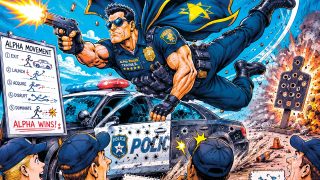
Gunfights happen quickly and often unexpectedly. When an officer has to assess a threat, make a use-of-force decision, then apply that level of force to defend their life or the lives of others, we want their training to be as good as possible. The difficulty is in training fundamental skills for new officers while continuously improving the skills of veteran officers. Once these skills are developed, officers must be challenged to identify their individual skill levels to improve their combative speed and accuracy.

Range culture

One of the biggest obstacles to improving the speed and accuracy of our officers has been the firearms instructors who run the range. If you’re an instructor, don’t get all puffed up and offended. I’m an instructor, and I take ownership of this problem. If instructors want to be more than a red shirt and a Sharpie, then we need to take ownership of our performance so we can work to improve officers’ skills.

Historically, law enforcement firearms training has been focused on basic marksmanship, precision shooting skills and weapon handling. While these skills are critically important, we have failed to provide more skilled officers with the opportunity to push themselves to “fail safely” and discover their capabilities. Traditionally, law enforcement firearms training has been like someone who does the same workout day after day without pushing themselves. The training works to a point, but it will plateau. Eventually, improvement will slow or cease altogether. Without pushing their limits and testing their performance, they have no idea if the training is effective.

Firearms instructors should allow officers to safely push the boundaries of their “speed limit” to discover their performance boundaries. Instead of ridiculing and embarrassing officers for failing to shoot tight groups, we should be praising those officers, as long as they are pushing the limits of their skill level to improve performance. Don’t misunderstand what I’m saying: Marksmanship accountability on the street and in training is important, but it shouldn’t limit a shooter’s ability to push their skills and abilities in training to get to the next level of performance.

Combative speed

Developing combative speed requires practice, training and the opportunity to discover your personal performance capabilities. Quick, accurate, fight-stopping hits placed into body parts that stop aggression should be the goal. 

A valuable tool for developing combative speed is the addition of a shot timer. Without a shot timer, a draw that feels quick may be slow due to wasted motion. Conversely, a draw that feels slow, but is smooth with no wasted movement, may be quicker. A shot timer does not lie about shooter performance. I’ve heard some instructors argue that there’s no shot timer in a gunfight. I will respectfully disagree. There is a shot timer in almost every gunfight, and it’s being run by the threat. The threat drives the use-of-force decision-making and the timing of the encounter. This means the threat is running the hypothetical shot timer.

I frequently refer to the shot timer as “the delete box.” You can have a game plan going into a course of fire, but as soon as the timer goes off, it’s like someone hit the delete button on the shooter’s brain. The only duress the shot timer provides is a time duress, but the timer puts more stress on shooters than most people will admit. This type of stress in training can be good for our officers. When they learn to perform under stress in training, they know they can perform under stress on the streets. I know the stress from the delete box isn’t the same as life-threatening combat stress, but each step we add in a safe training environment is good for our officers on the street.

A variety of targets and training aids are available to help officers improve their shooting performance. (Combative Firearms Training)

Combative accuracy

Combative accuracy means making hits on your intended target or target zone. Accuracy does not necessarily mean putting one round on top of another. Combative accuracy is hitting a general target zone such as the upper thoracic area. It may also mean using an acceptable, as opposed to a perfect, sight picture, or a flash sight picture.

On the other hand, precision shooting means placing rounds on a very particular spot on the target or putting one round on top of another repeatedly. This means pressing the trigger straight to the rear while attempting to obtain and maintain the “perfect” sight picture. Speed is secondary when precision shooting is required. 

Sight picture and alignment are another part of the speed and accuracy equation. Shooters need to be aware of what an acceptable sight picture is based on the context of their gunfight. This can vary depending on the need for accuracy or precision as well as the distance involved. Shooters should be allowed the opportunity to experiment under different distance and lighting conditions to determine an ideal sight picture for the problem they face. The ideal place for doing this is in a training environment where instructors can evaluate the type of sight picture that is necessary to deliver shots that meet the expected accuracy standard. This can reduce the problem of shooters attempting to maintain a “perfect” sight picture while working at combat speed. When it comes to combative speed and accuracy, perfection is the enemy of good enough.

Steel targets are one of the best ways to train and practice shooting well quickly. Steel targets help shooters balance speed and accuracy. In terms of adult learning, steel targets allow the development of shooting skills at the subconscious level of awareness. The subconscious mind can learn to reflexively control the shooting process using positive, instantaneous feedback. The sound and movement generated by the bullet hitting the target provides assurance of combative accuracy.

Too much of law enforcement firearms training focuses on “teaching to the test”: passing qualification. This results in training officers to meet minimum standards instead of preparing them to prevail in a gunfight. Instead, training needs to focus on balancing combative speed and accuracy. In other words, I don’t need you to shoot fast. I need you to shoot well … quickly.

Todd Fletcher

Todd Fletcher

Todd Fletcher is a retired sergeant from central Oregon with over 25 years of law enforcement experience. He presents firearms training and instructor development classes nationwide. He is also a charter member and staff instructor for NLEFIA. He owns Combative Firearms Training, LLC, providing firearms training and instructor development classes to law enforcement, military, private security and armed citizens. He can be contacted at Todd@CombativeFirearms.com.

View articles by Todd Fletcher

As seen in the January 2021 issue of American Police Beat magazine.
Don’t miss out on another issue today! Click below:


SUBSCRIBE TODAY!

Categories: Training

Primary Sidebar

Recent Articles

  • Cops promote National Donate Life Month
  • NYC’s electric vehicle fleet for LE passes milestone
  • Police officer kicks up social media praise
  • Donning denim in solidarity with victims and survivors of sexual assault
  • Clarifying your “true north”
  • Smile and let them swing
  • The job has changed — have you?
  • New National Law Enforcement Museum exhibit revisits D.C. snipers case
  • A hero’s legacy through a mother’s love
  • The days that follow

Footer

Our Mission
To serve as a trusted voice of the nation’s law enforcement community, providing informative, entertaining and inspiring content on interesting and engaging topics affecting peace officers today.

Contact us: info@apbweb.com | (800) 234-0056.

  • Facebook
  • Instagram
  • Twitter

Categories

  • Editor’s Picks
  • On the Job
  • Labor
  • Tech
  • Training
  • Policy
  • Health/Wellness
  • Community
  • Offbeat
  • We Remember
  • Jobs and Careers
  • Events

Editor’s Picks

Let’s get moving!

Let’s get moving!

April 27, 2026

Heroes of the World Trade Center

Heroes of the World Trade Center

April 24, 2026

The Promise Gap

The Promise Gap

April 22, 2026

Corruption, collusion and impunity

Corruption, collusion and impunity

April 21, 2026

Policies | Consent Preferences | Copyright © 2026 APB Media, LLC | Website design, development and maintenance by 911MEDIA

Open

Subscribe

Close

Receive the latest news and updates from American Police Beat directly to your inbox!

  • This field is for validation purposes and should be left unchanged.