• Skip to primary navigation
  • Skip to main content
  • Skip to primary sidebar
  • Skip to footer
  • Home
  • About
  • The Magazine
  • Events
  • Partners
  • Products
  • Contact
  • Jobs and Careers
  • Advertise
  • Facebook
  • Instagram
  • Twitter
  • Subscribe
American Police Beat

American Police Beat Magazine

Law Enforcement Publication

  • Home
  • Leadership
    • Understanding the boundaries of professional relationships with the...
      Why you should lead from 30,000 feet
      Public perception and trust
      When performance reviews are a waste of time
      Taking a page from Toyota’s playbook
  • Topics
    • Leadership
      • Understanding the boundaries of professional relationships with the...
        Why you should lead from 30,000 feet
        Public perception and trust
        When performance reviews are a waste of time
        Taking a page from Toyota’s playbook
    • Editor’s Picks
      • Let’s get moving!
        Heroes of the World Trade Center
        The Promise Gap
        Corruption, collusion and impunity
        Liability challenges in contemporary policing
    • On the Job
      • Frankpledge to forensics: A brief history of law enforcement
        Villains and heroes in the Big Apple
        Right place, right time — again
        Some good news on crime
        Mom-to-be named Cop of the Year
    • Labor
      • The Promise Gap
        Cut the cops, save a dollar?
        Labor release under fire
        Who’s watching the watchmen?
        Crime and punishment (or lack thereof) in Seattle
    • Tech
      • New Mexico license plate readers save lives, lead to “precise...
        A modern field guide to understanding research in policing
        Gear that moves with you
        A new breed of cop car
        The future of patrol is here
    • Training
      • Pushback as a training signal
        Let’s get moving!
        The five minutes before the ambulance
        Navigating danger
        Critical thinking in police training
    • Policy
      • Corruption, collusion and impunity
        E-bikes spark public safety concerns
        Try racing without wheels
        Law enforcement accreditation: Why it matters
        Liability challenges in contemporary policing
    • Health/Wellness
      • Addressing stress, vicarious trauma and burnout
        Nervous system regulation
        The nature of the job
        Promoting organizational wellness
        Telling cops to get more sleep isn’t working
    • Community
      • Improving autism awareness
        Shop with a Cop
        Community engagement: What is it moving forward?
        Contradictory crossroads
        Back-to-school season brings out police support nationwide
    • Offbeat
      • An unexpected burglar
        Police humor only a cop would understand
        Not eggzactly a perfect heist
        Pizza … with a side of alligator?
        Wisconsin man charged with impersonating Border Patrol agent twice in...
    • We Remember
      • Heroes of the World Trade Center
        Forty heroes: United Airlines Flight 93
        The Pentagon
        A nation propelled to war, lives changed forever
        A Christmas loss
    • HOT Mail
      • The War on Cops Continues Unabated
  • On the Job
    • Frankpledge to forensics: A brief history of law enforcement
      Villains and heroes in the Big Apple
      Right place, right time — again
      Some good news on crime
      Mom-to-be named Cop of the Year
  • Labor
    • The Promise Gap
      Cut the cops, save a dollar?
      Labor release under fire
      Who’s watching the watchmen?
      Crime and punishment (or lack thereof) in Seattle
  • Tech
    • New Mexico license plate readers save lives, lead to “precise...
      A modern field guide to understanding research in policing
      Gear that moves with you
      A new breed of cop car
      The future of patrol is here
  • Training
    • Pushback as a training signal
      Let’s get moving!
      The five minutes before the ambulance
      Navigating danger
      Critical thinking in police training
  • Policy
    • Corruption, collusion and impunity
      E-bikes spark public safety concerns
      Try racing without wheels
      Law enforcement accreditation: Why it matters
      Liability challenges in contemporary policing
  • Health/Wellness
    • Addressing stress, vicarious trauma and burnout
      Nervous system regulation
      The nature of the job
      Promoting organizational wellness
      Telling cops to get more sleep isn’t working
  • Community
    • Improving autism awareness
      Shop with a Cop
      Community engagement: What is it moving forward?
      Contradictory crossroads
      Back-to-school season brings out police support nationwide
  • Offbeat
    • An unexpected burglar
      Police humor only a cop would understand
      Not eggzactly a perfect heist
      Pizza … with a side of alligator?
      Wisconsin man charged with impersonating Border Patrol agent twice in...
  • We Remember
    • Heroes of the World Trade Center
      Forty heroes: United Airlines Flight 93
      The Pentagon
      A nation propelled to war, lives changed forever
      A Christmas loss
  • HOT Mail
    • The War on Cops Continues Unabated
  • About
  • The Magazine
  • Events
  • Partners
  • Products
  • Contact
  • Jobs and Careers
  • Advertise
  • Subscribe
Search

On the Job

A deadly mistake: How an officer mistook a handgun for a Taser

APB Team Published April 21, 2021 @ 6:00 am PDT

iStock.com/tirc83

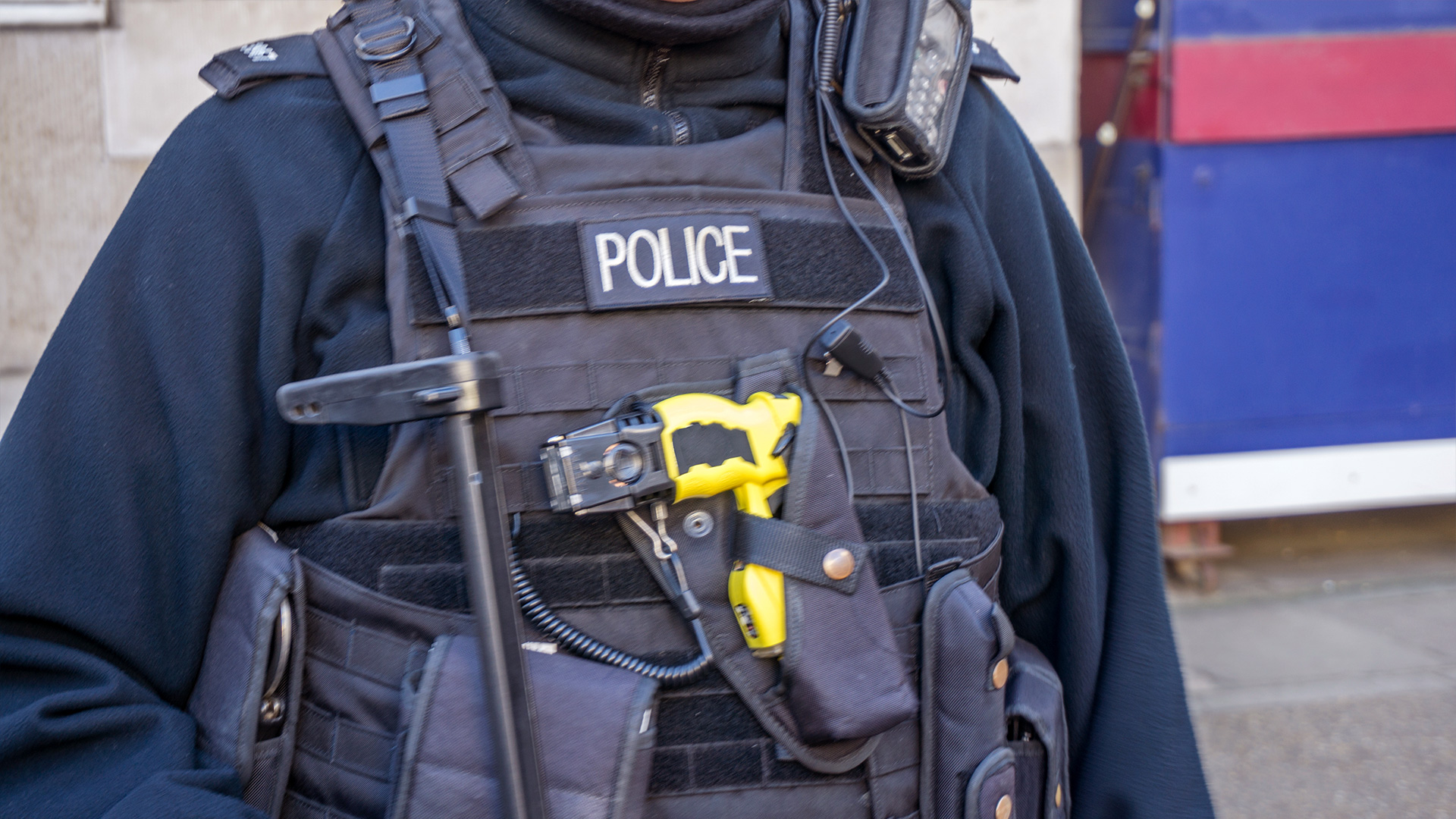
The media and civil rights activists are buzzing around an incident where a police officer accidentally mistook her Glock for a stun gun and ended up fatally shooting a Black man during a routine traffic stop.

There are many questions surrounding Brooklyn Center Police Officer Kim Potter’s shooting of Daunte Wright, as law enforcement experts try to understand what was going on in her mind and what caused the mix-up.

According to the AP, Potter, a 26-year-veteran on the force, resigned after accidentally firing her pistol instead of a taser during the traffic stop of Daunte Wright. Wright, who was fatally struck in the chest, was initially pulled over by police for traffic violations such as expired plates and an item hanging form his rearview mirror. Police soon found that there was a warrant out for his arrest.

When he attempted to flee, Potter was caught on video yelling “Taser! Taser! Taser!” as part of the officer’s training prior to deploying the taser, but fired a bullet from her Glock instead. After shooting Wright, she can be heard on camera saying “Holy [expletive]. I shot him.”

While experts agreed that her deadly action was unintentional, it was still inexcusable. Professor of criminal justice at John Jay College and former Florida police officer Dennis Kenney said, “There is no indication that the officer intended to use deadly force. That said, it goes nowhere near excusing this mistake.”

Experts agreed that the deadly mistake was a result of confusion during a high-stress scenario combined with inadequate training.

Maria Haberfeld, also a John Jay professor, said, “People underestimate the level of stress police officers experience during traffic stops.”

She continued, “A lot of police officers get killed doing what should be routine traffic stops and a veteran officer like Potter would be acutely aware of that. The longer you are on the job, the more layers of stress you accumulate. And errors of judgment happen when you are under stress.”

Sgt. Betsy Brantner Smith, spokeswoman for the National Police Association and a retired 29-year veteran of the Naperville Police Department in Illinois told NBC News, “It’s not like she looked at her gun and thought it was a Taser. It’s a horrible, horrible motor glitch that could happen in high-stress situations.”

Reaching for the wrong gun is a rare but possible occurrence.

A 2012 article published in the monthly law journal Americans for Effective Law Enforcement found nine documented cases dating back to 2001 where officers fired their handgun when they meant to fire their Taser, including a famous case in 2009 in Oakland when a Bay Area Rapid Transit (BART) police officer shot and killed Oscar Grant. The incident later inspired the film Fruitvale Station.

The statistical probability of such an event falls in at an average of less than one time per year.

Another reason for the “motor glitch” may be due to muscle memory developed during training, where officers fire their gun around 5,000 times in the police academy, but fire a taser only around 10 times.

While tasers are placed on an officer’s non-dominant side opposite their handgun, officers may sometimes draw their handgun simply out of a motor reflex during a highly stressful situation.

Experts are looking for specific solutions to ensure that these kinds of accidents are less likely to occur, and have considered changing the look and design of Tasers so they are less easily mistaken with handguns, as well as providing adequate Taser training.

St. Paul Minnesota Mayor Melvin Carter backed the former solution. “Why do we even have Tasers that operate and function and feel and deploy exactly like a firearm? Why can’t we have Tasers that look and feel different? That you could never mistake for deploying a firearm so that we can ensure that mistake that has happened before can never happen again?” he asked.

Mike Leonesio, a former police officer and Taser instructor, favored training instead. He said in a Reuters report that there is no research proving the Taser’s color makes a difference in the heat of a stressful encounter.

“In training I’ve done, often officers don’t even remember drawing their weapon or what it looked like,” said Leonesio. Instead, he advocated more training to avoid such mix-ups.

Haberfeld also looks to better training as a way to avoid such mistakes, but cost could be an obstacle. “Police training is in horrible shape in the United States. They don’t get refresher courses for years. And with the Taser, it’s just a few hours.”

Smith said that the lack of training is due to budget constraints. “Each Taser cartridge is expensive and not every department has Taser simulators on which officers can train,” she said.


Categories: On the Job

Primary Sidebar

Recent Articles

  • Frankpledge to forensics: A brief history of law enforcement
  • Pushback as a training signal
  • Let’s get moving!
  • Heroes of the World Trade Center
  • The Promise Gap
  • Corruption, collusion and impunity
  • The five minutes before the ambulance
  • New Mexico license plate readers save lives, lead to “precise policing”
  • Addressing stress, vicarious trauma and burnout
  • Understanding the boundaries of professional relationships with the boss

Footer

Our Mission
To serve as a trusted voice of the nation’s law enforcement community, providing informative, entertaining and inspiring content on interesting and engaging topics affecting peace officers today.

Contact us: info@apbweb.com | (800) 234-0056.

  • Facebook
  • Instagram
  • Twitter

Categories

  • Editor’s Picks
  • On the Job
  • Labor
  • Tech
  • Training
  • Policy
  • Health/Wellness
  • Community
  • Offbeat
  • We Remember
  • Jobs and Careers
  • Events

Editor’s Picks

Let’s get moving!

Let’s get moving!

April 27, 2026

Heroes of the World Trade Center

Heroes of the World Trade Center

April 24, 2026

The Promise Gap

The Promise Gap

April 22, 2026

Corruption, collusion and impunity

Corruption, collusion and impunity

April 21, 2026

Policies | Consent Preferences | Copyright © 2026 APB Media, LLC | Website design, development and maintenance by 911MEDIA

Open

Subscribe

Close

Receive the latest news and updates from American Police Beat directly to your inbox!

  • This field is for validation purposes and should be left unchanged.