• Skip to primary navigation
  • Skip to main content
  • Skip to primary sidebar
  • Skip to footer
  • Home
  • About
  • The Magazine
  • Events
  • Partners
  • Products
  • Contact
  • Jobs and Careers
  • Advertise
  • Facebook
  • Instagram
  • Twitter
  • Subscribe
American Police Beat

American Police Beat Magazine

Law Enforcement Publication

  • Home
  • Leadership
    • Perpetual recognition of line-of-duty deaths
      Understanding the boundaries of professional relationships with the...
      Why you should lead from 30,000 feet
      Public perception and trust
      When performance reviews are a waste of time
  • Topics
    • Leadership
      • Perpetual recognition of line-of-duty deaths
        Understanding the boundaries of professional relationships with the...
        Why you should lead from 30,000 feet
        Public perception and trust
        When performance reviews are a waste of time
    • Editor’s Picks
      • Let’s get moving!
        Heroes of the World Trade Center
        The Promise Gap
        Corruption, collusion and impunity
        Liability challenges in contemporary policing
    • On the Job
      • Testing the waters — literally
        Frankpledge to forensics: A brief history of law enforcement
        Villains and heroes in the Big Apple
        Right place, right time — again
        Some good news on crime
    • Labor
      • The Promise Gap
        Cut the cops, save a dollar?
        Labor release under fire
        Who’s watching the watchmen?
        Crime and punishment (or lack thereof) in Seattle
    • Tech
      • New Mexico license plate readers save lives, lead to “precise...
        A modern field guide to understanding research in policing
        Gear that moves with you
        A new breed of cop car
        The future of patrol is here
    • Training
      • Pushback as a training signal
        Let’s get moving!
        The five minutes before the ambulance
        Navigating danger
        Critical thinking in police training
    • Policy
      • Police pause license plate readers
        Corruption, collusion and impunity
        E-bikes spark public safety concerns
        Try racing without wheels
        Law enforcement accreditation: Why it matters
    • Health/Wellness
      • Addressing stress, vicarious trauma and burnout
        Nervous system regulation
        The nature of the job
        Promoting organizational wellness
        Telling cops to get more sleep isn’t working
    • Community
      • Improving autism awareness
        Shop with a Cop
        Community engagement: What is it moving forward?
        Contradictory crossroads
        Back-to-school season brings out police support nationwide
    • Offbeat
      • An unexpected burglar
        Police humor only a cop would understand
        Not eggzactly a perfect heist
        Pizza … with a side of alligator?
        Wisconsin man charged with impersonating Border Patrol agent twice in...
    • We Remember
      • A Tribute to Fallen Heroes
        Markers of service and remembrance
        Tragedy strikes Baker to Vegas
        Heroes of the World Trade Center
        Forty heroes: United Airlines Flight 93
    • HOT Mail
      • The War on Cops Continues Unabated
  • On the Job
    • Testing the waters — literally
      Frankpledge to forensics: A brief history of law enforcement
      Villains and heroes in the Big Apple
      Right place, right time — again
      Some good news on crime
  • Labor
    • The Promise Gap
      Cut the cops, save a dollar?
      Labor release under fire
      Who’s watching the watchmen?
      Crime and punishment (or lack thereof) in Seattle
  • Tech
    • New Mexico license plate readers save lives, lead to “precise...
      A modern field guide to understanding research in policing
      Gear that moves with you
      A new breed of cop car
      The future of patrol is here
  • Training
    • Pushback as a training signal
      Let’s get moving!
      The five minutes before the ambulance
      Navigating danger
      Critical thinking in police training
  • Policy
    • Police pause license plate readers
      Corruption, collusion and impunity
      E-bikes spark public safety concerns
      Try racing without wheels
      Law enforcement accreditation: Why it matters
  • Health/Wellness
    • Addressing stress, vicarious trauma and burnout
      Nervous system regulation
      The nature of the job
      Promoting organizational wellness
      Telling cops to get more sleep isn’t working
  • Community
    • Improving autism awareness
      Shop with a Cop
      Community engagement: What is it moving forward?
      Contradictory crossroads
      Back-to-school season brings out police support nationwide
  • Offbeat
    • An unexpected burglar
      Police humor only a cop would understand
      Not eggzactly a perfect heist
      Pizza … with a side of alligator?
      Wisconsin man charged with impersonating Border Patrol agent twice in...
  • We Remember
    • A Tribute to Fallen Heroes
      Markers of service and remembrance
      Tragedy strikes Baker to Vegas
      Heroes of the World Trade Center
      Forty heroes: United Airlines Flight 93
  • HOT Mail
    • The War on Cops Continues Unabated
  • About
  • The Magazine
  • Events
  • Partners
  • Products
  • Contact
  • Jobs and Careers
  • Advertise
  • Subscribe
Search

Tech

What is causing the rise of driving fatalities during the pandemic?

APB Team Published April 17, 2021 @ 6:00 am PDT

iStock.com/Dafinchi

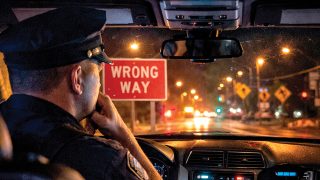
The pandemic has given rise to a paradoxical trend: less cars on the roads but more traffic-related deaths.

In the month of May alone, NBC News reported that motor vehicle fatalities surged over 23%. Indeed, according to a report by the National Safety Council, it marked the third straight month of an increased risk of traffic-related death over previous yearly averages.

Paradoxically, U.S. highway fatalities rose sharply in 2020 even as the number of miles driven by motorists fell. The worrisome trend comes during a time when one would intuitively think that less traffic would result in lower fatalities.

“At a moment when the country should be reaping a safety benefit from less traffic, the roads are riskier, threatening to reverse traffic safety gains made over the last few years,” the NSC said in a statement.

Preliminary data from the NSC shows that at least 42,060 people were killed in motor vehicle crashes last year, an increase of 24 percent per miles driven, the biggest year-over-year increase since 1924.

According to the statistics, for every 100 million miles driven, the death rate in May rose to 1.47, compared to 1.19 in 2019.

Especially now that the country is beginning to open up again and more cars are going to be on the roads, it is crucial to address the danger posed. Auto safety experts isolated a few contributing factors that could hold the key to the paradox.

One theory, according to experts, is cognitive overload from overusing technology while working at home – especially with regards to videoconferencing technology (Zoom). In short, they blame distracted driving due to technology.

“After you get into your car, you may be operating on autopilot,” Joan Claybrook, a former head of the National Highway Traffic Safety Administration, said. “I think computer use, in general, can overload you.”

Sam Abuelsamid, principal auto analyst at Guidehouse Insights, also theorized that simply not driving frequently over the past year has caused people’s skills to rust. Add to that a heightened emotional state from the pandemic and being locked down in one’s house on Zoom all day, it could severely impair one’s driving abilities.

To support this theory, a study by Root Insurance found that 54% of 1,819 adult drivers surveyed had trouble concentrating on the roads after videoconferences. However, distracted driving is not a new trend per say. With or without COVID, car crashes due to distractions from smart phones have been increasing.

Russ Rader, an official with the Insurance Institute for Highway Safety, told NBC News, “The problem with distraction is huge and it’s not just checking email or texting. There’s the risk of cognitive distraction, looking at the road while your thoughts are elsewhere. That zoning out may mean you don’t notice a dangerous situation soon enough to react.”

Now that the country is beginning to open up again, there is even greater concern about road safety. Officials warn that there will be 120,000 more cars on the road compared to 2019. In addition to the sheer number of cars, officials expect there to be more frequent short-distance driving due to working at home and the need for short trips, as well as increased deliveries.

To combat this dangerous trend in the wake of loosening COVID restrictions, Nassau County Police is cracking down on distracted driving.

According to a CBS New York report, Nassau police, who have felt the effects of distracted driving first hand, believe that it resulted in three fatal crashes over the last three weeks, including the death of one of their own – Trooper Joseph Gallagher, who was hit by a distracted driver texting and using social media. 

The traffic safety problem has also gotten the attention of lawmakers. For example, Alabama’s House of Representatives recently shot down a proposal by a narrow margin that would fine people for using a smart phone while driving.

According to the AP, it was rejected by lawmakers on both sides of the aisle for its lack of enforceability. Democrats also worried that it could be used to target minorities for traffic stops.

Although a major factor, distracted driving is not the only cause of increased road risks. Since the pandemic lockdowns, police on average have cut back on enforcing minor traffic violations, which could be leading to more chaos on the roads.

Police cited COVID as the reason for fewer traffic stops.

“We cut down our shifts to limit our exposure…there was a full-blown hiatus on stopping (motorists) unless they did something really egregious,” said Kevin Nowak, chief of police in Pleasant Ridge, Michigan.

According to Car and Driver magazine, the sentiment from law enforcement was to significantly cut back on pulling drivers over to abide by social distancing rules. Now that vaccines are rolling out and the pandemic is under some control, perhaps the enforcement of traffic rules will return to normal.


Categories: Tech

Primary Sidebar

Recent Articles

  • Perpetual recognition of line-of-duty deaths
  • A Tribute to Fallen Heroes
  • NLEOMF Fund announces March 2026 Officers of the Month
  • Markers of service and remembrance
  • Testing the waters — literally
  • Police pause license plate readers
  • Tragedy strikes Baker to Vegas
  • Frankpledge to forensics: A brief history of law enforcement
  • Pushback as a training signal
  • Let’s get moving!

Footer

Our Mission
To serve as a trusted voice of the nation’s law enforcement community, providing informative, entertaining and inspiring content on interesting and engaging topics affecting peace officers today.

Contact us: info@apbweb.com | (800) 234-0056.

  • Facebook
  • Instagram
  • Twitter

Categories

  • Editor’s Picks
  • On the Job
  • Labor
  • Tech
  • Training
  • Policy
  • Health/Wellness
  • Community
  • Offbeat
  • We Remember
  • Jobs and Careers
  • Events

Editor’s Picks

Let’s get moving!

Let’s get moving!

April 27, 2026

Heroes of the World Trade Center

Heroes of the World Trade Center

April 24, 2026

The Promise Gap

The Promise Gap

April 22, 2026

Corruption, collusion and impunity

Corruption, collusion and impunity

April 21, 2026

Policies | Consent Preferences | Copyright © 2026 APB Media, LLC | Website design, development and maintenance by 911MEDIA

Open

Subscribe

Close

Receive the latest news and updates from American Police Beat directly to your inbox!

  • This field is for validation purposes and should be left unchanged.