• Skip to primary navigation
  • Skip to main content
  • Skip to primary sidebar
  • Skip to footer
  • Home
  • About
  • The Magazine
  • Events
  • Partners
  • Products
  • Contact
  • Jobs and Careers
  • Advertise
  • Facebook
  • Instagram
  • Twitter
  • Subscribe
American Police Beat

American Police Beat Magazine

Law Enforcement Publication

  • Home
  • Leadership
    • Police leadership development
      Can they do it? Will they do it?
      A unique approach to salvaging a troubled employee
      The relentless pursuit of excellence
      An effective strategy for difficult discussions
  • Topics
    • Leadership
      • Police leadership development
        Can they do it? Will they do it?
        A unique approach to salvaging a troubled employee
        The relentless pursuit of excellence
        An effective strategy for difficult discussions
    • Editor’s Picks
      • No two days are ever the same
        Training dipshittery, Part 2
        Tactical medicine for cops
        Why good cops quit
        Smile and let them swing
    • On the Job
      • Frankpledge to forensics: A brief history of law enforcement
        The sixth sense in policing
        From warrior to peacekeeper
        Hats off to a new uniform look
        Overcoming climate and conditions to rescue child
    • Labor
      • The shift happens long before the resignation letter
        Facing the oral board
        Why good cops quit
        Succession planning
        Why more staff won’t fix your operational slowdowns
    • Tech
      • Accentuating safety for first responders
        Take Me Home program offers effective tool for police and families
        Get the most out of simulation training
        The virtual beat
        Training with an AI partner?
    • Training
      • More than just a red shirt and a Sharpie
        Train them to ask why
        Nobody is coming to do it for you
        Precision, adaptability and response: The need for LPVOs in equipping...
        Training dipshittery, Part 2
    • Policy
      • Out of chaos comes opportunity
        Massachusetts law establishes fund to care for retired K-9s
        Portlanders will not vote on diverting climate funds for police...
        Surviving internal affairs investigations
        Fighting human trafficking at the local level
    • Health/Wellness
      • Understanding why police officers think alcohol works
        Has the job quietly stolen your humanity?
        No two days are ever the same
        Changing the narrative
        Supporting your peer support team
    • Community
      • Pittsburgh mounted patrol officer helps inner-city kids saddle up
        Wyoming girl on a mission to collect “hero patches”
        Texas sheriff’s office nominates 7-year-old for commendation
        Cops try to net DEA agents
        A different type of teen takeover
    • Offbeat
      • A surprise sting operation
        Could cadaver otters help close cold cases?
        Police chief catches cat in the act
        “Teenage Mutant Ninja Deer” rescued
        An unexpected burglar
    • We Remember
      • Protecting America with the USA PATRIOT Act
        Distant cousins connect to honor fallen family member 110 years after...
        9/11 Victim Compensation Fund: A journey to coverage
        Driver charged with murder after striking LAPD sergeant at 112 mph
        Unsung heroes: New York City correction officers
    • HOT Mail
      • The War on Cops Continues Unabated
  • On the Job
    • Frankpledge to forensics: A brief history of law enforcement
      The sixth sense in policing
      From warrior to peacekeeper
      Hats off to a new uniform look
      Overcoming climate and conditions to rescue child
  • Labor
    • The shift happens long before the resignation letter
      Facing the oral board
      Why good cops quit
      Succession planning
      Why more staff won’t fix your operational slowdowns
  • Tech
    • Accentuating safety for first responders
      Take Me Home program offers effective tool for police and families
      Get the most out of simulation training
      The virtual beat
      Training with an AI partner?
  • Training
    • More than just a red shirt and a Sharpie
      Train them to ask why
      Nobody is coming to do it for you
      Precision, adaptability and response: The need for LPVOs in equipping...
      Training dipshittery, Part 2
  • Policy
    • Out of chaos comes opportunity
      Massachusetts law establishes fund to care for retired K-9s
      Portlanders will not vote on diverting climate funds for police...
      Surviving internal affairs investigations
      Fighting human trafficking at the local level
  • Health/Wellness
    • Understanding why police officers think alcohol works
      Has the job quietly stolen your humanity?
      No two days are ever the same
      Changing the narrative
      Supporting your peer support team
  • Community
    • Pittsburgh mounted patrol officer helps inner-city kids saddle up
      Wyoming girl on a mission to collect “hero patches”
      Texas sheriff’s office nominates 7-year-old for commendation
      Cops try to net DEA agents
      A different type of teen takeover
  • Offbeat
    • A surprise sting operation
      Could cadaver otters help close cold cases?
      Police chief catches cat in the act
      “Teenage Mutant Ninja Deer” rescued
      An unexpected burglar
  • We Remember
    • Protecting America with the USA PATRIOT Act
      Distant cousins connect to honor fallen family member 110 years after...
      9/11 Victim Compensation Fund: A journey to coverage
      Driver charged with murder after striking LAPD sergeant at 112 mph
      Unsung heroes: New York City correction officers
  • HOT Mail
    • The War on Cops Continues Unabated
  • About
  • The Magazine
  • Events
  • Partners
  • Products
  • Contact
  • Jobs and Careers
  • Advertise
  • Subscribe
Search

Policy

Missouri cannabis legalization leads to retirement of drug-sniffing police dogs

APB Team Published June 26, 2023 @ 3:00 pm PDT

iStock.com/Svitlana Hulko

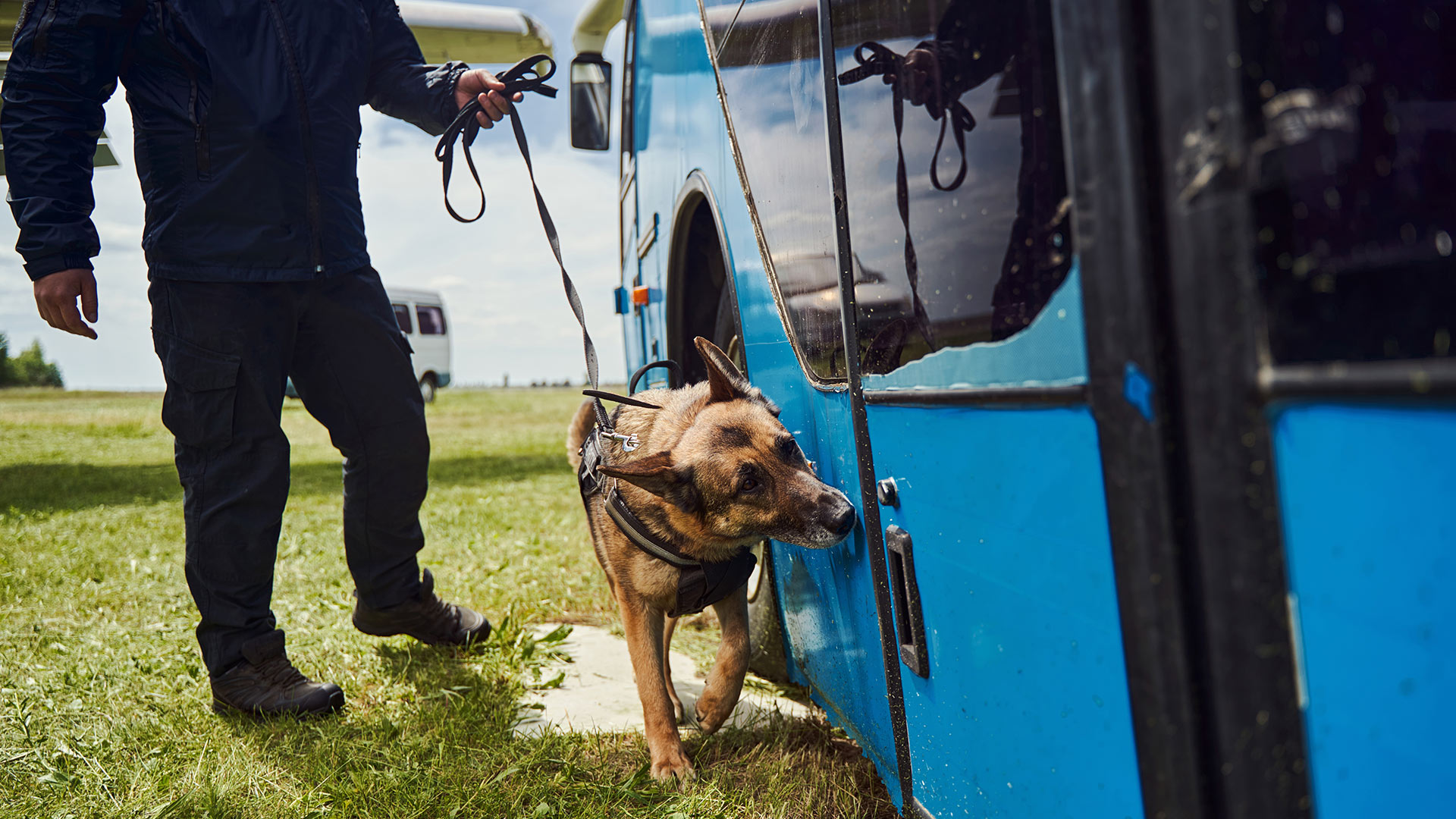
In the wake of last year’s cannabis legalization in Missouri, law enforcement agencies in the state are reporting that many drug-sniffing police dogs trained to detect marijuana may face an early retirement.

Police say the dogs, due to their sensitivity to the odor of cannabis, can compromise investigations and hinder successful drug prosecutions. According to police officials, dogs that are trained to detect marijuana are often unable to separate scents for their handlers, making it difficult to distinguish between a single joint and an unlawful quantity of marijuana or other illicit drugs nearby.

Sergeant William Brown of the Kansas City Police Department explained the legal issues that can arise from this situation.

“A defense attorney is going to say, ‘Your dog hit on marijuana’ if there’s even one joint, no matter if there was cocaine or whatever else alongside it.”

To address the problem, many agencies are choosing to retire dogs and training new ones exclusively for identifying illicit drugs.

As early as 2018, the Boone County Sheriff’s Department anticipated the impact of legalizing cannabis on its K-9 units and stopped cannabis training for its dogs.

“We had the forethought to stop training marijuana on dogs several years back,” Captain Brian Leer told the Columbia Missourian.

The department also took measures to reduce the cost of purchasing and training new canines, as procuring dogs for police work is typically expensive — ranging from $9,000 to $10,000 each, not including training costs.

The Boone County Sheriff’s K-9 program managed to circumvent this problem by offering an affordable eight-week training course costing $4,000 per dog.

This significantly reduced expense has attracted law enforcement agencies, including the Columbia Police Department, which is currently replacing two dogs using a grant from the Missouri Department of Public Safety called the Canine Replacement Grant.

As part of the training course, handlers hide small baggies containing various substances and have the dog locate them, gradually progressing to “blind searches” where neither the dog nor the handler knows the location of the substances. Dogs can even learn to detect drugs in vacuum-sealed bags and eventually advance to more challenging tasks like scent-tracking and aggression training.

However, some agencies are still hanging on to their marijuana dogs while awaiting grant money to purchase new dogs.

“Some agencies are waiting to get in on the DPS grant, and they’re still using their dogs that are marijuana-trained because there’s no case law yet,” Boone County Officer and K-9 trainer Chris Smith said.

Certain law enforcement agencies, such as the St. Louis Metropolitan Police Department, have determined that their dogs can continue to serve without risking illegal searches. Some of their K-9s possess skills in multiple areas, such as bomb detection and suspect tracking.

The interpretation of Amendment 3, which governs legal cannabis in Missouri, is still in its early stages. Consequently, some handlers are opting to wait for court interpretations before adjusting their procedures. According to Sergeant Charles Wall of the St. Louis Metropolitan Police Department, until there is clear case law indicating otherwise, they believe that the odor of marijuana can still establish probable cause for searches in specific situations.

“The fact that we say we can’t use the dog to develop probable cause — there’s not case law yet where the courts have actually said ‘you can’t do this,’” Wall said.

“It is our interpretation of Amendment 3 that the odor of marijuana may still establish cause to search in certain situations.”

Legal expert Dan Viets, an attorney and Missouri coordinator for the National Organization for the Reform of Marijuana Laws, believes that the use of marijuana dogs is already meaningless from a legal standpoint. Viets argued that searches by state law enforcement based solely on marijuana, regardless of probable cause, will be deemed illegitimate by the courts.

“If they’ve obtained specific evidence to pursue a search on what they suspect to be illegal marijuana, they don’t need a dog,” Viets said.

As for retired K-9s, they often remain with their handlers’ families. For instance, Nero, a 6-year-old Belgian Malinois from the Columbia Police Department, is retiring but will continue to live with his handler, Officer Eric Wiegman.

“My kids wouldn’t know what to do without him at home,” Wiegman said.

Categories: Policy Tags: cannabis legalization, 3rd Amendment, training, Missouri, marijuana, retirement, legal, police dogs, canines, drug-sniffing dogs

Primary Sidebar

Recent Articles

  • Accentuating safety for first responders
  • A surprise sting operation
  • Frankpledge to forensics: A brief history of law enforcement
  • NLEOMF announces July 2026 Officer of the Month
  • Police leadership development
  • Can they do it? Will they do it?
  • More than just a red shirt and a Sharpie
  • The sixth sense in policing
  • A unique approach to salvaging a troubled employee
  • Train them to ask why

Footer

Our Mission
To serve as a trusted voice of the nation’s law enforcement community, providing informative, entertaining and inspiring content on interesting and engaging topics affecting peace officers today.

Contact us: info@apbweb.com | (800) 234-0056.

  • Facebook
  • Instagram
  • Twitter

Categories

  • Editor’s Picks
  • On the Job
  • Labor
  • Tech
  • Training
  • Policy
  • Health/Wellness
  • Community
  • Offbeat
  • We Remember
  • Jobs and Careers
  • Events

Editor’s Picks

No two days are ever the same

No two days are ever the same

July 24, 2026

Training dipshittery, Part 2

Training dipshittery, Part 2

July 23, 2026

Tactical medicine for cops

Tactical medicine for cops

July 18, 2026

Why good cops quit

Why good cops quit

July 14, 2026

Policies | Consent Preferences | Copyright © 2026 APB Media, LLC | Website design, development and maintenance by 911MEDIA

Open

Subscribe

Close

Receive the latest news and updates from American Police Beat directly to your inbox!

  • This field is for validation purposes and should be left unchanged.