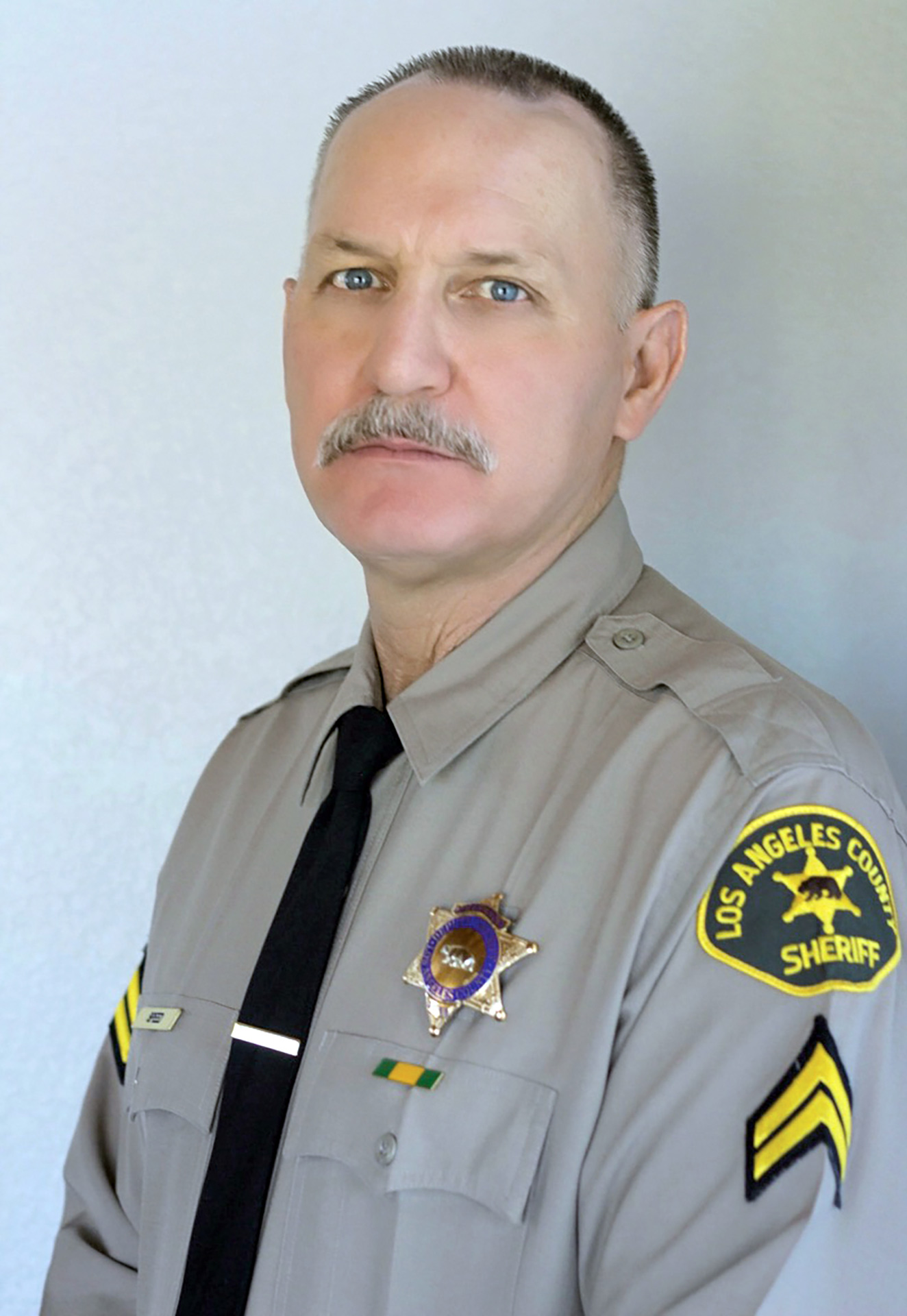
When Los Angeles County Sheriff’s Department Detective Mitch Speed was diagnosed with stage 4 cancer in March 2016, he told his wife, Vickie, “We will not ask why. We will never say, ‘Why us?’ We will always say, ‘Why not us?’ And we will ask God to use us.”
Mitch went off work on May 13, after receiving the initial diagnosis. In late 2016, the county picked it up as a workers’ comp case due to exposure. After going into kidney failure, Mitch started chemo and felt stronger by December 2016. He then dove into doing the thing he loved best: helping other people.
Though he was no longer able to serve as a volunteer football coach at his alma mater, Rosamond High School, Mitch continued to meet with several of the team members he was particularly close to. He had been raised by a single mother, as had some of the boys he coached. He served as a father figure and mentor to them.
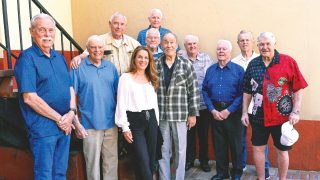
Mitch was also part of a small group of retired businessmen, deputies and firefighters, self-named Iron Sharpens Iron. The group worked with at-risk youth who couldn’t attend public schools because of behavioral issues. Instead, the men helped to connect these young people with the Opportunities for Learning network of charter high schools in Southern California. On the days when Mitch was feeling well, he was front and center speaking to the youth.
From a practical standpoint, there were not enough hours in the week, nor could Mitch impact young people in a significant way on a one-on-one basis. That’s when an idea occurred to him. He’d been using social media to communicate with others on an individual basis. Why not use it to connect with people of all ages who were hungry for encouragement?
Mitch had been writing creatively since high school. It was his means of dealing with feelings and emotions. He had plenty of material available to post daily, and that’s exactly what he did. He soon had a huge following, which opened the door to the big-ticket item on his bucket list: a book.
Throughout the summer months, Mitch was fully engaged with the book project, spending hours each day at his computer while also going to City of Hope Antelope Valley for routine scans and MRIs to monitor the cancer’s progression. Yet he still had time for his daily social media posts, mentoring others, visiting the Lancaster Station twice each week, and helping to lead praise and worship each Sunday at his church.
Mitch’s book, titled Mitch Speed: The Man Behind the Badge, was released in October 2017. It was a collection of stories Mitch had penned about his real-life experiences and the values that had made him who he was. Also included in the book were more than a dozen poems he’d written throughout the years. Some were humorous, some were filled with wisdom, and some spoke vital truth directly to matters of the human heart. The book was an immediate success, selling over a thousand copies in the first run. It has since been revised and reprinted multiple times (now available on Amazon.com).
Though Mitch’s cancer progressed, he insisted that Vickie go to work each day and live life as normally as possible.
Vickie recalls of that time in their journey, “Mitch’s health care team had encouraged him to walk. However, I’m not sure his chosen method was exactly what they’d intended. In just a short time he was joined each day at a nearby track field by anywhere from two to 20 people — some, deputies in uniform — who were there for fellowship and to hear Mitch’s words of faith and encouragement. As the group grew and gained public attention, they chose for themselves the name Speed Walkers.”
Although Mitch remained strong and vibrant in spirit, the same was not true of his body. Vickie knew she had to be strong for their family. She became Mitch’s protector as she took responsibility for their finances, their home, making decisions and dealing with treatment options, departmental benefits, workers’ comp issues, attorneys and anything that concerned their son, Brodie, who was then in the master’s program at the University of San Francisco’s satellite campus in Anaheim.
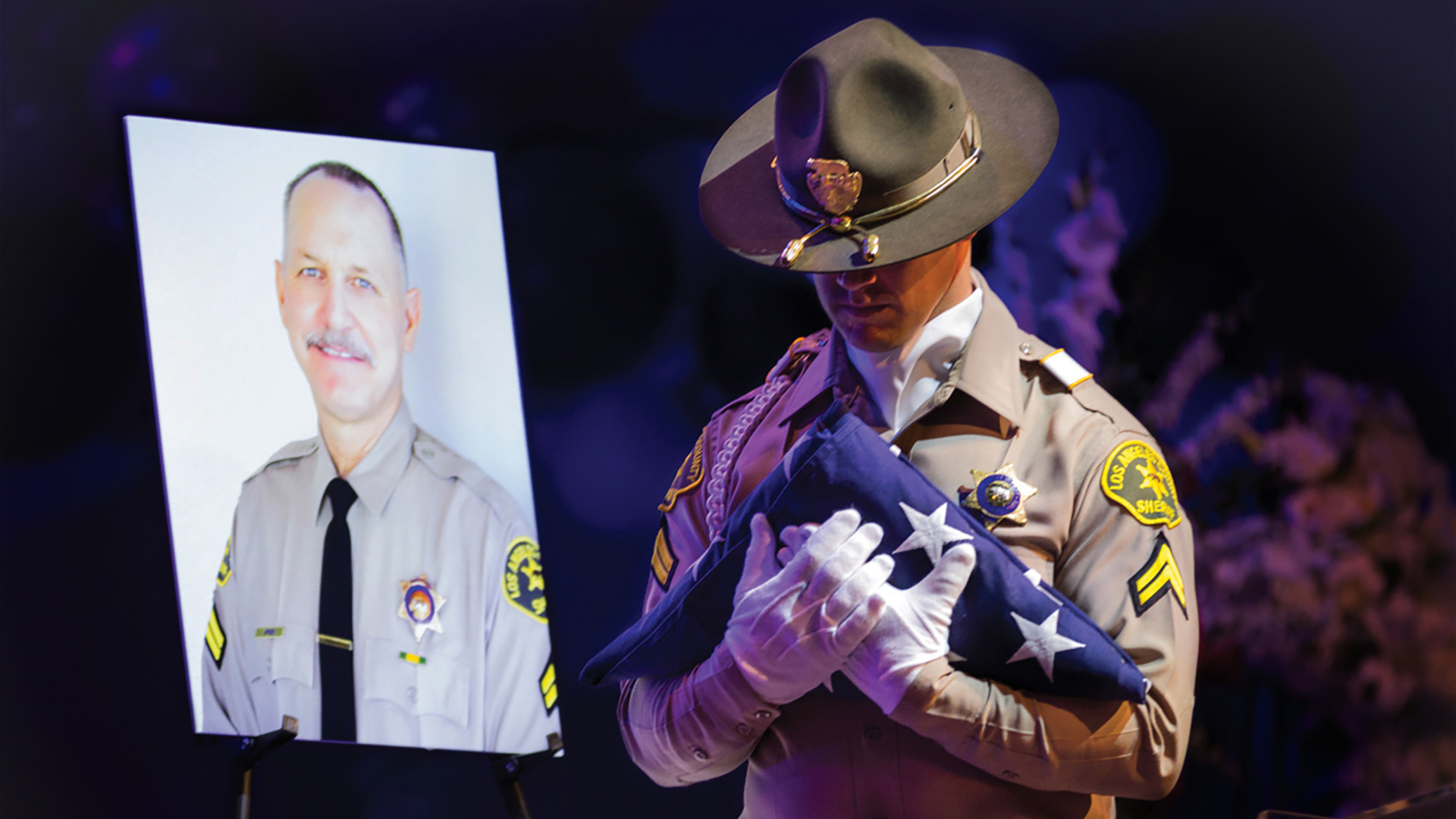
In the face of fear, grief, confusion and the overwhelming disruption of their lives, Vickie fought alongside Mitch for 26 months. Then, on July 7, 2018, with Vickie and Brodie at his side, Mitch departed this life.
A world turned upside down
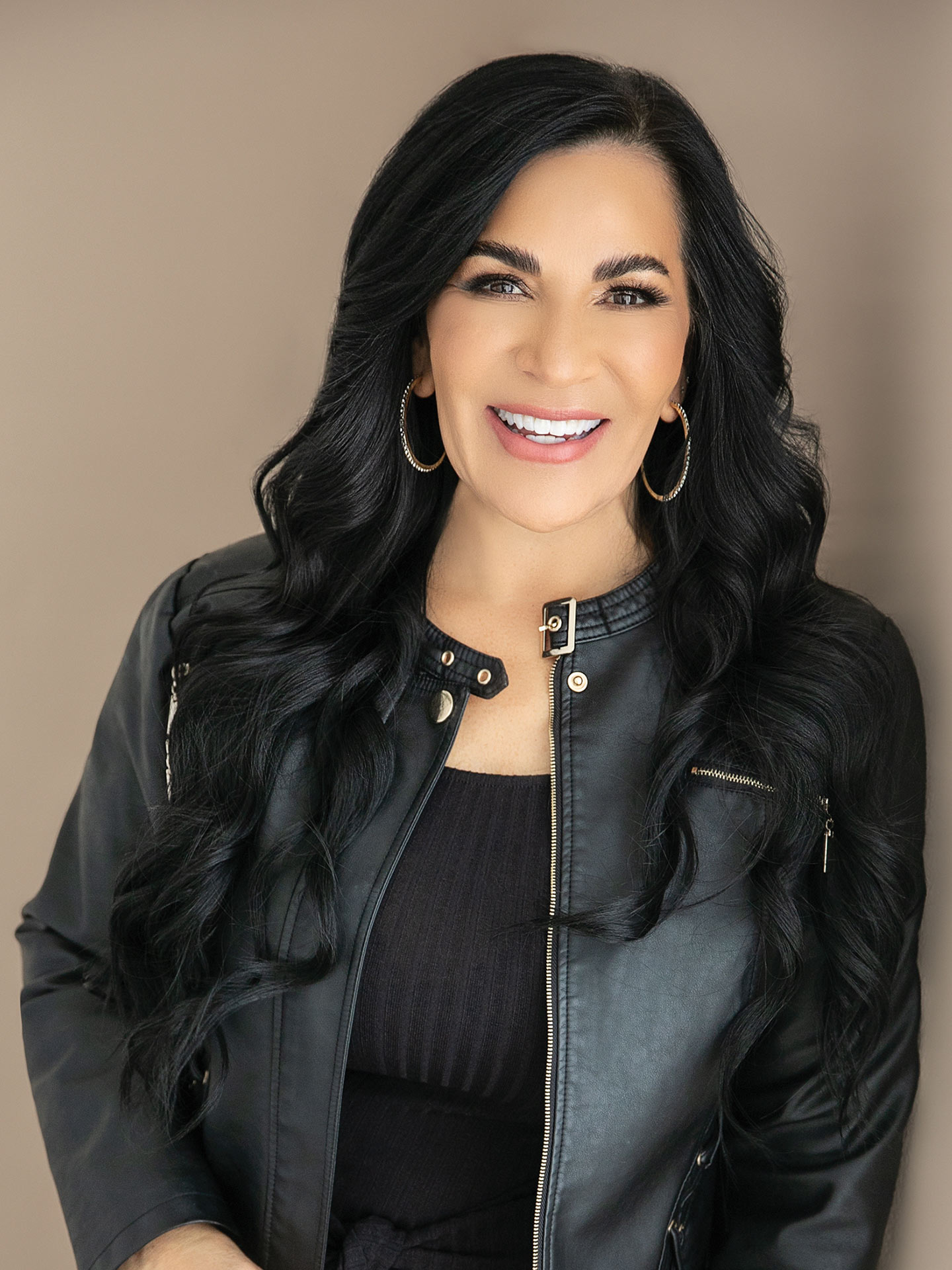
Vickie says of the initial days and months following the loss of her husband, “I don’t believe anyone is ever prepared to lose a spouse, no matter how that loss occurs. I never thought in a million years that at a young age I would be without my husband. I struggled to wrap my mind around the fact that he was gone — he’d gone home — and I was left in a world turned upside down.”
One of Vickie’s greatest comforts during Mitch’s two-year battle with cancer and then following his passing was the overwhelming outpouring of love and support from Mitch’s brothers and sisters in blue. When Mitch was undergoing regular chemo treatments, he and Vickie were greeted by dozens of uniformed deputies each time they entered City of Hope. When Vickie had to attend Brodie’s graduation ceremony alone because Mitch was unable to leave the house, a group of deputies stayed with him and watched the ceremony online. And within an hour after Vickie announced Mitch’s passing, the street they lived on was lined with both marked and unmarked department vehicles, while their uniformed drivers stood at attention along the sidewalk in front of the house.
“I don’t remember a lot about the initial weeks and months following Mitch’s passing,” Vickie says. “What was blatantly real at the time was a constant sense of being in a proverbial fog. It was probably a year before I had any short-term memory and felt semi-human again.”
As Vickie navigated the uncharted waters of establishing a “new normal” for her life, she found great peace in the ongoing support demonstrated by members of Mitch’s law enforcement family. She remembers thinking, Someday I’m going to find a way to give back to these amazing men and women.
Finding purpose
Shortly before Mitch passed, he’d said something to Vickie that she couldn’t let go of. Those words kept coming back to her: “Vickie, you’ve got to let your purpose be bigger than your pain.” That’s when an idea started to take form through a series of questions that each began with two simple words: what if?
- What if officers with cancer could be diagnosed at stage 1 instead of stage 4?
- What if spouses and families had the practical information that they needed to navigate departmental, workers’ comp and legal issues?
- What if there was a way to connect law enforcement officers with other law enforcement officers dealing with cancer?
- What if there was direction available for second opinions and treatment options?
- What if I could bring education, awareness and screenings to our officers?
Vickie was not a novice when it came to big thinking. She’d spent years as an accountant and project manager in the construction industry, overseeing $10–20 million public works projects, including the building of municipal water systems, schools, prisons and courthouses. Why not establish a nonprofit organization dedicated to helping those who put their lives on the line daily to serve and protect members of these very same communities?
On March 28, 2023 — what would have been Mitch Speed’s 58th birthday — Vickie took a bold step. She announced the launch of Blue Cancer Connect, a nonprofit, 501(c)(3) approved charitable organization whose mission is to bring awareness, education, screenings and early diagnosis to our officers nationwide. One of the ways Vickie accomplishes this mission is by conducting onsite briefings and training sessions throughout the nation.
The organization’s earliest partnership was with City of Hope, where Mitch had received exceptional care throughout his journey. New York Life, Dream Foundation, Camp Kesem and the Law Office of Lewis, Marenstein, Wicke, Sherwin & Lee have also lent their support.
“When Mitch told me that I had to let my purpose be bigger than my pain, I couldn’t see my future. I was in too much pain,” Vickie says. “But now I realize the incredible gift my husband gave me: the ability to bring hope to the lives of others throughout our state and nation who are dealing with cancer as he once did. Because in this family, no one fights alone.”
For more information or to request training, visit BlueCancerConnect.org.
As seen in the January 2024 issue of American Police Beat magazine.
Don’t miss out on another issue today! Click below: