


• Skip to primary navigation
  • Skip to main content
  • Skip to primary sidebar
  • Skip to footer
  • Home
  • About
  • The Magazine
  • Events
  • Partners
  • Products
  • Contact
  • Jobs and Careers
  • Advertise
  • Facebook
  • Instagram
  • Twitter
  • Subscribe
American Police Beat

American Police Beat Magazine

Law Enforcement Publication

  • Home
  • Leadership
    • Every great sports team has a playbook
      The new chief and the old salt
      The hidden costs of micromanagement
      Police leadership development
      Can they do it? Will they do it?
  • Topics
    • Leadership
      • Every great sports team has a playbook
        The new chief and the old salt
        The hidden costs of micromanagement
        Police leadership development
        Can they do it? Will they do it?
    • Editor’s Picks
      • More than just a red shirt and a Sharpie
        The sixth sense in policing
        Train them to ask why
        The shift happens long before the resignation letter
        No two days are ever the same
    • On the Job
      • LAPD puts brakes on bike takeover
        Frankpledge to forensics: A brief history of law enforcement
        The sixth sense in policing
        From warrior to peacekeeper
        Hats off to a new uniform look
    • Labor
      • The shift happens long before the resignation letter
        Facing the oral board
        Why good cops quit
        Succession planning
        Why more staff won’t fix your operational slowdowns
    • Tech
      • Accentuating safety for first responders
        Take Me Home program offers effective tool for police and families
        Get the most out of simulation training
        The virtual beat
        Training with an AI partner?
    • Training
      • More than just a red shirt and a Sharpie
        Train them to ask why
        Nobody is coming to do it for you
        Precision, adaptability and response: The need for LPVOs in equipping...
        Training dipshittery, Part 2
    • Policy
      • Policy should guide, not handcuff
        Out of chaos comes opportunity
        Massachusetts law establishes fund to care for retired K-9s
        Portlanders will not vote on diverting climate funds for police...
        Surviving internal affairs investigations
    • Health/Wellness
      • The call you handled right can still hurt you
        The radio says you’re clear; your body disagrees
        The armor behind the badge
        The hidden weight: Suffering in silence as a police officer
        Heart attack on duty
    • Community
      • Inspiring noteworthy community outreach
        A happier homecoming
        National Night Out 2026
        Pittsburgh mounted patrol officer helps inner-city kids saddle up
        Wyoming girl on a mission to collect “hero patches”
    • Offbeat
      • A surprise sting operation
        Could cadaver otters help close cold cases?
        Police chief catches cat in the act
        “Teenage Mutant Ninja Deer” rescued
        An unexpected burglar
    • We Remember
      • Honoring the Fallen Heroes of 9-11
        Steel Across America
        The first officers on scene on September 11
        Protecting America with the USA PATRIOT Act
        Distant cousins connect to honor fallen family member 110 years after...
    • HOT Mail
      • The War on Cops Continues Unabated
  • On the Job
    • LAPD puts brakes on bike takeover
      Frankpledge to forensics: A brief history of law enforcement
      The sixth sense in policing
      From warrior to peacekeeper
      Hats off to a new uniform look
  • Labor
    • The shift happens long before the resignation letter
      Facing the oral board
      Why good cops quit
      Succession planning
      Why more staff won’t fix your operational slowdowns
  • Tech
    • Accentuating safety for first responders
      Take Me Home program offers effective tool for police and families
      Get the most out of simulation training
      The virtual beat
      Training with an AI partner?
  • Training
    • More than just a red shirt and a Sharpie
      Train them to ask why
      Nobody is coming to do it for you
      Precision, adaptability and response: The need for LPVOs in equipping...
      Training dipshittery, Part 2
  • Policy
    • Policy should guide, not handcuff
      Out of chaos comes opportunity
      Massachusetts law establishes fund to care for retired K-9s
      Portlanders will not vote on diverting climate funds for police...
      Surviving internal affairs investigations
  • Health/Wellness
    • The call you handled right can still hurt you
      The radio says you’re clear; your body disagrees
      The armor behind the badge
      The hidden weight: Suffering in silence as a police officer
      Heart attack on duty
  • Community
    • Inspiring noteworthy community outreach
      A happier homecoming
      National Night Out 2026
      Pittsburgh mounted patrol officer helps inner-city kids saddle up
      Wyoming girl on a mission to collect “hero patches”
  • Offbeat
    • A surprise sting operation
      Could cadaver otters help close cold cases?
      Police chief catches cat in the act
      “Teenage Mutant Ninja Deer” rescued
      An unexpected burglar
  • We Remember
    • Honoring the Fallen Heroes of 9-11
      Steel Across America
      The first officers on scene on September 11
      Protecting America with the USA PATRIOT Act
      Distant cousins connect to honor fallen family member 110 years after...
  • HOT Mail
    • The War on Cops Continues Unabated
  • About
  • The Magazine
  • Events
  • Partners
  • Products
  • Contact
  • Jobs and Careers
  • Advertise
  • Subscribe
Search

Training

Don’t be a PowerPoint Grim Reaper

How to create presentations that won’t suck the life out of your audience

Todd Fletcher Published January 24, 2024 @ 12:00 pm PST

iStock.com/TadejZupancic
iStock.com/Nataliia Nesterenko

We’ve all been there: You walk into a classroom and the instructor begins class by giving everyone a handout of their PowerPoint presentation. They greet the class and fire up the machine. The first thing they do is introduce themselves using a PowerPoint slide with bullet points outlining their credentials. Next, they go through a dozen slides with more bullet points showing all the performance objectives for the class. By this time, you’re already fighting extreme gravitational pull on your eyelids and begging for the first break so you can mainline some high-octane caffeinated beverage.

Whether you’re an instructor or supervisor or you want to become an instructor or supervisor, the truth is PowerPoint has become a necessary evil. Whether it’s a use-of-force class or a budget presentation, we need to use PowerPoint to get our point across. The problem is that most instructors suck as much at making PowerPoint presentations as PowerPoint sucks the life out of our audiences. It’s time to fix this mess and give our people the better presentations and classes they deserve.

If your PowerPoint is boring, hard to understand and difficult to see, your audience can be assured the rest of your presentation is going to be just as bad.
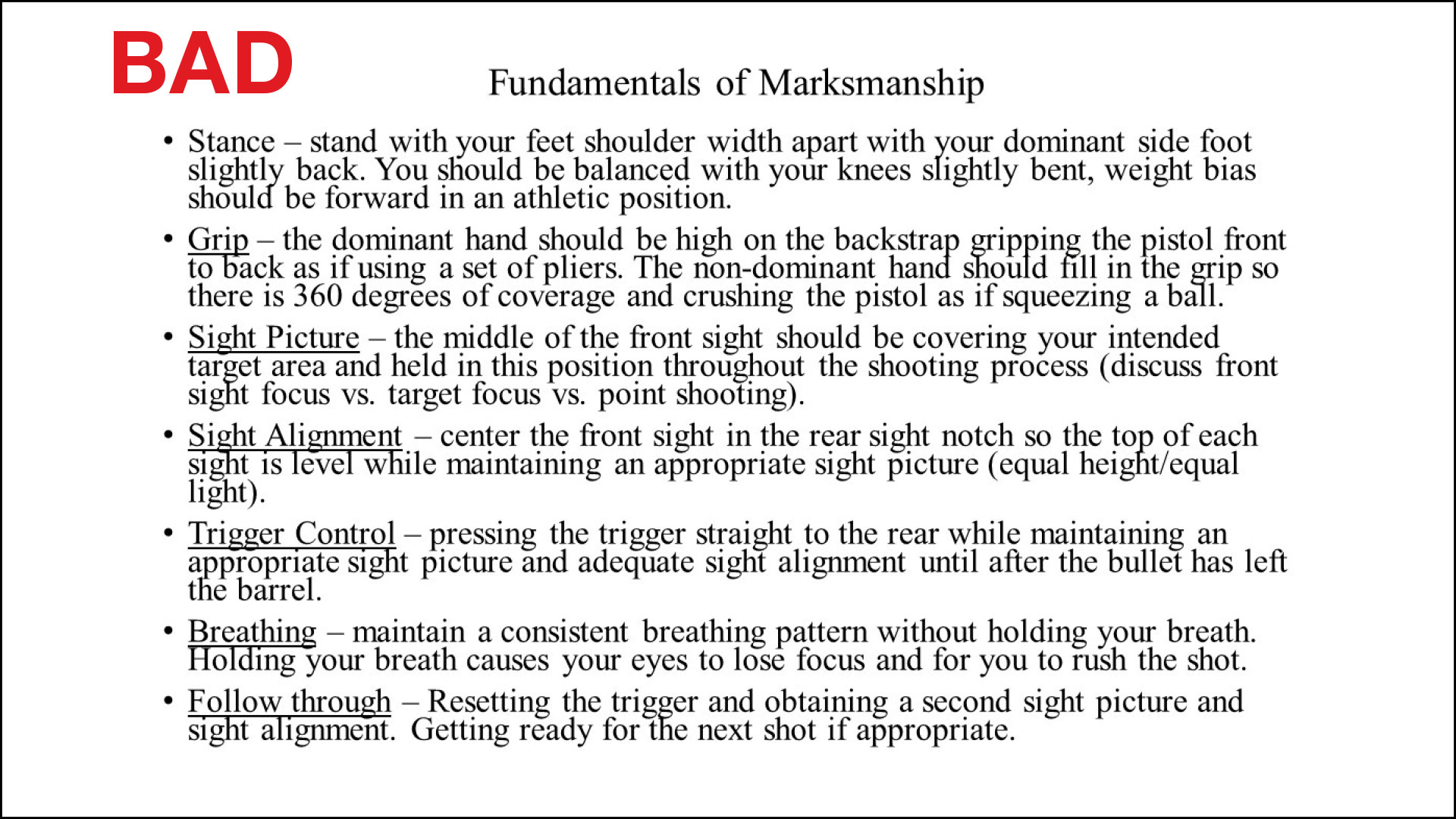
If you don’t recognize death by PowerPoint, here is an example. Times New Roman, endless bullet points with too many words and 24-point text. Snoozefest. (Combative Firearms Training, LLC)

Death by PowerPoint

Antonio Zarzoza, co-owner of Instructor Z & Associates (instructor-z.com), is the leading PowerPoint instructional design trainer in law enforcement. In addition to being a sworn police officer, he conducts classes on how to maximize the value of PowerPoint in law enforcement presentations. Whether it’s firearms, a budget presentation, crisis intervention training, use of force or a first aid class, Antonio has helped thousands of law enforcement trainers and supervisors improve their PowerPoint game.

Antonio believes death by PowerPoint has evolved to the point where instructors are killing their own presentations and sending students into a PowerPoint-induced coma. Slides with endless lists and bullet points are boring to everyone in class. He points out that when you start working with PowerPoint to build a slide deck, the default style includes a title and bullet points. By doing this, PowerPoint is setting you up to suck.

Instead, Antonio says we have two paths to choose from when we’re building our PowerPoint presentation: We can either teach by default or teach by design. If we teach using the default PowerPoint settings, we will continue down the executioner’s row of PowerPoint casualties. If we teach by design, we can use PowerPoint to influence our audience by creating short but intense emotional experiences to help deliver our message. This is done using movement, contrasting colors and sound to our advantage. An easy way to accomplish this is to use a morph transition in a carousel of pictures to create movement. 

There are an endless number of ways to accomplish this, limited only by the imagination of the presenter. A good place to start is with a catchy title to hook people into your class and message. In addition, the opening slide should engage the audience, catch their attention and trigger their emotions. After you have their attention, don’t lose it with a series of slides that make them beg for mercy or presentation skills that are dull and monotonous.
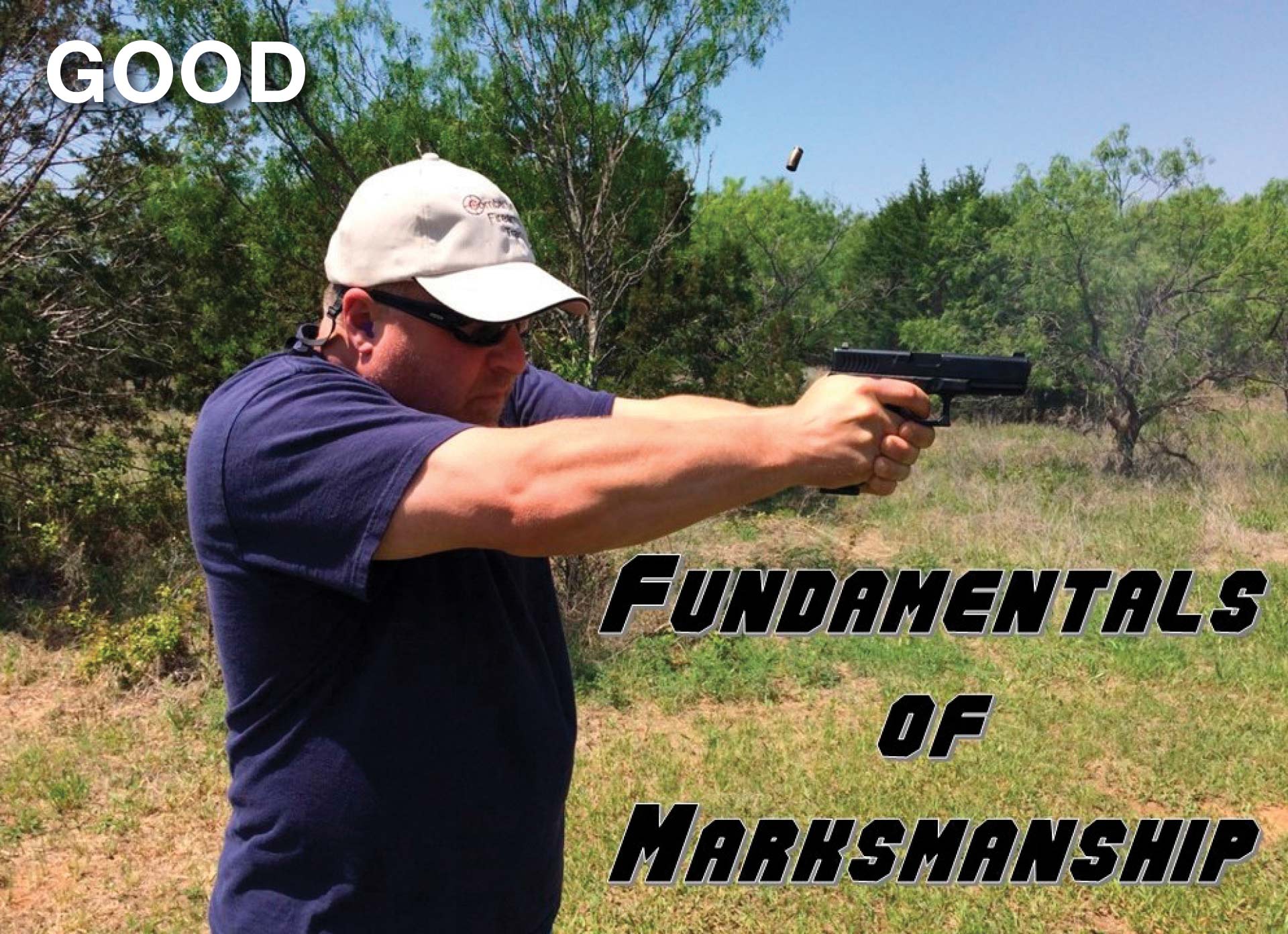
Pictures are superior to text. This slide limits the text and provides the audience with something to look at while the instructor addresses each topic. (Combative Firearms Training, LLC)

Master the content

A surefire way to lose an audience is to focus the presentation on the PowerPoint and not the instructor. Let’s start with the worst first: the instructor who reads the slides to the audience. This is insulting to everyone in the audience. It’s basically like saying they’re too dumb to read, so the ultra-smart instructor is going to do it for them. The result is a totally disconnected instructor and an audience that feels like the presentation is a colossal waste of time. The purpose of PowerPoint is to support the presentation, not to be the presentation.

Dan Fraser, a retired police officer and the author of Kickass Presentations: Wow Audiences with PowerPoint Slides that Click, Humor that’s Quick, and Messages that Stick (kickasspresentationsbook.com), says, “People are there to see you and to hear what you have to say. This means that you must master your content and have your message dialed in. It also means that the audience should be primarily focused on you — your facial expressions, body language, hand gestures, eye contact, the words you say and how you say them.”

Remember what I said about giving everyone a handout of each bullet point and PowerPoint slide? Every time I’m in a class with an instructor who does this, it takes every bit of self-control I possess to not walk out. Seriously, if you are giving me your class on a handout, why do I need to waste my time in the classroom? I’m pretty sure I can read through your handout of slides faster than you can read them off the screen to me. And you’re welcome — I just saved you from eight hours of embarrassment!

Part of mastering your content is mastering the timing and progress of your PowerPoint presentation. When using video or transitioning between topics, insert some inconspicuous cue prompts in the slide preceding your video or topic transition. This helps avoid a surprise or rough spot in the delivery. These cues can be a camera or play button as a reminder about the upcoming video, or it can be some other sort of symbol to indicate a topic change. This will help keep your presentation smooth and seamless as if you’ve done it a thousand times.
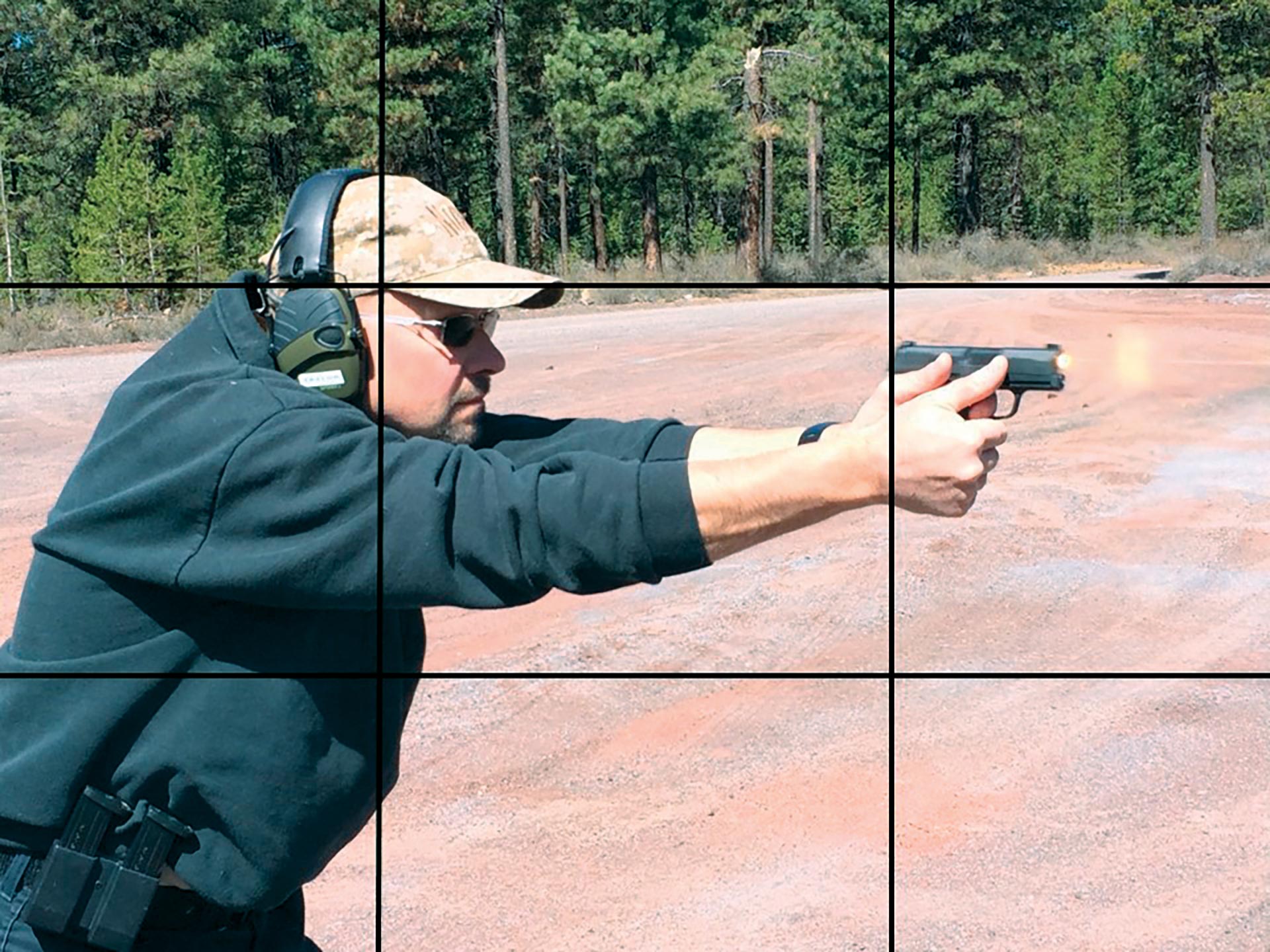
By following the rule of thirds, you can create visual flow and energy with your pictures, making your presentation more appealing and attention-grabbing. (Combative Firearms Training, LLC)

Avoiding the reaper

There are several helpful guidelines to break you out of the PowerPoint slump. First, remember slides are free. PowerPoint doesn’t charge an extra fee if you use additional slides. Instead of dumping a bunch of words on one slide, keep it down to one message per slide. If you insist on using bullet points on a slide, use less than six bullets per slide. Too many bullet points and words make the slide hard to read, moving the focus of the presentation to the screen and not the presenter. 

On this note, text should be no smaller than 36-point font. And for crying out loud, stop using Times New Roman! I swear, if I’m in your class and you use Times New Roman, I will mock you incessantly, take photos of your slides and share them on social media. This may sound extreme, but it’s the only way I’ll stay awake while you’re escorting me to the PowerPoint gallows.

Instead of relying on endless text and bullet points, Fraser believes in the superiority of pictures over text. He says research going back to the 1970s shows memory is more robust when people see images compared to just words. Advertisers know this, which is why billboards have pictures on them and only a few words. The image and a few select words stick with your audience, while slides filled with words will elicit yawns of disapproval.

When using pictures, get the highest-quality images possible. There are several websites that offer free stock images, but if you can’t find just the right one, take your own photos. In Kickass Presentations, Fraser says if you decide to take your own photographs, do it using the rule of thirds, where an image is divided into thirds horizontally and vertically. The subject of the image is placed at the intersection of the dividing lines or along one of the lines to create tension, energy and more interesting compositions. According to Dan, professional photographers and designers eat, sleep and breathe the rule of thirds.

Whether you’re teaching a class, making a proposal to command staff or presenting a budget to the city council, the quality of your presentation is a direct reflection on you. If your PowerPoint is boring, hard to understand and difficult to see, your audience can be assured the rest of your presentation is going to be just as bad. On the other hand, if your PowerPoint elicits emotion and grabs their attention, your audience is primed to listen and learn. A professional presentation shows the audience that you respect the privilege of their time and attention.

Todd Fletcher

Todd Fletcher

Todd Fletcher is a retired sergeant from central Oregon with over 30 years of law enforcement experience. He presents firearms training, instructor certification and instructor development classes nationwide. Todd has presented at multiple regional, national and international conferences, including multiple ILEETA conferences and IALEFI events. He owns Combative Firearms Training, LLC, providing firearms training, handgun and patrol rifle instructor certification, and instructor development classes to law enforcement, military and private security. He can be contacted at Todd@CombativeFirearms.com.

View articles by Todd Fletcher

As seen in the January 2024 issue of American Police Beat magazine.
Don’t miss out on another issue today! Click below:

SUBSCRIBE TODAY!

Categories: Training

Primary Sidebar

Recent Articles

  • Every great sports team has a playbook
  • NLEOMF announces August 2026 Officers of the Month
  • The call you handled right can still hurt you
  • The radio says you’re clear; your body disagrees
  • The armor behind the badge
  • The hidden weight: Suffering in silence as a police officer
  • Inspiring noteworthy community outreach
  • A happier homecoming
  • National Law Enforcement Museum receives $147,182 grant from Institute of Museum and Library Services
  • LAPD puts brakes on bike takeover

Footer

Our Mission
To serve as a trusted voice of the nation’s law enforcement community, providing informative, entertaining and inspiring content on interesting and engaging topics affecting peace officers today.

Contact us: info@apbweb.com | (800) 234-0056.

  • Facebook
  • Instagram
  • Twitter

Categories

  • Editor’s Picks
  • On the Job
  • Labor
  • Tech
  • Training
  • Policy
  • Health/Wellness
  • Community
  • Offbeat
  • We Remember
  • Jobs and Careers
  • Events

Editor’s Picks

More than just a red shirt and a Sharpie

More than just a red shirt and a Sharpie

August 22, 2026

The sixth sense in policing

The sixth sense in policing

August 21, 2026

Train them to ask why

Train them to ask why

August 19, 2026

The shift happens long before the resignation letter

The shift happens long before the resignation letter

August 16, 2026

Policies | Consent Preferences | Copyright © 2026 APB Media, LLC | Website design, development and maintenance by 911MEDIA

Open

Subscribe

Close

Receive the latest news and updates from American Police Beat directly to your inbox!

  • This field is for validation purposes and should be left unchanged.