• Skip to primary navigation
  • Skip to main content
  • Skip to primary sidebar
  • Skip to footer
  • Home
  • About
  • The Magazine
  • Events
  • Partners
  • Products
  • Contact
  • Jobs and Careers
  • Advertise
  • Facebook
  • Instagram
  • Twitter
  • Subscribe
American Police Beat

American Police Beat Magazine

Law Enforcement Publication

  • Home
  • Leadership
    • Understanding the boundaries of professional relationships with the...
      Why you should lead from 30,000 feet
      Public perception and trust
      When performance reviews are a waste of time
      Taking a page from Toyota’s playbook
  • Topics
    • Leadership
      • Understanding the boundaries of professional relationships with the...
        Why you should lead from 30,000 feet
        Public perception and trust
        When performance reviews are a waste of time
        Taking a page from Toyota’s playbook
    • Editor’s Picks
      • Liability challenges in contemporary policing
        When performance reviews are a waste of time
        Proactive wellness visits
        Taking a page from Toyota’s playbook
        Law enforcement’s missing weapon
    • On the Job
      • Villains and heroes in the Big Apple
        Right place, right time — again
        Some good news on crime
        Mom-to-be named Cop of the Year
        Fatherly instincts save boy from icy water
    • Labor
      • Cut the cops, save a dollar?
        Labor release under fire
        Who’s watching the watchmen?
        Crime and punishment (or lack thereof) in Seattle
        Labor leadership out in the field
    • Tech
      • New Mexico license plate readers save lives, lead to “precise...
        A modern field guide to understanding research in policing
        Gear that moves with you
        A new breed of cop car
        The future of patrol is here
    • Training
      • Navigating danger
        Critical thinking in police training
        Threshold neuroscience
        Integrated virtual reality training
        Hit the pause button
    • Policy
      • E-bikes spark public safety concerns
        Try racing without wheels
        Law enforcement accreditation: Why it matters
        Liability challenges in contemporary policing
        The war on drugs is evolving
    • Health/Wellness
      • Addressing stress, vicarious trauma and burnout
        Nervous system regulation
        The nature of the job
        Promoting organizational wellness
        Telling cops to get more sleep isn’t working
    • Community
      • Improving autism awareness
        Shop with a Cop
        Community engagement: What is it moving forward?
        Contradictory crossroads
        Back-to-school season brings out police support nationwide
    • Offbeat
      • An unexpected burglar
        Police humor only a cop would understand
        Not eggzactly a perfect heist
        Pizza … with a side of alligator?
        Wisconsin man charged with impersonating Border Patrol agent twice in...
    • We Remember
      • Forty heroes: United Airlines Flight 93
        The Pentagon
        A nation propelled to war, lives changed forever
        A Christmas loss
        York County ambush leaves three officers dead, others critically...
    • HOT Mail
      • The War on Cops Continues Unabated
  • On the Job
    • Villains and heroes in the Big Apple
      Right place, right time — again
      Some good news on crime
      Mom-to-be named Cop of the Year
      Fatherly instincts save boy from icy water
  • Labor
    • Cut the cops, save a dollar?
      Labor release under fire
      Who’s watching the watchmen?
      Crime and punishment (or lack thereof) in Seattle
      Labor leadership out in the field
  • Tech
    • New Mexico license plate readers save lives, lead to “precise...
      A modern field guide to understanding research in policing
      Gear that moves with you
      A new breed of cop car
      The future of patrol is here
  • Training
    • Navigating danger
      Critical thinking in police training
      Threshold neuroscience
      Integrated virtual reality training
      Hit the pause button
  • Policy
    • E-bikes spark public safety concerns
      Try racing without wheels
      Law enforcement accreditation: Why it matters
      Liability challenges in contemporary policing
      The war on drugs is evolving
  • Health/Wellness
    • Addressing stress, vicarious trauma and burnout
      Nervous system regulation
      The nature of the job
      Promoting organizational wellness
      Telling cops to get more sleep isn’t working
  • Community
    • Improving autism awareness
      Shop with a Cop
      Community engagement: What is it moving forward?
      Contradictory crossroads
      Back-to-school season brings out police support nationwide
  • Offbeat
    • An unexpected burglar
      Police humor only a cop would understand
      Not eggzactly a perfect heist
      Pizza … with a side of alligator?
      Wisconsin man charged with impersonating Border Patrol agent twice in...
  • We Remember
    • Forty heroes: United Airlines Flight 93
      The Pentagon
      A nation propelled to war, lives changed forever
      A Christmas loss
      York County ambush leaves three officers dead, others critically...
  • HOT Mail
    • The War on Cops Continues Unabated
  • About
  • The Magazine
  • Events
  • Partners
  • Products
  • Contact
  • Jobs and Careers
  • Advertise
  • Subscribe
Search

Health/Wellness

Chicago city council member advocates for alternative PTSD treatments to prevent suicides

APB Team Published November 12, 2022 @ 6:00 am PST

iStock.com/theasis

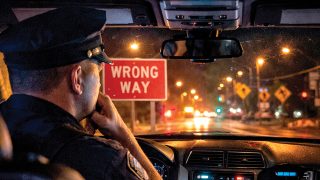
A Chicago city council member is calling for a joint hearing to discuss two alternative PTSD treatments that have been shown to help prevent suicides.

The only barrier could be the cost.

Alderman Anthony Napolitano, a former Chicago police officer and firefighter, pointed out that 18 CPD officers have committed suicide since 2019.

He believes that two alternative treatment strategies can cure post-traumatic stress disorder (PTSD) in officers and prevent suicides.

However, the treatments are costly and currently not covered by city insurance.

The resolution signed by Napolitano and two dozen colleagues urges three city council committees — Budget, Public Safety, and Health and Human Relations — to discuss the treatments in a joint hearing.

Napolitano said the treatments include ketamine and “stellate ganglion block” injections, which have proven useful in the treatment of U.S. military veterans with PTSD who are at risk of suicide.

The alderman said the stellate ganglion block injection was given to one of the commanding officers, who responded to the scene the night Officer Ella French was shot and killed, and her partner was critically wounded.

The officer paid for both neck injections out of pocket for a total of $2,000. Napolitano said the goal is to make the treatments affordable and covered by insurance.

“I personally know two people who have used it, both are Chicago police officers, both served in the military as well, and they both said it was a complete and absolute life-changing experience for them,” Napolitano told Fox News Digital.

According to the councilman’s resolution, stellate ganglion block treatment resets the “fight or flight response” to its pre-trauma state, and there are virtually zero side effects.

“A stellate ganglion block (sympathetic block) is an injection of local anesthetic into the front of the neck,” Cedars Sinai Medical Center’s website explained.

According to the website, the procedure works by numbing the stellate ganglion block nerves at the base of the neck that are responsible for the sympathetic nervous activity.

Napolitano said the treatment is remarkably effective at eliminating suicidal urges.

“In people who suffer post-traumatic stress from their jobs, these are the situations that cause a person to feel like they have, maybe, a suicidal urge or a feeling [of hopelessness that can lead to] suicide,” 41st Ward Alderman Napolitano told the Chicago Sun-Times.

Part of the problem is that the FDA has not yet certified the injections.

“It’s not completely FDA-certified yet, so your insurance is not going to acknowledge it unless we ask them to acknowledge it and have it as a treatment,” the alderperson noted.

Napolitano suggested another way to cover the costs.

“And [even if it’s covered], insurance is going to be red tape. Everything with bureaucracy attached to it is gonna be red tape. So, we’re seeing, can we roll this into our flex pay system? We’re still paying for it ourselves, but it comes out of flex pay, so you can pay for the treatment upfront, then pay that back by them taking it out of your check over the next 12 months.”

Mark Doyle, founder of the nonprofit Rags of Honor, has spent years with his organization raising awareness for stellate ganglion block treatments and raising money for them.

So far, the nonprofit has paid for 10 CPD officers to receive the treatments.

“We refer out for the ganglion block and ketamine all the time and see a tremendous response,” said Alexa James, the CEO of the National Alliance of Mental Illness Chicago.

“In some emergency departments in other parts of the country, they actually use ketamine treatment for folks who are coming in who are suicidal. It’s like a very fast-acting brain healer with very little side effects, if any. I’ve done ketamine treatment for my depression, actually. It’s incredible.”

James said that the city also needs to make sure its health insurance covers clinicians who offer mental health services.

“Current health insurance makes it challenging to seek mental health services consistently because, for example, the current health insurance will not reimburse couples counseling,” James said.

She also blamed workforce shortages for the lack of coverage.

“Because we have a workforce shortage to begin with, we receive calls consistently that it is difficult to find therapists within the network for police officers. The reimbursement rates … were actually decreased in the last several years. So clinicians are unable to afford to treat particular insurance coverage. One of those happens to be [the city’s] Blue Choice.”


Categories: Health/Wellness Tags: suicide, trauma, Anthony Napolitano, PTSD treatments, stellate ganglion block, ketamine, fight or flight, City Council, Chicago Police Department, mental health

Primary Sidebar

Recent Articles

  • New Mexico license plate readers save lives, lead to “precise policing”
  • Addressing stress, vicarious trauma and burnout
  • Understanding the boundaries of professional relationships with the boss
  • E-bikes spark public safety concerns
  • Improving autism awareness
  • Cut the cops, save a dollar?
  • Villains and heroes in the Big Apple
  • NLEOMF announces February 2026 Officers of the Month
  • Fallen law enforcement officers from across the country to be honored during 38th Annual Candlelight Vigil on May 13 in Washington, D.C.
  • Nervous system regulation

Footer

Our Mission
To serve as a trusted voice of the nation’s law enforcement community, providing informative, entertaining and inspiring content on interesting and engaging topics affecting peace officers today.

Contact us: info@apbweb.com | (800) 234-0056.

  • Facebook
  • Instagram
  • Twitter

Categories

  • Editor’s Picks
  • On the Job
  • Labor
  • Tech
  • Training
  • Policy
  • Health/Wellness
  • Community
  • Offbeat
  • We Remember
  • Jobs and Careers
  • Events

Editor’s Picks

Liability challenges in contemporary policing

Liability challenges in contemporary policing

February 27, 2026

When performance reviews are a waste of time

When performance reviews are a waste of time

February 26, 2026

Proactive wellness visits

Proactive wellness visits

February 25, 2026

Taking a page from Toyota’s playbook

Taking a page from Toyota’s playbook

February 23, 2026

Policies | Consent Preferences | Copyright © 2026 APB Media, LLC | Website design, development and maintenance by 911MEDIA

Open

Subscribe

Close

Receive the latest news and updates from American Police Beat directly to your inbox!

  • This field is for validation purposes and should be left unchanged.