• Skip to primary navigation
  • Skip to main content
  • Skip to primary sidebar
  • Skip to footer
  • Home
  • About
  • The Magazine
  • Events
  • Partners
  • Products
  • Contact
  • Jobs and Careers
  • Advertise
  • Facebook
  • Instagram
  • Twitter
  • Subscribe
American Police Beat

American Police Beat Magazine

Law Enforcement Publication

  • Home
  • Leadership
    • Why you should lead from 30,000 feet
      Public perception and trust
      When performance reviews are a waste of time
      Taking a page from Toyota’s playbook
      Tattoos can be self-inflicted handicaps
  • Topics
    • Leadership
      • Why you should lead from 30,000 feet
        Public perception and trust
        When performance reviews are a waste of time
        Taking a page from Toyota’s playbook
        Tattoos can be self-inflicted handicaps
    • Editor’s Picks
      • Liability challenges in contemporary policing
        When performance reviews are a waste of time
        Proactive wellness visits
        Taking a page from Toyota’s playbook
        Law enforcement’s missing weapon
    • On the Job
      • Right place, right time — again
        Some good news on crime
        Mom-to-be named Cop of the Year
        Fatherly instincts save boy from icy water
        More than a call for service
    • Labor
      • Labor release under fire
        Who’s watching the watchmen?
        Crime and punishment (or lack thereof) in Seattle
        Labor leadership out in the field
        When you are falsely accused
    • Tech
      • A modern field guide to understanding research in policing
        Gear that moves with you
        A new breed of cop car
        The future of patrol is here
        New York governor highlights $24 million investment to modernize law...
    • Training
      • Navigating danger
        Critical thinking in police training
        Threshold neuroscience
        Integrated virtual reality training
        Hit the pause button
    • Policy
      • Try racing without wheels
        Law enforcement accreditation: Why it matters
        Liability challenges in contemporary policing
        The war on drugs is evolving
        Drug policy and enforcement
    • Health/Wellness
      • Nervous system regulation
        The nature of the job
        Promoting organizational wellness
        Telling cops to get more sleep isn’t working
        Proactive wellness visits
    • Community
      • Shop with a Cop
        Community engagement: What is it moving forward?
        Contradictory crossroads
        Back-to-school season brings out police support nationwide
        A bold idea for reducing homelessness in America
    • Offbeat
      • An unexpected burglar
        Police humor only a cop would understand
        Not eggzactly a perfect heist
        Pizza … with a side of alligator?
        Wisconsin man charged with impersonating Border Patrol agent twice in...
    • We Remember
      • Forty heroes: United Airlines Flight 93
        The Pentagon
        A nation propelled to war, lives changed forever
        A Christmas loss
        York County ambush leaves three officers dead, others critically...
    • HOT Mail
      • The War on Cops Continues Unabated
  • On the Job
    • Right place, right time — again
      Some good news on crime
      Mom-to-be named Cop of the Year
      Fatherly instincts save boy from icy water
      More than a call for service
  • Labor
    • Labor release under fire
      Who’s watching the watchmen?
      Crime and punishment (or lack thereof) in Seattle
      Labor leadership out in the field
      When you are falsely accused
  • Tech
    • A modern field guide to understanding research in policing
      Gear that moves with you
      A new breed of cop car
      The future of patrol is here
      New York governor highlights $24 million investment to modernize law...
  • Training
    • Navigating danger
      Critical thinking in police training
      Threshold neuroscience
      Integrated virtual reality training
      Hit the pause button
  • Policy
    • Try racing without wheels
      Law enforcement accreditation: Why it matters
      Liability challenges in contemporary policing
      The war on drugs is evolving
      Drug policy and enforcement
  • Health/Wellness
    • Nervous system regulation
      The nature of the job
      Promoting organizational wellness
      Telling cops to get more sleep isn’t working
      Proactive wellness visits
  • Community
    • Shop with a Cop
      Community engagement: What is it moving forward?
      Contradictory crossroads
      Back-to-school season brings out police support nationwide
      A bold idea for reducing homelessness in America
  • Offbeat
    • An unexpected burglar
      Police humor only a cop would understand
      Not eggzactly a perfect heist
      Pizza … with a side of alligator?
      Wisconsin man charged with impersonating Border Patrol agent twice in...
  • We Remember
    • Forty heroes: United Airlines Flight 93
      The Pentagon
      A nation propelled to war, lives changed forever
      A Christmas loss
      York County ambush leaves three officers dead, others critically...
  • HOT Mail
    • The War on Cops Continues Unabated
  • About
  • The Magazine
  • Events
  • Partners
  • Products
  • Contact
  • Jobs and Careers
  • Advertise
  • Subscribe
Search

Editor's Picks

Pink patches, powerful impact

Pink Patch Project shows the humanity behind the badge

APB Team Published October 11, 2025 @ 6:00 am PDT

Ed Burns Photography

Editor’s note: This article is adapted with permission from the October 2025 issue of PORAC Law Enforcement News, the official publication of the Peace Officers Research Association of California.

October is Breast Cancer Awareness Month, a time dedicated to raising awareness, promoting early detection and supporting research toward a cure. According to the Breast Cancer Research Foundation, an estimated 316,950 women will be diagnosed with breast cancer in the U.S. this year, making it the most common cancer in American women.

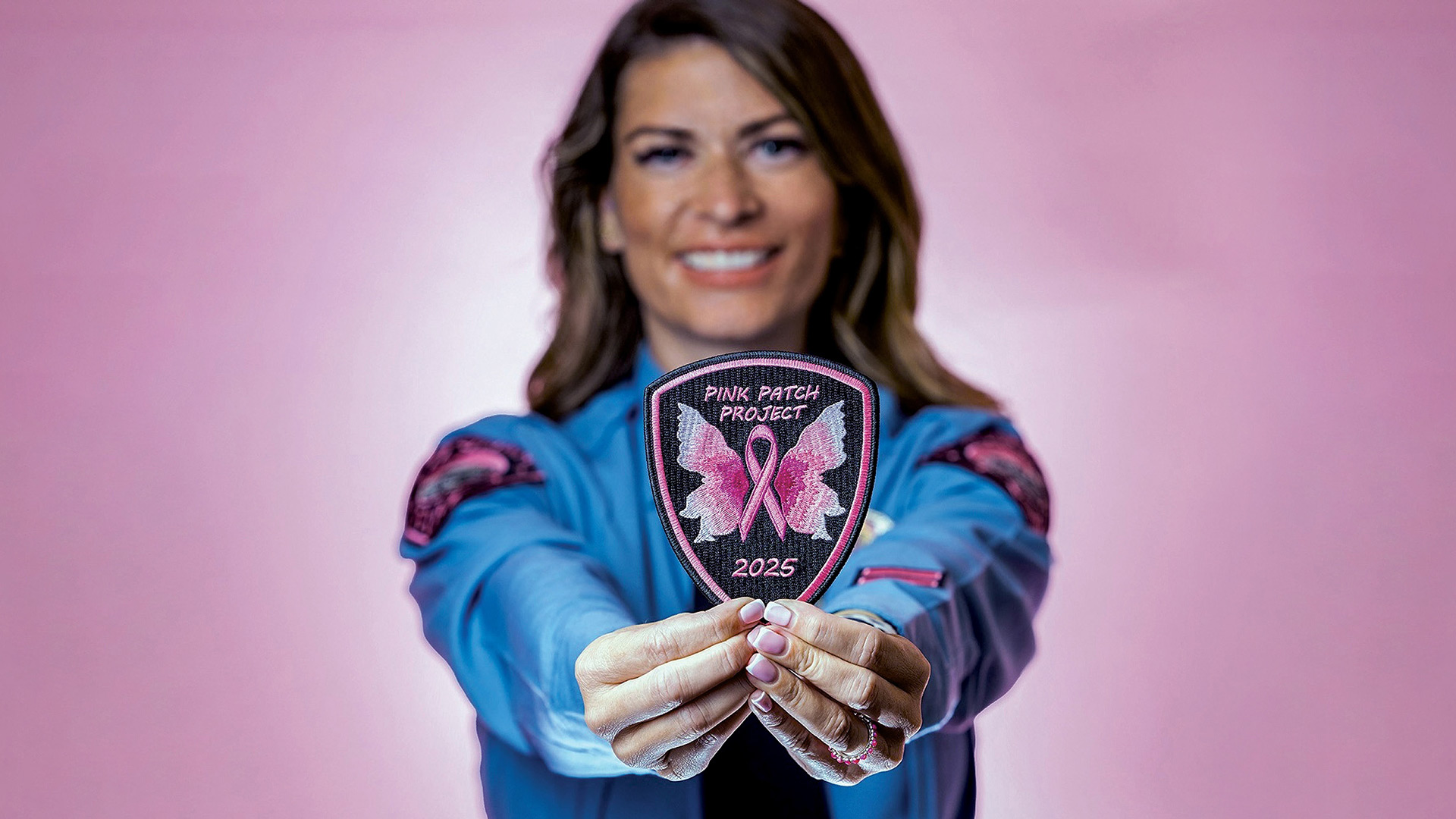
For the law enforcement community, this month represents a chance to unite through the Pink Patch Project (PPP) — a campaign that has become one of the most visible and inspiring efforts across the profession.

The PPP has grown to include more than 1,000 agencies across the nation and around the world, including police, sheriff’s, fire, EMS and other first responder organizations. “I believe that shows what a testament law enforcement has — that we are able to unite for a cause that raises not only awareness, but funds to support research and education,” says Amy McDaniel of the El Segundo, California, Police Department, who helps run the program. “The project humanizes law enforcement, shows our solidarity with those who are fighting and bridges law enforcement and the public through shared values and a collective effort for such a meaningful cause.”

In just over a decade, PPP has evolved from a handful of Southern California agencies wearing pink patches during October to a global symbol of law enforcement solidarity with breast cancer survivors and their families. The growth is striking not just in scale but in impact. To date, PPP has raised $2 million for City of Hope, one of the largest and most advanced cancer research and treatment organizations in the U.S.

“Raising $100,000 was a huge milestone for us — but to see that we have reached more than $2 million now is incredible!” McDaniel shares. “I believe that this just speaks to the power of community partnerships and the commitment that law enforcement has that we are able to touch so many lives. It is real people supporting real people. For many in law enforcement, this effort is personal. Officers, staff and their families have faced these battles firsthand, and every dollar raised is able to contribute to being that much closer to a cure. Reaching $2 million shows what is possible when agencies come together for a common cause. It is extremely inspiring!”


Amy McDaniel
Amy McDaniel

Supporting families directly

For McDaniel, some of the most meaningful moments come when PPP is able to help individual law enforcement families in need. In 2024, that mission took center stage when the project rallied behind Detective Jackie Sipaque of the Inglewood Police Department.

“Jackie was bravely battling breast cancer at the time and was the sole provider of her two young children. We all recognized the immense support she and her family needed,” McDaniel recalls.

To provide that support, PPP and the Inglewood Police Officers Association hosted a fundraiser at a local comedy and magic club in Hermosa Beach, with proceeds donated
directly to Jackie and her children. The effort expanded with help from community partners like Camp Xcel in South Gate, California, and Xcellent Nutrition Meal Prep, which hosted a workout session in her honor. 

“Thanks to the overwhelming generosity of the community, Jackie was able to focus on her treatment and recovery without the added burden of financial stress,” McDaniel says. “She is currently receiving active treatment and awaiting a future surgery. Despite her ongoing treatments, Jackie remains hopeful about returning to duty. She continues to actively participate in Pink Patch Project events, demonstrating her dedication to the cause and her deep gratitude for the love and generosity she has received. The PPP is proud to stand with Jackie and her family.”

Much of PPP’s success, McDaniel emphasizes, can be traced to the vision of South Gate Police Chief Darren Arakawa, who will retire later this year.

“Chief Arakawa understood early on that this project could be more than just a symbolic gesture — it could be a national movement,” McDaniel explains. “He has guided the project to what it is today, and I believe this speaks to how he is not only as a leader, but as a person. His leadership has been the backbone of the Pink Patch Project’s success and he will be truly missed as he retires.”


Amy McDaniel
Amy McDaniel

Looking ahead and getting involved

As the program looks to the future, McDaniel says the mission remains focused and deeply personal. “My goal has always been to continue to advocate for early detection,” McDaniel says. “One in eight women will be diagnosed with breast cancer. If law enforcement can continue to fundraise and raise awareness, we get that much closer to a cure. The goal has not been to just grow bigger, but to get deeper and more effective in the fight against breast cancer while continuing to strengthen the bond between law enforcement and the communities we serve.”

Participation continues to expand nationwide, with some states leading the way. “California is the leading state with the most agency participation for Pink Patches! Second up is the state of Massachusetts!” McDaniel notes. Each new agency that joins adds momentum and helps spread the message further.

She encourages agencies not yet involved to take the leap. “What are you waiting for!? Joining the Pink Patch Project gives your agency an opportunity to be a part of something bigger than the uniform. It is a powerful way to show your community that you stand for hope. The PPP starts conversations. It opens the door to talk about how we care about the same struggles and that we can fight the same fight against cancer. We honor the survivors, support those fighting and remember those who were lost.”

Participation is simple: agencies can begin by producing a pink version of their patch and selling it to raise funds, or by hosting local events, fitness fundraisers and merchandise sales. Communities love to engage, McDaniel stresses, and every new agency adds strength to the movement. “This isn’t a trend — it’s a movement — one that shows your agency’s compassion and is something you can be proud of for years to come.”

The Pink Patch Project resonates so deeply because it speaks to something universal: breast cancer touches everyone. Officers, dispatchers, family members, friends and neighbors alike have faced this fight, and nearly everyone knows someone impacted. That shared reality makes the project not just a fundraiser, but a unifying cause that connects law enforcement with the communities they serve.

“If the project can give someone even an inkling of hope — we have done what we set out to do,” McDaniel says. “The Pink Patch Project shows a different side of our profession — one of empathy and a shared purpose. Wearing pink patches on our uniforms shows a clear message of support; it starts conversations, raises awareness and shows a shared mission.”
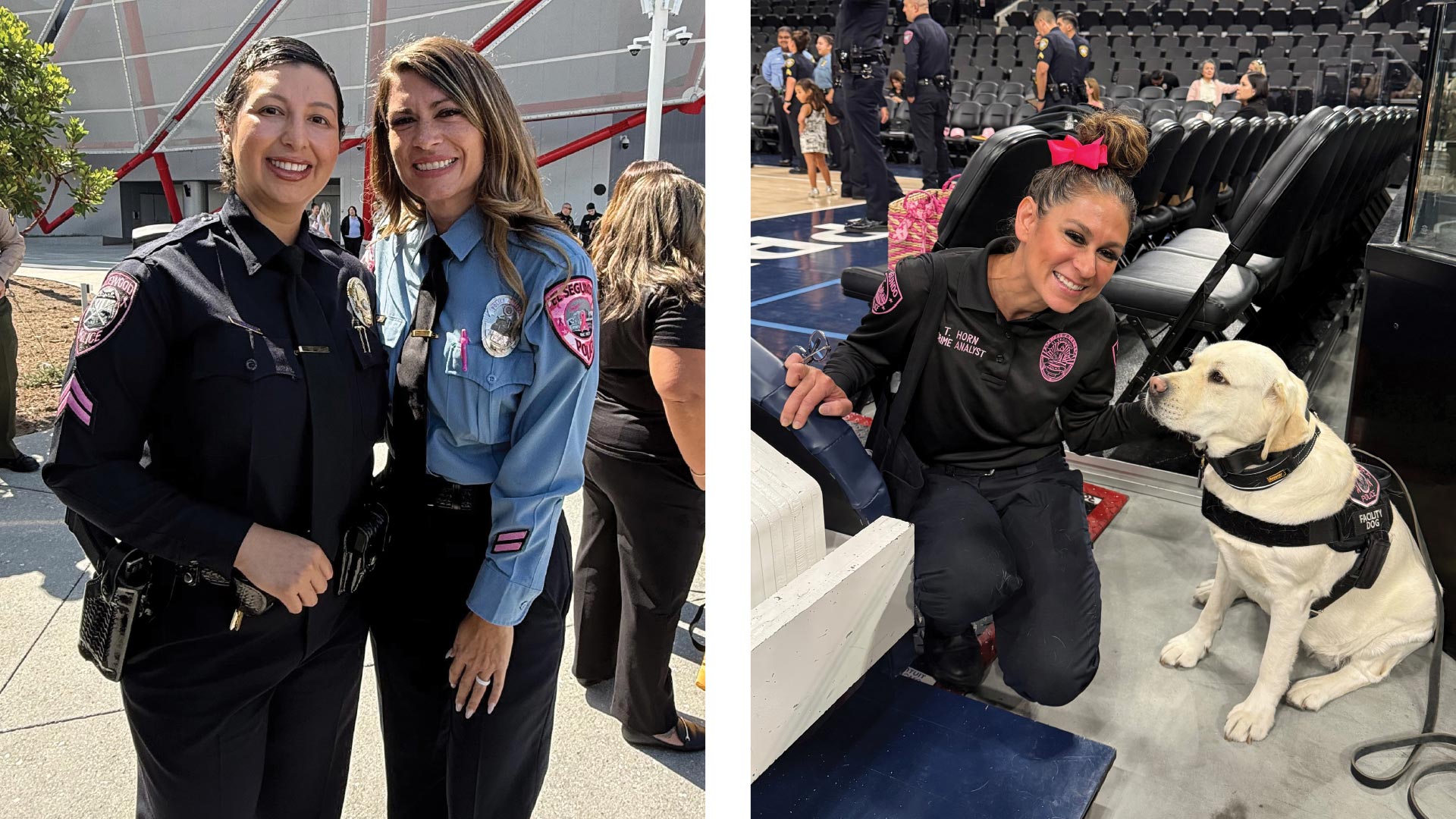

Amy McDaniel
Amy McDaniel

As seen in the October 2025 issue of American Police Beat magazine.
Don’t miss out on another issue today! Click below:


SUBSCRIBE TODAY!

Categories: Editor's Picks, Health/Wellness

Primary Sidebar

Recent Articles

  • Nervous system regulation
  • Navigating danger
  • The nature of the job
  • Forty heroes: United Airlines Flight 93
  • Why you should lead from 30,000 feet
  • Promoting organizational wellness
  • Critical thinking in police training
  • Public perception and trust
  • Labor release under fire
  • Reminder: Apply now for the 2026 Destination Zero Awards

Footer

Our Mission
To serve as a trusted voice of the nation’s law enforcement community, providing informative, entertaining and inspiring content on interesting and engaging topics affecting peace officers today.

Contact us: info@apbweb.com | (800) 234-0056.

  • Facebook
  • Instagram
  • Twitter

Categories

  • Editor’s Picks
  • On the Job
  • Labor
  • Tech
  • Training
  • Policy
  • Health/Wellness
  • Community
  • Offbeat
  • We Remember
  • Jobs and Careers
  • Events

Editor’s Picks

Liability challenges in contemporary policing

Liability challenges in contemporary policing

February 27, 2026

When performance reviews are a waste of time

When performance reviews are a waste of time

February 26, 2026

Proactive wellness visits

Proactive wellness visits

February 25, 2026

Taking a page from Toyota’s playbook

Taking a page from Toyota’s playbook

February 23, 2026

Policies | Consent Preferences | Copyright © 2026 APB Media, LLC | Website design, development and maintenance by 911MEDIA

Open

Subscribe

Close

Receive the latest news and updates from American Police Beat directly to your inbox!

  • This field is for validation purposes and should be left unchanged.