
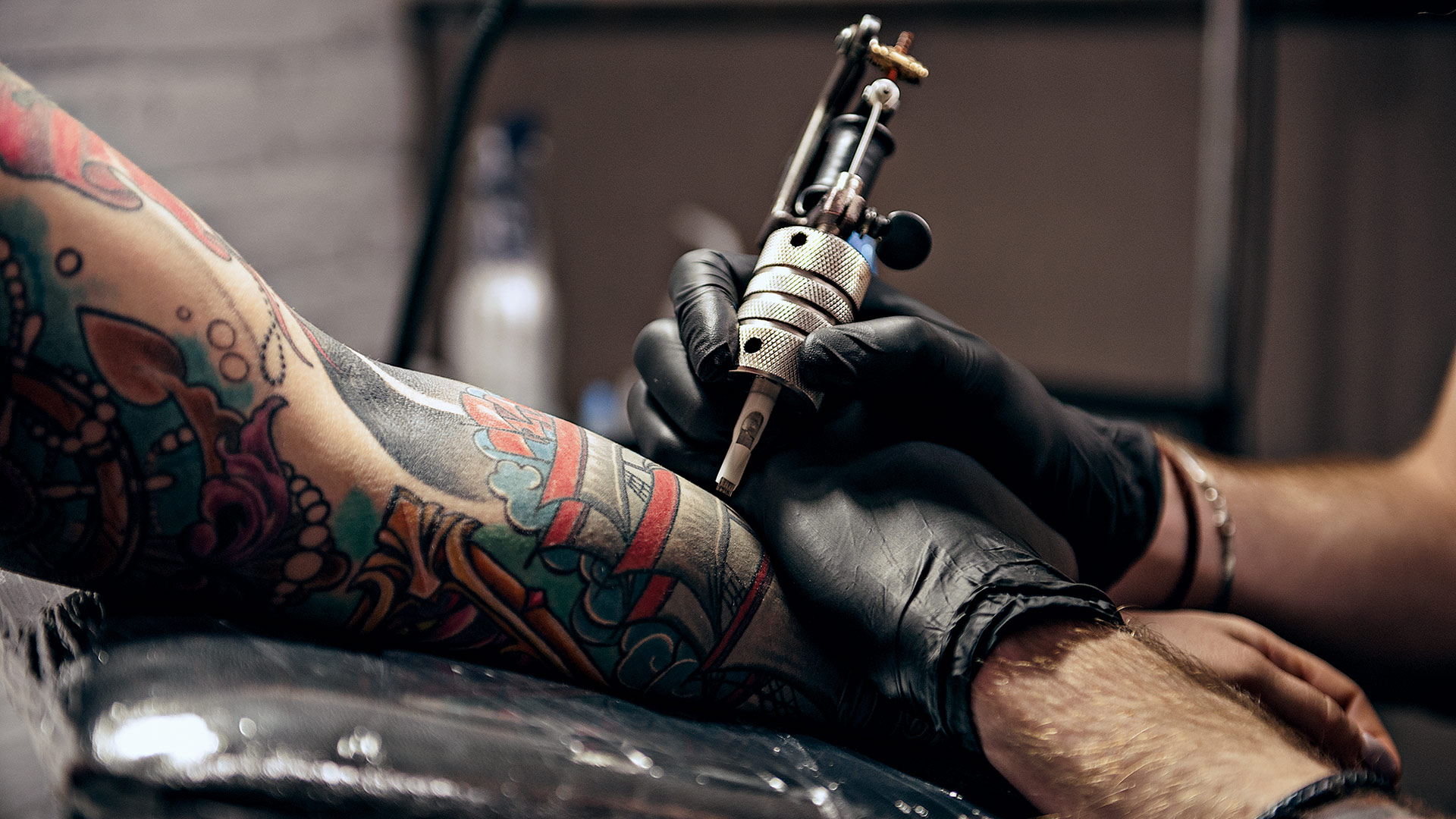
I fully expect that this article may not sit well with some readers, but I believe that it will be helpful to others. It contains information that should be considered by all who may be impacted by the issue of conspicuous body art — tattoos.
I have been meaning to address this subject for some time. Renewed emphasis recently arose when a wonderful young friend was unable to obtain a coveted position for which she was more than qualified. Why? Simply because the prospective employer declines to hire people with conspicuous body art — certainly because of a bias and likely unfair — but it’s a reality.
I am not an anti-tattoo person. I do not perceive body art to be good or bad; right or wrong. Like many folks, I have watched the escalation of tattoos from my early years in the military to the widespread practice throughout today’s society. Tattoos are increasingly accepted, although sometimes grudgingly.
As a parent, educator, evaluator and employer, I have witnessed the impact of tattoos and hope that my perceptions and experiences will be helpful to those who have an interest in the issue. Specifically, I hope those considering tattoos will read this article and evaluate the potential implications of life-long ink in conspicuous places. I want to provide food for thought in determining if the time is right for you to get a tattoo as well as placement on the body.
Goal of this article
I encourage those who are contemplating tattoos to factor in their present station in life and reflect on whether a tattoo may or may not be a good acquisition. If you are about to enter or move up in the workforce or are not yet in a committed relationship, deferring that body ink may be a wise decision. On the other hand, if your career station in life is where you intend to remain and your partner is likely to be your last — there may be no downside whatsoever. The issue is not one of good or bad, but rather an issue of context. This includes the type of work you do, the intended area of placement on your body and perhaps most important of all — the tattoo itself!
Youthful observations and regrets
I entered the military at a very early age, and shortly thereafter, observed many of my colleagues return after a hard night of drinking with any number of tattoos, including the name of the “girl back home” or the perceived “love of their life.” In many instances, the tattoos were more of a spur-of-the-moment experience based on a few drinks and the great variety of images on display at the tattoo parlors. The smart ones (my biased thinking) were those who got their ink high on their arms, where the tattoos could be covered by short-sleeved shirts.
While not the norm, in several instances, my fellow Marines (tattoos were mostly a guy thing in my early years) got a kick out of their colleagues who had inked a list of women’s names, with all except the last one crossed out! My brother (RIP) was among those folks who got — and deeply regretted — a tattoo on his forearm. He spent years in a self-effort to remove it; he died with the tattoo on his arm, faded but still visible. I admit that I sometimes regret not getting a tasteful USMC high on an upper arm, even though that proud USMC eagle would now likely look like a sagging vulture!
Tattoos and the military
Although there have been some serious “bumps in the road” over the issue of conspicuous tattoos, the military seems to have accepted the reality of conspicuous tattoos, with body art for men and women seemingly not an impediment to assignments or advancement. There have been some painful periods in the transition from the past semi-
acceptance to the more widespread visibility of tattoos in today’s military workplace.
The anti-conspicuous tattoo bias in the military hit its full stride in roughly the late 1990s and early 2000s. All branches of the military require full-length photos for promotional consideration, with conspicuous body art typically shown. There is a well-understood reality that bias on the part of selection boards sometimes means lower qualifying scores and restricted assignments. During that era, some assignments, such as recruiters and drill instructors, were closed to those with conspicuous body art. This situation was unjust, unfair and unnecessary — but such was the reality.
I am aware of a massive “anti-
body art” injustice in the several years after the twin towers (New York City 9/11) collapse. A high-ranking official’s bias resulted in the disqualification of a great many persons’ desires to enlist in the U.S. Marine Corps. When challenged about the massive disqualification, the high-ranking person replied, “Because I can.” I remain saddened at the number of wonderful men and women who could and should have been fellow Marines but were referred to other branches because of one person’s bias. This terrible situation was unjust, unfair and unnecessary — but such was the reality.
All of us are well-advised to recognize — aside from the tattoo issue — that the environments we are in today may be radically different from future environments.
Legal implications
From a legal standpoint, employers can generally impose body art restrictions if the rules do not discriminate against a particular class of persons, especially if a work-related nexus can be articulated. However, the bigger issue is subtle bias. A typical example is where the issue of body art is not even discussed at a hiring interview. The person with the conspicuous body art is not selected for the position and has no idea that was the reason for not being selected. It may be unfair and based on the bias of the organization or the interviewer or both — but such is the reality.
Civilian sector hiring and advancements
Without suggesting that some occupational job sectors are better or more professionally appearing than others, all of us can visualize various job sites and see differences in the degree, or complete absence of, conspicuous body art. Obviously, those perceptions exist because of social expectations, biases, unwritten rules or job requirements of the employers based upon positions or locations. Such restrictions, whether written or unwritten, may be unfair, arbitrary or biased, or all three — but such is the reality.
Environments change — sometimes radically so
There are some environments, such as the military and athletic organizations, to name just two, where there is a considerable degree of conspicuous body art. Conversely, with professions such as medicine or finance, conspicuous body art is seen less often. All of us are well-advised to recognize — aside from the tattoo issue — that the environments we are in today may be radically different from future environments. Future environments may have very different customs, practices and levels of tolerance. Restaurants are an example of the degrees of conspicuous art often related loosely to the prosperity and social standing of the establishment. Such practices, whether written or unwritten, may be unfair, arbitrary or biased, or all three — but such is the reality.
Personal relationships
The painful reality is that some people are just plain turned off by conspicuous body art by persons who might otherwise be candidates for a romantic relationship. Being painfully blunt, not all relationships end on a happy note. Further, subsequent relationships may involve a different set of customs, practices and degrees of social interaction. The partner who is supportive of body art might be replaced with someone who is not quite so enthusiastic, which could taint the overall relationship. Just imagine a person with a Marine tattoo hooking up with a sailor, or worse yet — a Yankee fan hooking up with a person sporting a conspicuous Dodger tattoo! All kidding aside, today’s tattoo may not sit well in future relationships.
I have seen this reality in action on several occasions, admittedly by persons primarily in my advanced age group, but other generations as well. Given the subjective considerations we all factor into the attractive qualities of another person, adding another unnecessary factor to the equation may not always be a wise decision. A manifestation of this reality is that some individuals may harbor negative feelings toward conspicuous body art at formal social events. Such situations are particularly highlighted by evening dresses and gowns at formal events, where tattoos are on full display. Such concerns are unfair, and the product of bias — but such is the reality.
Maturity and judgment
We all make questionable decisions from time to time, and making the decision to take an unnecessary action that may not sit well with future employers or personal partners strikes me as not great judgment. As an employer, the decision to obtain a tattoo was seldom a deal breaker, but it was a factor in evaluating levels of maturity and impulsiveness. Body art is clearly an activity practiced more by young people and sometimes regretted as those younger persons get older (it happens to all of us!).
Bodies change — tattoos as well!
Bodies sag and change, and so do tattoos. That tattoo of the ornate, beautiful, and colorful image looks increasingly haggard with the passing of the years! If the images of old tattoos on older men and women were to be displayed in tattoo parlors, business would drop off dramatically! Ladies, those attractive flower tattoos become badly wilted with the passage of time.
Tattoo removal
Generally, tattoos can now be removed via laser treatment. In the case of extreme depth, surgical removal and skin grafts may be necessary for complete eradication. Tattoo eradication programs are being increasingly developed for youth and gang rehabilitation programs, with the goal of making participants more employable.
Medical and health considerations
While not often considered, there is a growing body of evidence that tattoos have medical drawbacks, including unregulated ink ingredients that can move rapidly into the lymphatic system, where they can persist for months, damaging immune cells and disrupting how the body responds to certain vaccines. Also, the metallic particles in some inks have been shown to skew the results of MRI examinations, resulting in inaccurate readings. I am aware from personal observation that many blood banks will not accept blood donations from tattoo recipients for varying periods of time (typically one year). As research continues, these are issues worthy of consideration.
As tattoos increase — options decrease
Conspicuous body art is not inherently evil or necessarily a bad thing. It is something that many people enjoy and find satisfying. But those who have or who are considering conspicuous tattoos are reminded that life is not always fair. Conspicuous tattoos do result — to some degree — in a decrease in occupational opportunities and personal relationships. A great many people are supportive or tolerant of conspicuous tattoos, but no one I’m aware of has ever been offended by the absence of body art.
Summary
My prediction is that some will read my remarks with contempt. Others will delete as not of interest. However, some will make multiple copies to share with others, especially their teenage kids. Finally, I hope that my remarks add to the limited information on this very subjective issue. I would encourage those who are considering getting tattoos to reflect on their present career and personal stations in life, and the potential consequences. As previously stated, it is not an issue of good or bad, but one of timing and placement.

Keith Bushey
As seen in the February 2026 issue of American Police Beat magazine.
Don’t miss out on another issue today! Click below: