
• Skip to primary navigation
  • Skip to main content
  • Skip to primary sidebar
  • Skip to footer
  • Home
  • About
  • The Magazine
  • Events
  • Partners
  • Products
  • Contact
  • Jobs and Careers
  • Advertise
  • Facebook
  • Instagram
  • Twitter
  • Subscribe
American Police Beat

American Police Beat Magazine

Law Enforcement Publication

  • Home
  • Leadership
    • Clarifying your “true north”
      The job has changed — have you?
      Perpetual recognition of line-of-duty deaths
      Understanding the boundaries of professional relationships with the...
      Why you should lead from 30,000 feet
  • Topics
    • Leadership
      • Clarifying your “true north”
        The job has changed — have you?
        Perpetual recognition of line-of-duty deaths
        Understanding the boundaries of professional relationships with the...
        Why you should lead from 30,000 feet
    • Editor’s Picks
      • Let’s get moving!
        Heroes of the World Trade Center
        The Promise Gap
        Corruption, collusion and impunity
        Liability challenges in contemporary policing
    • On the Job
      • Testing the waters — literally
        Frankpledge to forensics: A brief history of law enforcement
        Villains and heroes in the Big Apple
        Right place, right time — again
        Some good news on crime
    • Labor
      • Smile and let them swing
        The Promise Gap
        Cut the cops, save a dollar?
        Labor release under fire
        Who’s watching the watchmen?
    • Tech
      • NYC’s electric vehicle fleet for LE passes milestone
        New Mexico license plate readers save lives, lead to “precise...
        A modern field guide to understanding research in policing
        Gear that moves with you
        A new breed of cop car
    • Training
      • Pushback as a training signal
        Let’s get moving!
        The five minutes before the ambulance
        Navigating danger
        Critical thinking in police training
    • Policy
      • Police pause license plate readers
        Corruption, collusion and impunity
        E-bikes spark public safety concerns
        Try racing without wheels
        Law enforcement accreditation: Why it matters
    • Health/Wellness
      • The days that follow
        Addressing stress, vicarious trauma and burnout
        Nervous system regulation
        The nature of the job
        Promoting organizational wellness
    • Community
      • Cops promote National Donate Life Month
        Police officer kicks up social media praise
        Donning denim in solidarity with victims and survivors of sexual...
        Improving autism awareness
        Shop with a Cop
    • Offbeat
      • An unexpected burglar
        Police humor only a cop would understand
        Not eggzactly a perfect heist
        Pizza … with a side of alligator?
        Wisconsin man charged with impersonating Border Patrol agent twice in...
    • We Remember
      • A Tribute to Fallen Heroes
        Markers of service and remembrance
        Tragedy strikes Baker to Vegas
        Heroes of the World Trade Center
        Forty heroes: United Airlines Flight 93
    • HOT Mail
      • The War on Cops Continues Unabated
  • On the Job
    • Testing the waters — literally
      Frankpledge to forensics: A brief history of law enforcement
      Villains and heroes in the Big Apple
      Right place, right time — again
      Some good news on crime
  • Labor
    • Smile and let them swing
      The Promise Gap
      Cut the cops, save a dollar?
      Labor release under fire
      Who’s watching the watchmen?
  • Tech
    • NYC’s electric vehicle fleet for LE passes milestone
      New Mexico license plate readers save lives, lead to “precise...
      A modern field guide to understanding research in policing
      Gear that moves with you
      A new breed of cop car
  • Training
    • Pushback as a training signal
      Let’s get moving!
      The five minutes before the ambulance
      Navigating danger
      Critical thinking in police training
  • Policy
    • Police pause license plate readers
      Corruption, collusion and impunity
      E-bikes spark public safety concerns
      Try racing without wheels
      Law enforcement accreditation: Why it matters
  • Health/Wellness
    • The days that follow
      Addressing stress, vicarious trauma and burnout
      Nervous system regulation
      The nature of the job
      Promoting organizational wellness
  • Community
    • Cops promote National Donate Life Month
      Police officer kicks up social media praise
      Donning denim in solidarity with victims and survivors of sexual...
      Improving autism awareness
      Shop with a Cop
  • Offbeat
    • An unexpected burglar
      Police humor only a cop would understand
      Not eggzactly a perfect heist
      Pizza … with a side of alligator?
      Wisconsin man charged with impersonating Border Patrol agent twice in...
  • We Remember
    • A Tribute to Fallen Heroes
      Markers of service and remembrance
      Tragedy strikes Baker to Vegas
      Heroes of the World Trade Center
      Forty heroes: United Airlines Flight 93
  • HOT Mail
    • The War on Cops Continues Unabated
  • About
  • The Magazine
  • Events
  • Partners
  • Products
  • Contact
  • Jobs and Careers
  • Advertise
  • Subscribe
Search

Training

Threshold neuroscience

Why understanding the brain’s breaking point is becoming essential for modern policing

Gary Nel Published February 16, 2026 @ 12:00 pm PST

iStock.com/Martin Broz

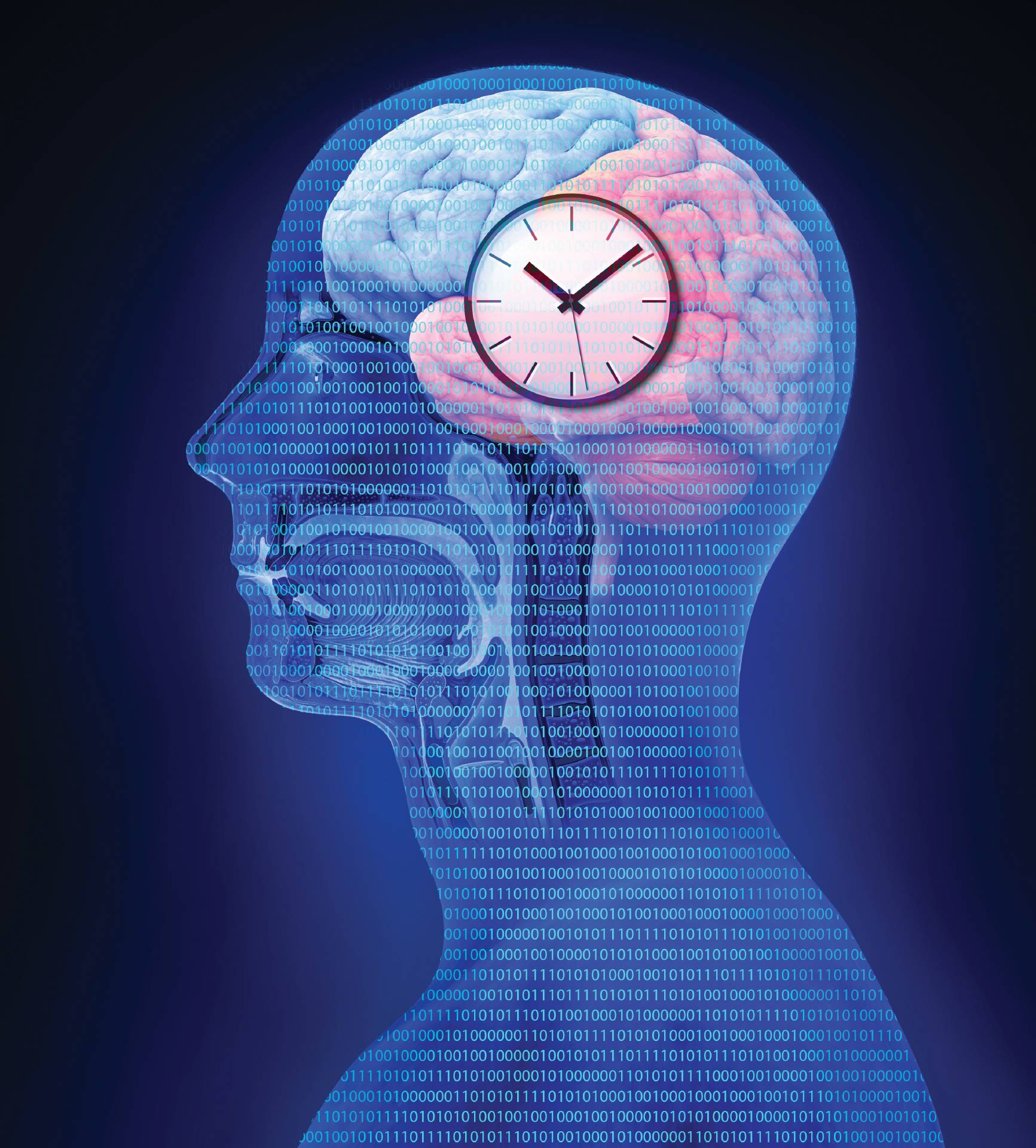
Police work doesn’t fail due to a lack of bravery or dedication. Failures happen when officers reach their cognitive limits. These are very short instances when stress, perception, memory and quick thinking all clash. Neuroscience calls this point the threshold.

In the brain, a threshold isn’t just a concept; it’s biological. Neurons stay quiet until enough electrical signals build up to activate them. Once that happens, the neuron fires and sends data. Under that point, nothing occurs. Above it, everything is happening.

It’s clear that this idea applies to how people act under stress. Decisions aren’t instant choices; they’re the result of built-up evidence that leads to a tipping point. In policing, where every second counts and things are unclear, knowing where those thresholds are and what shapes them is a key idea that neuroscience gives to the field.

Decision-making isn’t like flipping a switch. It’s a build-up.

People usually think of police decision-making as a simple choice: act or don’t act. But the brain is working way before any choice is even seen. What you sense, your past, how you feel, what you perceive is a threat, and the situation all add up to an internal calculation. The officer doesn’t really decide as much as they reach a point where their brain commits to this outcome.

Neuroscientists explain this process with models that show how evidence buildup flows. Information comes in, possible ideas are looked at, and brain activity goes up until it crosses a decision threshold. Only when that threshold is passed does the action happen. Thresholds aren’t set in stone. Stress can cause them to be lower, leading to actions too soon. Being tired can make them go up, causing hesitation. Situations from the past can sharpen them, allowing for quicker and more correct reactions with less mental work, while trauma can mess them up completely.

So, a lot of failures in the field aren’t just moral failings or training issues. They’re threshold failures, which are situations where the brain was pushed too far.

Stress alters the brain before behavior

When we’re seriously stressed, the brain shifts things around. The prefrontal cortex, which handles clear thinking, loses control. Faster subcortical systems take over, focusing on speed and survival. This shift isn’t a bad thing; it’s how we have evolved as a species. The issue is when a situation needs both speed and accuracy.

This understanding from neuroscience helps explain why even well-trained officers can still struggle during extremely stressful situations. When excitement goes up, the evidence needed to act often goes down, so the brain reacts faster with less info. This has the potential to be lifesaving or disastrous, depending on the case.

Too much thinking or uncertainty can push the threshold way too high. Officers may freeze or hesitate because the brain hasn’t reached the trigger point yet. Keeping these changes in mind shifts the focus of training toward doing predetermined actions under stress. It gets rid of labels and focuses on cognitive processes that can be measured and trained.

Train the threshold, not just the tactic

Normal law enforcement training is all about what to do to be safe and win. Training that keeps thresholds in mind focuses on when and why the brain decides to act and uses this to avoid making things worse. Modern programs are starting to match training with how the brain learns and does things under stress. Simulations and drills aren’t just about being realistic, they’re about getting neural pathways used to spotting patterns faster and reaching the thresholds in quick order.

Experienced officers often say they just know what to do before they can say why. Neuroscience views this as optimized evidence accumulation. The brain learns what things are important and which ones can be ignored. This is where training helps the most. It teaches the brain how to do its job even when stressed. Thresholds are reached faster but not carelessly.

Personalities, perceptions and individual thresholds

One idea from neuroscience is that thresholds can be different from person to person. Two officers can get the same info, in the same place, with the same training, and still come to different thoughts at different times.

Personality, past experiences and how someone thinks affect how evidence is looked at. Some people need a lot of proof before they act; others rely on early signs. There’s no better or worse way. Issues arise when officers don’t know their own habits or when training assumes everyone thinks the same way. This explains why strict rules often don’t measure real skills.

Department leadership that knows about thresholds understands these differences. They allow supervisors to guide officers on their decision-making patterns. The goal isn’t to make all officers think the same way. It’s to help each officer know how their brain reaches the point of action and how to handle that process on purpose.

Tech and the future of readiness

Sensors and simulations are starting to give agencies real info on how officers are doing mentally and physically. Things like heart rate and reaction time can show where an officer is in relation to their threshold. If done right, these tools can improve readiness, recovery and strength, but done wrong, they could turn human decision-making based on millennia of evolution into simple data. Using these programs requires honesty, officers who want to join and a clear line between helping performance and watching too closely. Neuroscience should help officers, not force them into compliance. It’s science, so it doesn’t promise outcomes, but it gives us the framework to change them.

Why this is important now

The public expects more from law enforcement than ever, and they don’t like mistakes. Officers must make perfect decisions in milliseconds in uneasy situations, often while being recorded and harassed.

The neuroscience does offer reasons behind failures and a way forward. By matching training and plans with how the brain works under stress, law enforcement can make better choices, lower incidents and protect officers from the mental strain and total burnout.

This reminds us that behavior comes from our bodies and our experiences. If the profession wants better results, it must focus on what happens before the action. The threshold is where everything is altered. The future of policing might depend on learning how to handle it.

Gary Nel

Gary Nel

Gary Nel is a veteran law enforcement leader and instructor with over two decades of experience in international policing, critical incident management and tactical operations. He is currently a patrol sergeant with the San Antonio Police Department. Drawing on experience with the British Army and the South African Police Service, his writing focuses on risk mitigation, human performance under stress, leadership in high-consequence environments and the translation of operational law enforcement principles into practical frameworks for modern organizations.

View articles by Gary Nel

As seen in the February 2026 issue of American Police Beat magazine.
Don’t miss out on another issue today! Click below:


SUBSCRIBE TODAY!

Categories: Training

Primary Sidebar

Recent Articles

  • Cops promote National Donate Life Month
  • NYC’s electric vehicle fleet for LE passes milestone
  • Police officer kicks up social media praise
  • Donning denim in solidarity with victims and survivors of sexual assault
  • Clarifying your “true north”
  • Smile and let them swing
  • The job has changed — have you?
  • New National Law Enforcement Museum exhibit revisits D.C. snipers case
  • A hero’s legacy through a mother’s love
  • The days that follow

Footer

Our Mission
To serve as a trusted voice of the nation’s law enforcement community, providing informative, entertaining and inspiring content on interesting and engaging topics affecting peace officers today.

Contact us: info@apbweb.com | (800) 234-0056.

  • Facebook
  • Instagram
  • Twitter

Categories

  • Editor’s Picks
  • On the Job
  • Labor
  • Tech
  • Training
  • Policy
  • Health/Wellness
  • Community
  • Offbeat
  • We Remember
  • Jobs and Careers
  • Events

Editor’s Picks

Let’s get moving!

Let’s get moving!

April 27, 2026

Heroes of the World Trade Center

Heroes of the World Trade Center

April 24, 2026

The Promise Gap

The Promise Gap

April 22, 2026

Corruption, collusion and impunity

Corruption, collusion and impunity

April 21, 2026

Policies | Consent Preferences | Copyright © 2026 APB Media, LLC | Website design, development and maintenance by 911MEDIA

Open

Subscribe

Close

Receive the latest news and updates from American Police Beat directly to your inbox!

  • This field is for validation purposes and should be left unchanged.


