• Skip to primary navigation
  • Skip to main content
  • Skip to primary sidebar
  • Skip to footer
  • Home
  • About
  • The Magazine
  • Events
  • Partners
  • Products
  • Contact
  • Jobs and Careers
  • Advertise
  • Facebook
  • Instagram
  • Twitter
  • Subscribe
American Police Beat

American Police Beat Magazine

Law Enforcement Publication

  • Home
  • Leadership
    • Your agency needs you
      Pursuit termination option: Radiator disablement
      Liability — not always a showstopper!
      A candid chat with law enforcement Explorer scouts
      Do you know your emotional intelligence?
  • Topics
    • Leadership
      • Your agency needs you
        Pursuit termination option: Radiator disablement
        Liability — not always a showstopper!
        A candid chat with law enforcement Explorer scouts
        Do you know your emotional intelligence?
    • Editor’s Picks
      • Mental health checks … in the training room?
        Crime doesn’t take a vacation
        The power of mediation
        Therapy isn’t just for the broken
        Police humor only a cop would understand
    • On the Job
      • Texas manhunt captures suspect in shooting of officer and K-9
        “Wanna hop in?” Louisiana officer gets a lift from a good...
        “Nothing else mattered”: Heroic NYPD trio rescues girl from river
        “Just gut reaction”: Maine officer makes great save
        Crime doesn’t take a vacation
    • Labor
      • The power of mediation
        Differentiation in police recruitment
        Building positive media relations
        LEO labor and community outreach — make the haters scoff
        Racing with a purpose
    • Tech
      • The future of patrol is here
        New York governor highlights $24 million investment to modernize law...
        Cutting-edge police technology
        One step closer
        New Jersey school district first to adopt AI gun detection and...
    • Training
      • The vision behind precision
        Mentorship: Ensuring future success
        Unlocking innovation
        Training dipshittery
        Police Academy 20
    • Policy
      • The phenomenon of trauma bonding in law enforcement
        Betrayed from within
        Supreme Court declines to revive Missouri gun law
        Quotas come to the end of the road
        Consolidation in action
    • Health/Wellness
      • Beyond crisis response
        Mental health checks … in the training room?
        Surviving and thriving in retirement
        Fit for duty, fit for life
        A wake-up call for cops
    • Community
      • Community engagement: What is it moving forward?
        Contradictory crossroads
        Back-to-school season brings out police support nationwide
        A bold idea for reducing homelessness in America
        Operation Brain Freeze keeps community cool
    • Offbeat
      • Police humor only a cop would understand
        Not eggzactly a perfect heist
        Pizza … with a side of alligator?
        Wisconsin man charged with impersonating Border Patrol agent twice in...
        Only in California?
    • We Remember
      • A Christmas loss
        York County ambush leaves three officers dead, others critically...
        Honoring the Fallen Heroes of 9/11
        Team Romeo
        National Police Week 2025
    • HOT Mail
      • The War on Cops Continues Unabated
  • On the Job
    • Texas manhunt captures suspect in shooting of officer and K-9
      “Wanna hop in?” Louisiana officer gets a lift from a good...
      “Nothing else mattered”: Heroic NYPD trio rescues girl from river
      “Just gut reaction”: Maine officer makes great save
      Crime doesn’t take a vacation
  • Labor
    • The power of mediation
      Differentiation in police recruitment
      Building positive media relations
      LEO labor and community outreach — make the haters scoff
      Racing with a purpose
  • Tech
    • The future of patrol is here
      New York governor highlights $24 million investment to modernize law...
      Cutting-edge police technology
      One step closer
      New Jersey school district first to adopt AI gun detection and...
  • Training
    • The vision behind precision
      Mentorship: Ensuring future success
      Unlocking innovation
      Training dipshittery
      Police Academy 20
  • Policy
    • The phenomenon of trauma bonding in law enforcement
      Betrayed from within
      Supreme Court declines to revive Missouri gun law
      Quotas come to the end of the road
      Consolidation in action
  • Health/Wellness
    • Beyond crisis response
      Mental health checks … in the training room?
      Surviving and thriving in retirement
      Fit for duty, fit for life
      A wake-up call for cops
  • Community
    • Community engagement: What is it moving forward?
      Contradictory crossroads
      Back-to-school season brings out police support nationwide
      A bold idea for reducing homelessness in America
      Operation Brain Freeze keeps community cool
  • Offbeat
    • Police humor only a cop would understand
      Not eggzactly a perfect heist
      Pizza … with a side of alligator?
      Wisconsin man charged with impersonating Border Patrol agent twice in...
      Only in California?
  • We Remember
    • A Christmas loss
      York County ambush leaves three officers dead, others critically...
      Honoring the Fallen Heroes of 9/11
      Team Romeo
      National Police Week 2025
  • HOT Mail
    • The War on Cops Continues Unabated
  • About
  • The Magazine
  • Events
  • Partners
  • Products
  • Contact
  • Jobs and Careers
  • Advertise
  • Subscribe
Search

Training

The vision behind precision

Train more than just your trigger finger

Todd Fletcher Published November 17, 2025 @ 6:00 am PST

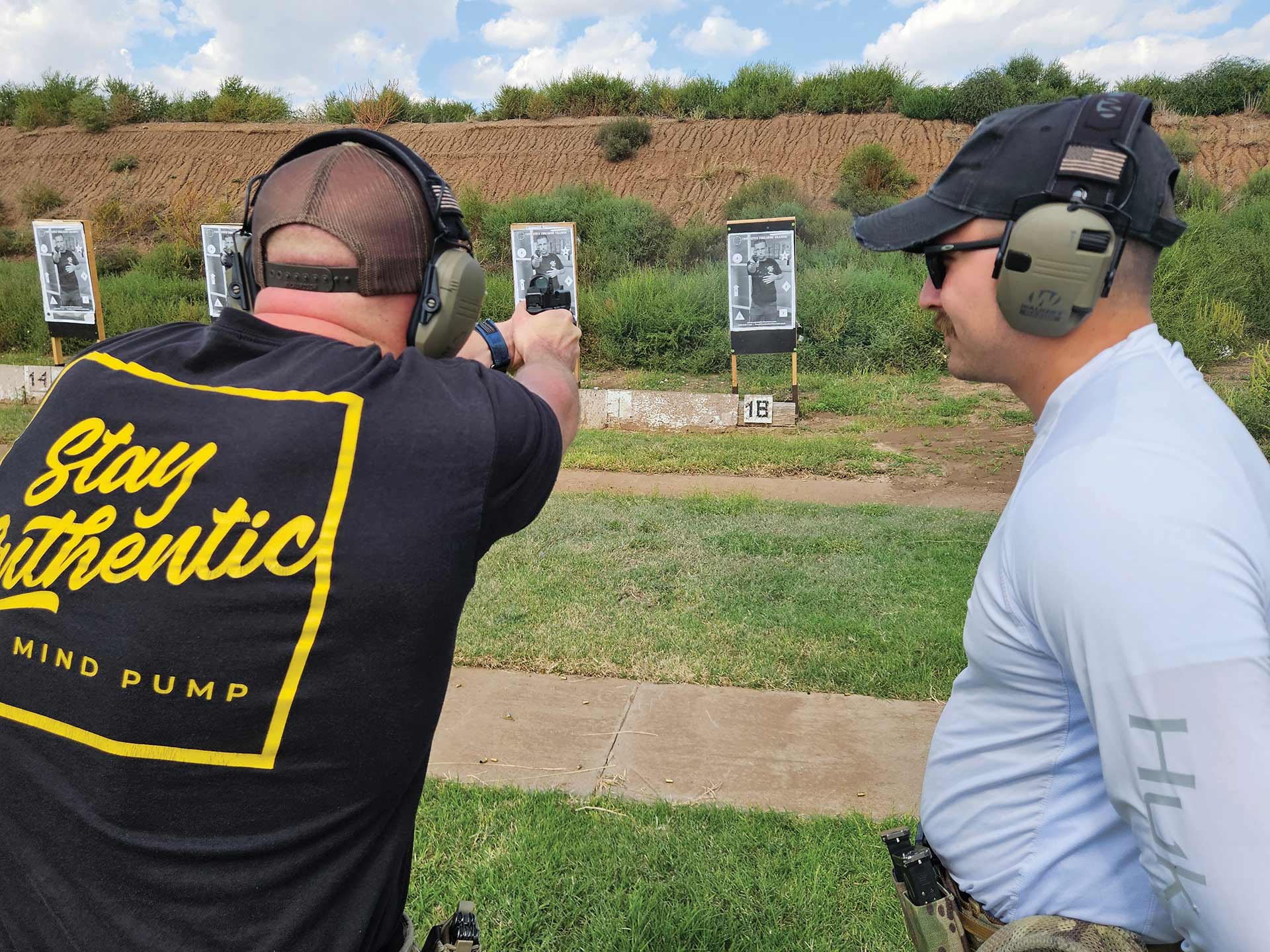
Work on separating your eyes and head from the gun to improve and increase your visual speed. (Todd Fletcher)

The primary difference between the best shooters in the world and us mere mortals is the speed at which we process visual information. Our trigger fingers can only move so fast and so far, but the speed at which we interpret

visual information is what separates the good from the exceptional.

To put this into context, law enforcement officers need to process a significant amount of visual information very quickly. Just driving a patrol car requires the ability to process a lot of visual information. On top of that, officers must also watch for criminal activity, identify traffic violators and read information on the computer. Even when out of the car on foot, we are always on the lookout for criminal activity while constantly scanning for threats and areas of cover.

During a use-of-force event, the volume of visual information we need to quickly and accurately process skyrockets. For example, while engaging with deadly force, officers need to recognize and identify threats, process what they perceive as an acceptable sight picture, transition their eyes and focus between threats to a specific target area and be able to track sights or dot through recoil — all while continuously evaluating the threat under real-time duress.

To improve threat recognition and force response, we need to exercise our eyes and brains to improve visual speed, visual precision and visual processing. Understanding and utilizing these concepts will greatly improve your ability to shoot quickly and accurately, and all of these can be improved through intentional and deliberate training.

Visual speed

This may sound academic and difficult to understand, but even a knuckle-dragging-Neanderthal-firearm-instructor like me can grasp the basics. I’ll be framing each of these from a firearms training perspective, but defensive tactics, Taser and driving instructors need to understand these elements to help students improve their skills. So bear with me and let’s get into it.

First, visual speed simply means moving your eyes from one spot to another quickly. Many shooters get their eyes and head connected to the pistol as if they are one unit. If we can separate the eyes from the pistol, the shooter’s eyes and head can move much faster than the gun. This gives the shooter more time to visually process the information sent to their brain. Once our eyes have reached the next spot and our brains have processed the information, we can move our body and the gun to that spot quickly while feeling less rushed compared to trying to do all these things at one time.

A range drill simply called “Eyes, Head, Gun” can help improve visual speed. This is a target transition drill done at five yards to make the transitions further apart. Start centered between the targets. On the “eyes” command, transition your eyes to the next target. On “head,” transition your head to the next target. On the “gun” command, transition the pistol to the next target and fire as soon as the sights or dot intercept the eye-target line. Do this for a full magazine while varying the pace and trying to avoid any specific rhythm for too long.
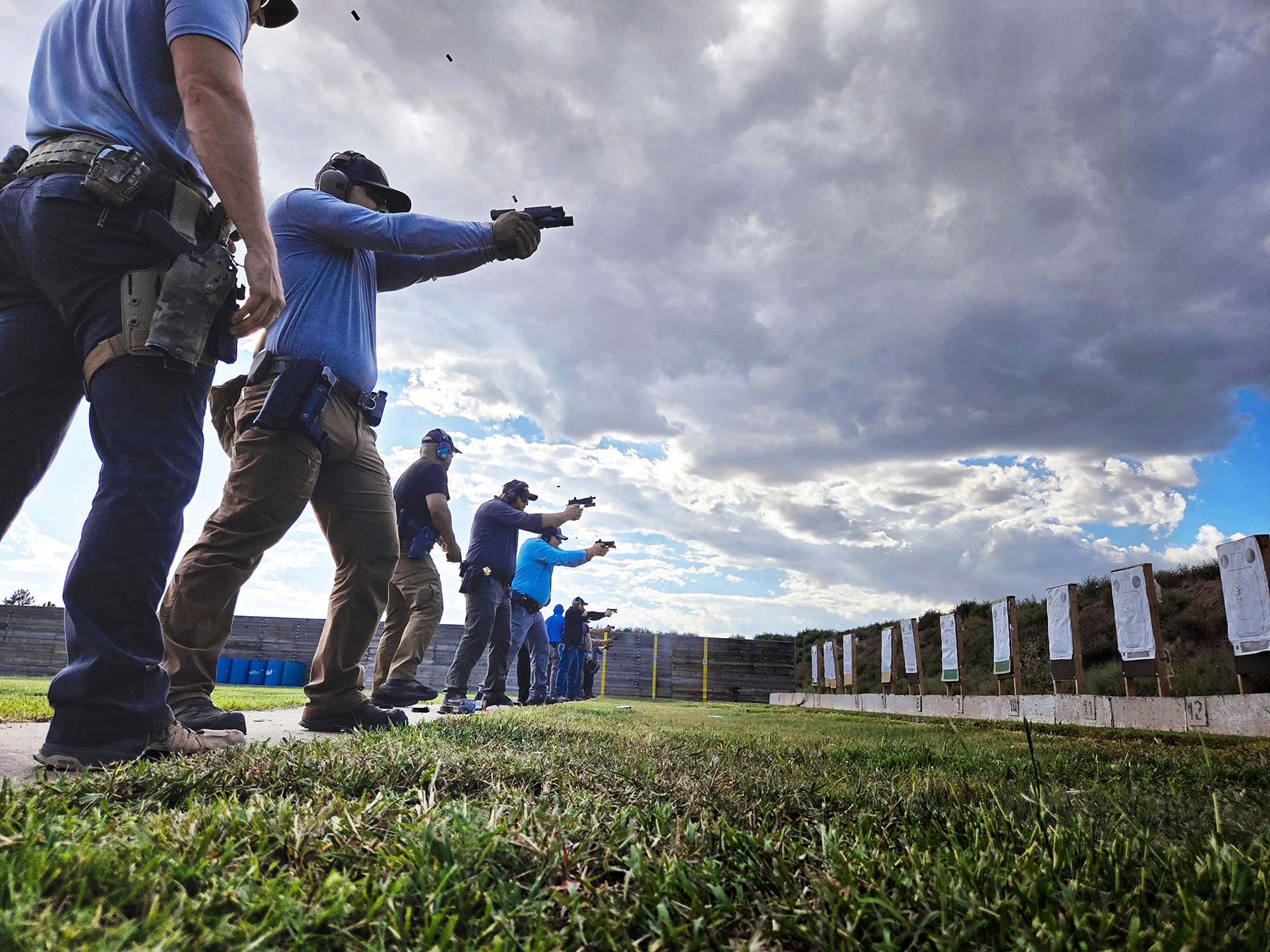
Increasing your visual speed, visual precision and visual processing will help you shoot better and faster while giving you time to make better decisions. (Billy Etheredge/Combative Firearms Training, LLC)

Visual precision

Visual precision refers to the ability to focus on a specific spot on the target as opposed to the entire target. Being able to focus on the exact spot on the target where you want rounds to go leads to better results than simply shooting at the brown cardboard.

Shooters who lack visual precision will inevitably fire their first shot while moving the pistol into the center-mass area, resulting in an early shot followed by a second center-mass shot. This happens because they press the trigger as soon as they recognize the target behind their sights instead of seeing an exact spot in the middle of the target.

A good drill to help with visual precision is to put an obvious mark in the center of the target that helps draw the shooter’s eye to the spot; a bright orange or yellow dot works well. A target transition drill such as “Eyes, Head, Gun,” or a basic draw-and-press-out drill, can help develop visual precision. The important thing to focus on is moving the eyes to the precise place on the target where you want rounds to hit, and maintaining visual focus on that spot throughout the shooting process.

Visual processing

The final part of this equation is getting the brain to process the data input from the eyes. The shooter’s brain needs to be able recognize information, interpret the data, decide what to do and start the movement process for the next action. To make this simple: your brain needs to recognize a specific spot on the target as your intended impact area, determine the exact moment your sights have entered the eye-target line, decide whether to shoot and begin pressing the trigger or changing actions.

Training your brain to process information quickly is a trainable skill, but it’s one we rarely practice on the range. One of the most common places to train this skill is in emergency vehicle operations classes. The emergency lane-change drill commonly used by driving instructors is a terrific way to increase visual processing. Unfortunately, how often do we do it, and why don’t we run the same type of drill on the live-fire range?

It’s not that difficult to work on this skill. On the range, we can train our eyes to find and track the sights quickly and train the brain to process the sight picture faster using the Eyes-Closed Drill. This drill improves reaction time and trains the brain to acquire the sights faster. Using a shot timer to track your progress, start with a target at seven yards with a white paster or dot in the center. With your eyes closed, draw your pistol and aim at the white paster with your finger on the trigger. On the beep of the shot timer, open your eyes and fire one shot as quickly as possible at the white paster. The goal is to focus on the target dot and see only a flash of your front sight or red dot as it aligns, not wait for a perfect sight picture. If you take too long to acquire a perfect sight picture, you lose speed.

See quicker, respond better

There’s a concept among instructors and academics offering cautionary words about training officers to shoot faster than they can make decisions, and I don’t dispute that this would not be a good thing. This can be a problem, but it’s also something we can train to improve if we train by design instead of by accident. If we intend to improve our shooting skills while deliberately improving our visual speed, precision and processing, we give ourselves extra time to make better decisions. Being better, faster, more precise and making better decisions — who could argue with that way of thinking?


Todd Fletcher

Todd Fletcher

Todd Fletcher is a retired sergeant from Central Oregon with over 30 years of law enforcement experience. He presents firearms training, instructor certification and instructor development classes nationwide. Todd has presented at multiple regional, national and international conferences, including multiple ILEETA conferences and IALEFI events. He owns Combative Firearms Training, LLC, providing firearms training, handgun and patrol rifle instructor certification, and instructor development classes to law enforcement, military and private security. He can be contacted at Todd@CombativeFirearms.com.

View articles by Todd Fletcher

Categories: Training

Primary Sidebar

Recent Articles

  • Texas manhunt captures suspect in shooting of officer and K-9
  • Beyond crisis response
  • A Christmas loss
  • “Wanna hop in?” Louisiana officer gets a lift from a good Samaritan
  • “Nothing else mattered”: Heroic NYPD trio rescues girl from river
  • “Just gut reaction”: Maine officer makes great save
  • The phenomenon of trauma bonding in law enforcement
  • Mental health checks … in the training room?
  • Betrayed from within
  • Surviving and thriving in retirement

Footer

Our Mission
To serve as a trusted voice of the nation’s law enforcement community, providing informative, entertaining and inspiring content on interesting and engaging topics affecting peace officers today.

Contact us: info@apbweb.com | (800) 234-0056.

  • Facebook
  • Instagram
  • Twitter

Categories

  • Editor’s Picks
  • On the Job
  • Labor
  • Tech
  • Training
  • Policy
  • Health/Wellness
  • Community
  • Offbeat
  • We Remember
  • Jobs and Careers
  • Events

Editor’s Picks

Mental health checks … in the training room?

Mental health checks … in the training room?

November 25, 2025

Crime doesn’t take a vacation

Crime doesn’t take a vacation

November 21, 2025

The power of mediation

The power of mediation

November 20, 2025

Therapy isn’t just for the broken

Therapy isn’t just for the broken

November 14, 2025

Policies | Consent Preferences | Copyright © 2025 APB Media, LLC | Website design, development and maintenance by 911MEDIA

Open

Subscribe

Close

Receive the latest news and updates from American Police Beat directly to your inbox!

  • This field is for validation purposes and should be left unchanged.