It’s strange seeing so much violence and death, and so much violent death, so regularly, especially being away from any war zone. That’s not even factoring in the constant natural death investigations and every other nonviolent, non-death-related run. Think about this: with the beat policing model in the city of Indianapolis, the nation’s 16th or so most populous city, I’m responding to the equivalent of all of a medium-sized, densely populated town’s emergencies two out of every three days throughout the year, for years on end. In rougher parts of the city, like where I work, folks’ struggles with every conceivable thing folks struggle with means a lot of emergencies, and subsequently a lot of trauma — likely much more than is healthy. There are years, there are dog years and then there are hood years, as one of my beat partners says. Those really age a person quickly.
Many cops become distant, deadpan, numb and sometimes uncompassionate, not because they’re callous people, but as a barrier-building way of coping with accumulated stressors from these accumulated runs. There’s no healthy way to fully invest oneself in repeated conversations about intensely emotional events like suicide, rape and child death, so cops don’t. Instead, they employ a balance of empathy against emotional sustainability when listening to, say, a victim’s story about her child’s father kicking her in the belly until her child, still two months from birth, emerged stillborn. Or hearing a mail-order bride discuss, in detail, the years of repeated rape, starvation and abuse by her husband. Or talking about anything at all with a 4-year-old whose mother was just shot and killed in front of him and his sister. Luckily for me, I get to step away from it at the end of the day, physically at least. Those involved don’t. Still, secondary trauma builds like secondhand smoke. It may not be as apparent or intense as the primary version, but the micro-accumulation adds up over time.
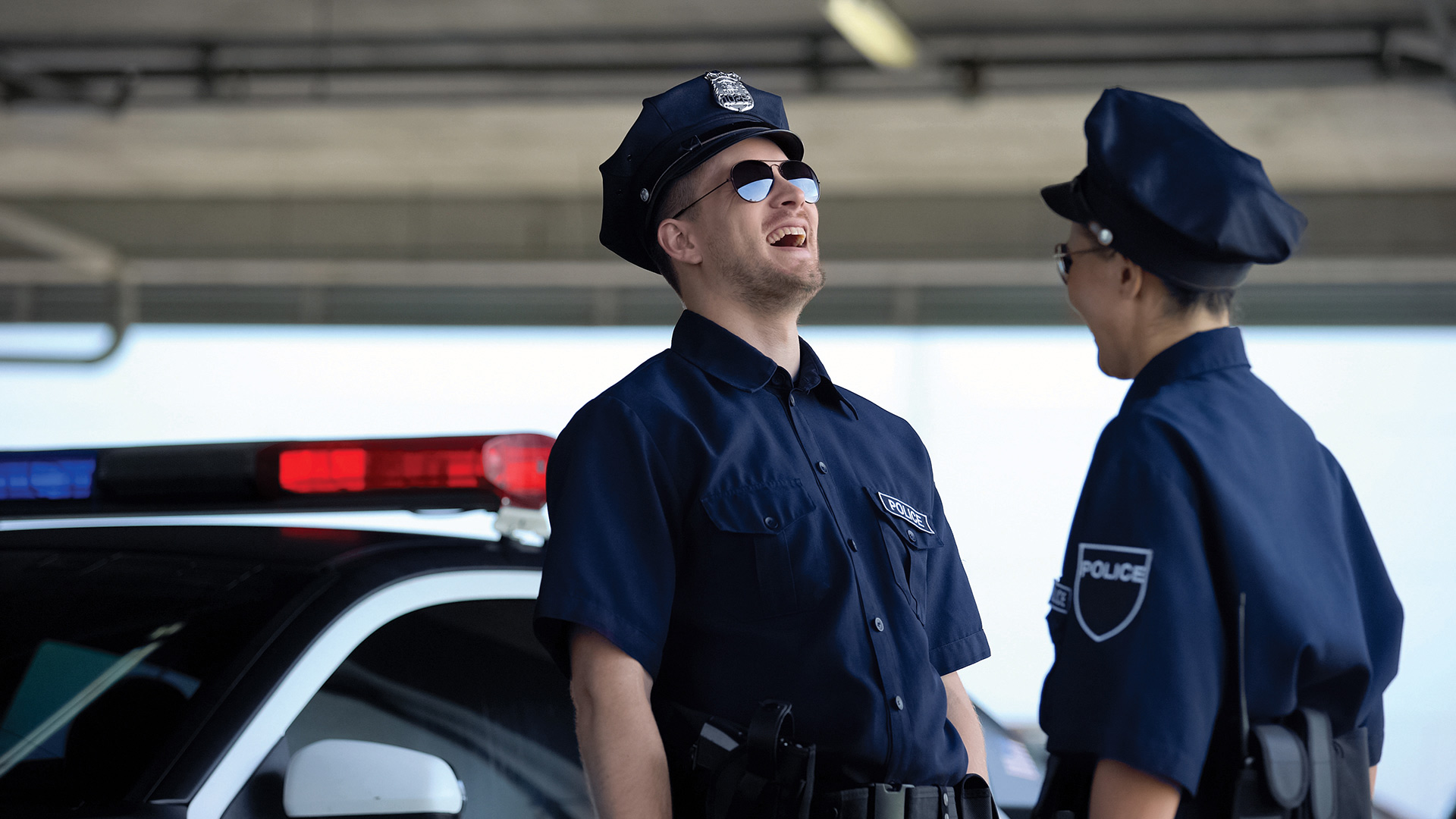
Many times, my colleagues and I are stuck on one of these violence- or death-related scenes, a murder for instance. Can’t exactly tell either party to go for a walk. Can’t exactly go for a walk ourselves. These scenes sometimes take an entire shift or more, testing both patience and bladder capacity. Inevitably, both because of the length of time on scene and the routine nature of these scenes, which is sad but true, officers shift their focus away from what’s at hand. Watercooler talk ensues. Someone makes a funny comment wholly unrelated to the scene, and it leads to a few cackles. Inevitably, that’s when the news cameras capture their B-roll footage. And those cameras don’t seem to recognize the difference between laughing about the scene and laughing about something else entirely. It seems crass to laugh on a murder scene. I don’t dispute that. Looks bad. But for cops, at least cops on my department, scenes of this caliber occur so often that officers become somewhat numb to the reality of them. They have to, especially when the victim’s a kid. I agree it’s best not to treat these scenes callously, but until you’ve experienced it week in and week out, it’s hard to convey the distance one’s mind can create from this shocking reality. I’ve got a theory that to create that distance, a good cop’s gotta be at least one of two things: 1) very religious, or 2) a smartass.
Aside from use as a de-escalation tool, scene-related sarcasm or humor can benefit officers directly, helping reduce frustration.
The timing and semi-clandestine nature of laughter on any scene, smartass or not, can be tricky. But at times, humor can also be a fairly overt on-scene tool. “You never know what funny can do,” as Ellen DeGeneres put it. I can’t begin to tell you the number of angry people I’ve disarmed with a little sarcasm or alternative perspective. Of course, certain scenes are better suited for satire than others. My beat partner was making that exact point when he said, “When Seaton shows up, I know he’s either gonna use some magic words and make this guy his best friend, or he’s gonna go the total opposite direction, be an absolute smartass and make this guy want to kill us. There’s no in between.”
Aside from use as a de-escalation tool, ideally anyway, scene-related sarcasm or humor can benefit officers directly, too. It can help reduce frustration. I’ll be angry some lady gave me three fake names and DOBs. I’ll be annoyed a robbery suspect believes not knowing the definition of robbery excludes him from the crime. I’ll get mad someone destroyed an old woman’s garden. It’ll bother me some dude thinks he’s a revolutionary from another country based out of Chicago. I’ll be pissed some guy shot a dog in the leg. Comedy helps cool me down when stupidity fires me up. Call it calm-edy. The lying lady is just terribly forgetful. Robbery guy taught me a new and widely applicable legal defense. Garden woman now has fewer plants to water. Expat is perhaps the Paul Revere of our day. Dog shot in the leg gained instant street cred.
Scene-related sarcasm can also help keep things in perspective. Not a workday goes by where I don’t think about the social strangeness of the situations I find myself in. I turn on colorful lights and cars pull to the side of the road, ideally. I then walk up to one of those cars and have a conversation in the middle of traffic. Sometimes I have to say magic warning words to try and talk a person out of talking to me. Other times I don’t. I walk through houses and businesses whose owners aren’t there, pointing my gun at and giving commands to people who aren’t there. Other times I make actual people leave houses and businesses that aren’t mine. I drive really fast to get places, but I tell others not to do that. I point a gun at people I’ve never met, but I tell others not to do that, either. I speak into a microphone and make an ambulance or a fire truck or tow truck or another police car magically appear. I say the word “resistor” into that mic and make a whole bunch of police cars appear.
This perspective isn’t discounting the gravity of these situations. Inversely, it’s an anxiety-alleviating tool helping me do my job better. It’s why I’m able to joke with a colleague shot in the leg as we haul ass to the hospital, or convince a young lady to reconsider her story about a hit-and-run crash as I ease her into cuffs, or communicate with a guy about prison on Pluto as I talk him into an emergency detention. I assume it’s the same reason one of my colleagues was able to calmly continue writing traffic tickets in the middle of a 500-plus-car “street takeover” with multiple simultaneous shootings like it was a peaceful Sunday morning. I sometimes get frustrated by the sheer stupidity of runs like these, so I try to keep in mind that it’s this sort of stupidity that keeps the lights on and food on my table. Calmedy. Humor’s as much a sanity-saving de-escalation tool for officers as for everyone else on ridiculous runs.
That’s perhaps especially true when it comes to mental health emergencies. This is definitely not PC to say but nonetheless absolutely true. Mental health runs are some of the funniest runs a police officer takes. When a guy’s talking a thousand words a minute and narrating poopoo doodoo splatter sounds from invisible “ugly bitches shittin’ theyselves” and only responding to questions by naming days of the week, it’s hard not to laugh. The caveat is that it’d be pretty rude to laugh at someone for a mental illness. Laughter does not have to mean disrespect or lack of empathy. Quite the opposite; I’ll argue that well-placed, well-timed — aka discreet or off-scene — laughter is actually a tool to help first responders manage their own mental health and well-being.
The gruesome, grotesque and depressing runs where someone’s brains are splattered across a wall or soaked through a couch cushion build up emotional plaque over time, I’m sure. But it’s secondary stressors like job performance, lawsuits, unjustified public scrutiny and fear of formal indictments that really weigh on today’s officers. These worries drive reluctance about proactivity and even about doing more than is required on dispatched runs. Pressures from the court of public opinion lead to hesitancy of action, too. Doing the job correctly can be as liability-laden as messing up. Police responses to mental health crises are too heavy-handed one week, then too lax the next. It’s a lot. So, in addition to tools like hobbies, healthy eating, regular exercise, wellness visits and time spent outdoors, sometimes a little calmedy can go a long way.

Casey L. Seaton
As seen in the December 2025 issue of American Police Beat magazine.
Don’t miss out on another issue today! Click below: