• Skip to primary navigation
  • Skip to main content
  • Skip to primary sidebar
  • Skip to footer
  • Home
  • About
  • The Magazine
  • Events
  • Partners
  • Products
  • Contact
  • Jobs and Careers
  • Advertise
  • Facebook
  • Instagram
  • Twitter
  • Subscribe
American Police Beat

American Police Beat Magazine

Law Enforcement Publication

  • Home
  • Leadership
    • Understanding the boundaries of professional relationships with the...
      Why you should lead from 30,000 feet
      Public perception and trust
      When performance reviews are a waste of time
      Taking a page from Toyota’s playbook
  • Topics
    • Leadership
      • Understanding the boundaries of professional relationships with the...
        Why you should lead from 30,000 feet
        Public perception and trust
        When performance reviews are a waste of time
        Taking a page from Toyota’s playbook
    • Editor’s Picks
      • Let’s get moving!
        Heroes of the World Trade Center
        The Promise Gap
        Corruption, collusion and impunity
        Liability challenges in contemporary policing
    • On the Job
      • Frankpledge to forensics: A brief history of law enforcement
        Villains and heroes in the Big Apple
        Right place, right time — again
        Some good news on crime
        Mom-to-be named Cop of the Year
    • Labor
      • The Promise Gap
        Cut the cops, save a dollar?
        Labor release under fire
        Who’s watching the watchmen?
        Crime and punishment (or lack thereof) in Seattle
    • Tech
      • New Mexico license plate readers save lives, lead to “precise...
        A modern field guide to understanding research in policing
        Gear that moves with you
        A new breed of cop car
        The future of patrol is here
    • Training
      • Pushback as a training signal
        Let’s get moving!
        The five minutes before the ambulance
        Navigating danger
        Critical thinking in police training
    • Policy
      • Corruption, collusion and impunity
        E-bikes spark public safety concerns
        Try racing without wheels
        Law enforcement accreditation: Why it matters
        Liability challenges in contemporary policing
    • Health/Wellness
      • Addressing stress, vicarious trauma and burnout
        Nervous system regulation
        The nature of the job
        Promoting organizational wellness
        Telling cops to get more sleep isn’t working
    • Community
      • Improving autism awareness
        Shop with a Cop
        Community engagement: What is it moving forward?
        Contradictory crossroads
        Back-to-school season brings out police support nationwide
    • Offbeat
      • An unexpected burglar
        Police humor only a cop would understand
        Not eggzactly a perfect heist
        Pizza … with a side of alligator?
        Wisconsin man charged with impersonating Border Patrol agent twice in...
    • We Remember
      • Heroes of the World Trade Center
        Forty heroes: United Airlines Flight 93
        The Pentagon
        A nation propelled to war, lives changed forever
        A Christmas loss
    • HOT Mail
      • The War on Cops Continues Unabated
  • On the Job
    • Frankpledge to forensics: A brief history of law enforcement
      Villains and heroes in the Big Apple
      Right place, right time — again
      Some good news on crime
      Mom-to-be named Cop of the Year
  • Labor
    • The Promise Gap
      Cut the cops, save a dollar?
      Labor release under fire
      Who’s watching the watchmen?
      Crime and punishment (or lack thereof) in Seattle
  • Tech
    • New Mexico license plate readers save lives, lead to “precise...
      A modern field guide to understanding research in policing
      Gear that moves with you
      A new breed of cop car
      The future of patrol is here
  • Training
    • Pushback as a training signal
      Let’s get moving!
      The five minutes before the ambulance
      Navigating danger
      Critical thinking in police training
  • Policy
    • Corruption, collusion and impunity
      E-bikes spark public safety concerns
      Try racing without wheels
      Law enforcement accreditation: Why it matters
      Liability challenges in contemporary policing
  • Health/Wellness
    • Addressing stress, vicarious trauma and burnout
      Nervous system regulation
      The nature of the job
      Promoting organizational wellness
      Telling cops to get more sleep isn’t working
  • Community
    • Improving autism awareness
      Shop with a Cop
      Community engagement: What is it moving forward?
      Contradictory crossroads
      Back-to-school season brings out police support nationwide
  • Offbeat
    • An unexpected burglar
      Police humor only a cop would understand
      Not eggzactly a perfect heist
      Pizza … with a side of alligator?
      Wisconsin man charged with impersonating Border Patrol agent twice in...
  • We Remember
    • Heroes of the World Trade Center
      Forty heroes: United Airlines Flight 93
      The Pentagon
      A nation propelled to war, lives changed forever
      A Christmas loss
  • HOT Mail
    • The War on Cops Continues Unabated
  • About
  • The Magazine
  • Events
  • Partners
  • Products
  • Contact
  • Jobs and Careers
  • Advertise
  • Subscribe
Search

Leadership

Smart power

A leadership case study of Eisenhower and Patton

Dr. Matthew Loeslie Published December 25, 2025 @ 6:00 am PST

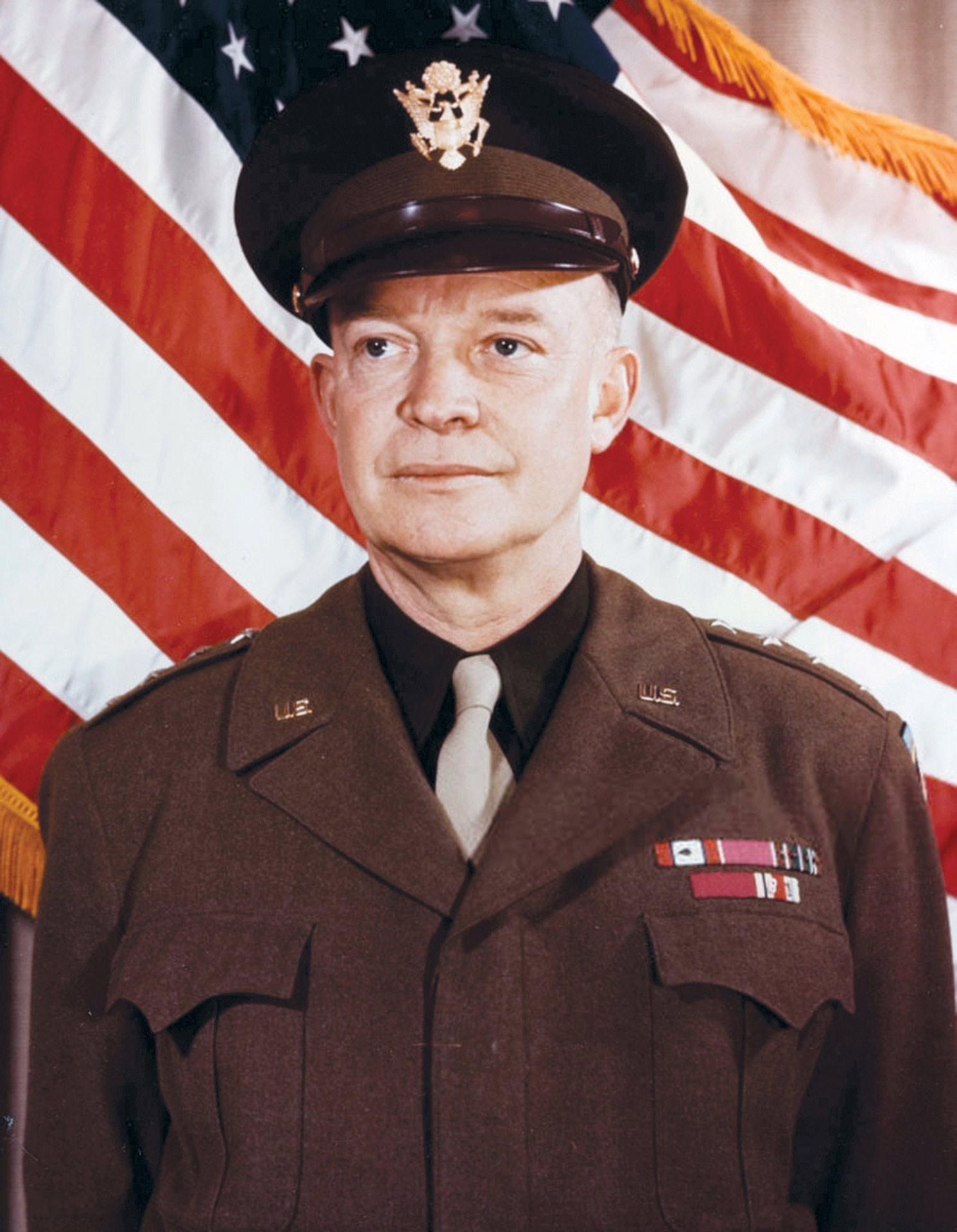
General Dwight D. Eisenhower in 1943 (U.S. Army Signal Corps/Interim Archives)

Dwight Eisenhower and soft power

Joseph S. Nye, the author of The Powers to Lead, argues that soft power rests on getting results using influence, so that others want to do what you want them to do. Soft power appeals and invites. Those who use soft power are skillful at communication. They use leadership to persuade. Dwight Eisenhower is an example of a leader who used soft power to achieve his goals.

During World War II, Eisenhower sent a letter to his outspoken friend George Patton. Eisenhower used soft power by attempting to make Patton realize he should use more tact and discretion in his speech. Eisenhower stated: “My advice is … (if you want it) merely the old saw to ‘count to ten before you speak.’ This applies not only to criticism of allies, a subject on which I am adamant, but to many others.” Eisenhower referred to a proverb that states, “Keep silent and appear stupid; open your mouth and remove all doubt.” Yet Eisenhower showed soft power by stating, “I do not mean that this applies to you, as you damn well know, but I do mean that a certain sphinx-like quality upon occasion will do one hell of a lot toward enhancing one’s reputation.” Eisenhower did his best to convince Patton to watch his tongue without commanding him to do so.

Eisenhower used a soft-power approach in politics, too. He is known for his use of the middle way. As a leader, he had important issues to decide. However, most people’s views on the issues were extreme and in opposition. Eisenhower made it his practice to seek out and advocate for the compromise in the middle. His middle-way approach made him reject the idea that government should excessively control the lives of people. He thought the U.S. should not push further into the socialistic experiment because he also wanted citizens to have their own initiative to make a better future for their children. At the same time, he would not reject useful government services to advance the economy. 

Eisenhower’s soft-power approach came under scrutiny when it came to civil rights. Critics thought there was no middle ground when it came to civil rights. As Jim New writes, “Eisenhower’s reluctance to force a confrontation also reflected his instinctive desire to move slowly and with bipartisan support, especially in this area.”

Growing up, Eisenhower was the middle child of six boys. As a middle child, his use of a soft power approach was not surprising. Middle children are known for achieving diplomatic cooperation. Overall, Eisenhower was able to use soft power to lead the U.S. in World War II and as president.
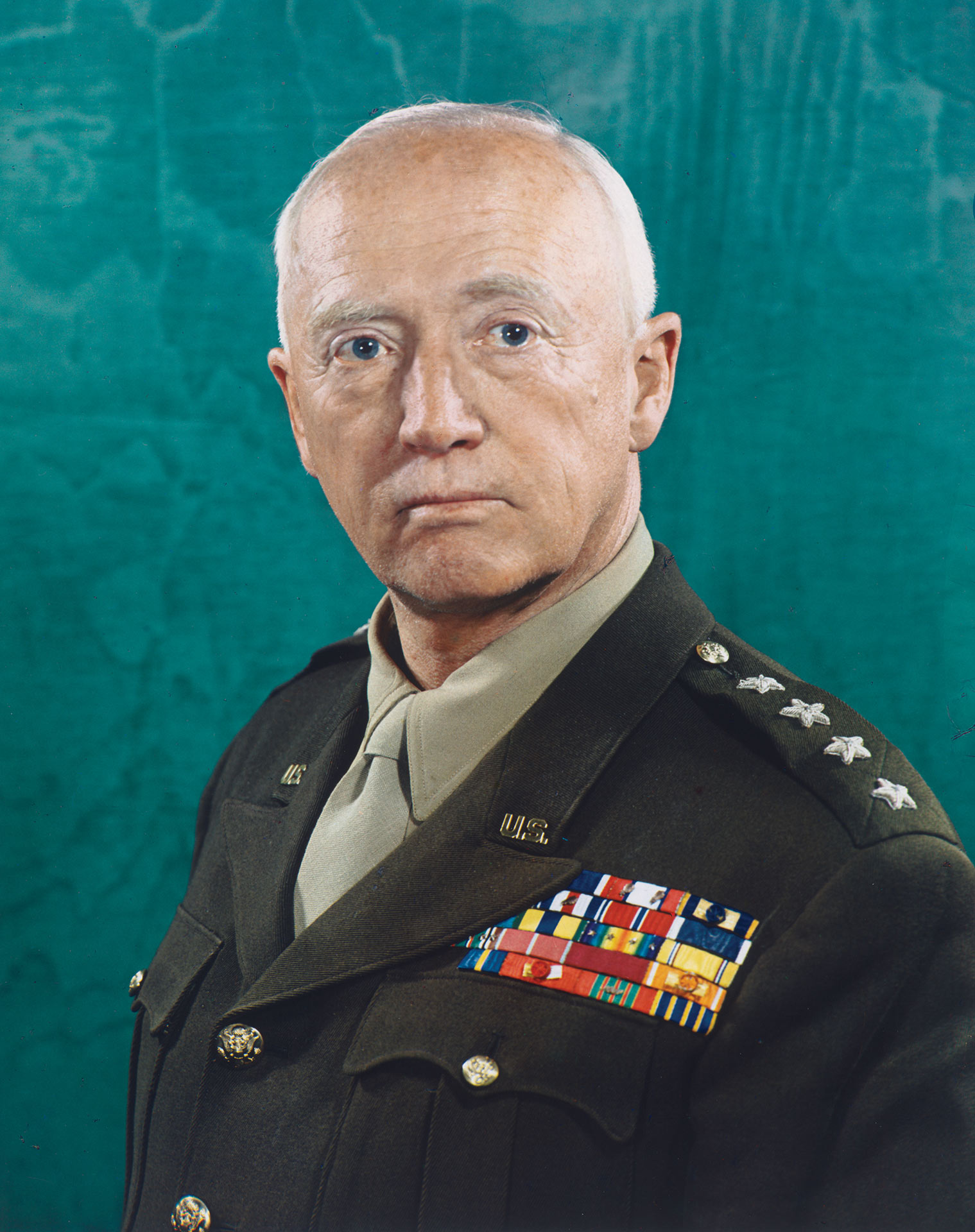
General George S. Patton in 1945 (National Portrait Gallery)

George Patton and hard power

According to Nye, hard power rests on “inducements (carrots) and threats (sticks).” Hard power uses coercion and intimidation. Those who use hard power raise up or tear down to motivate followers. George Patton is an example of a leader who used hard power to achieve his goals.

During World War I, young Patton sent a letter to his wife recounting a battle scene. Patton and his soldiers were digging a trench under fire. A soldier, in defiance of Patton’s command, refused to work. Patton was so infuriated that he hit the soldier over the head with a shovel, and he confessed in the letter that he had possibly killed the man. Patton’s letter quickly moved on from the possible homicide to other topics without acknowledging any wrongdoing or significance.

In World War II, Patton continued using hard power in negative ways. Once, when he visited a hospital to encourage troops, he encountered soldier Charles H. Kuhl, who was shaking. Patton insulted Kuhl and tossed him out of the hospital by clutching his neck. Not long after this, Patton had a run-in with soldier Paul G. Bennett, who was also shaking. Patton cursed him out and slapped him several times. Patton openly considered putting him before a firing squad. Patton was recorded saying, “I ought to shoot you myself, you goddamned whimpering coward.” Patton was reprimanded by Eisenhower for the injustice. Later, in a letter, Patton admitted his “method was too forthright” and explained that Eisenhower had correctly pointed out the negative effect of his actions. However, in the same letter he described one of the men he victimized as a cur and a coward.

Despite Patton’s misuse of hard power, he also used it successfully in his military career. In World War II, Patton used the Third Army to aggressively engage and overcome the German military. Patton’s strong bias toward action, coupled with the Allied Forces’ superior airpower, allowed him to use tank warfare to gain decisive victories. Patton once said, “No one realizes the terrible value of the unforgiving minute except me.” 

Patton also wanted to use the military might of the Allied Forces against the Soviet Union, to the dismay of U.S. and Soviet leadership. He was planning a speaking tour in the U.S. to encourage a war with the Soviet Union upon his return from Europe. As a result, some historians speculate that Patton was actually murdered by the Soviet Union. However, overall, Patton was able to use hard power to win military victories and advance the cause of the Allied Forces in World War II.

Summary

In police administration, the importance of soft power cannot be overstated. Hard power will only be effective in rare situations, and when used incorrectly, it can have negative consequences. Soft power is a go-to strategy for leaders to achieve a variety of goals. Such goals include building trust, creating collaboration and achieving long-term success. As leaders in police administration, we must understand the value of soft power and how to use it effectively. Soft power helps us invest in our relationships, build credibility, foster a sense of community, and create a positive and supportive environment for our employees and community. In sum, soft power helps create lasting change that will benefit our institutions and our society as a whole.

References

Barnett, J.R. (1998, Winter). Great soldiers on airpower. Airpower Journal, 12. Retrieved from airuniversity.af.edu.

Brown, R.K. (2012, Spring/Summer). Advance and Destroy: Patton as commander in the bulge. Journal of America’s Military Past, 37, 99–100. Retrieved from campjamp.org/publications.

Newton, J. (2011). Eisenhower: The White House Years. N.Y.: Doubleday.

Nye, J.S. (2008). The Powers to Lead. Oxford: Oxford University Press.

O’Reilly, B., and Dugard, M. (2014). Killing Patton: The Strange Death of World War II’s Most Audacious General. N.Y.: Holt.

Patton Jr., G.S. (November 1943). Correspondence. Patton Papers (Letters of November 25 and 27, box 11).

Patton Jr., G.S. (1983). War as I Knew It: The Battle Memoirs of “Blood and Guts.” N.Y.: Bantam.

Perlin, M., and Grater, H. (1984, March). The relationship between birth order and reported interpersonal behavior. The Journal of Adlerian Theory, 40. Retrieved from alfredadler.org/journal-of-ip.

Dr. Matthew Loeslie

Dr. Matthew Loeslie

Dr. Matthew Loeslie is an associate professor at Minnesota State University, Mankato. He has held leadership roles such as academic dean, criminal justice program director and lecturer. In addition to his academic experience, Dr. Loeslie has also served as a police officer and trainer. He holds a Doctor of Criminal Justice from Pennsylvania Western University, California, and a Master of Arts in Criminal Justice Leadership from Concordia University–St. Paul. He can be reached at linkedin.com/in/matthewloeslie.

View articles by Dr. Matthew Loeslie

As seen in the December 2025 issue of American Police Beat magazine.
Don’t miss out on another issue today! Click below:


SUBSCRIBE TODAY!

Categories: Leadership, Editor's Picks

Primary Sidebar

Recent Articles

  • Frankpledge to forensics: A brief history of law enforcement
  • Pushback as a training signal
  • Let’s get moving!
  • Heroes of the World Trade Center
  • The Promise Gap
  • Corruption, collusion and impunity
  • The five minutes before the ambulance
  • New Mexico license plate readers save lives, lead to “precise policing”
  • Addressing stress, vicarious trauma and burnout
  • Understanding the boundaries of professional relationships with the boss

Footer

Our Mission
To serve as a trusted voice of the nation’s law enforcement community, providing informative, entertaining and inspiring content on interesting and engaging topics affecting peace officers today.

Contact us: info@apbweb.com | (800) 234-0056.

  • Facebook
  • Instagram
  • Twitter

Categories

  • Editor’s Picks
  • On the Job
  • Labor
  • Tech
  • Training
  • Policy
  • Health/Wellness
  • Community
  • Offbeat
  • We Remember
  • Jobs and Careers
  • Events

Editor’s Picks

Let’s get moving!

Let’s get moving!

April 27, 2026

Heroes of the World Trade Center

Heroes of the World Trade Center

April 24, 2026

The Promise Gap

The Promise Gap

April 22, 2026

Corruption, collusion and impunity

Corruption, collusion and impunity

April 21, 2026

Policies | Consent Preferences | Copyright © 2026 APB Media, LLC | Website design, development and maintenance by 911MEDIA

Open

Subscribe

Close

Receive the latest news and updates from American Police Beat directly to your inbox!

  • This field is for validation purposes and should be left unchanged.