The rookie of today faces a host of challenges that weren’t necessarily present for their forebears. Body cameras, activist groups and ever-present cellphone cameras make for an especially challenging career experience.
Though it may come as little consolation, at least their cars are a lot cooler. Prior generations of cops were issued cars that weren’t all that different from civilian versions. The difference was often limited to a souped-up program for the engine controller and, perhaps, some stiffer shocks. The need to accommodate a prisoner transport cage meant the car was usually something big. Oftentimes, it was a large sedan that wasn’t all that different than your grandmother’s vehicle of choice. In recent decades, manufacturers have taken a proactive approach to meeting agencies’ needs, so officers might find themselves in a Charger with a Hemi or a Ford Interceptor with a turbocharged engine.
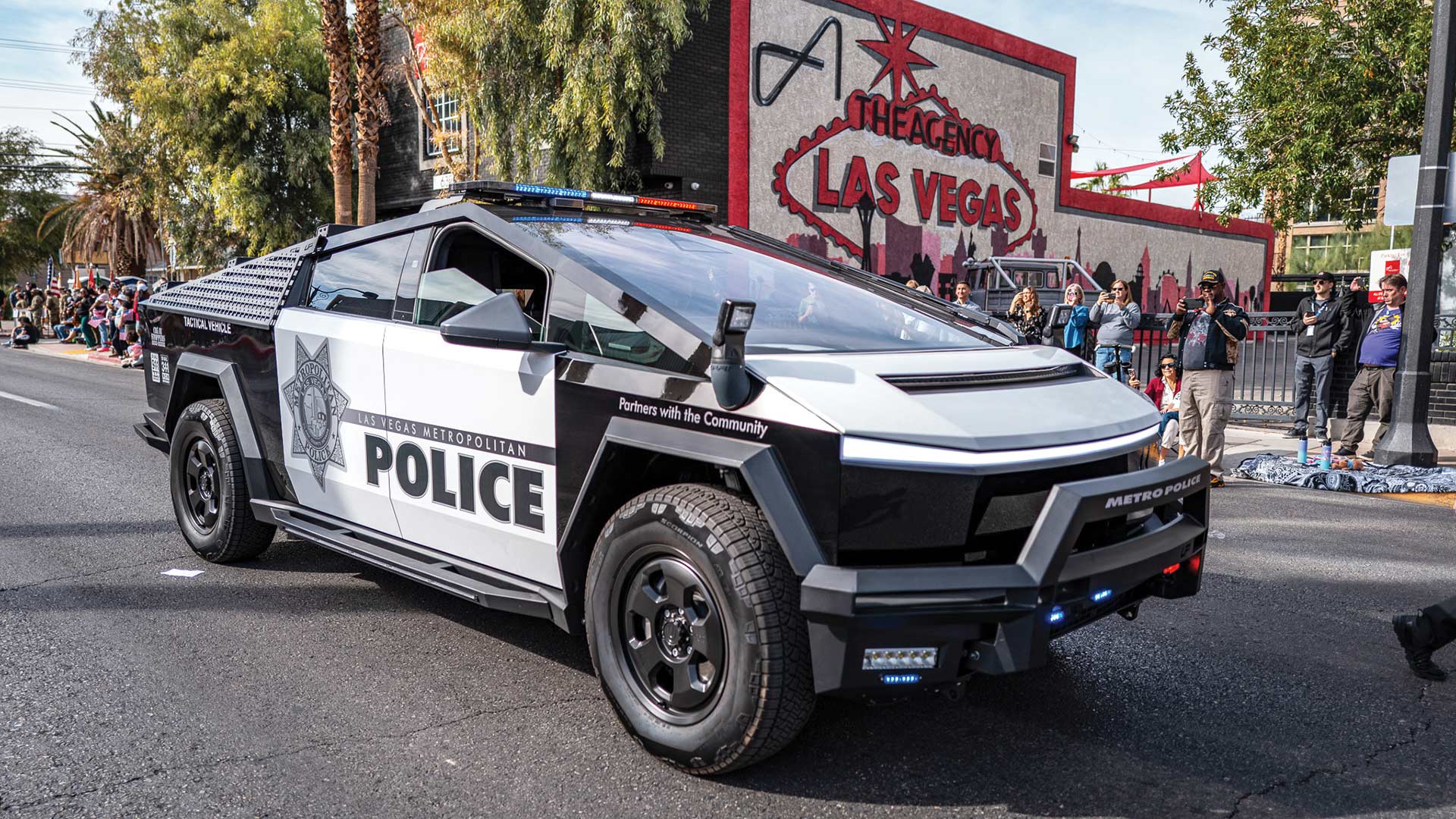
As relatively sporty as these upgrades might feel, officers in Las Vegas may soon look back on them as quaint relics of the past. At a recent press conference, the Las Vegas Metropolitan Police Department unveiled a new addition to their fleet: 10 Tesla Cybertrucks.
Calling the move “the future of policing,” Clark County Sheriff Kevin McMahill told reporters that the trucks are safer than the agency’s other squad cars because they’re bulletproof. The trucks are all wrapped in the Department’s logo, and in addition to standard police add-ons, they’re equipped with extra battery capacity to handle the demands of police work. The department currently plans to utilize public charging stations to keep the all-electric vehicles fueled, with the goal of allowing officers to be out in the community engaging with people. In addition to regular patrols, the trucks will be used to respond to calls such as barricades and shootings, not to mention serving as recruiting tools.
Despite the fanfare that accompanied the unveiling of the nation’s largest fleet of police Cybertrucks, the move isn’t without controversy. Some of it is political blowback against Tesla CEO Elon Musk’s involvement in the Trump administration’s efforts to downsize the federal government earlier this year. Some of it is a reaction to the sharp-angled appearance of the vehicles, which seem “like they’re designed for intimidation and not safety,” Laura Martin of the Progressive Leadership Alliance of Nevada Action Fund told the Associated Press.
And some of the criticism is concern over a potential blurring of the line between public and private interests. The trucks, valued at $80,000 to $115,000 apiece, were a gift from billionaire venture capitalist Ben Horowitz and his wife, Felicia. They’ve donated millions of dollars to the department over the years for everything from drones to license plate readers. Critics have questioned whether such a large donation might give the donors undue influence, while the ACLU of Nevada has expressed worry about the Cybertrucks’ surveillance abilities and that the fleet might give Tesla access to police data.
Ed Obyashi, a special prosecutor and an expert on police practices, told reporters that private donations to law enforcement are neither uncommon nor illegal, and that the donation wouldn’t give the donor any advantages or benefits, aside from saving taxpayers money.
The new cruisers started hitting the road in November.
“They represent innovation,” McMahill said. “They represent sustainability, and they represent our continued commitment to serve this community with the best tools that we have available, safely, efficiently and responsibly.”
As seen in the December 2025 issue of American Police Beat magazine.
Don’t miss out on another issue today! Click below: